Travelling with Pets in England

Travelling with Pets in England
Travelling to England? You don’t need to leave your furry friend behind. From the rolling countryside trails of the Cotswolds to the rugged peaks of the Lake District and Cornwall’s sandy beaches, it’s a dream destination for your four-legged companion.
Alongside endless walking routes, you’ll find pubs, cafés, and accommodation across the country that welcome pets, often with treats at the ready. And the best news is, getting there is easy thanks to pet-friendly ferry routes from Europe to the UK, making travelling with your pet a smooth and stress-free experience.
Read on to find out everything you need to know about travelling to England with your pet, including key requirements and what to expect on your journey.
Before you plan your trip to England with your dog, cat, or ferret, there are a few important requirements you need to be aware of to ensure everything goes smoothly.
You’ll need to make sure you’re travelling via an approved pet travel route into the UK. Most major ferry routes and the Eurotunnel accept pets, but it’s always best to check in advance via official guidance. Bear in mind that if you’re travelling within the UK or from Ireland, this requirement does not apply.
Your pet must be microchipped before travelling to England. They will also need to be microchipped before or at the same time as having their rabies vaccinations. Border officials will then scan the microchip on arrival to confirm your pet’s identity.
A valid rabies vaccination is required for all pets entering England. Once your pet has been vaccinated, you then must wait at least 21 days after the first vaccination before making your trip. However, the exact waiting period can vary depending on the type of rabies vaccination that was used so it’s always best confirming with your vet.
Travelling with a dog? Then they may also need to be treated for tapeworm. This must be given by a vet between 1 and 5 days (24-120 hours) before you enter England, and then recorded in your pet’s travel documents.
Your pet will also need an official pet travel document that will need to be issued by your vets. The specific documents required depend on the country you’re travelling from. Documents include either a pet passport or an animal health certificate and must include details of microchipping and vaccinations.
Pet passports are valid for travel to England from certain countries and can be issued by your vets. In order to get a pet passport, you’ll need to show proof of your pet’s identity, microchip details, vaccination records, along with rabies blood test results if necessary. Make sure you bring the original pet passport with you when travelling to England as copies will not be accepted.
| Europe | Countries | Oversea Territory | Countries |
|---|---|---|---|
| EU (Schengen) | All EU Countries | France | Mayotte, Réunion, Saint Barthélemy, Saint Martin (French part of the island), Martinique |
| San Marino, Azores and Madeira, Vatican City State, Monaco | Guadeloupe, French Guiana | ||
| EEA + | Iceland, Norway, Switzerland, Liechtenstein | Denmark | Greenland and the Faroe Islands |
| Andorra | UK | Gibraltar |
If you’re travelling to England from a country that doesn’t issue pet passports, you can use a Great Britain pet health certificate instead. You may also be able to use a Great Britain-issued pet passport if it was issued before 1 January 2021. You can obtain a pet health certificate from your vet, but it must be signed, stamped, and dated by an Official Veterinarian (OV) - a vet authorised by the government.
If your usual vet isn’t an OV, they’ll need to arrange for the certificate to be completed by one. Once issued, the certificate is only valid for entry into England for 10 days, so you’ll need to plan your travel carefully to ensure it’s still valid when you arrive.
If you’re travelling to England from the EU or another country that doesn’t use UK-issued pet passports, then you can use an Animal Health Certificate (AHC). Unlike a pet passport, an AHC is only valid for a single trip. Your vet must issue your AHC within 10 days of travel and it must include details of your pet’s microchip, rabies vaccination, and any other necessary treatments.
Once it’s been issued, it allows entry into the UK and is valid for onward travel within the EU for up to 4 months. If you’re planning to stay in England for longer than 4 months and your AHC expires, you’ll then need to either get a pet passport or a Great Britain pet health certificate.
If you’re just visiting England for a holiday with your pet, then all you need to do is sign a declaration form stating that your pet is not for sale.
If you’re travelling to England with a guide or assistance dog then they must meet the same requirements as other pets, including valid travel documents, microchipping, and a rabies vaccination. However, they are often allowed on a wider range of routes, including some where other pets may not be allowed.
Depending on the operator, guide and assistance dogs can also usually stay with their owner in passenger areas during the journey. Don’t forget to let your ferry operator know in advance that you’ll be travelling with an assistance dog, as you may need to provide certification or make special arrangements before you travel.
Make sure to follow these rules as if not, your pet may be refused entry to England or have to be put into quarantine for up to 4 months. For more information, we’d recommend checking out the government website.
There are a few things that you need to bear in mind when travelling to England with a pet:
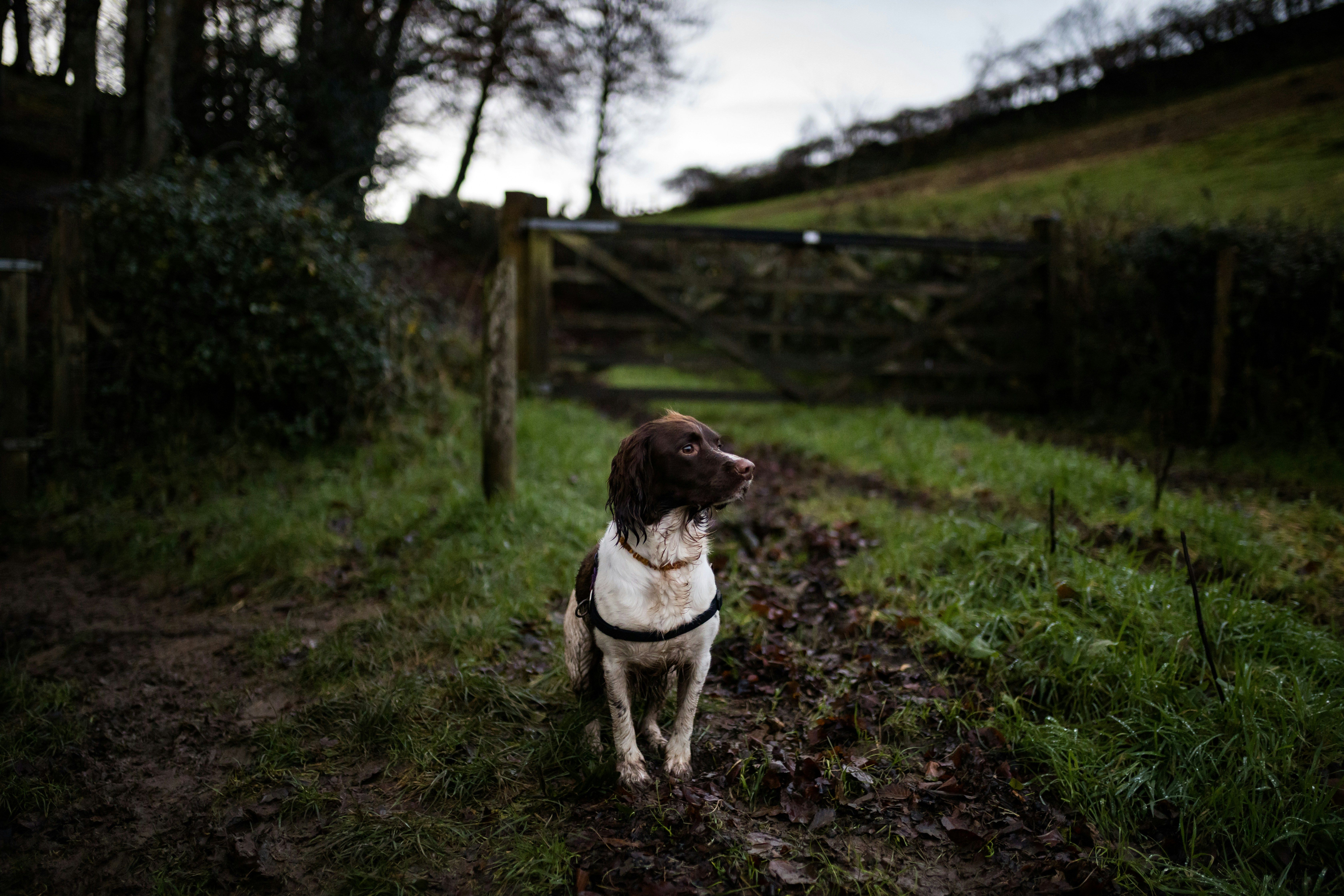
With a range of ferry ports connecting England with mainland Europe, travelling to England with your pet has never been easier. Whether you plan on exploring the south east, south west, midlands or the north of England, there are several ports that make it easy to continue your journey to England’s countryside, coastline, towns and cities.
Although most of England’s ferry ports are located in the south of the country, with Dover and Portsmouth offering easy access to the South East, and Plymouth making a great starting point for the South West, there are also options further north.
Ports such as Hull and Newcastle provide convenient access to the North of England, whilst Harwich is a good choice for those travelling towards the Midlands or the Cotswolds. Ferries to England include a mix of short and longer overnight sailings.
Popular ferry routes include Calais to Dover which takes about 1 hour 30 minutes, Dunkirk to Dover which takes about 2 hours, Hook of Holland to Harwich, with a journey time of around 9 hours 30 minutes, and Rotterdam to Hull, which takes approximately 11 hours 30 minutes.

Although it’s easy to travel to England with a pet, each port and operator may have slightly different rules so we’d always recommend checking with them in advance so you can prepare for your journey.
Wherever you’re travelling from, you’ll need to make sure your pet’s microchip, vaccinations and documents are ready to show before boarding the ferry to England. We’d also recommend allowing extra time for your journey to make it as smooth as possible.
Here’s what to expect at some of the most popular departure ports:
Calais ferry port serves routes to Dover with regular services provided by P&O Ferries, DFDS and Irish Ferries.
With a short crossing time of just 1 hour 30 minutes, pets usually stay in your vehicle, however P&O Ferries also offer a pet lounge. Before boarding the ferry, pets must stay in your vehicle or in the outdoor waiting areas.
Operated by DFDS Seaways, Dunkirk also serves ferries to Dover.
Similar to the Calais crossing, pets remain in your vehicle for the 2-hour crossing, and must either stay in your car prior to boarding the ferry or in the outdoor waiting areas. When walking to your vehicle or kennel, your dog must be kept on a lead whilst other pets must be transported in a carrier.
Rotterdam serves ferries to Hull in the north of England, with regular services provided by P&O Ferries.
This is an overnight crossing, and your pet must be booked into either a kennel or a pet-friendly cabin onboard. Pets are not allowed inside the Rotterdam terminal building, however there are plenty of green spaces nearby for a pre-departure stroll. When boarding the ferry, you’ll need to make sure they are on a lead and wearing a harness.
Stena Line serve the port of Hook of Holland, offering routes to Harwich.
If you’re travelling by car, you’ll be given a coloured tag at check-in to indicate that you are travelling with a pet – make sure to place this in the rear-view mirror of your windscreen until you have cleared customs at arrival. If you’re travelling as a foot passenger, you’ll need to book a kennel or pet-friendly cabin instead.
Dogs will need to wear a collar and non-retractable lead (no longer than 4 ft / 1.2 m in length) when they are being transferred to a kennel or pet cabin. Once you’ve boarded the ferry, you can go to the information desk on deck 9 for more information about travelling with your pet with Stena Line.
Brittany Ferries operate services from Cherbourg to Portsmouth and Poole and from Roscoff to Plymouth.
Although pets are not allowed inside the terminal, the port does have a small grassed area located outside of the terminal where dogs are allowed as long as they are on a lead and are muzzled.
Once you’ve checked in, your pet must then stay inside your vehicle. On board, pet-friendly cabins and kennels are available.
Brittany Ferries also offer services from Caen to Portsmouth.
Muzzled dogs on a lead are allowed in all areas of the port. Once you’re past the security check point, there’s also a water point and sandpit for your pets. There are pet-friendly cabins and kennels available on board for your journey to Portsmouth or your pet can stay in your vehicle.
Routes from St Malo to Portsmouth are also operated by Brittany Ferries.
If dogs are muzzled and on a lead then they are allowed in the port area but not inside the terminal building. Once you have checked in, your pet then must stay in your vehicle. Water is also available once you have passed security – just look for a sign saying 'Point d'eau Animaux'.
At the port, your dog’s microchip will be scanned and documents will be checked. They will then put a sticker on your car windscreen that will need to stay on until your have exited at Portsmouth. Once on board, pet-friendly cabins and kennels are available.

Once onboard, the journey is relatively straightforward. Most ferry operators are well set up for pet travel, with dedicated spaces and clear guidelines to help keep your pet safe and comfortable.
Depending on the route and operator, your pet will usually travel in your vehicle, a pet-friendly cabin, onboard kennel, or a designated pet lounge. We’d recommend booking these options as early as possible, as spaces can fill up quickly.
Apart from assistance dogs, pets are generally not allowed in public areas such as restaurants and lounges Make sure you bring everything your pet needs for a comfortable crossing, including water, food, bedding, toys, and a crate or carrier if required. Familiar items like blankets can make a big difference in helping your pet stay calm, particularly on longer journeys.
This popular France to UK ferry route is operated by P&O Ferries, DFDS, and Irish Ferries, all of which accept pets on board. The crossing time is just 90 minutes, making it especially great for pets who don’t love long journeys!
Duration: 1 hour 30 minutes
Operators and pet-friendly facilities on board:
P&O Ferries
DFDS Seaways
Irish Ferries
The ferry from Rotterdam to Hull is a longer overnight sailing, with an average duration of 11 hours 30 minutes. However, P&O have made it comfortable for your furry friends with their pet-friendly facilities. Make sure to book kennels and cabins in advance to secure your pet’s spot on the ferry.
Duration: 11 hours 30 minutes
Operators and pet-friendly facilities on board:
The Hook of Holland to Harwich ferry is another popular pet-friendly crossing. It’s operated by Stena Line and takes 9 hours 30 minutes on average.
Duration: 9 hours 30 minutes
Operators and pet-friendly facilities on board:

Disembarking the ferry with your pet is also fairly straightforward. Once you have docked in England, make sure to follow the instructions from the crew.
If you’re travelling with a vehicle, you’ll usually return straight to your vehicle and comfort your pet if they have been travelling in there. Although most pet checks are carried out before boarding, your pet’s microchip and documents may still be checked again on arrival so make sure you have everything on hand to show. For longer journeys, it’s also a good idea to take your pet for a walk or toilet break as soon as possible after leaving the port.
Dover ferry port is the busiest ferry port in the UK, especially for the Calais to Dover route, so expect a busy but efficient process. You’ll usually have to return to your vehicle and then follow the signs for UK Border Force/customs. Even though most checks happen in France before departure, your dog’s microchip may still be scanned, and travel documents may be checked. Once cleared, you can exit onto major routes like the M20, making onward travel quick and easy.
Once you’ve arrived at Hull ferry port, you will need to collect your pet from the onboard kennels unless you are travelling with them in a pet-friendly cabin. As the journey to Hull is often a longer or overnight crossing, the process might feel a little bit slower so make sure to allow extra time. After that, proceed to UK Border Force checks, where you may be asked to show your pet’s documentation or undergo a quick inspection. Once through, you’ll have easy access to northern motorways, ideal for continuing your journey.
Harwich is often quieter than some of England’s other major ports like Dover, making the arrival process a bit smoother. Depending on how your pet travelled, you can either return to your vehicle or collect them from onboard kennels. Follow crew instructions carefully, as you may be directed to a DEFRA inspection point, where your pet’s microchip and documents could be checked. Once cleared, you can quickly join nearby routes towards London and the Midlands.
Serving a range of routes, Portsmouth can be busy especially in peak season. If your pet hasn’t been travelling with you in a cabin, you’ll need to collect them from onboard kennels before returning to your vehicle. After, continue through passport control and customs. You may also be directed to a designated pet check area, where pet documents are reviewed or microchips are scanned. Once you’ve cleared the port, you’ll have good access to routes heading towards London and the south east.
Once you’ve arrived at Plymouth, you can leave the cabin with your pet, making sure they are on a lead or in a carrier, or collect your pet from the kennels on board. After, continue to customs control. Pet checks can still take place on arrival so make sure you have everything on hand for a quick and stress-free arrival. Once you leave the port, you’ll be able to continue your journey to the south west.
Need some more information about travelling with your pet to England? Here are some useful links:
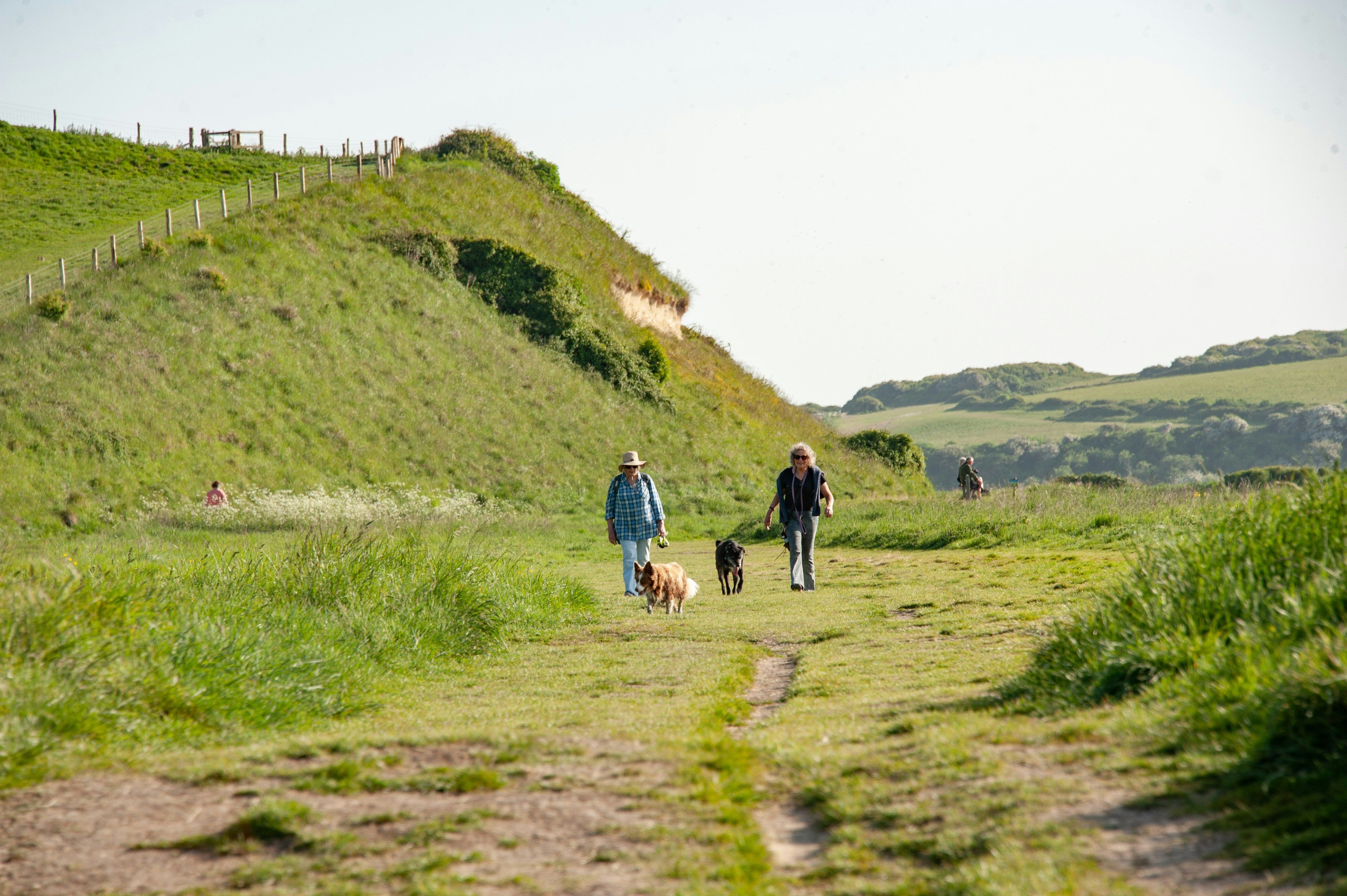
The cost of taking your pet on the ferry to England varies depending on the ferry operator you’re travelling with and the route you’re travelling on. For example, on popular crossings like Calais to Dover, the Pet Lounge costs around £15 each way with P&O, although some operators do offer pet travel for free. On longer routes, such as overnight sailings from Harwich to Hook of Holland, prices are higher due to having to book a kennel or pet-friendly cabin.
Yes, you can leave your dog in your car on many shorter ferry routes, such as the Calais to Dover route. However, on longer routes such as Rotterdam to Hull, pets are not allowed to stay inside your vehicle and must in onboard kennels or pet-friendly cabins instead.
Whether or not you can travel with your pet as a foot passenger depends on the route and operator. On short routes such as Calais to Dover, pets are only allowed if you are travelling with a vehicle. However, some longer routes, like Harwich to Hook of Holland, do allow foot passengers to travel with pets, provided you book a kennel or pet-friendly cabin in advance.
Pet-friendly options, such as kennels or pet-friendly cabins, can be booked during the booking process. We’d recommend booking these in advance as availability is often limited.
Usually, pets are now allowed in public areas onboard such as restaurants and lounges. However, this doesn’t apply for guide or assistance dogs. Some operators offer designated pet areas or lounges instead.
Yes, you can stay with your dog on a ferry depending on the route and operator. Many operators such as Stena Line and P&O Ferries offer pet-friendly cabins, offering a comfortable spacious place for you and your pet. These are often available on longer routes rather than shorter journeys where your pet can stay in your vehicle.
More routes than anyone else.

Compare fares, times & routes in one place.
Change plans easily with flexi tickets.

Book e-tickets & manage trips in-app.
Live ship tracking & real-time updates.

Top-rated customer support when you need it.