Ireland Things to do
Ireland Things to do
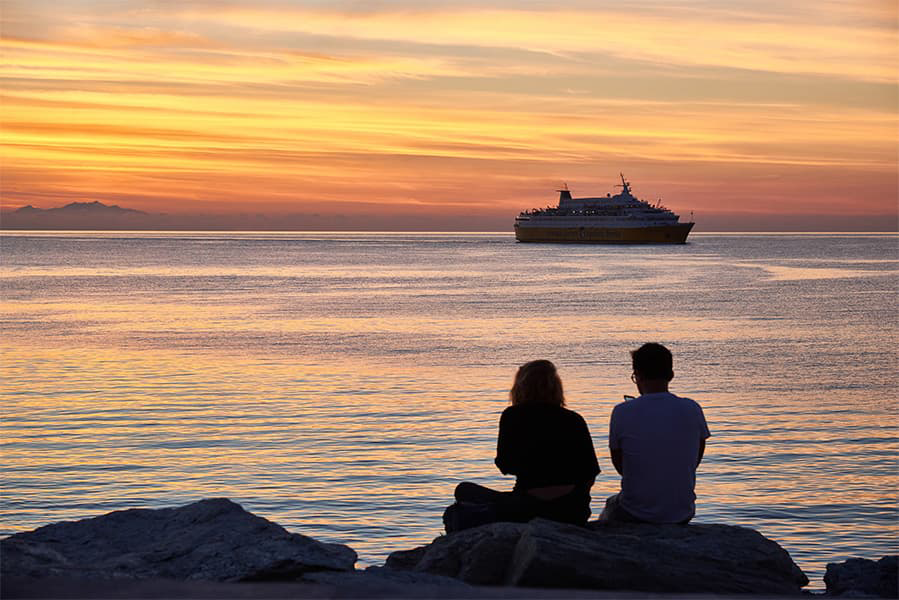
Ireland is one of the world's most warmly welcomed destinations — and the warmth begins the moment you arrive. From the wild, cliff-edged coastlines of the west to the rolling drumlin countryside of the midlands, the ancient monastic sites of the interior to the vibrant, literary streets of Dublin and Galway, Ireland packs an extraordinary variety of landscapes, culture, and character into a relatively small island.
Whether you're a first-time visitor drawn by the scenery and the craic, or a returning traveller seeking out hidden valleys and traditional music sessions in unassuming pubs, Ireland rewards every kind of explorer. Read on to discover why a ferry trip to Ireland could be your most memorable holiday yet.
Ferry Tip: Did you know you can reach Ireland directly by ferry from the UK and France? Direct Ferries offers easy crossings to Dublin, Rosslare, Belfast, and Cork — putting all of Ireland within reach without stepping on a plane. Compare ferries to Ireland and start planning your trip today.
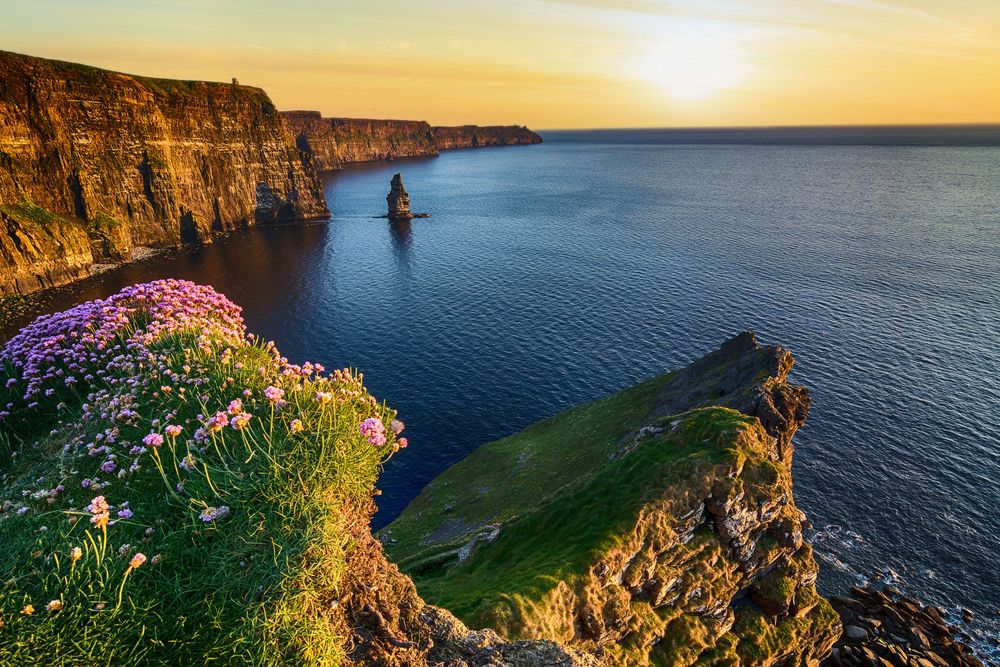
Ireland is a country like no other. Spanning around 70,000 square kilometres on the westernmost edge of Europe, the island of Ireland is divided politically between the Republic of Ireland in the south and west and Northern Ireland in the north-east, which remains part of the United Kingdom.
Both jurisdictions share the same island, the same Atlantic weather, and, in most important respects, the same hospitable culture.
This guide focuses on the regions most beloved by travellers arriving by ferry from Britain and France: Dublin and the east coast, the Wild Atlantic Way, the Ancient East, and the island of Ireland's dramatic north.
Ireland can be visited year-round, but the best time depends on what you want to do and how much you mind the rain. Ireland's Atlantic climate means that almost any month can produce both sunshine and downpours, sometimes within the same hour.
The west tends to be wetter and windier than the east, while the summer months are reliably the warmest and brightest. Here's what to expect season by season.
Spring is arguably the finest season to visit Ireland. The countryside turns a luminous, almost improbable green as the light improves, crowds are lighter than in summer, and the atmosphere in towns and cities is relaxed and genuine. Temperatures in March typically range from 7–12°C across the island, rising to 12–17°C by May. The west coast in May, when the hedgerows are white with hawthorn blossom, and the Atlantic turns blue on clear days, is one of the great sights in Irish travel.
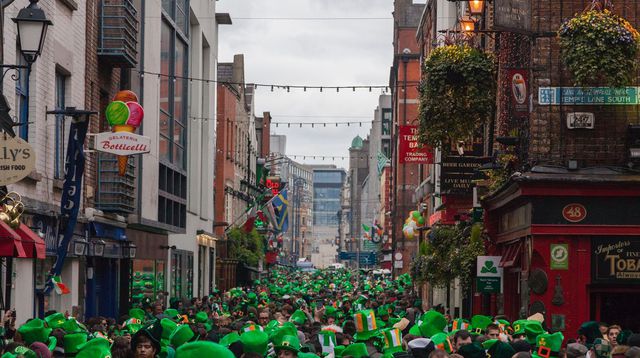
St Patrick's Day on 17th March transforms Dublin, Galway, Limerick, and Cork into a national festival of music, parades, and good-natured celebration. Booking accommodation well in advance is essential for that weekend. The Aran Islands and Connemara in late April and May see the return of migratory seabirds and wildflowers across the limestone pavement of the Burren, making it an exceptional time for walkers and naturalists alike.
Ferry crossings in spring are highly recommended, as services are frequent and the passage from Holyhead, Fishguard, or Pembroke is often calm and straightforward in settled weather.
Summer is peak season in Ireland. The Wild Atlantic Way, the Ring of Kerry, and the Cliffs of Moher fill with visitors from across Europe and North America. Daytime temperatures typically range from 17–22°C in the south and east, with the west slightly cooler at 15–20°C. Ireland rarely experiences the extreme heat of continental Europe, which makes outdoor walking, cycling, and coastal activities genuinely enjoyable rather than a trial of endurance.
The evenings are the great revelation of an Irish summer. At midsummer, there is usable daylight until after 11pm in the north and west, allowing for long evenings on cliff paths and outdoor pub terraces. July and August see traditional music festivals across the country, most notably the Willie Clancy Summer School in Miltown Malbay and Fleadh Cheoil na hÉireann, which moves between host towns each year.
Autumn is the connoisseur's season in Ireland. The tourist crowds thin, prices ease, and the landscape takes on a richly saturated quality. September temperatures typically range from 13–18°C, cooling to 8–13°C by October. The west coast remains dramatic and accessible well into October, and many of Ireland's finest pubs and restaurants are at their most convivial once the summer rush has passed.
The Galway Oyster Festival in late September is one of Ireland's great food and drink events, a long weekend of shellfish, stout, and traditional music that draws visitors from across Europe. The Dublin Theatre Festival in October is one of the finest in the English-speaking world.
For those arriving by ferry, autumn offers comfortable crossings, uncrowded roads, and a more intimate encounter with Irish life than the high summer months can provide.
Winter in Ireland is not for the faint-hearted in meteorological terms. The Atlantic can be brutal along the west coast, with storms that are genuinely spectacular if you're positioned safely to watch them. But Ireland in winter has a character all of its own. Dublin and the other cities are at their most atmospheric in December, with Christmas markets, twinkling streets, and the genuine warmth of pub fires and traditional music sessions that feel all the more precious in the dark.
Temperatures across the island typically range from 4–9°C, rarely dropping below freezing except on higher ground. Snow is uncommon at sea level. The Wild Atlantic Way in winter, when storms drive enormous swells against the sea stacks and cliffs of Clare and Donegal, is an awe-inspiring spectacle for those willing to brave the weather.
Ferry crossings can be rough between November and February, particularly on the Holyhead to Dublin ferry.
Trinity College is one of the great university campuses of Europe, a 40-acre enclave of cobbled squares, Georgian buildings, and ancient trees in the heart of the city. Founded by Elizabeth I in 1592, it has educated Swift, Wilde, Beckett, and Bram Stoker, among many others. Its library, the Long Room, is one of the most beautiful interiors in Ireland: a barrel-vaulted hall of dark oak and ancient marble busts, 213 feet long, housing around 200,000 of the library's oldest books.
Within the library is the Book of Kells, a magnificently illustrated gospel manuscript created by Celtic monks around 800 AD, and considered one of the finest surviving examples of medieval European art. Book timed-entry tickets online at least a week in advance; the queues for on-the-day entry can be considerable.
The college grounds themselves are free to walk through and are at their most atmospheric in the early morning before the tour groups arrive.
Howth, perched on a rocky headland 15km north-east of Dublin city centre, is one of those rare places where wild coastal scenery and a functioning fishing village combine in a single afternoon. The cliff walk around the headland, a circular route of around 8km, passes above dramatic sea cliffs, through heathland thick with gorse, and around the ruins of an ancient abbey, with views across Dublin Bay to the Wicklow Mountains on clear days.
The harbour is lined with seafood restaurants and fish-and-chip shops that draw Dubliners from across the city on weekends. Howth is a 25-minute journey from Dublin city centre on the DART coastal rail line, making it the most accessible coastal walk from any major Irish city.
The DART rail line south of Dublin passes through some of the most sought-after and scenically beautiful coastline in Ireland. The Victorian resort towns of Dún Laoghaire, Sandycove (where James Joyce once lived in a Martello tower, now a museum), Dalkey, and Killiney, whose bay is so often compared to the Bay of Naples that locals now consider the comparison obligatory.
Killiney Hill offers a 45-minute walk through woodland and open hillside to a Victorian obelisk with panoramic views over the bay, the Sugarloaf mountain, and on clear days, the mountains of Wales.
The Wicklow Way, Ireland's oldest and most celebrated long-distance walking route, begins in the southern suburbs of Dublin and runs for 127km through the Wicklow Mountains to Clonegal in County Carlow. Even the first day's section from Marlay Park through the Dublin foothills to Enniskerry is among the finest half-day walks within reach of any European capital.
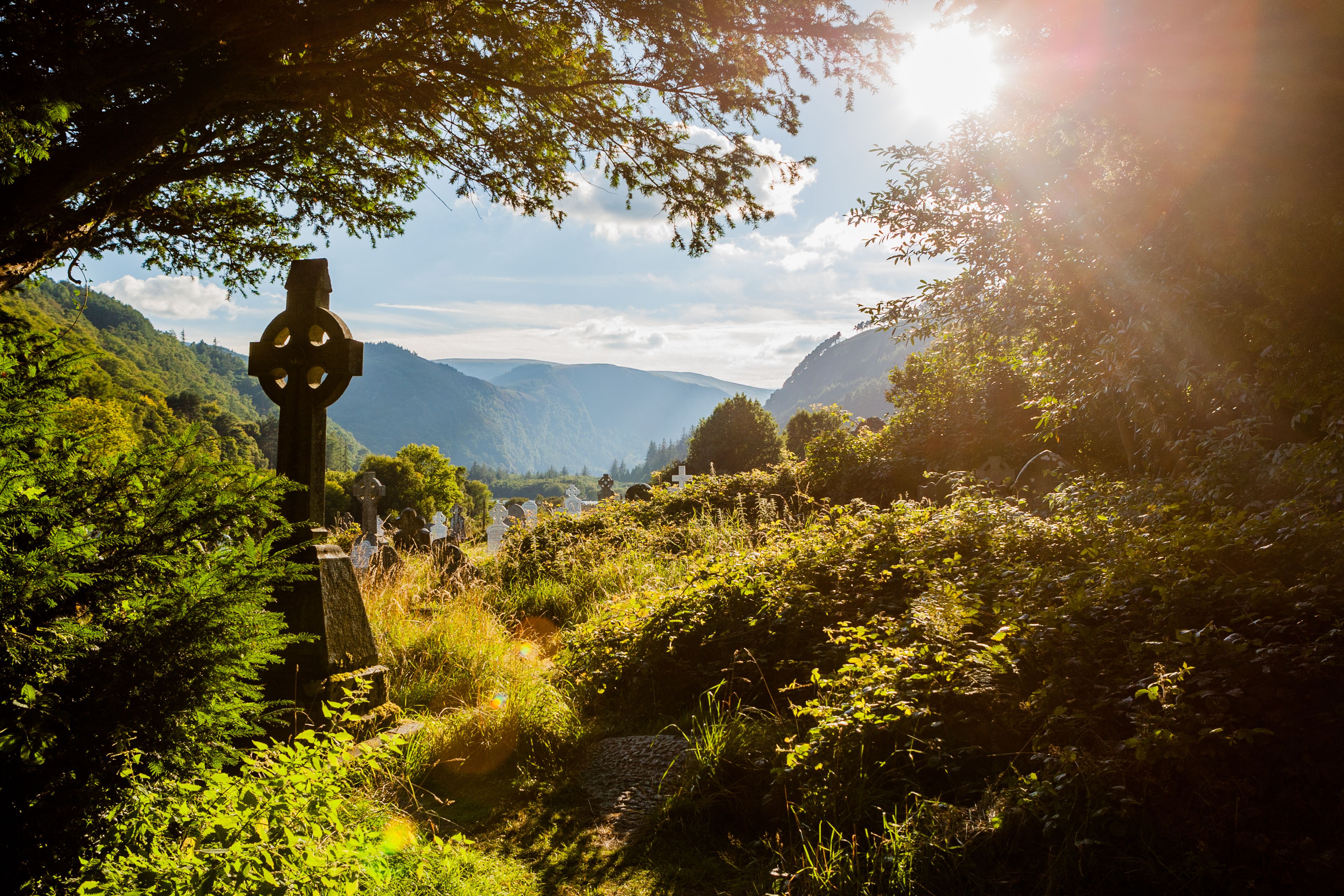
The mountains themselves, a granite upland of corrie lakes, blanket bog, and river valleys, are empty and magnificent, and the Glendalough valley, with its round tower and Early Christian monastic settlement, is one of the most affecting places in Ireland.
The National Museum of Ireland on Kildare Street houses the finest collection of prehistoric Irish gold in the world, alongside Viking artefacts excavated from beneath Dublin's streets and the extraordinary Bog Bodies — Iron Age men and women, preserved for two millennia in the Irish peat, whose faces remain eerily recognisable. Admission is free.
Kilmainham Gaol, where the leaders of the 1916 Easter Rising were imprisoned and executed, is the most emotionally powerful historic site in Dublin, and its guided tour is essential for understanding modern Irish history.
Bloomsday on 16th June celebrates James Joyce's Ulysses with readings, performances, and guided walks around the Dublin locations described in the novel, with enthusiasts dressing in Edwardian costume. The atmosphere is literary, eccentric, and genuinely joyful.
The Dublin Horse Show in August at the Royal Dublin Society showgrounds is one of the oldest and most prestigious equestrian events in Europe, attracting competitors from across the world and a decidedly dressed-up domestic crowd.
The Cooley Peninsula in County Louth, north of Drogheda, is one of the least-visited mountain landscapes within easy reach of Dublin. It’s a granite upland above Carlingford Lough with walking trails that are genuinely empty even at midsummer. The medieval walled town of Carlingford itself is one of the most complete and least-touristed examples of Norman urban planning in Ireland.
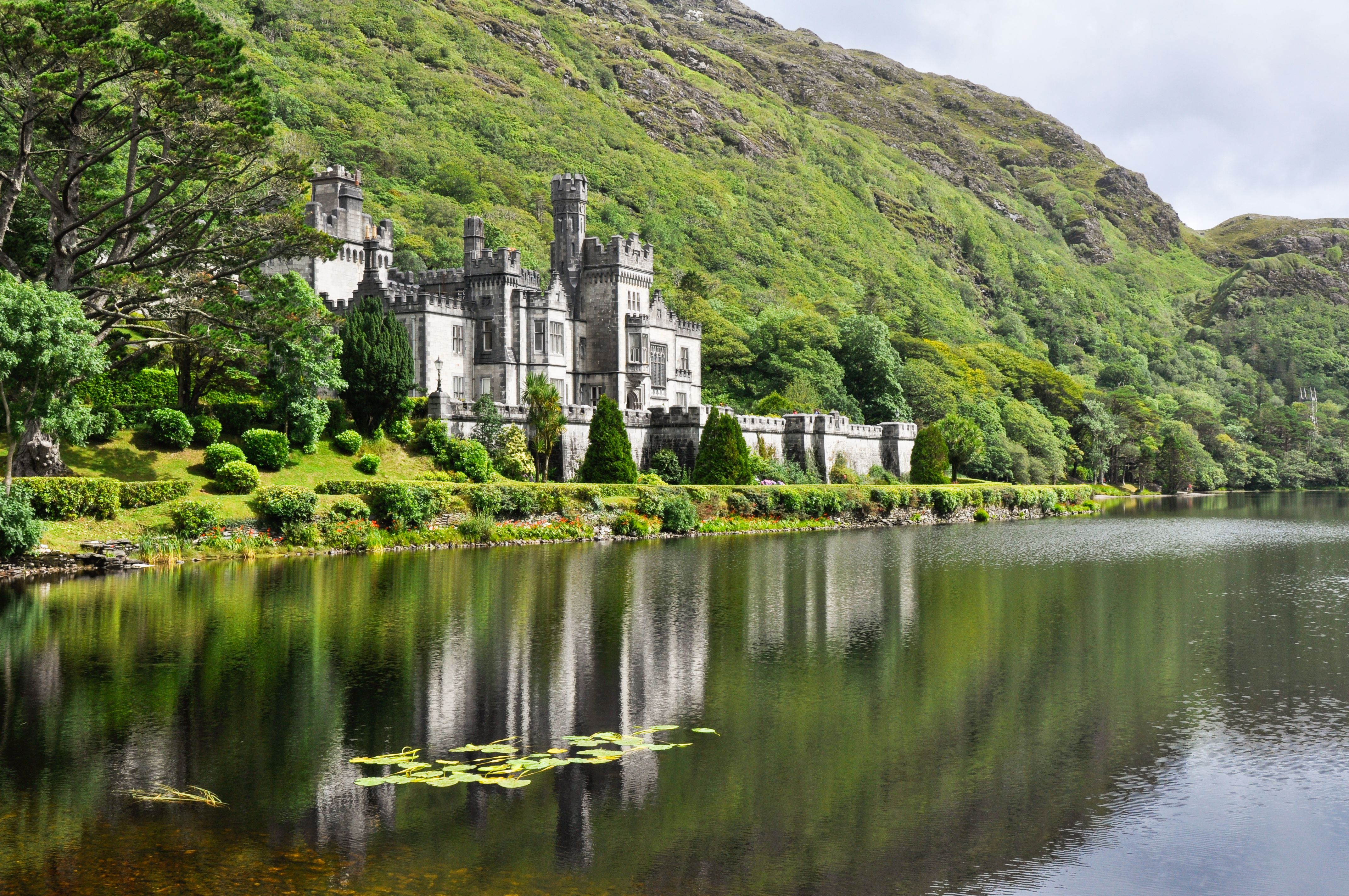
Rising to 214 metres above the Atlantic at their highest point, the Cliffs of Moher stretch for 8km along the Clare coastline and are, by almost any measure, one of the most spectacular natural sights in Europe. The view south from O'Brien's Tower at the highest section, across the limestone plateau of the Burren, the Aran Islands, and Galway Bay, with the mountains of Connemara beyond, is genuinely extraordinary on a clear day.
Arrive before 9 AM or in the late afternoon to avoid the peak crowds. The cliff-edge path between the visitor centre and Hag's Head to the south is far less walked than the northern section and offers the finest views of the cliff face itself.
The Visitor Centre is well designed and includes an excellent exhibition on the geology and wildlife of the cliffs, where puffins, razorbills, and guillemots nest in their tens of thousands between March and August.
Connemara is the Ireland of the imagination: a vast, hauntingly beautiful landscape of bog, lake, bare quartzite mountain, and Atlantic inlet in the west of County Galway. The Twelve Bens, a compact range of quartzite peaks rising to 729 metres, offer walking of genuine mountain character, with short ascents that provide dramatic exposure and views that extend, on clear days, from the Aran Islands to the mountains of Mayo.
The village of Clifden, the informal capital of Connemara, is an excellent base for the region. The Sky Road, a circular driving route above Clifden Bay, is one of the finest short scenic drives in Ireland. The Irish language is spoken as a first language in the Gaeltacht areas of the Connemara coast, giving the region a distinctly different cultural texture from the rest of Ireland.
Slieve League, on the south coast of Donegal, rises 601 metres directly from the Atlantic, nearly three times the height of the Cliffs of Moher, making it one of the highest sea cliffs in Europe. The approach from Teelin offers progressively more vertiginous views, and the exposed ridge walk across the One Man's Pass to the summit is one of the most thrilling mountain routes in Ireland for those with a head for heights.
Donegal as a whole is significantly less visited than Galway or Kerry, and Slieve League sees only a fraction of the footfall of the Cliffs of Moher. Glenveagh National Park, further north, with its Victorian castle set above a glacial lough, combines natural beauty with historical interest in a landscape that feels genuinely remote.
The Wild Atlantic Way, stretching for 2,500km from the Inishowen Peninsula in Donegal to Kinsale in Cork, is the world's longest defined coastal touring route. Even a section of it, like the Loop Head Peninsula in Clare, or the Beara Peninsula on the Cork-Kerry border, delivers coastal scenery of the first order.
The Beara Way walking route, circling the peninsula for 206km above sea inlets, clifftops, and ancient Bronze Age sites, is one of Ireland's finest long-distance walks and significantly less crowded than the better-known Kerry Way.
The Aran Islands sit in the mouth of Galway Bay and preserve some of the oldest and most complete early Christian and prehistoric monuments in Ireland. Dún Aonghasa on Inis Mór, a semi-circular dry-stone fort perched on the edge of a 100-metre cliff, was built around 800 BC and remains one of the most dramatically sited prehistoric monuments in Europe.
Inis Meáin, the least visited of the three islands, has retained its Irish-speaking culture, its landscape of stone walls and limestone pavement, and an atmosphere of genuine remoteness that is rare anywhere in western Europe.
The Galway International Arts Festival in July is the largest in Ireland, a fortnight of theatre, street spectacle, visual art, and music that transforms the city into one of Europe's most energetic cultural venues for its duration. Tickets for the major theatrical productions sell out months in advance.
The Clifden Arts Festival in September is smaller, more intimate, and takes place against the extraordinary backdrop of Connemara. It’s a weekend of music, literature, and visual art that draws both international names and local talent in equal measure.
The Mullet Peninsula in north Mayo is one of the most isolated landscapes on the Irish mainland, a long arm of Atlantic-facing coastline with wide, empty beaches, enormous skies, and a sense of being genuinely at the edge of Europe.
Belmullet, the small town at the peninsula's neck, is as far from international tourism as you can get while still being in Ireland, and the surrounding landscape of blanket bog, machair grassland, and deserted strand is magnificent in almost any weather.
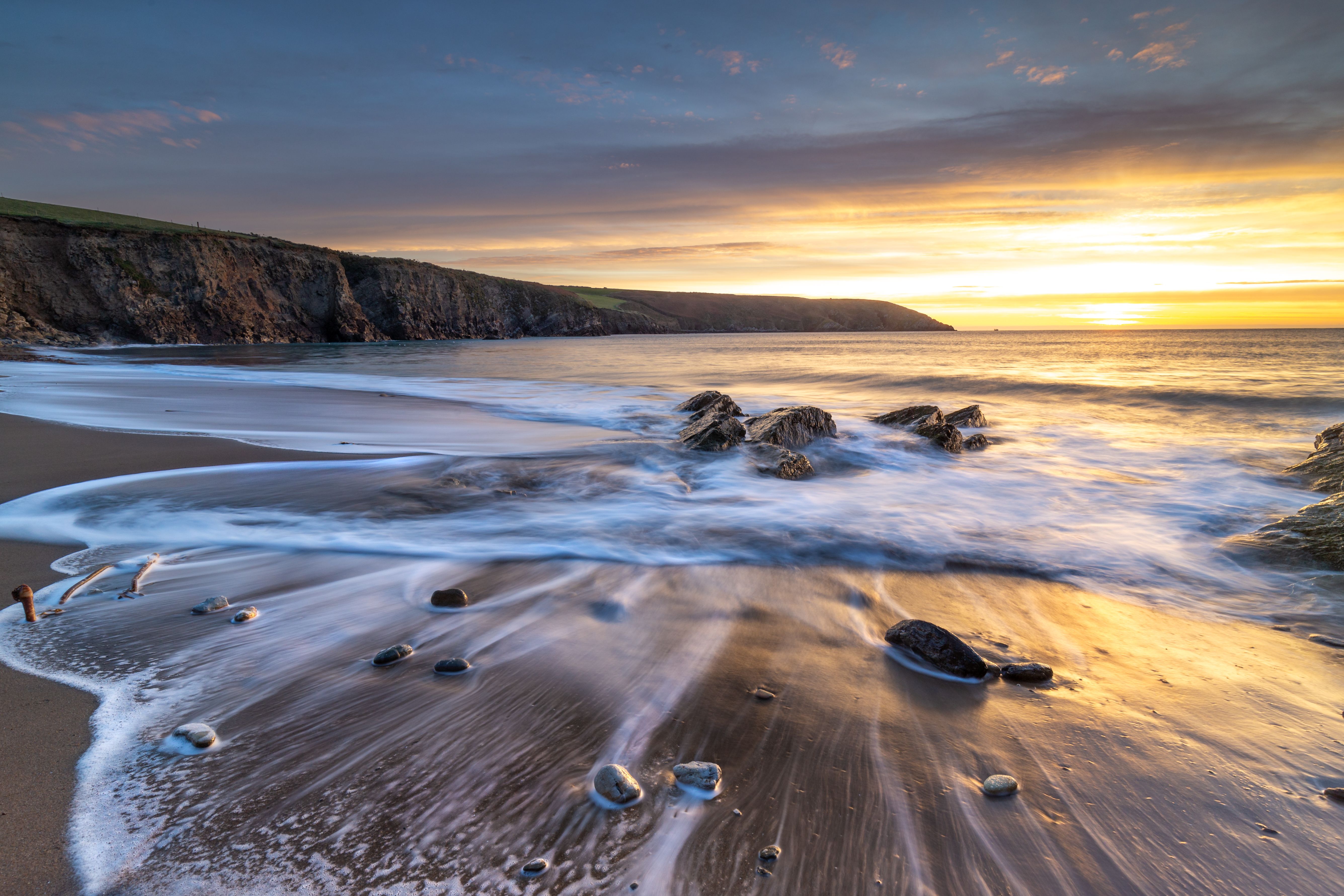
Newgrange is one of the most significant prehistoric monuments in the world: a passage tomb built around 3200 BC on a ridge above the River Boyne in County Meath. The monument's engineering is extraordinary: the entrance passage is aligned with such precision that at dawn on the winter solstice, a narrow shaft of sunlight enters through a specially constructed roof box and illuminates the burial chamber deep within the mound for approximately seventeen minutes.
Entry to the monument is by guided tour only, departing from the Brú na Bóinne Visitor Centre, and tickets must be booked online in advance.
The wider Boyne Valley, a UNESCO World Heritage Site, also contains the passage tombs of Knowth and Dowth, the Hill of Tara (the ancient seat of the High Kings of Ireland), and the Battle of the Boyne site, where the future of the British Isles was decided in a single afternoon in 1690. Allow at least a full day to do it justice.
The Rock of Cashel rises abruptly from the flat farmland of County Tipperary like something from a medieval illustration — a limestone outcrop crowned with a 12th-century round tower, the ruins of a Romanesque cathedral, and the magnificent Cormac's Chapel, the finest piece of Romanesque architecture in Ireland. The site was the seat of the Kings of Munster for centuries before it was handed to the church in 1101, and its ruins are among the most impressive and evocative in the country.
Visit early in the morning when the bus tours from Dublin have not yet arrived. Alternatively, the town of Cashel itself has several excellent traditional pubs and restaurants that repay an overnight stay.
Kilkenny is Ireland's finest medieval city, a walkable historic core of Norman castle, Gothic cathedral, medieval alleyways, and more pubs per capita than almost anywhere in the country. Kilkenny Castle, rebuilt and extended over seven centuries on a bend of the River Nore, now houses an excellent collection of Irish art and regularly hosts major cultural events.
The cathedral of St Canice, with its 9th-century round tower that can be climbed for panoramic views over the city, is one of the most complete examples of Irish Gothic architecture.
The Kilkenny Design Centre, in the castle's stable yard, is the best single shop for high-quality Irish craft and design in the country. The city's restaurant and craft beer scene has developed rapidly in recent years, making it an excellent base for a few days in the Ancient East.
The Wicklow Mountains, extending south from Dublin through Counties Wicklow and Carlow, offer walking of genuine quality within an hour of the capital. The Glendalough valley, with its two glacial lakes, Early Christian monastic city, and network of marked trails, is the most popular destination, but the surrounding upland plateau of Lugnaquilla, at 925 metres the highest point in the province of Leinster, offers solitary ridge walking that few visitors discover.
The Mountain Bike Trail Centre at Ballinastoe in the Wicklow uplands is one of Ireland's best, with trails ranging from introductory to expert technical descents through the State forest.
Jerpoint Abbey in County Kilkenny, founded by Cistercian monks in the 12th century, preserves one of the finest collections of medieval carved stonework in Ireland, a cloister arcade of extraordinary inventiveness, with figures of knights, bishops, and mythological creatures that retain traces of their original paint.
The site receives a fraction of the visitors of Newgrange or the Rock of Cashel, and its quiet, unkempt meadow setting makes it one of the most atmospheric in Ireland.
The Kilkenny Arts Festival in August is one of Ireland's most distinguished cultural events, a ten-day programme of classical music, theatre, visual art, and literature that uses the city's medieval buildings, castle, cathedral, and public spaces as venues in a way that feels genuinely integrated rather than merely imposed.
The Wexford Opera Festival in October and November is one of Europe's leading opera festivals, renowned for staging rare and neglected works with world-class casts in an intimate 770-seat theatre.
The Cooley and Mourne Mountains straddling the border between the Republic and Northern Ireland are among the least visited uplands on the island, despite offering some of its finest coastal mountain scenery.
The Mourne Wall Walk, a 35km circuit following a 19th-century dry-stone wall across fifteen of the highest Mourne summits, is one of Ireland's great hill-walking challenges, entirely unknown to most visitors who come no further north than Dublin or Kilkenny.
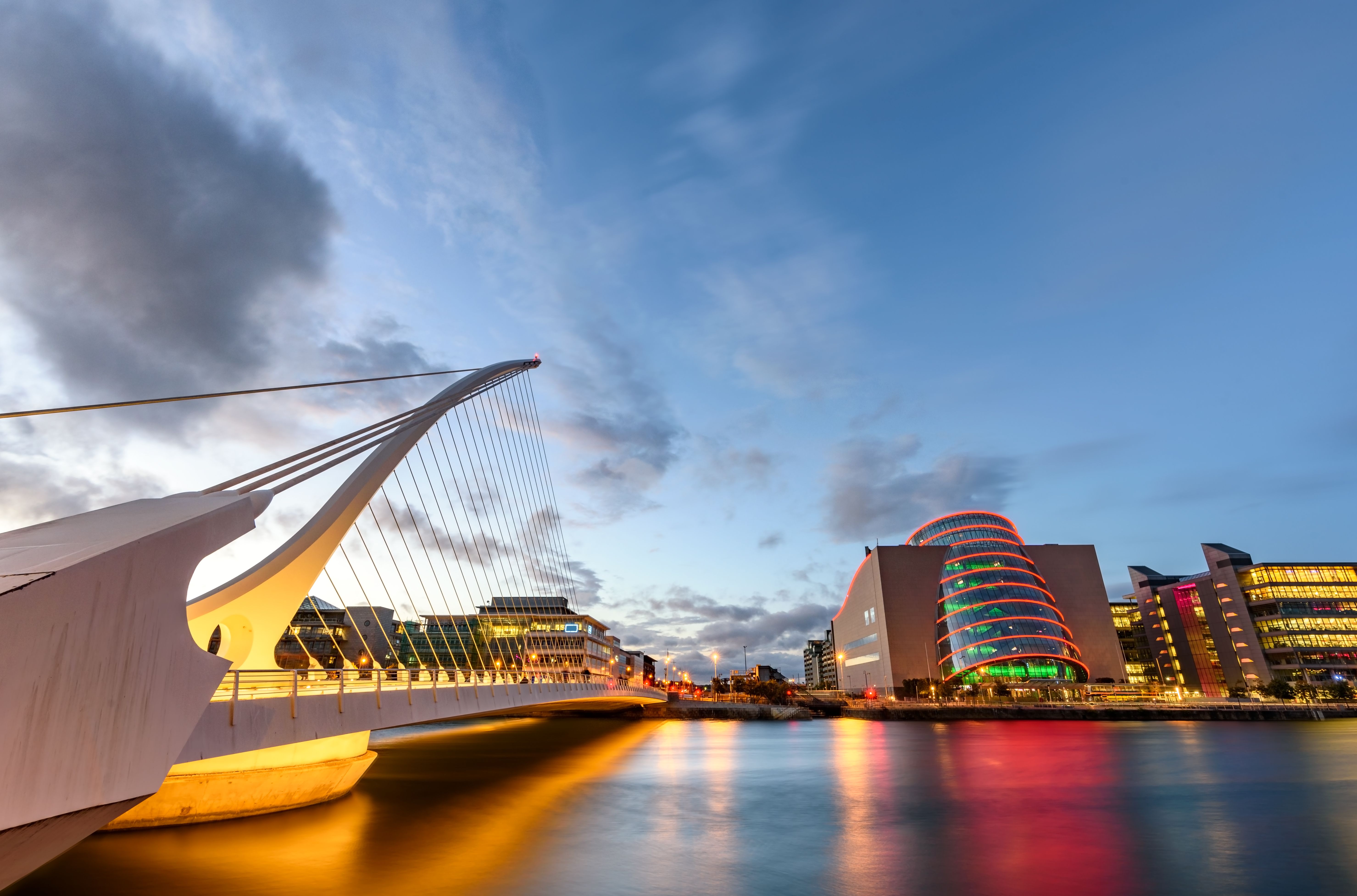
Irish food culture has transformed in the past two decades, turning a country once gently mocked for its cuisine into one of Europe's most exciting food destinations.
The foundations were always there: exceptional dairy produce, world-class shellfish and seafood from the Atlantic coast, heritage beef and lamb, and a farmhouse cheese tradition that now produces dozens of internationally recognised varieties.
What has changed is the confidence with which Irish chefs and producers now present and celebrate these ingredients, and the emergence of a genuinely distinctive Irish food identity that is neither imitative of British nor French traditions.
Dublin's food scene has developed rapidly and now offers restaurants of genuine international quality at every price point. The city's covered food markets, especially the one at Dún Laoghaire, offer an excellent introduction to Irish artisan produce.
Classic Dublin dishes include coddle, a slow-cooked stew of sausages, rashers, and potatoes that is a genuine working-class staple, and the full Irish breakfast, which differs from its English counterpart in the addition of white and black pudding made to regional recipes, and soda bread in place of toast.
The Wicklow and Meath hinterland supplies Dublin with some of the finest beef, lamb, and vegetables in Ireland, and the farmers' markets of Blessington and Malahide showcase the breadth of what is produced within an hour of the capital.
Craft brewing has expanded dramatically in Dublin in recent years, with Enniskerry, Wicklow, and the Liberties neighbourhood all producing beers that rival the city's famous Guinness heritage.
The west coast of Ireland produces some of the finest shellfish in Europe. Galway Bay oysters, grown in the cold, clear waters off Clarinbridge and Mweenish Island, are harvested from September and at their finest through the winter months. Connemara smoked salmon, cured over oak and turf smoke, is a regional speciality with a distinctive sweetness that reflects the purity of the rivers from which the fish are sourced.
Seafood chowder, served thick with Atlantic prawns, smoked fish, and cream in pubs from Kinsale to Donegal, is the definitive dish of the Wild Atlantic Way. In the Irish-speaking Connemara coast, the older traditions of seaweed harvesting and salted fish have been revived by a new generation of producers, and seaweed butter, seaweed bread, and sea-vegetable salads now appear on menus across the region.
Kilkenny and the Ancient East have become the heartland of Ireland's farmhouse cheese renaissance. The region produces Knockanore, Cashel Blue — a creamy, complex blue cheese that is Ireland's most internationally recognised — and St Tola goat's cheese from Clare, alongside dozens of smaller-batch producers whose cheeses appear on the menus of the region's best restaurants.
The River Nore valley produces some of Ireland's finest apple orchards, and the craft cider tradition, largely dormant for a century, has been revived with considerable skill by producers in Tipperary and Kilkenny.
Wexford, on the south-east coast, is Ireland's strawberry country, and the county also supplies much of the country's early-season vegetables. The food market in Thomastown and the farm shops of south Kilkenny offer an insight into the quality of what is grown and raised in this corner of Ireland that few visitors take the time to discover.
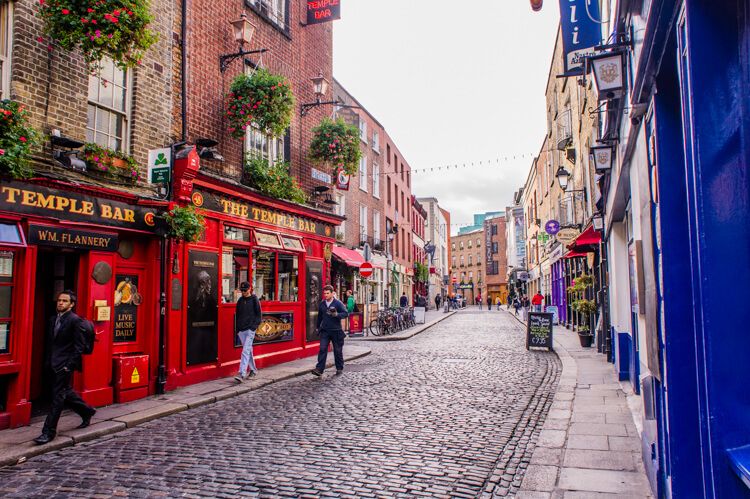
Ireland has a great public transport network connecting its main cities, but for rural areas, particularly the Wild Atlantic Way, the Ancient East's scattered monastic sites, and the peninsulas of Cork and Kerry, a car remains by far the most practical means of exploration. For visitors arriving by ferry with their own vehicle, the freedom this provides is considerable and is one of the principal advantages of the sea crossing over flying.
Driving in Ireland is generally straightforward, though several features require attention from overseas visitors. The road network ranges from smooth motorways linking Dublin to Cork, Galway, and Belfast, to single-track lanes where passing places are marked by small white posts and the etiquette of reversing to allow oncoming vehicles requires patience and good humour. Speed limits are posted in kilometres per hour throughout the Republic of Ireland (100km/h on national roads, 120km/h on motorways, 50km/h in built-up areas), while Northern Ireland uses miles per hour.
Rural roads on the peninsulas of the west and south-west can be significantly narrower than they appear on mapping apps, so please allow considerably more time than digital maps suggest. Sat-nav coverage is generally reliable in urban areas but can be inconsistent in remote parts of Connemara, Donegal, and west Cork. A physical map remains a useful supplement in these regions.
Irish Rail (Iarnród Éireann) operates intercity rail services connecting Dublin Heuston to Cork, Galway, Limerick, Waterford, Westport, and Tralee, and Dublin Connolly to Belfast and Wexford. Journey times are longer than equivalent distances elsewhere in Europe. For example, the Dublin to Cork train takes approximately 2 hours and 30 minutes, but the rolling countryside visible from the train windows certainly makes the journey worthwhile.
Bus Éireann operates the national bus network, with frequent services on intercity routes and a more limited timetable in rural areas. The private operator Aircoach offers express services between Dublin Airport and Cork, Galway, and Belfast at competitive prices. Within Dublin, the Luas tram network and the Dublin Bus system cover most of the city, and the Leap card contactless payment system simplifies travel across all modes.
Ireland has an extensive and well-maintained network of long-distance walking routes, the National Waymarked Trails, covering all four provinces. The Kerry Way (214km), the west of Ireland's finest coastal mountain walk, circles the Iveragh Peninsula through the MacGillycuddy's Reeks, Ireland's highest mountain range.
The Camino Irlandés, one of the lesser-known Camino de Santiago pilgrim routes, crosses from Dublin to Galway and is gaining popularity rapidly. Most Irish towns and villages are walkable, and the culture of the pub as a destination at the end of a day's walking gives Irish walking routes a social dimension that few other countries can match.
Ferry travel is one of the best ways to begin a holiday to Ireland, particularly if you want to bring your car and drive straight into the landscapes you've come to see. Direct Ferries lets you compare and book crossings on all major UK to Ireland routes:
Ireland is one of the most visitor-friendly countries in Europe, but there are cultural norms, practical considerations, and a few pleasurable quirks of Irish life that are worth knowing before you travel.
Driving in Ireland requires a full, valid driving licence. UK driving licences are fully valid in the Republic and in Northern Ireland. Visitors from outside the EU and UK may require an International Driving Permit.
Ireland drives on the left, as in the UK, which makes the transition straightforward for British visitors but requires adjustment for North American and continental European drivers. Road signs in the Republic are bilingual in Irish and English in Gaeltacht areas; in Connemara and Donegal, Irish may appear alone on some rural signs.
The currency in the Republic of Ireland is the Euro (€), whereas Northern Ireland uses Pounds Sterling (£). Credit and debit cards are accepted virtually everywhere, but smaller rural pubs and market stalls may be cash-only. Tipping is appreciated but not obligatory: 10–15% in restaurants is standard for good service. The tap water throughout Ireland is excellent and safe to drink.
Emergency numbers in Ireland: 999 or 112 (Republic and Northern Ireland) for police, fire, and ambulance. The Garda Síochána (Irish police) non-emergency number is 1800 666 111 in the Republic.
Yes, several ferry operators run regular crossings from UK ports to Ireland throughout the year. Routes include Holyhead to Dublin, Fishguard to Rosslare, Pembroke to Rosslare, Cairnryan to Belfast, and Liverpool to Dublin.
Crossings range from around 2 hours on Holyhead to Dublin ferry to overnight sailings of 8 hours or more. Taking your car means you have complete freedom to explore Ireland's roads, peninsulas, and coastal routes at your own pace once you arrive.
British citizens do not require a visa or passport to enter the Republic of Ireland; a valid passport or photo ID card is sufficient, as Ireland and the UK share a Common Travel Area agreement that predates both the EU and Brexit. Citizens of EU and EEA countries can also enter the Republic using a valid national identity card. Non-EU, non-UK visitors should check current visa requirements on the Irish Naturalisation and Immigration Service website before booking.
Late spring (May–June) and early autumn (September–October) offer the best combination of daylight hours, manageable weather, lighter crowds, and fair prices. Summer (July–August) is peak season and the warmest and driest period, but popular routes and attractions should be booked well in advance. Winter crossings are available year-round and can offer excellent value, though Atlantic weather can make passages rougher between November and February.
A valid UK or EU driving licence is sufficient to drive in both the Republic of Ireland and Northern Ireland. Drivers from outside the EU and UK should carry an International Driving Permit alongside their national licence. Remember that the Republic uses kilometres per hour for speed limits and Northern Ireland uses miles per hour — signs change as you cross the border. Your vehicle must be roadworthy and insured; most UK vehicle insurance policies automatically cover driving in the Republic of Ireland, but check your policy before departure.
Ireland is an outstanding family destination. The Cliffs of Moher and the Aran Islands appeal to children of almost any age. Dublin's Viking World experience and the National Museum are genuinely engaging for older children. The Ring of Kerry and Connemara's landscapes are vast natural playgrounds, while the beaches of Wexford and Donegal are among the finest and safest for swimming in northern Europe. Irish campsites are numerous and well-equipped, and the freedom of arriving by ferry with your own car gives families the flexibility that makes travel with children so much more enjoyable.
The easiest way is to use our Deal Finder to compare prices across all operators and routes in real time. We recommend booking in advance, particularly for summer and bank holiday sailings, and being flexible about departure times can significantly reduce costs. Overnight sailings on the longer routes like Liverpool to Dublin or Pembroke to Rosslare often represent excellent value when you factor in the cost of a hotel night saved, and arriving refreshed at your destination is an advantage on a driving holiday.
Ready to explore Ireland? Book your ferry to Ireland today and get ready for the trip of a lifetime.
More routes than anyone else.

Compare fares, times & routes in one place.
Change plans easily with flexi tickets.

Book e-tickets & manage trips in-app.
Live ship tracking & real-time updates.

Top-rated customer support when you need it.