Travelling with a car to Ireland
Travelling with a car to Ireland
Ireland is one of the greatest driving destinations in Europe, best known for the famous Wild Atlantic Way. Taking your own vehicle to Ireland by ferry is the most convenient way to explore the country, whether you are visiting for a long weekend break in Dublin or crossing on a motorbike for a touring holiday along the Dingle Peninsula and the Ring of Kerry.
The ferries from the UK to Ireland are provided by several ferry operators. Each offer multiple daily crossings and accept cars, caravans, motorhomes, campervans, and motorbikes onboard.
For more information also visit our page on travelling with a car on the ferry and our guide to ferry travel with a motorhome or caravan. Continue reading to find out everything you need to know to get your vehicle from the UK to Ireland by ferry.
Driving in Ireland is one of the most enjoyable cross-Channel experiences available to UK visitors. Ireland drives on the left, which means you don’t have to worry about the disorientation of adjusting to the right-hand side of the road in France or the rest of Europe.
The roads in Ireland are well-maintained, the scenery is unrivalled, and the island's relatively modest size means that almost any destination is reachable in a single day's drive from the ferry port. However, Ireland does have its own specific rules, speed limits and toll arrangements that differ from the UK in ways that are worth understanding before you travel.
The most noticeable distinction for UK drivers is that the Republic of Ireland measures speed limits in kilometres per hour (km/h) as opposed to miles per hour. Ireland's speed limit system has also undergone significant changes in 2025, with new rural road limits and urban zone reductions coming into effect. Always observe the posted signs, which are in km/h throughout the Republic. In Northern Ireland, speed limits are in miles per hour as in the rest of the UK, and the road rules are broadly the same as driving in England, Scotland, or Wales.
There are several direct ferry routes from the UK to Ireland, connecting ports in Wales, England, and Scotland with Dublin, Rosslare, Belfast, and Larne. Whether you are driving a car, travelling in a motorhome, or towing a caravan, the ferry is the only practical way to take your own vehicle to Ireland from the UK mainland.
For those heading to the Republic of Ireland, Dublin Port and Rosslare Europort are the main arrival ports. For Northern Ireland, Belfast and Larne are the main arrival ports.
There is a standard fare for cars, whereas motorhomes, campervans, and vehicles towing caravans or trailers are priced by vehicle length, which must be declared at the time of booking, including any roof boxes, bike racks, or towed units. Motorbikes travel at a reduced rate on most routes and are loaded and secured separately from cars on the vehicle deck.
The main routes and operators are:
Holyhead is the main departure port for those travelling to the Republic of Ireland, served by both Irish Ferries and Stena Line on the Holyhead to Dublin ferry.
This crossing sails up to four times per day, with a crossing time of approximately 2 hours on the Irish Ferries Dublin Swift fast catamaran and around 3 hours and 15 minutes on the conventional vessels. Both operators accept all vehicle types on this route, including cars, motorbikes, motorhomes, campervans, and vehicles towing caravans and trailers.
At the port of Holyhead, vehicle check-in takes place at the terminal building, where both Irish Ferries and Stena Line have dedicated vehicle lanes. UK Border Force checks occur on this side of the crossing before boarding. Please be aware that check-in for both operators typically closes 45 minutes to 1 hour before departure, so we recommend arriving at the port at least 90 minutes before your sailing, particularly in summer.
Motorhomes and caravans are directed to oversize vehicle lanes at check-in, where the vehicle height, length, and towing arrangement will be confirmed against your booking. Any discrepancy in declared dimensions may result in a surcharge at the port. Motorbikes are loaded first and secured in a dedicated bay by crew; riders should bring additional securing straps.
Holyhead Port can be reached from London and the south-east via the A55 North Wales Expressway from Chester, which connects to the M56 and M6, and by Avanti West Coast trains from London Euston in approximately 3 hours and 45 minutes.
South Wales has two departure ports for those travelling to Rosslare Europort in County Wexford. The Fishguard to Rosslare ferry is provided by Stena Line with a crossing time of approximately 3 hours and 30 minutes, and the Pembroke to Rosslare ferry is provided by Irish Ferries with a crossing time of approximately 4 hours.
Both routes accommodate cars, motorhomes, caravans, and motorbikes onboard. These crossings are particularly popular with motorhome and caravan owners who are visiting Cork, the Ring of Kerry, and the Wild Atlantic Way, as the arrival at Rosslare Europort drops them on Ireland's south-east coast, with the N25 west connecting directly to Cork and Waterford.
At Fishguard and Pembroke, vehicle check-in take place in dedicated vehicle lanes at the terminal building, with documentation and vehicle dimension checks carried out before boarding. Please arrive at least 90 minutes before departure to ensure sufficient time for security and check-in procedures.
Fishguard Port is located approximately 1 hour and 45 minutes from Cardiff via the A40 and 4 hours from London via the M4 and A40. Pembroke Port is approximately 15 minutes further south-west on the A4075 from the A40 near Pembroke Dock.
For travellers from northern England and Scotland, the northern Irish Sea routes provide convenient vehicle ferry crossings to Belfast and Larne in Northern Ireland. The Liverpool to Belfast ferry, provided by Stena Line on the Stena Edda and Stena Embla, accommodates all vehicle types on an overnight crossing of approximately 8 hours, with cabin accommodation available for both car and motorhome passengers.
The Cairnryan to Belfast ferry, provided by Stena Line on the Stena Superfast vessels is the quickest ferry crossing to Ireland from the UK mainland that allows cars onboard. The Cairnryan to Larne ferry, provided by P&O Ferries is the most convenient option for those travelling into Northern Ireland from Scotland or the north of England.
At Liverpool Twelve Quays terminal, vehicle check-in for the overnight Belfast sailing opens 2 hours before departure and closes 45 minutes before. Motorhomes and caravans check in at the oversize vehicle lanes.
The port is located approximately 90 minutes from Glasgow via the A77 and approximately 3 hours and 15 minutes from Manchester via the M6 and A75. Both Cairnryan ferry routes accept cars, motorbikes, motorhomes, and vehicles towing caravans.
Once you get onboard the ferry, your vehicle is parked on the car deck for the duration of the crossing and you are required to spend the journey in the passenger areas above. You cannot sleep in your motorhome or caravan on the car deck during overnight crossings.
Before leaving your vehicle, please ensure that you close all windows, secure any loose items, turn off the gas supply if travelling in a motorhome or caravan with a gas installation, and take all valuables with you. Car decks are not accessible to passengers during the crossing, apart from on the longer overnight routes with Brittany Ferries where supervised visits may be possible.
On the ferry from Holyhead to Dublin, both Irish Ferries and Stena Line operate modern vessels with a range of passenger facilities. The Irish Ferries Ulysses has seven vehicle decks accommodating up to 1,342 cars, with substantial space for motorhomes and caravans.
Motorbikes are loaded first and secured in a dedicated bay. Owners must collect their gear before ascending to the passenger areas and return to the bike deck approximately 20 minutes before arrival at Dublin to prepare for disembarkation.
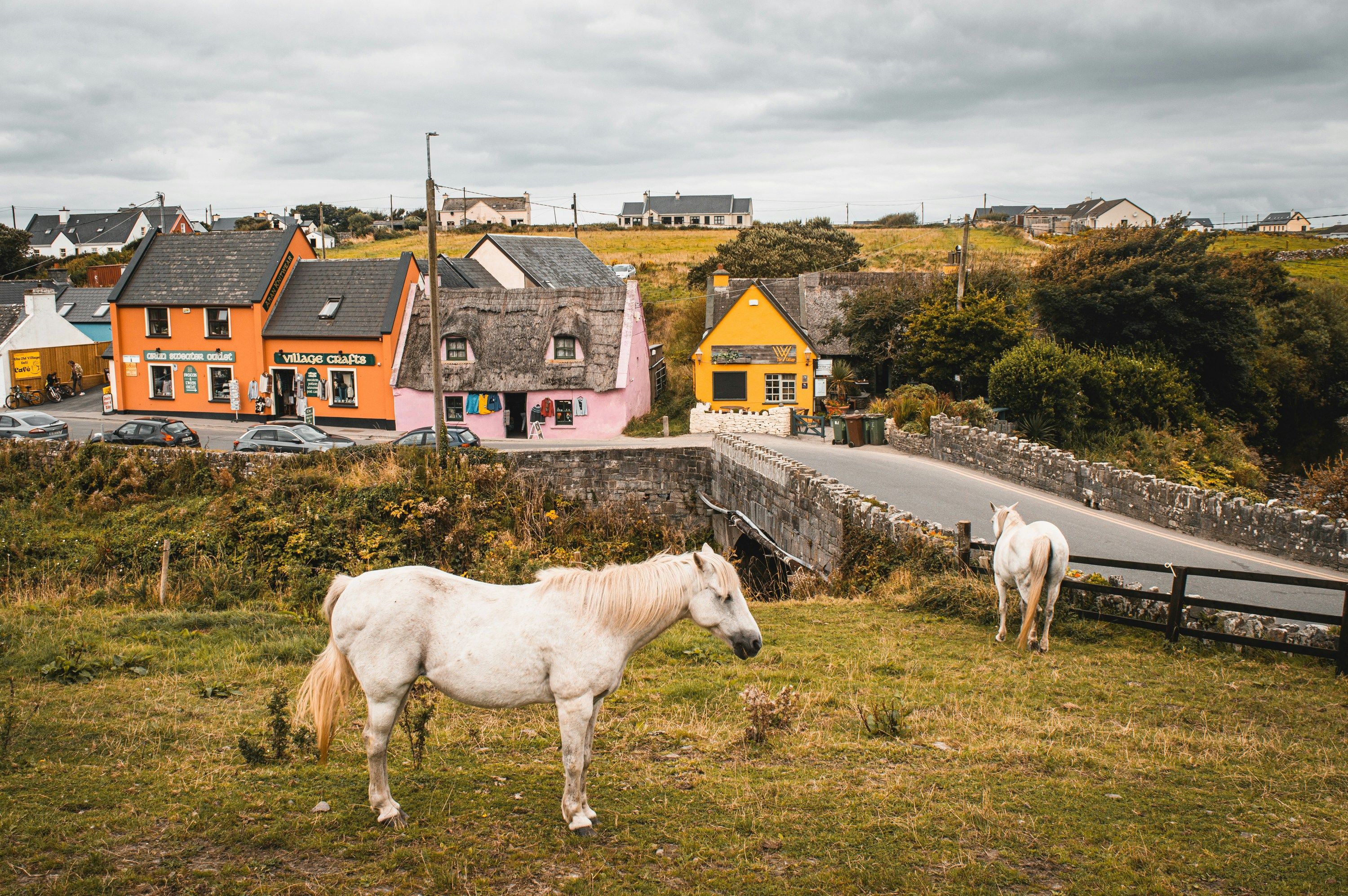
On the ferry from Fishguard to Rosslare with Stena Line, vehicles park on the car deck. There are no overnight cabins on this route.
On the Pembroke to Rosslare ferry with Irish Ferries, you do not need to stay in a cabin. Both routes are particularly popular among passengers with motorhomes and caravans as the daytime crossings allow a full driving day either side of the ferry, and the arrival at Rosslare gives immediate access to the N25 west towards Cork and the start of the southern Wild Atlantic Way.
On the Liverpool to Belfast ferry with Stena Line, cabin accommodation must be booked for all passengers, including those with motorhomes. You cannot remain in your motorhome or caravan on the car deck overnight.
On the ferry from Cairnryan to Belfast with Stena Line, no cabin is required and vehicles are parked on the car deck while passengers use the lounge and café facilities above. The same applies on the Cairnryan to Larne ferry with P&O Ferries. Both crossings are short enough that vehicles remain unattended on the car deck while passengers use the on-board café and seating areas.
On arrival in Ireland, crew announcements will direct you back to the vehicle deck approximately 20 to 30 minutes before docking. Please ensure that you return to your vehicle promptly, have your passport and vehicle documents ready to present to Irish border officials, and follow crew marshals' directions. Do not attempt to move until the marshal signals your row.
The Dublin ferry port at Alexandra Road is one of Ireland's busiest ports. After disembarking from the ferry, vehicles proceed through Irish Customs and Border Control, where passport checks and occasional customs inspections take place.
From Dublin port, the Dublin Port Tunnel links onto the M50 ring road and the M1 motorway north towards Belfast and the M7/M8 south towards Cork and Limerick, making it straightforward to leave the city without navigating through the city centre. Please be aware that the M50 uses the eFlow barrier-free tolling system, so you must register your vehicle before using the ring road or pay within 24 hours of your journey at a Pay Zone outlet or online.
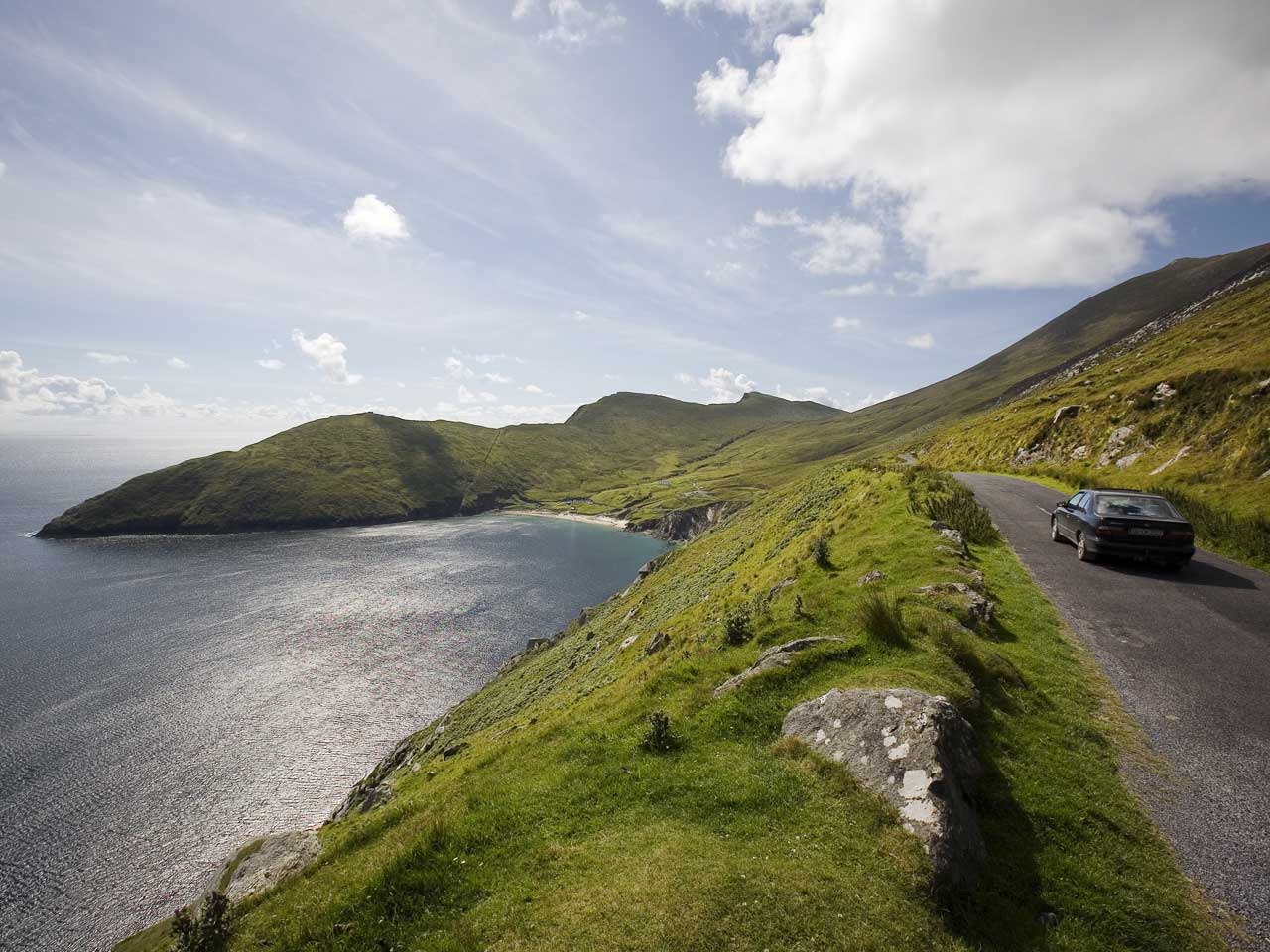
The Rosslare Europort terminal in County Wexford is one of the most popular ferry ports in Ireland. The disembarkation process at Rosslare is generally straightforward and significantly less congested than Dublin. Vehicles simply drive off the vessel and proceed through Irish Customs and Border Control.
From Rosslare, the N25 road heads west towards Wexford Town, Waterford, Cork, and the beginning of the southern part of the Wild Atlantic Way near Kinsale. The N11 heads north towards Dublin. For those with motorhomes, Rosslare Europort has a motorhome service area in the vicinity of the port, and the town of Wexford nearby has an array of supermarkets for stocking up on provisions before heading west.
At Belfast Victoria Terminal, vehicles disembark through UK Border Force and Northern Ireland Customs. From Belfast, the M1 motorway heads south-west towards Dungannon and connects to the A4 towards Enniskillen and the Republic of Ireland border at Belcoo.
At Larne, the A8 motorway connects directly to the M2 and. From both Belfast and Larne, the road network into Northern Ireland and onward to the Republic is well-signposted. Please remember that you pass from the UK into the Republic of Ireland at the border without a hard checkpoint, but the driving rules, speed limit units, and currency change immediately. Budget for euro cash before you cross if you plan to use toll roads, rural shops, or campsites in the Republic.
You will require your driving licence, your vehicle's V5C registration document, and proof of motor insurance with you in Ireland. UK-registered vehicles do not need a Green Card to drive in the Republic of Ireland. Your existing insurance policy in the UK should provide at least minimum third-party cover, but check with your insurer and carry your insurance certificate or a confirming letter. If you are towing a caravan, verify that your policy covers the towed unit.
The best route all depends on where you are travelling from in the UK and your destination in Ireland. For the fastest ferry to the Republic of Ireland, the Holyhead to Dublin ferry provided by Irish Ferries and Stena Line) takes only 2 hours on the fast catamaran service.
For those travelling to Cork, Kerry, and the south-west, the Pembroke to Rosslare ferry or the Fishguard to Rosslare ferry are closer to the southern Wild Atlantic Way.
For travellers arriving from Scotland and northern England, the Cairnryan to Larne ferry with P&O Ferries or the Cairnryan to Belfast ferry with Stena Line are the most convenient options.
Yes, all the main ferry routes to Ireland accommodate motorhomes and caravans onboard. Vehicle fares are calculated by the length of the vehicle so must always declare your dimensions accurately when booking. While very large motorhomes are accepted on ferries, they might not be suitable on certain rural roads, as some are extremely narrow and may be impassable.
On overnight crossings such as the Liverpool to Belfast ferry, you must book a cabin as you cannot sleep in your motorhome on the car deck.
Yes, all ferry routes from UK to Ireland accept motorcycles onboard. Motorbikes are loaded first and secured in a designated area of the vehicle deck. We suggest bringing additional securing straps as backup for longer crossings. The Holyhead to Dublin ferry is the most popular route for motorcyclists, who can then join the Wild Atlantic Way or the Ring of Kerry from Dublin within a morning's ride.
The Pembroke to Rosslare ferry and the Fishguard to Rosslare ferry are popular options for riders travelling directly to the south-west of Ireland.
Yes, there are a few motorways in the Republic of Ireland that charge tolls, including the M1, M4, M7, M8, M9, M11, and M17/M18. Tolls are paid at booths using cash or card. The M50 Dublin ring road is an important exception: it uses a barrier-free system called eFlow, where cameras automatically read your number plate. There are no booths and you must pay online at eflow.ie within 24 hours of completing your journey on the M50. If you plan to drive on the M50, register your vehicle number plate at eflow.ie before you travel.
No, the Republic of Ireland does not currently operate any low emission zones or require any environmental vignette or sticker for driving in the cities. Unlike France, Germany, Belgium, and many other European countries, Ireland has no such scheme in place. Vehicles of all ages are allowed to drive freely in Dublin, Cork, Galway, Limerick, and all other Irish cities without any environmental sticker or pre-registration.
More routes than anyone else.

Compare fares, times & routes in one place.
Change plans easily with flexi tickets.

Book e-tickets & manage trips in-app.
Live ship tracking & real-time updates.

Top-rated customer support when you need it.