Travelling with pets to France

Travelling with pets to France
France is one of the most pet-friendly countries in Europe. Whether you are heading for a weekend in Normandy or a long summer road trip through Brittany, taking the ferry to France is by far the easiest way to bring a pet on your travels.
The ferry routes between the UK and France are available with 4 ferry operators offering a wide range of pet accommodation options to suit every crossing length and budget. Continue reading to find out everything you need to know to get your pet from the UK to France by ferry.
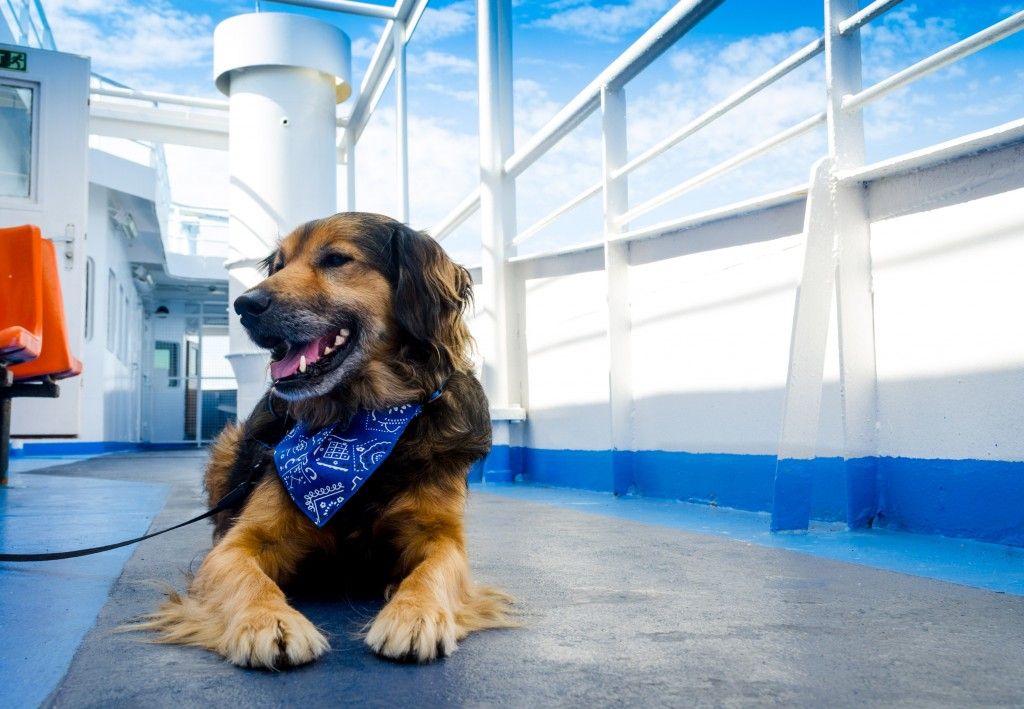
Since the UK left the European Union, the rules for travelling to France with a pet from Great Britain have changed significantly. UK-issued EU pet passports are no longer valid for travel to France. Alternatively, GB residents must obtain an Animal Health Certificate (AHC) from an Official Veterinarian prior to every trip.
The most important documents and requirements for taking a dog, cat, or ferret from Great Britain to France are as follows.
Pets travelling from Northern Ireland to France can still use an EU pet passport issued in Northern Ireland or an EU member state, as Northern Ireland remains part of the EU pet travel scheme. Pets from the Republic of Ireland travelling to France require a valid EU pet passport and an up-to-date rabies vaccination, but do not need an AHC.
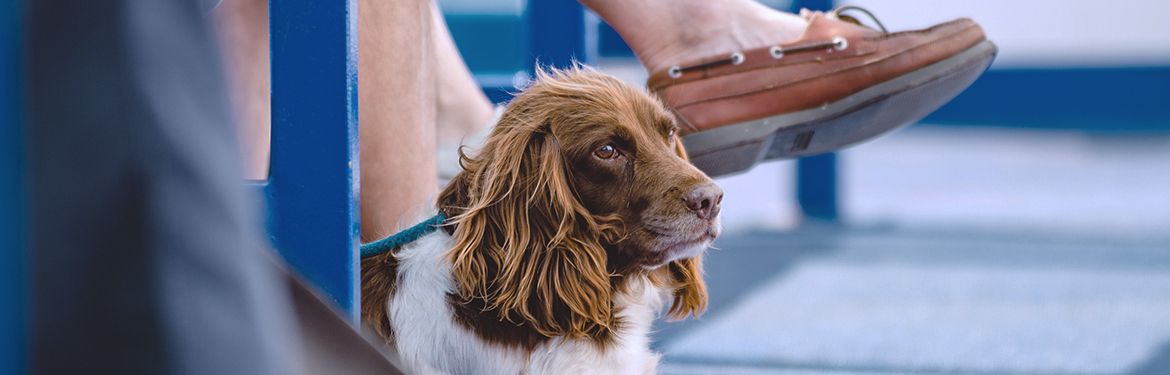
There are currently 12 direct ferry routes from England to France, along with several others departing from Ireland. From the short, fast crossings of the eastern Channel to the longer overnight sailings from the south coast ports, the routes to France span an enormous range of crossing times, departure ports, and arrival destinations. This offers you the flexibility to choose the crossing that best suits your travel itinerary, your pet's needs, and your preferred port of departure.
The main routes and operators are:
All of these routes accept pets onboard, though the facilities and procedures may differ between operators and between ships on the same route.
Dover is the busiest ferry port in the UK and the closest crossing point to France, with the Dover to Calais ferry taking approximately 90 minutes. The port is served by P&O Ferries, Irish Ferries and DFDS, all of which accept pets on their ferries from Dover to Calais.
When travelling with a pet from Dover, you must declare your animal at the time of booking and pay the applicable pet fee. Pets must remain in the owner's vehicle for the duration of the 90-minute crossing unless you have booked the P&O Pet Lounge upgrade. The P&O Pet Lounge, which is available at an additional fee of approximately £12 each way, is a dog-friendly area on board P&O's Dover to Calais vessels, with comfortable seating for owners, space for a pet bed, and an outdoor exercise deck.
At Dover Eastern Docks, vehicle check-in for passengers with pets takes place in the same lanes as standard vehicle check-in. Your AHC or EU pet passport will be checked as part of the standard pre-boarding process. P&O requires passengers with pets to complete check-in at least 90 minutes prior to departure. DFDS has a similar pet check-in process and closes its check-in desks 30 minutes prior to departure, though arriving earlier is strongly recommended.
All operators require pets to be microchipped and have a valid AHC or EU pet passport before boarding. These documents will be inspected at check-in and may even be re-inspected at the French border upon arrival at Calais Port.
The nearby Folkestone terminal serves the Eurotunnel, which also accepts pets at approximately £19 per pet each way. Pets must remain in the vehicle throughout the 35-minute tunnel crossing. If your pet gets anxious during travel, the Eurotunnel is an option worth considering alongside the Dover ferry. Both Folkestone and Dover can be reached via the M20 motorway from London in approximately 75 minutes from central London.
Newhaven, on the East Sussex coast, is the departure port for the Newhaven to Dieppe ferry, operated by DFDS with a crossing time of approximately 4 hours. Newhaven is notable as the only ferry terminal on the UK to France routes that currently allows foot passengers to travel with pets, making it the only viable option for pet owners travelling without a car.
For passengers travelling with vehicles, pets must remain in the vehicle or in the onboard kennel for the crossing, costing approximately £15 each way for pets in vehicles. Newhaven port is located approximately 10km south-east of Brighton, and can be reached in 1 hour and 15 minutes from London Victoria and by the A27 and A23 road network. At check-in, DFDS staff will inspect your pet's AHC or EU pet passport.
The western Channel ports of Portsmouth, Poole, and Plymouth are the departure points for Brittany Ferries' longer crossings to northern and western France. Sailing times range from 3 hours and 30 minutes from Poole to Cherbourg to 8 or 9 hours from Portsmouth to Saint-Malo.
These are the most comprehensive pet travel routes for those travelling to Brittany, Normandy, and western France, with the widest range of pet accommodation options available depending on the route and vessel.
At Portsmouth Continental Ferry Port, Brittany Ferries has a dedicated pet check-in area and a pre-boarding walk area near the terminal building. Brittany Ferries also requires all passengers travelling with pets to complete an online pre-travel pet check 96 hours before departure, which involves uploading a photograph of your AHC or EU pet passport for review. Failure to do so may result in delays or complications at the port.
Dogs travelling on Brittany Ferries must wear a muzzle when moving between the vehicle and a kennel or pet-friendly cabin, and when visiting the on-board exercise areas. Passengers can reach Portsmouth via the M27 and M3 motorways, and by direct trains from London Waterloo in approximately 1 hour and 30 minutes. The ferry terminal is located approximately 10 minutes' drive from Portsmouth city centre.
At Poole Harbour, Brittany Ferries provide the Poole to Cherbourg ferry. Pet procedures at Poole are exactly like Portsmouth: pre-booking required, online pet pre-check 96 hours before departure, muzzle required for movement on board.
The Poole to Cherbourg route does not currently offer kennels or pet-friendly cabins. Therefore, pets must remain in the vehicle for the duration of the sailing. Poole is accessible from London and the Midlands via the A31 and the M3/A31. Alternatively, it is easily reached in 2 hours by South Western Railway trains from London Waterloo via Bournemouth.
At Millbay Port in Plymouth, Brittany Ferries operates the Plymouth to Roscoff ferry, with the Pont-Aven ferry offering kennels as a pet accommodation option on this route.
Plymouth is the most convenient departure port for travellers arriving from the South West, Wales, and the Midlands heading to Brittany and western France. The pet check-in and documentation process at Plymouth follows the same Brittany Ferries procedures as Portsmouth. Passengers can reach Plymouth from London and the South West via the A38 and M5, or by Great Western Railway services from London Paddington.
How your pet travels on board depends upon which route and vessel you have chosen. There are three options for ferries from UK to France: your pet remains in your vehicle on the car deck, your pet is placed in a kennel on the car deck or a separate kennel area or your pet travels with you in a dedicated pet-friendly cabin.
Pets in vehicles is the most common arrangement and is available on all UK to France ferry routes. Your pet stays in your car for the duration of the sailing, which is best suited for the shorter crossings like Dover to Calais. We suggest that you leave a window slightly open for ventilation, provide fresh water in a non-spill bowl, place your pet's bed or a familiar blanket in the car, and avoid feeding your pet within two hours of boarding.
On Brittany Ferries, it is possible to visit your pet on the vehicle deck on the longer crossings, though access is typically supervised by a crew member and may be restricted during the departure and arrival phases of the crossing. In the event of cold weather, Brittany Ferries may advise against leaving pets in vehicles and may make kennels available as a safer alternative.
On the ferry from Dover to Calais with P&O Ferries, the default arrangement is that pets stay in the vehicle throughout the 90-minute sailing. Alternatively, P&O's Pet Lounge is available as an upgrade and offers a comfortable lounge area for owners and dogs to travel together, with an exercise deck, refreshments, and treats available on board. The Pet Lounge is a significant improvement on the car-deck and is particularly recommended for anxious dogs who benefit from owner company.
On DFDS's Dover to Calais service, pets remain in the vehicle during the crossing. There is no pet lounge or kennel option available on this route. Both crossings are short enough that the vehicle option is perfectly comfortable for most pets.
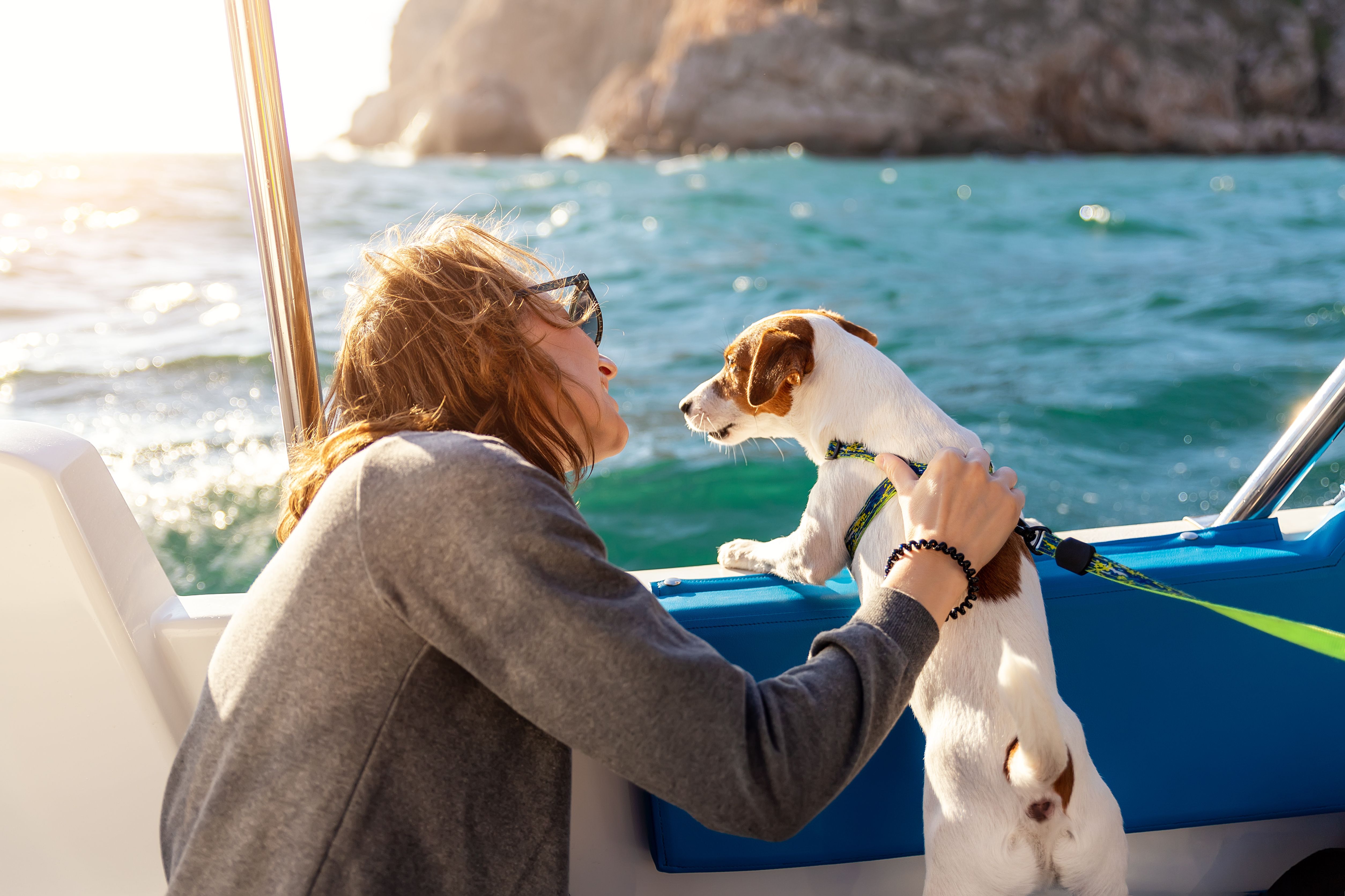
The ferry routes departing from Portsmouth, operated by Brittany Ferries, offer the most comprehensive pet accommodation options between UK and France. On the Portsmouth to Caen ferry, pet-friendly cabins are available on the Normandie Express and Mont St Michel ferries. Every pet-friendly cabin can accommodate up to two medium-sized dogs and a maximum of four people. They are exactly like standard cabins in terms of facilities, with the addition of pet-specific flooring and a dedicated exercise access arrangement.
On the Portsmouth to St Malo ferry, kennels are available on the Bretagne ferry, offering a more comfortable alternative to the vehicle for the longer overnight crossing.
On the Portsmouth to Le Havre ferry, pet accommodation may vary depending on what ship you are sailing on. Please check with Brittany Ferries at the time of booking. All pets must wear a muzzle when moving between the car deck, kennels, or cabin, and when using the exercise area. The exercise areas on Brittany Ferries vessels are located on the outer deck and are only available at specific times during the crossing.
Pet-friendly cabins and kennels can book out very quickly, especially in July, August, and during school holiday periods, so please book as far in advance as possible.
On the Newhaven to Dieppe ferry with DFDS, passengers travelling with a vehicle may keep their pet in the car or book a kennel on the vehicle deck. Foot passengers can also book a kennel for their pet on this service, making it the only current option for those travelling by public transport with a pet. This must be arranged with the operator directly.
There are no pet-friendly cabins on the Newhaven to Dieppe ferry. All pets must remain in the vehicle or kennel and are not allowed to enter the passenger areas.
Upon arrival in France, your pet's documents may be checked by a French border officer at the point of disembarkation. Please have your AHC or EU pet passport, microchip details, and vaccination record at hand to present. If your pet's documents do not meet the necessary requirements, the animal might be refused entry, quarantined, or required to return to the UK at your expense.
The Calais ferry port is one of the busiest border crossings in Europe. On arrival by ferry from Dover, vehicles are processed through French border control in the disembarkation lanes. This is where pet documentation checks take place. In practice, pet checks at Calais are not systematic for arrivals from the UK, but your AHC or EU pet passport should be immediately accessible.
Once you are through border control, Calais connects directly to the A16 towards Paris and the A26 towards Reims and the rest of France. There are no designated pet relief areas at Calais port, so walk your pet thoroughly at Dover before boarding and schedule a rest stop on the A16 service station shortly after departing the port.
The Dieppe ferry port is situated approximately 200km north-west of Paris on the Normandy coast, making it an attractive arrival point for those travelling into Normandy or central France. Disembarkation at the port of Dieppe is generally straightforward. Vehicles drive off the vessel and through border control, where you may be asked to present pet documentation.
Dieppe town centre is immediately adjacent to the port and has a small park area near the harbour where pets can be walked immediately after disembarkation. The D915 and A29 provide quick access from Dieppe into Normandy and towards Paris.
Arrivals at the Normandy and Brittany ports like Caen (Ouistreham), Saint-Malo, Le Havre, and Cherbourg follow the same procedure as most other ports in northern France.
At Caen ferry port, there is a small green area close to the terminal building where you can walk your dog immediately after disembarking. Saint-Malo's Intra-Muros and its beach areas are immediately accessible from the ferry terminal, making it one of the most convenient arrival ports for those with pets. Le Havre and Cherbourg are both large working ports with less scenic surroundings, though both connect quickly to rural France.
On Brittany Ferries vessels, passengers with pets in kennels or pet-friendly cabins will usually be told to collect their pets and return to their vehicles approximately 30 minutes prior to docking.
When returning from France to the UK with a dog, the tapeworm treatment requirement is the most time-sensitive task. A licensed vet in France must administer a tapeworm treatment and record it in your pet's AHC or on a veterinary certificate between one to five days before your arrival back in the UK.
We recommend that you book this appointment before you travel to France to avoid any stress when you arrive. If you get the treatment too early or too late, it will be deemed invalid, and UK Border Force could refuse your pet entry.
Since Brexit, UK-issued EU pet passports are no longer valid for travel from Great Britain to France. Instead, you will need an Animal Health Certificate (AHC) issued by an Official Veterinarian within 10 days of your departure date. Your pet must also be microchipped and have a rabies vaccination administered at least 21 days before departure.
For those travelling from Northern Ireland or the Republic of Ireland, an EU pet passport issued by a Northern Irish or EU vet remains valid. The AHC must be obtained for every trip to the EU from Great Britain. It is not a one-time document like the old EU pet passport.
The best route depends on where you are travelling from in the UK and your destination in France. For the shortest crossing with the least time in the car, the Dover to Calais ferry is the most convenient.
For the best pet accommodation, including pet-friendly cabins where your dog can travel with you, the Portsmouth to Caen ferry with Brittany Ferries is the best option. If you are travelling without a car, the Newhaven to Dieppe ferry with DFDS is currently the only crossing from UK to France that allows foot passengers to bring pets.
The only ferry from UK to France that currently permits foot passengers to bring pets is the Newhaven to Dieppe ferry with DFDS.
You should book pet accommodation as early as possible. Pet-friendly cabins on Brittany Ferries are the most desired pet accommodation on the UK–France routes. They frequently sell out for July and August sailings within weeks of going on sale, and the Portsmouth to Caen route in particular books up very quickly for school holiday periods.
There is slightly better availability for kennel but they also tend to sell out during the summer. If you are travelling in July, August, or any UK school holiday, book your pet accommodation as soon as possible.
Muzzle requirements depend solely on the operator you are sailing with. Brittany Ferries requires all dogs to wear a muzzle when moving between the car deck and a kennel or pet-friendly cabin, and when using the onboard exercise areas. P&O Ferries, DFDS, and Irish Ferries do not currently enforce a general muzzle requirement on their ferries from UK to France, though individual ships may have certain rules.
Yes, cats can travel on all ferries from UK to France. The same documentation requirements apply as for dogs, including a valid AHC or EU pet passport, microchip, and a rabies vaccination. Cats do not need tapeworm treatment on return to the UK. On most routes, cats must remain in the vehicle or a carrier in the kennel area. Please note that the P&O Pet Lounge is exclusively for dogs. Brittany Ferries accepts cats in vehicles and in kennels on routes where kennels are available.
France strictly forbids the import of Category 1 dogs, essentially any breeds that resemble American Staffordshire Terriers and Boerboel/Rottweiler-type dogs without a pedigree. Category 2 dogs, such as American Staffordshire Terriers, Rottweilers, and Tosas with pedigrees, plus Mastiff-type breeds, are allowed to enter the country, but are subject to strict regulations in France, including compulsory muzzling and lead requirements in public.
If your dog is of a breed that could be classified in either category, check the current French regulations carefully before travelling and obtain a veterinary certificate confirming the breed is acceptable for entry. The UK border force also enforces breed-specific restrictions under the Dangerous Dogs Act, which may affect the return journey.
On the Dover to Calais ferry, access to the vehicle deck is not normally available during the 90-minute crossing, so your pet will remain in the car without your company for the duration. On the longer crossings with Brittany Ferries, it is possible to visit your pet on the vehicle deck, though access is escorted by a crew member and is restricted during the departure and arrival phases.
The best alternative to vehicle deck visits is to book a kennel or pet-friendly cabin, which keeps your pet with you for the entire crossing. Whatever the crossing length, prepare the car thoroughly before boarding to ensure your pet is comfortable and hydrated.
Ready to explore France? Compare ferries to France and find the crossing that suits you best.
More routes than anyone else.

Compare fares, times & routes in one place.
Change plans easily with flexi tickets.

Book e-tickets & manage trips in-app.
Live ship tracking & real-time updates.

Top-rated customer support when you need it.