High-speed ferry types explained
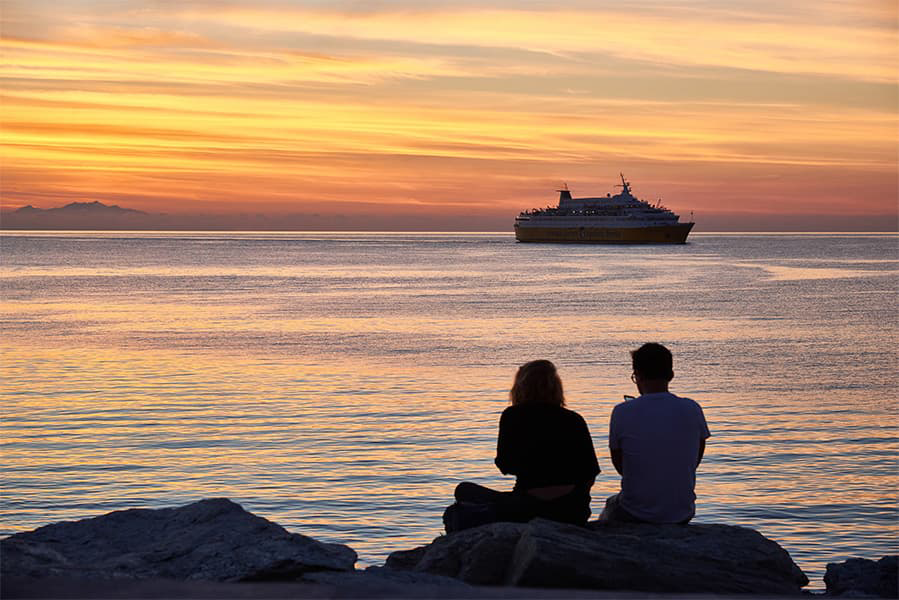
High-speed ferry types explained
A high-speed ferry can get you there in around half the time of a conventional ship. From the fast Channel Islands ferries operated by Brittany Ferries to the island-hopping catamarans of the Mediterranean, high-speed ferries come in three main designs: catamarans, trimarans and hydrofoils.
This guide explains how each type works, how they compare with conventional ferries, and where you can catch them.
A high-speed ferry is a purpose-built vessel designed to travel at around 30 to 45 knots. That's roughly twice the speed of a conventional ferry, which typically travels at 15 to 24 knots.
The speed comes from a lightweight hull and waterjets rather than traditional propellers. The formal definition is set by the International Maritime Organization's High-Speed Craft (HSC) Code, but basically, any ferry clearly faster than a conventional ship, from about 25 knots up, is treated as high-speed.
High-speed ferries are most common on short and medium-length crossings and island-hopping routes. The trade-off is that they generally carry fewer passengers or vehicles than large conventional ferries and can be more affected by rough weather, which may lead to slower journeys or cancellations.
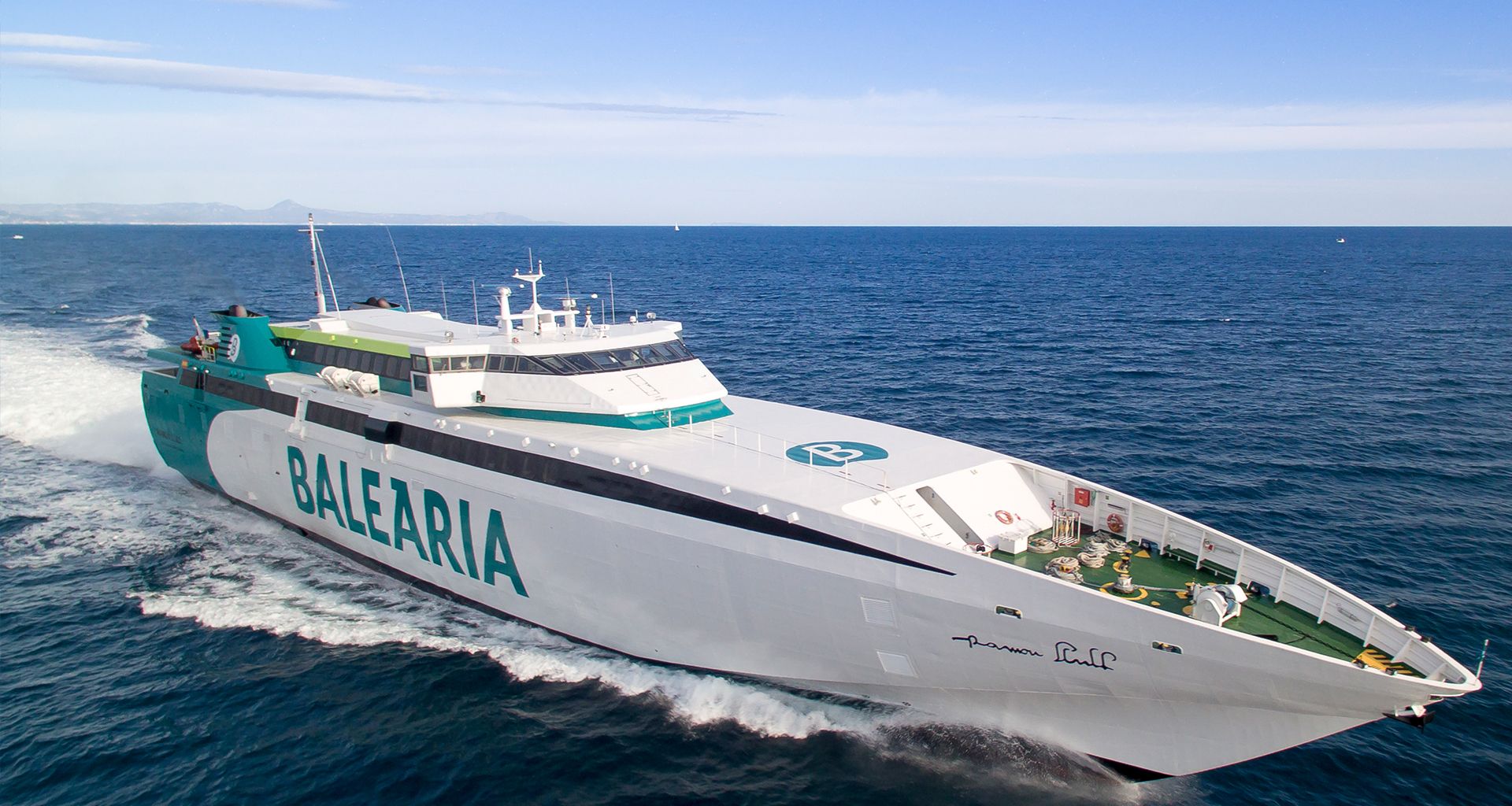
Catamarans are by far the most common type of high-speed ferry on the routes we compare. Trimarans and hydrofoils are less common and tend to be used for more specialised routes. Here’s how the three designs differ:
A catamaran has two slender, parallel hulls under a wide bridging deck, driven by waterjets. It’s the workhorse of the high-speed ferry fleet and the design most likely to take your car. Catamarans are generally stable in seas coming from the side, but can slam and pitch in a head-on swell.
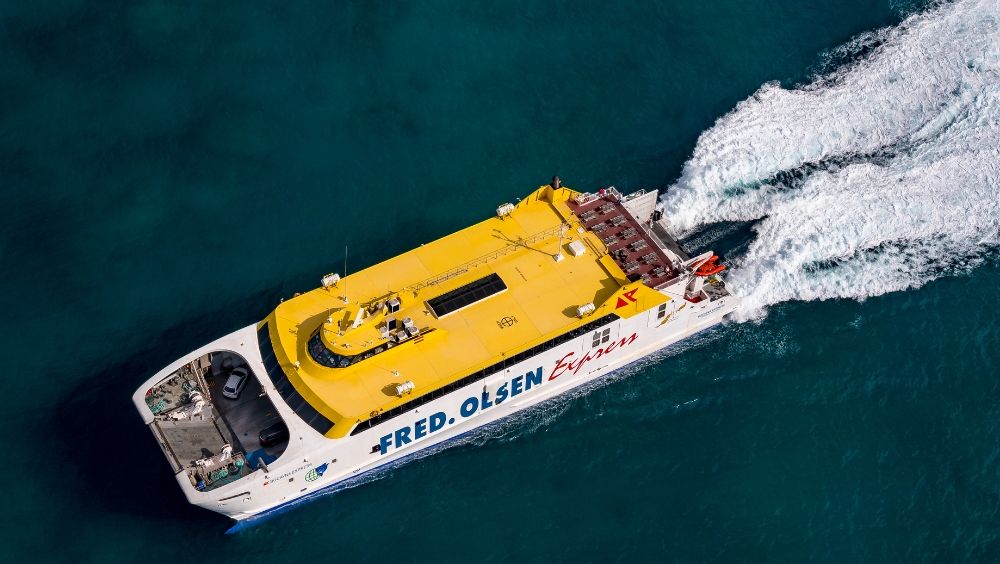
A trimaran has one long, very fine central hull flanked by two small outrigger hulls. The design helps the ship hold both its speed and a level ride in open water. Condor Liberation, operated by Brittany Ferries on its Channel Islands service, is one example. Trimarans can carry both passengers and cars.
Underwater wings lift the whole hull clear of the water as the craft speeds up. This reduces drag, allowing hydrofoils to reach speeds of up to around 45 knots. The ride is very smooth, but these are passenger-only craft that can be more affected by rough seas, leading to slower journeys or cancellations.
| Characteristic | Catamaran | Trimaran | Hydrofoil |
|---|---|---|---|
| How it goes fast | Two low-drag hulls and waterjets | Fine central hull pierces waves | Foils lift the hull clear of the water |
| Typical speed | 32–40 kn | 32–40 kn | up to ~45 kn |
| Carries vehicles | Often – cars and coaches | Yes – car deck | No – foot passengers only |
| Passenger capacity | High | High | Lower |
| Ride in a swell | Steady side-on; slams head-on | Best – stays level | Glass-smooth; slows in big swell |
| Best for | Island hops carrying cars | Exposed open water | Fast foot-passenger shuttles |
| High-speed ferry | Conventional ferry | |
|---|---|---|
| Typical speed | 30–45 kn | 15–24 kn |
| Journey time | Around half as long | The slower baseline |
| Vehicles | Cars on many catamarans and trimarans; none on hydrofoils | Full car and freight decks |
| Fares | Usually a little higher | Usually the cheaper option |
| Rough weather | More likely to slow down or cancel | Handles heavy seas better |
| Best for | Short and medium hops, day trips, island-hopping | Long crossings, overnight sailings, freight |
| Region | What to expect | Typical operators |
|---|---|---|
| Channel Islands | Fast trimaran and catamaran from Poole and Portsmouth to Jersey and Guernsey, and on to St Malo | Brittany Ferries |
| Irish Sea | High-speed catamaran between Dublin and Holyhead | Irish Ferries (Dublin Swift) |
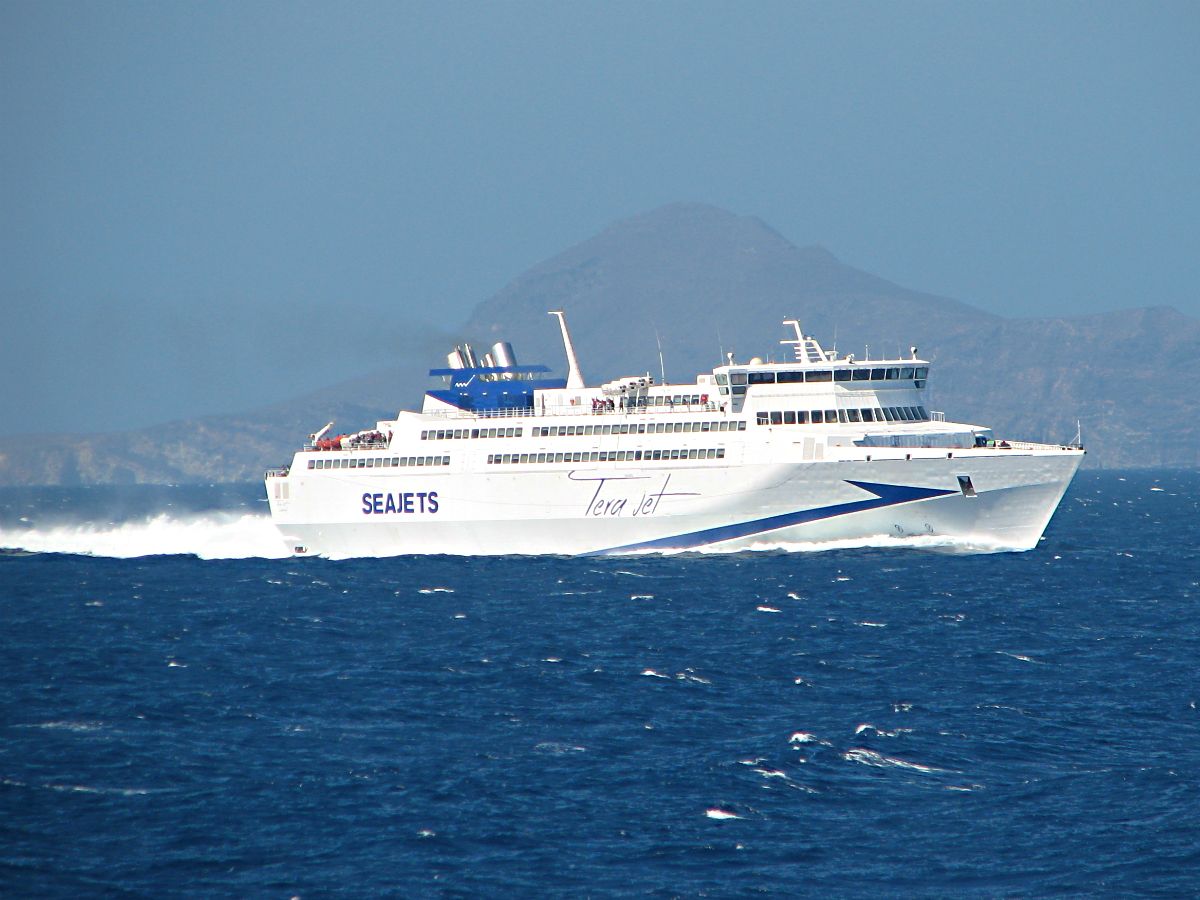
| Greek islands and Aegean | Cyclades and Dodecanese catamarans, Saronic hydrofoils | SeaJets, Blue Star Ferries, Hellenic Seaways, Aegean Flying Dolphins (hydrofoils) |
| Croatian Adriatic | Passenger catamarans linking Split and the islands | Krilo (Kapetan Luka), TP Line |
| Canary Islands | Fred Olsen trimarans between the islands | Fred Olsen Express, Naviera Armas |
| Balearics and Gibraltar | Fast ferries from mainland Spain and across to Morocco | Balearia, FRS |
Here are some examples of the high-speed operators you can book, starting with Britain's own routes. Shortest crossings and lowest one-way fares are shown, but prices vary by route, season and how far in advance you book. "Foot only" means the craft carries passengers, not vehicles.
| Operator | Craft | Route/region | Crossings | Foot fare | Car fare |
|---|---|---|---|---|---|
| Brittany Ferries | Trimaran and catamaran | Channel Islands and St Malo | from 1h | £49 | £142 |
| Irish Ferries (Dublin Swift) | Catamaran | Dublin – Holyhead | from 2h 17m | £51 | £292 |
| SeaJets | Catamaran | Greek islands | from 10 min | £6 | £20 |
| Fred Olsen Express | Trimaran | Canary Islands | from 50 min | £35 | £81 |
| Balearia | Catamaran and trimaran | Spain and Morocco | from 29 min | £22 | £64 |
| Krilo Kapetan Luka | Catamaran | Croatia | from 20 min | £4 | — foot only |
| Hellenic Seaways | Catamaran | Greek islands | from 10 min | £5 | £35 |
| FRS | Catamaran | Strait of Gibraltar | from 59 min | £35 | £178 |
| Aegean Flying Dolphins | Hydrofoil | Greek islands (Saronic) | from 10 min | £8 | — foot only |
*Prices are median. Crossing times and fares shown are indicative and can vary by route, season, operator and booking date.
Yes. Brittany Ferries (which took over Condor Ferries) operates fast ferry services from Poole and Portsmouth to Jersey and Guernsey, and on to St Malo, including the trimaran Condor Liberation. On the Irish Sea, Irish Ferries' Dublin Swift is a high-speed catamaran between Dublin and Holyhead. Most other UK crossings use conventional ferries.
The fast cross-Channel services of the past have been retired, so today's Dover to Calais and Dover to Dunkirk crossings run on conventional ferries. For a quick sea crossing from Britain, the Channel Islands and the Irish Sea are your high-speed options.
Some do, some don't. Larger high-speed catamarans and trimarans, including the Channel Islands ships, have vehicle decks and take cars, often caravans and coaches too. Hydrofoils are foot-passenger only. Always check the vehicle options for your route before booking.
A hydrofoil usually has the higher top speed, up to around 45 knots once it lifts onto its foils, against roughly 32 to 40 knots for a fast catamaran. On your actual journey, the number of stops and the distance matter more than the hull's headline speed.
They're built to strict safety standards, but because they're lighter and ride higher than conventional ships, operators are more likely to slow them down or cancel a sailing when the sea is rough. On exposed routes such as the Channel Islands, it's worth allowing a little flexibility in the windier months.
Planning a fast-ferry trip? These guides go a little deeper:
Ready to book? Compare high-speed and conventional ferry routes on Direct Ferries to find sailing times, operators and live prices for your journey.
More routes than anyone else.

Compare fares, times & routes in one place.
Change plans easily with flexi tickets.

Book e-tickets & manage trips in-app.
Live ship tracking & real-time updates.

Top-rated customer support when you need it.