Gap Year
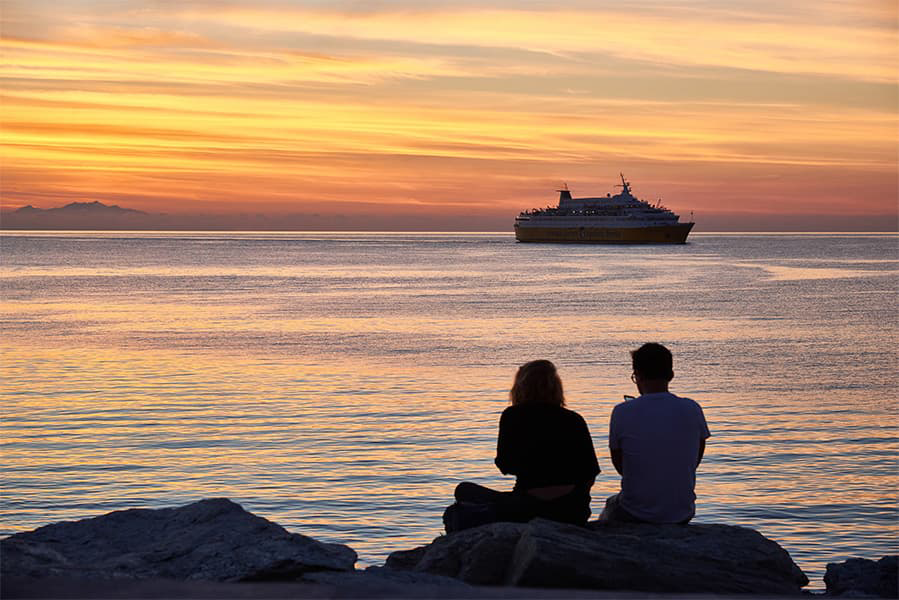
Gap Year
Planning a gap year and wondering how to make the most of it? Whether you're mapping out an epic Europe tour, backpacking through Southeast Asia, or island-hopping across the Pacific, ferry travel is one of the most useful tools in a gap-year traveller's kit. Read on to discover how to make the most of ferry travel during your gap year, wherever in the world your adventure takes you.
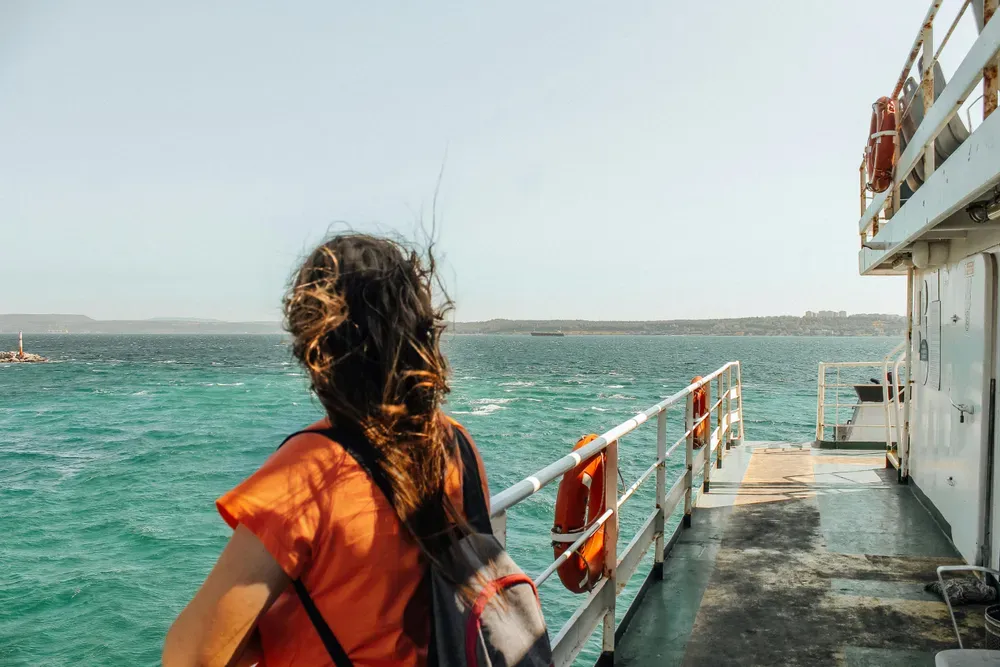
So, what exactly is a gap year? It's a period of time, typically between six months and a year, taken away from formal education or work to travel, volunteer, gain new skills, or simply see more of the world. Most commonly taken between school and university, or after graduating and before starting a career, a gap year gives you the freedom to explore on your own terms and at your own pace.
As with anything, there are pros and cons to weigh up. On the plus side, taking a gap year can broaden your horizons, build independence and confidence, expose you to new cultures and ways of thinking, and give you life experiences no classroom can offer.
Plenty of employers and universities also view gap year experience favourably. On the other hand, the downsides include the cost of travel, the challenge of staying motivated, and the need for careful budgeting and planning. Whatever your situation, getting the logistics right — including how you travel between destinations — can make a huge difference to both your experience and your budget.
One of the most common misconceptions about taking a gap year is that you need to plan everything in advance. In reality, most gap-year travellers combine a loose overarching itinerary with plenty of flexibility to change plans as they go. Here are some of the most popular ways people structure their gap-year travels:
For first-time travellers, or those who prefer more structure, organised gap year programmes are a popular starting point. Companies like Contiki, G Adventures, and Intrepid Travel offer guided tours across Europe, Southeast Asia, South America, and beyond — often spanning several weeks and covering multiple countries. These tours typically handle transport, accommodation, and many activities, taking the stress out of logistics while still leaving plenty of room to explore independently.
The beauty of these programmes is that you can use them as a springboard. Many gap-year travellers join an organised tour to get their bearings in a new region, then extend the trip independently afterwards — adding extra countries, revisiting favourite places, or veering off the beaten track entirely. This is where knowing your local transport options, including ferries, becomes invaluable.
Independent backpacking is perhaps the most classic gap-year approach. With little more than a backpack, a rough itinerary, and a travel budget, independent gap-year travellers make their way between destinations using a mix of buses, trains, overnight coaches, and ferries.
Buses and trains are often the backbone of overland travel — affordable, widely available, and a great way to meet other travellers — but ferries become essential the moment your route crosses water, hops between islands, or follows a coastline that's inaccessible any other way.
Many gap-year travellers combine travel with work or volunteering — picking up seasonal jobs, teaching English, working on farms through programmes like WWOOF, or volunteering with conservation and community organisations.
These experiences often involve moving between locations within a country or region, and local ferries are frequently the most practical and affordable way to do it. In places like New Zealand, Australia, and Southeast Asia, working holiday visas make it easy to stay longer and travel more slowly — and ferries are a key part of getting around.
Europe remains one of the most popular gap-year destinations, and a classic Europe tour typically involves crossing multiple countries by train — often with an Interrail or Eurail pass — combined with buses for shorter legs and ferries wherever the land runs out.
Crossing the English Channel, sailing between Scandinavia and the Baltic states, island-hopping in Greece, or taking the ferry from Italy to Croatia are all classic components of a European gap year, and none of them require a car or a plane.
Here are some of the biggest reasons ferry travel is a gap-year traveller's secret weapon:
In many of the world's most rewarding gap-year destinations, the ferry is a necessity. If you want to reach the Thai islands, explore the Greek islands, island-hop in Indonesia, or cross between New Zealand's North and South Islands, you're taking a ferry. Full stop. No bus or train can get you there, and flying would often be more expensive and time-consuming once you factor in airport transfers. Knowing your ferry options in these regions is as fundamental as knowing your bus routes.
In destinations where flying is an option but not the only one, the ferry is often the smarter choice for gap-year travellers. Crossing the English Channel by ferry or Eurotunnel is frequently cheaper than flying once you factor in baggage fees, airport transfers, and the time cost of arriving hours early.
The same logic applies across Europe — sailing from the UK to Spain, from Italy to Greece, or from Denmark to Norway is often more affordable, more comfortable, and far more scenic than the equivalent flight. And unlike flying, you arrive in the city centre, not an airport miles outside it.
Say goodbye to strict airline weight limits, costly excess baggage fees, and long check-in queues. One of the biggest advantages of travelling by ferry on your gap year is the generous luggage allowance.
In many cases there are no strict weight restrictions, so you can pack everything you need without worrying about extra charges. This is especially helpful for gap-year travellers carrying large backpacks, camera equipment, or gear for outdoor activities.
With comfortable lounges, spacious cabins, onboard dining, and entertainment, ferries let you sit back, relax, and enjoy the journey. Unlike air travel, you're free to move around the ship, stretch your legs, meet fellow travellers, and take in spectacular scenery along the way, turning every crossing into a highlight of your gap year rather than simply a means of reaching your destination.
Overnight ferries in particular are perfect for gap-year travel, since you can travel while you sleep, wake up somewhere new, and save a night's accommodation costs in the process.
One of the most important considerations when taking a gap year is budget, and ferry travel can be a surprisingly affordable option. Foot passenger tickets are often very reasonably priced, especially if you book in advance or travel overnight to save on accommodation. Choosing a seat rather than a cabin is another great way to keep costs down — perfect for the budget-conscious gap-year traveller looking to stretch every penny as far as it will go.
Whether you're embarking on your gap year solo or travelling with friends, ferries are naturally social spaces. Solo gap-year travellers will love the communal atmosphere on board, where it's easy to meet other backpackers on the same journey, swap travel tips, and even plan your next move together.
Shared lounges, open-air decks, and onboard bars all create the kind of relaxed environment where conversations happen naturally — something you don't often get on a forty-minute flight.
For gap-year travellers who care about travelling responsibly, ferries generally have a significantly lower carbon footprint per passenger than short-haul flights. Choosing the ferry over the plane where both options are available is one of the easiest and most impactful ways to reduce the environmental cost of your gap year without compromising on your experience.
Facilities on board may include*:
*Please note that facilities may vary depending on the operator, route, and ship.
Looking for inspiration for your gap year itinerary? Here's a region-by-region guide to where ferries fit into the picture — whether they're the primary way to get around or a key part of a longer journey:
Europe is the most popular gap-year destination in the world, and for good reason. It's compact enough to cover a huge amount of ground in a few months, yet diverse enough to feel like a completely different world in every country you visit. Most gap-year travellers tackle Europe by train — Interrail and Eurail passes give you enormous flexibility — supplemented by budget buses (Flixbus is a favourite), and ferries wherever the continent's coastline and islands demand it.
Ferries are a core part of the European gap-year experience. Crossing the English Channel is one of the most common starting points for UK-based travellers heading into Europe — and the ferry from Dover to Calais or the ferry from Dover to Dunkirk is often the cheapest and most convenient option.
From there, you can sail between Scandinavia and the Baltic states, cross the Adriatic from Italy to Croatia or Greece, island-hop through the Greek archipelago, or take the ferry from Spain to Morocco for a taste of North Africa.
Key European ferry routes for gap year travellers:
Greece is one of the most popular gap-year destinations in the world — and one of the places where the ferry truly is the only way to travel. With over 200 inhabited islands spread across the Aegean and Ionian Seas, the Greek island ferry network is not only extensive but surprisingly affordable.
Gap-year travellers typically base themselves in Athens for a few days before picking up a ferry to their first island and working their way through a loose island-hopping itinerary from there. The beauty of it is that you don't need a fixed plan. With multiple daily departures on most routes in summer, you can decide that morning where you fancy going next.
Popular gap-year island-hopping routes include the Cyclades (Mykonos, Paros, Naxos, Ios, Santorini), the Dodecanese (Rhodes, Kos, Symi), and the Saronic Islands for those sticking closer to Athens. Each island group has its own character, from the party atmosphere of Ios to the dramatic volcanic scenery of Santorini and the laid-back whitewashed villages of the smaller Cycladic islands.
Popular Greek island ferry routes for gap year travellers include:
Southeast Asia is perhaps the ultimate gap-year destination — and it's also a region where ferries are as fundamental to getting around as buses and trains. Countries like Thailand and Indonesia are made up of thousands of islands, and the ferry is simply the way you move between them. There's no alternative.
Most gap-year travellers tackle Southeast Asia as part of a broader multi-country loop. The classic route typically takes in Thailand, Laos, Vietnam, Cambodia, Malaysia, and Indonesia over the course of several months, using a combination of overnight buses, trains, and short-haul ferries.
Organised tour operators like Contiki and G Adventures offer structured Southeast Asia tours covering multiple countries in one itinerary, which many gap-year travellers use as a starting point before extending independently.
In Thailand, ferries are the only way to reach the famous southern islands of Koh Samui, Ko Pha-ngan (home of the legendary Full Moon Party), Koh Tao, and the Phi Phi Islands.
In Indonesia, the sheer scale of the archipelago — over 17,000 islands — means ferries range from large, comfortable overnight vessels between major islands to small local boats between beach villages. Bali alone connects to dozens of neighbouring islands by ferry, including the Gili Islands and Lombok, making it one of the best places in the world to use ferries as your primary mode of transport.
Popular Southeast Asia ferry routes for gap year travellers include:
For gap-year travellers after something a little different, Scandinavia and the Baltic states offer dramatic fjords, vibrant cities, dense forests, and some of the world's most scenic ferry crossings. The region is exceptionally well connected by ferry — in fact, for many routes between countries, the ferry is the most affordable option, often running overnight so you save on accommodation too.
A typical Scandinavian and Baltic gap-year loop might start in Copenhagen, continue by train to Stockholm, then pick up overnight ferries to Helsinki and Tallinn before heading south through the Baltics by bus.
The ferry crossings between these cities are long-established routes with well-equipped ships, onboard restaurants, and comfortable cabins — making them a highlight rather than a chore. Budget-conscious gap-year travellers should note that Tallinn in particular is one of Europe's most affordable cities, making it a great place to extend a stay.
Popular Scandinavian ferry routes for gap year travellers include:
Italy and the wider Mediterranean are fantastic destinations for a gap year by ferry, and Italy in particular serves as a major hub for onward ferry connections across the region. From the stunning Amalfi Coast to the island of Sardinia, the ancient ruins of Sicily, and the ferry ports of Ancona and Bari that connect Italy with Croatia, Greece, and Albania, the Mediterranean ferry network is one of the most extensive in the world.
Italy is also a natural end point — or mid-point — for a European interrail trip, and adding a ferry crossing to Greece or Croatia from an Italian port is one of the most popular ways gap-year travellers extend their European adventure beyond the continent's main train network. These overnight crossings are a gap-year rite of passage in their own right: budget for a deck seat or a basic shared cabin, pack some food, and enjoy waking up in a new country.
Popular Mediterranean ferry routes for gap year travellers include:
A gap year in New Zealand is a rite of passage for many young travellers — and unlike Southeast Asia or Europe, New Zealand gap-year travel tends to be slower and more immersive. The country's working holiday visa scheme is one of the most popular in the world, and many gap-year travellers spend months here picking fruit, working in hospitality, or taking on outdoor roles, travelling between jobs by bus, campervan, or ferry.
The Cook Strait ferry from Wellington to Picton is not just the most practical way to travel between the North and South Islands — it's one of the most spectacular ferry crossings in the world, passing through the Marlborough Sounds with views few aeroplane windows could match. For gap-year travellers making their way down through the country, this crossing is simply part of the journey, and an unmissable one at that.
Popular New Zealand ferry routes for gap year travellers include:

For gap-year travellers, the ferry is one of the most rewarding and practical ways to see the world — you arrive at your destination refreshed after a relaxing journey on board, having spent your travel time productively rather than staring at the inside of an airport terminal. Whether you're just starting to think about taking a gap year or you're already mid-adventure, use our price finder to compare routes and book your next ferry crossing with Direct Ferries.
More routes than anyone else.

Compare fares, times & routes in one place.
Change plans easily with flexi tickets.

Book e-tickets & manage trips in-app.
Live ship tracking & real-time updates.

Top-rated customer support when you need it.