The Ultimate France Road Trip
Car & Road Trips
Car & Road Trips


This is no ordinary France road trip. This 17-day journey begins with the classic Dover to Calais ferry and unfolds through Normandy’s D-Day beaches, the Loire Valley’s châteaux, Bordeaux’s vineyards, the Dordogne’s hilltop villages, Provence’s lavender landscapes, the French Riviera’s coastal roads, and Burgundy’s wine country before finishing in Paris. Each leg of the route is carefully connected by scenic drives that reward both planning and spontaneity, offering the freedom to explore beyond the main stops and experience France in a way that goes far beyond a standard itinerary.
Dover is the obvious starting point for a French road trip if you're arriving from the UK. It's the closest main port to France, located just 21 miles from Calais across the Channel, and it gives the trip a sense of departure that you would otherwise miss by flying into Paris. You drive onto the ship with your own car, and drive off in another country an hour and a half later, no hire-car desk or airport shuttle required.
If this is your first European road trip, there are a few things you must consider, starting with the crossing itself. You have two real options: a ferry from Dover to Calais or the Eurotunnel from Folkestone to Calais, and which one suits you depends on budget, timing, and whether you would rather see the sea or skip it altogether.
Dover → Calais · Ferry 1.5 hours or Eurotunnel 35 minutes
The Dover Calais ferry, available with P&O Ferries, Irish Ferries and DFDS Seaways, takes around 90 minutes dock to dock, with up to 171 sailings departing every week. You stay in your car on the vehicle deck during loading, then head upstairs for the crossing itself, where you will find a cafeteria, a duty-free shop, and outdoor deck space. While it’s slower than the alternative, the views on deck more than compensate for the extra time.
The Eurotunnel is the faster option: a drive-on train that transports your car through the Channel Tunnel from a terminal just outside Folkestone to Coquelles, near Calais, in about 35 minutes. There's no walking around during the crossing — you stay with your car the entire time — but it runs in almost any weather and is a fantastic option if you’re in a rush.
For a detailed side-by-side on cost, timing, and which one actually suits your trip, the Ferry vs Eurotunnel guide breaks down the trade-offs in more depth.
Driving note
The moment you drive off the ferry or out of the Eurotunnel terminal, you're driving on the right for the first time. Give yourself a few minutes on a straight, quiet road to adjust before joining a roundabout. French roundabouts give priority to traffic already inside them, the opposite of what you're used to if you're coming from the UK. Find out more with our Driving to France from UK guide.
Calais → Étretat → Bayeux → Mont Saint-Michel · approx. 260 miles
Normandy earns its reputation as one of France's most beautiful regions before you've even left the coast. Étretat's chalk cliffs and natural arches, a short detour off the direct route, are certainly worth the stop for the view alone. From there, head towards Bayeux, home to the nearly thousand-year-old Bayeux Tapestry depicting the Norman conquest of England.
The American, British, and Canadian D-Day landing beaches — Omaha, Utah, Gold, Juno, and Sword — stretch along this coast, and the Normandy American Cemetery above Omaha Beach, with its rows of white crosses overlooking the sand, is one of the most moving places on this itinerary. Give the beaches a full day rather than rushing through them, as most visitors find they need more time than they expect.
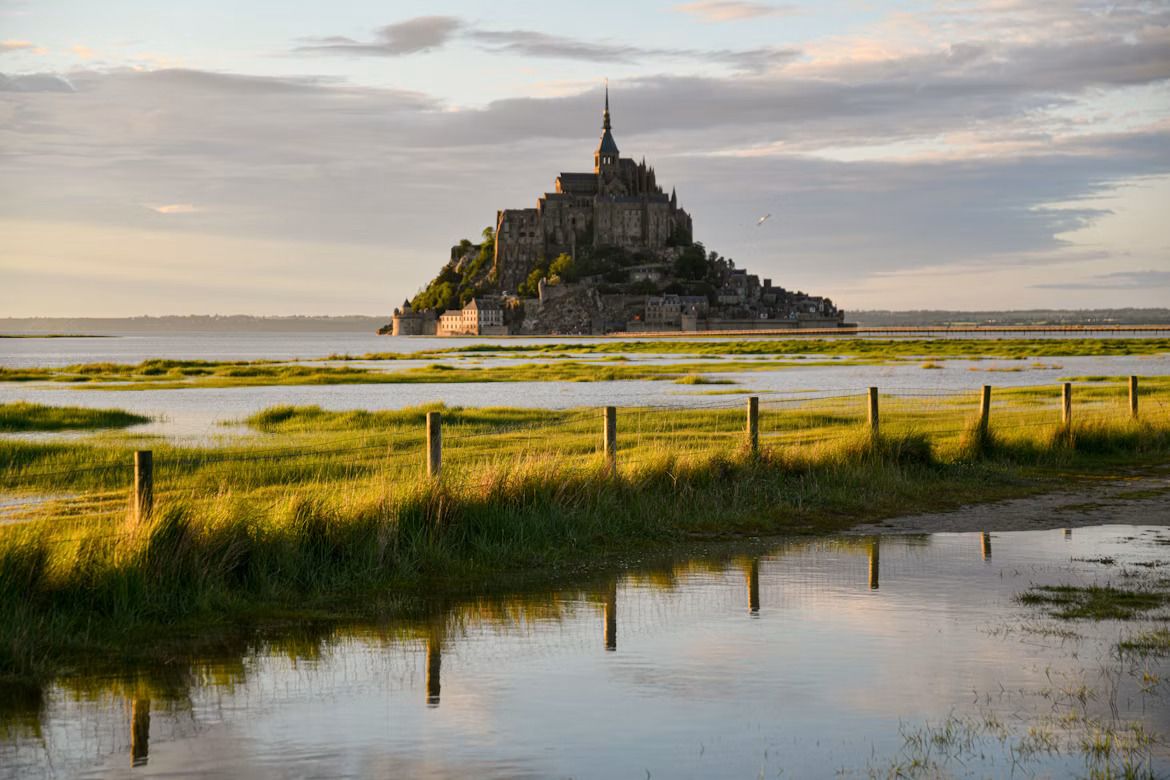
End this stretch at Mont Saint-Michel, the medieval abbey rising out of tidal flats on the Normandy-Brittany border. Park your car in the mainland car park (cars aren't allowed onto the island itself) and take the shuttle or walk along the causeway. Staying overnight nearby allows you to see the island in all its glory after the day-trippers have departed.
Alternatively, you can bypass the drive from Calais and take the ferry from Portsmouth to Le Havre with Brittany Ferries instead. However, by doing so, you will miss out on the D-Day Beach and Étretat's cliffs.
Mont Saint-Michel → Amboise/Chinon area · approx. 170 miles
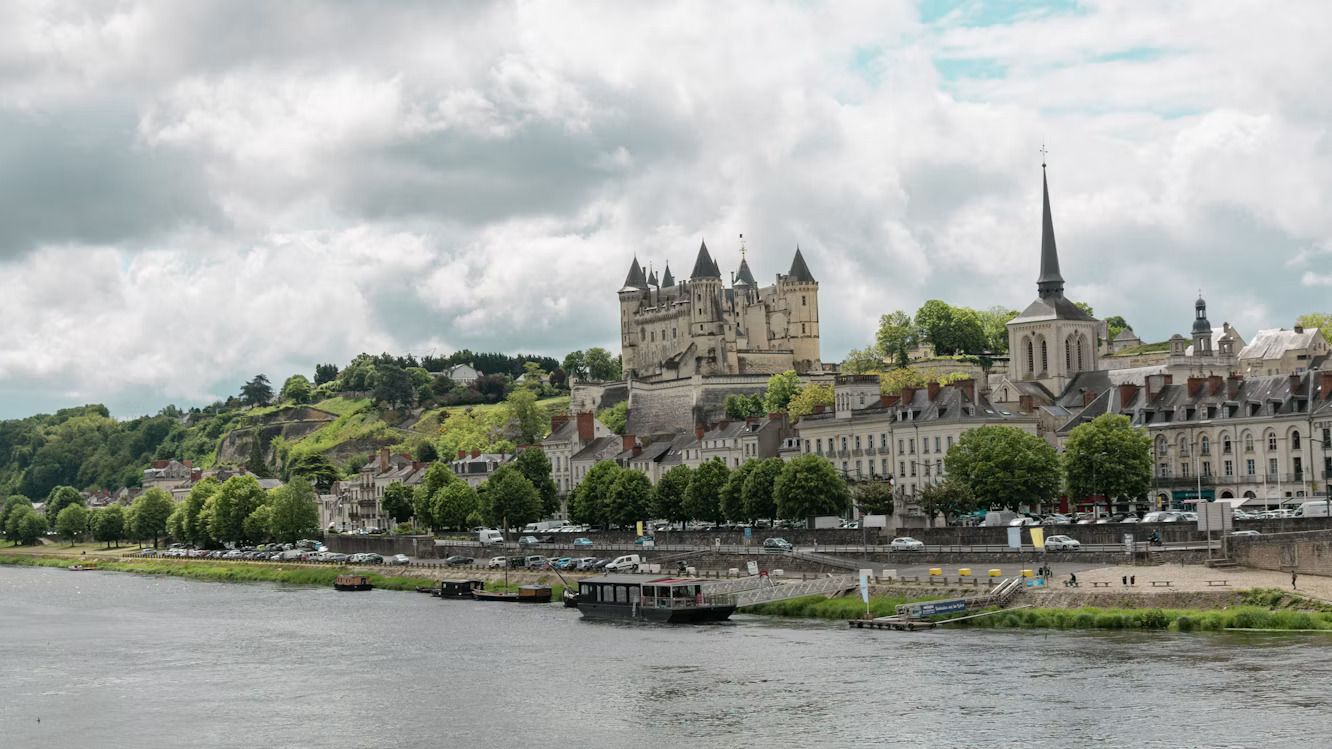
The Loire Valley is where French royalty once went to relax, and it shows — this stretch of river is dotted with more than 300 châteaux, from fortified medieval castles to Renaissance pleasure palaces. Here are some of our favourites:
We suggest staying in or near Amboise, using a free afternoon to visit a Vouvray or Chinon winery. The Loire's cool climate produces some of France's best white and sparkling wines, often at a fraction of the prices you will find in Bordeaux or Champagne.
If you are short of time, you can take the overnight ferry from Portsmouth to St Malo with Brittany Ferries and drive directly to the Loire Valley as soon as you disembark.
Loire Valley → Bordeaux · approx. 215 miles
The drive from the Loire Valley to Bordeaux is one of the most rewarding stretches of the journey, giving way from vineyard-lined river landscapes to the wide, open countryside of southwestern France. As you head south, you’ll pass through rolling farmland, quiet market towns, and pockets of forest, with opportunities to detour into lesser-known wine regions and historic villages along the way.
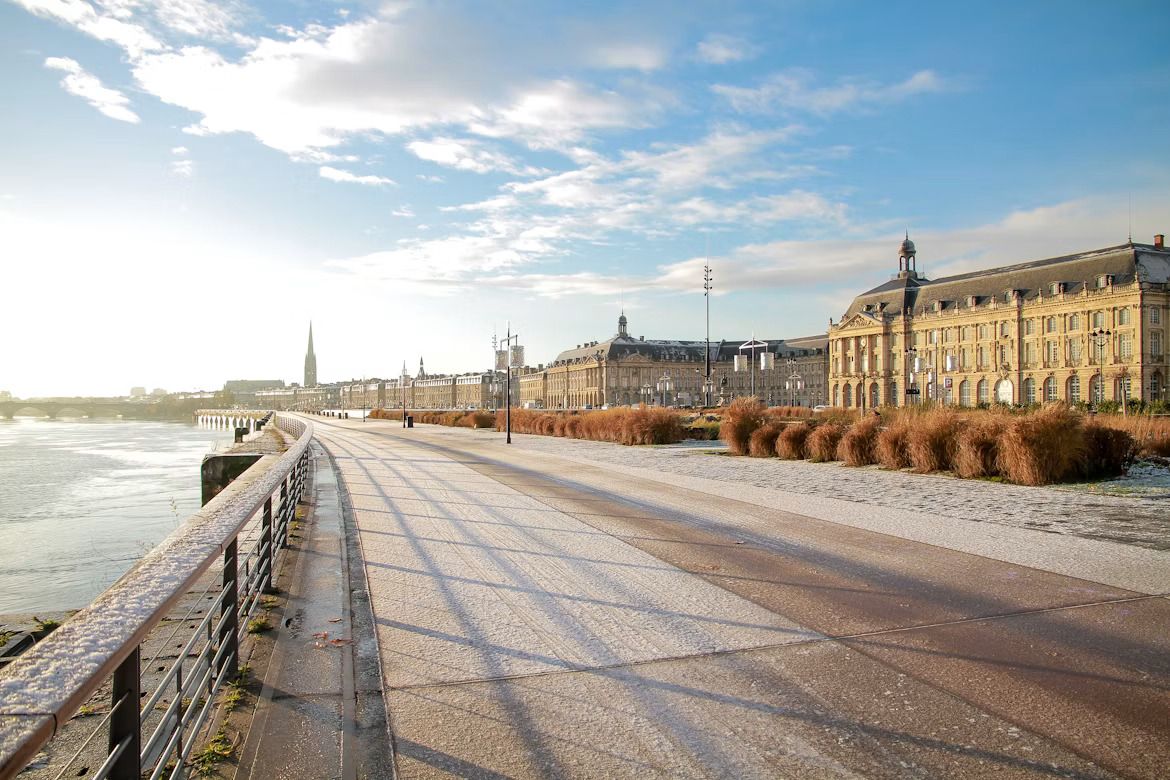
Bordeaux itself deserves at least a full day of exploration. The elegant 18th-century Place de la Bourse is one of the city’s defining landmarks, beautifully reflected in the Miroir d’Eau, a shallow water feature that creates a mirror-like effect. Along the Garonne River, the rejuvenated waterfront has been transformed from former industrial docks into a vibrant promenade, with cafés, green spaces, and walking paths that make it one of the most enjoyable urban riverfronts in France.
Beyond the city, Bordeaux’s surrounding wine regions are a popular highlight. The Médoc, Saint-Émilion, and Graves form a ring around the city, offering easy access to some of the world’s most celebrated vineyards. Exploring these areas by car gives you a chance to discover smaller, family-run estates, where visits are often more personal and flexible than at the larger, well-known châteaux that usually require bookings.
Saint-Émilion, a UNESCO-listed medieval village set on limestone hills above its vineyards, is certainly worth a visit. Its narrow streets, historic squares, and panoramic viewpoints make it the perfect destination for a leisurely afternoon. Take a guided cellar tour to gain insight into the region’s winemaking traditions. Another standout highlight is the remarkable monolithic church, carved directly into the rock beneath the village, offering a unique glimpse into the area’s heritage.
Bordeaux → Sarlat-la-Canéda · approx. 90 miles
The Dordogne leaves behind the vineyards for limestone cliffs, prehistoric caves, and some of the most photogenic villages in France. Base yourself in Sarlat-la-Canéda, a golden-stone medieval town whose Saturday market has run continuously for centuries and still draws farmers from across the region.
Nearby, the Lascaux caves provide one of the most important insights into prehistoric art. While the original cave has been closed to the public since the 1960s to preserve its fragile paintings, a highly detailed replica allows visitors to see these remarkable works, which date back around 17,000 years.
For a more relaxed way to explore the region, consider hiring a canoe along the Dordogne River. Paddling this gentle stretch of water takes you past some of the area’s most iconic scenery, including the cliffside village of La Roque-Gageac and the imposing Château de Beynac. Seen from the river, these historic sites reveal a perspective that has remained largely unchanged for centuries, offering a unique sense of how the landscape would have been experienced in medieval times.
Dordogne → Carcassonne → Avignon/Luberon · approx. 250 miles
Carcassonne’s medieval citadel is one of the most striking fortified sites in France, defined by its distinctive double-ringed walls and watchtowers. Restored in the 19th century to the fairy-tale silhouette seen today, it can feel busy during peak hours but remains well worth a visit. Arriving early in the morning or staying overnight within the walls allows you to experience the site at its most atmospheric, once the day visitors have left.
From here, continue into Provence, where the landscape and pace of travel begin to shift. In Avignon, the Palais des Papes stands as one of Europe’s largest Gothic structures, reflecting the period in the 14th century when the papacy relocated from Rome and established its seat in the city.
Beyond Avignon, the Luberon region offers some of Provence’s most memorable scenery. Hilltop villages such as Gordes, dramatically positioned on a rocky outcrop, and Roussillon, known for its rich ochre tones, are best explored at a relaxed pace. Rather than treating them as brief photo stops, take time to explore their streets and enjoy an unhurried lunch to fully appreciate the charm of the region.
Provence → Nice · approx. 140 miles
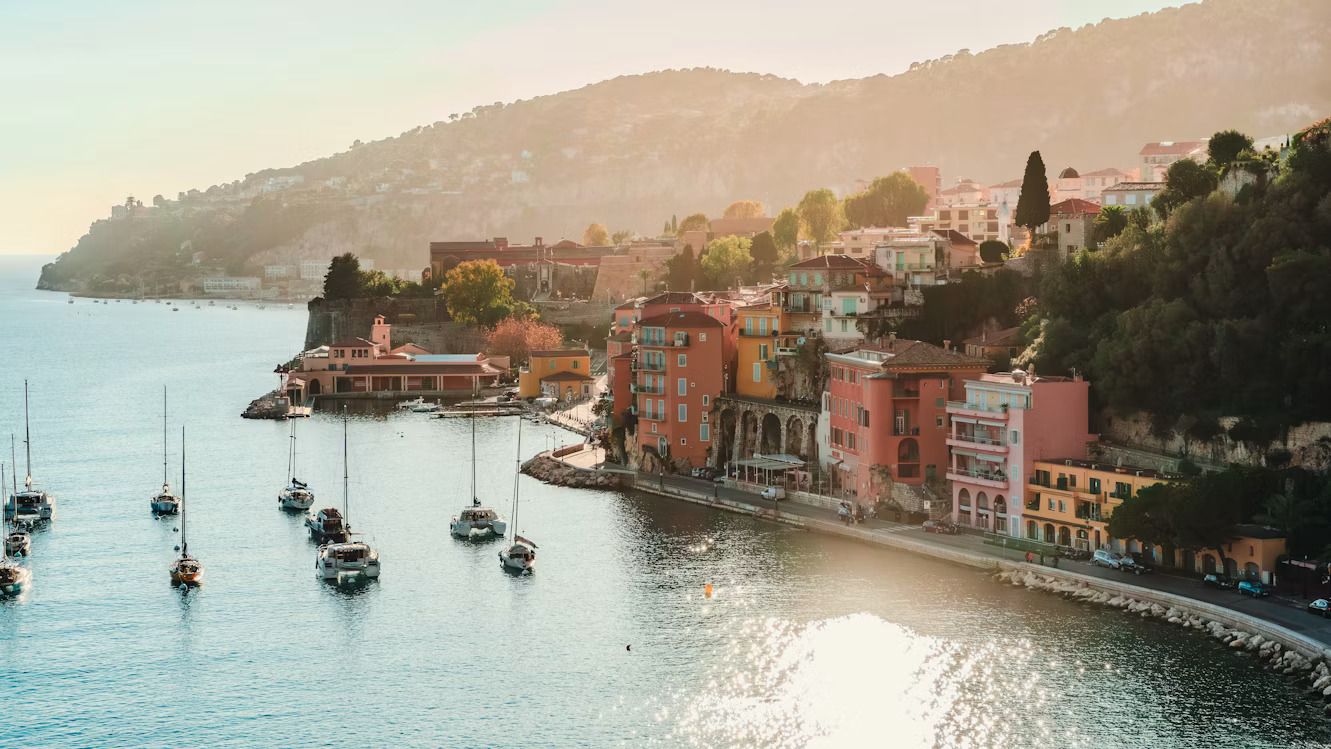
As you follow the inland roads towards the coast, the landscape opens into the dramatic Corniche routes of the French Riviera, where winding roads trace cliffs above some of the most sought-after coastline in Europe. In Nice, the iconic Promenade des Anglais stretches along the pebble beach for miles, while the old town behind it retains a distinctly local character, with pastel façades and narrow streets.
A short drive inland brings you to Èze, a medieval village dramatically perched on a rocky outcrop between Nice and Monaco. The ascent up its narrow roads is rewarded with sweeping coastal views, even if it’s a popular stop with visitors. Further along the coast, Cannes offers a more understated atmosphere than its global reputation suggests, apart from the brief intensity of the film festival period in May, when the city transforms entirely.
The Riviera is located just minutes from the border of Italy near Menton. If this trip leaves you wanting to keep driving, check out our Perfect Italy Road Trip.
Nice → Gorges du Verdon → towards Burgundy · approx. 200 miles
Before heading north, detour inland to the Gorges du Verdon. Often referred to as Europe's Grand Canyon, this limestone gorge is over 15 miles long, with the Verdon River running turquoise far below the cliffside roads. The Route des Crêtes offers some of the best viewpoints without requiring a hike, though a short walk down to Lac de Sainte-Croix for a swim is a good way to break up a long driving day before turning north towards Burgundy.
Verdon area → Beaune · approx. 230 miles
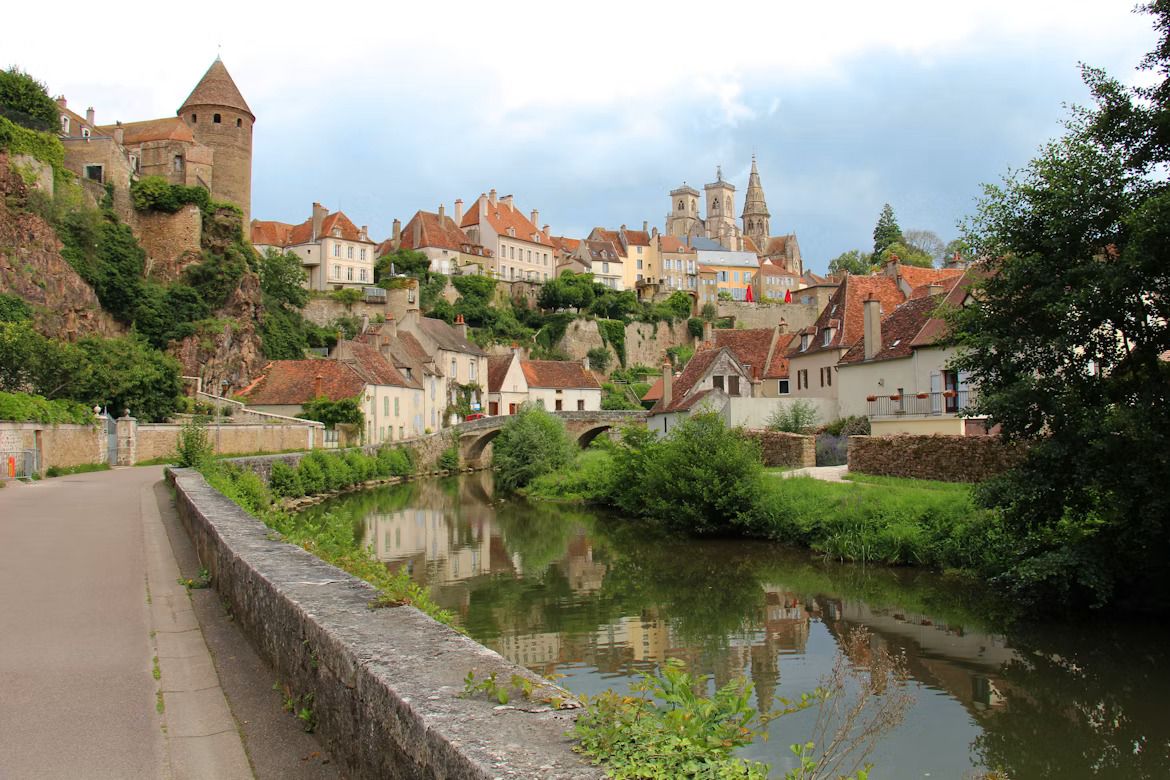
Burgundy offers a more intimate wine experience than Bordeaux, shaped by small vineyard plots known as climats rather than large estates. At its heart is the historic town of Beaune, an easily walkable base for exploring the region’s wine culture and popular attractions.
One of Beaune’s most celebrated landmarks is the Hospices de Beaune, a former medieval hospital that’s instantly recognised for its colourful glazed-tile roof. Today, it remains closely tied to the region’s wine tradition, with its annual wine auction—running since 1859—continuing to play a key role in funding the historic institution.
From Beaune, the Route des Grands Crus offers one of the most rewarding short drives in France. This scenic route links a series of renowned wine villages, including Vosne-Romanée and Gevrey-Chambertin, set among some of the most prestigious Pinot Noir vineyards in the world. Alongside the famous labels, the area is also home to many smaller producers offering excellent wines at more accessible prices.
Beaune → Paris · approx. 190 miles
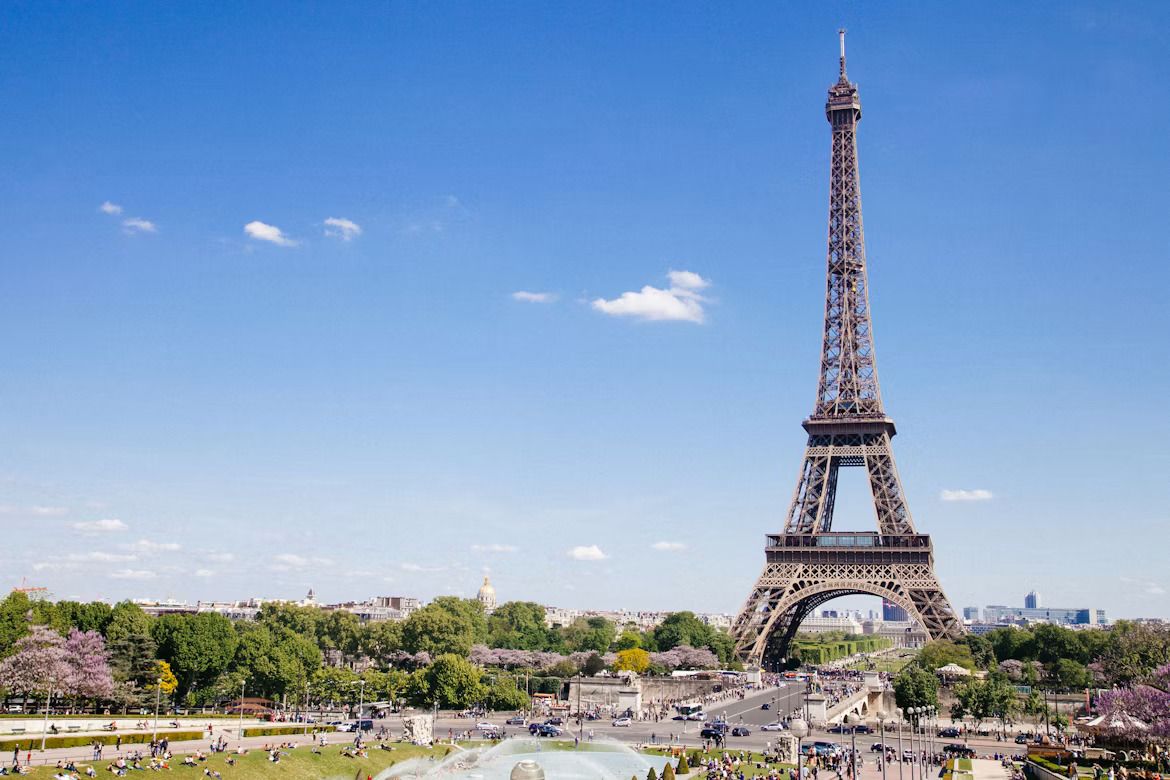
What better way to finish this road trip than Paris? After two weeks of travelling through villages, vineyards, and historic landscapes, the city’s scale and energy feel all the more striking. Those visiting for the first time will want to cover the essential landmarks—the Louvre, the Eiffel Tower, and the Notre-Dame, which reopened to visitors in late 2024 following the 2019 fire—but the real charm of Paris is often found in its neighbourhoods.
Spend time exploring the Marais, known for its independent boutiques and classic falafel spots, or wander the steep, winding streets of Montmartre above the crowds gathered at Sacré-Cœur. Along the Seine, the bouquinistes continue a centuries-old tradition, selling second-hand books, prints, and postcards from their green riverside stalls, where you can pick up a souvenir.
Important Note: Before arriving, please be aware that most of central Paris sits within a low-emission zone requiring a Crit’Air sticker for vehicles. This must be ordered online in advance and can take several weeks to arrive by post, so it’s best arranged well before your trip.
Paris → Calais → Dover · approx. 180 miles + Channel crossing
The drive from Paris back to Calais takes around three hours via the autoroute, making it a simple return journey with time to spare for an afternoon crossing back to the UK. If your schedule allows any flexibility, it’s often worth choosing a weekday sailing rather than a busy Sunday afternoon, when return traffic tends to peak.
It’s also worth remembering that you don’t need to repeat your outbound crossing method. Many travellers choose to sail one way and use the Eurotunnel the other.
Here are some useful tips and tricks that we think will help you on your trip to France:
We know driving in a foreign country can be stressful, but here are all the things you need to know before you travel so you can enjoy a more seamless journey:
Yes, and it catches many visiting drivers by surprise. French motorways drop from 130 km/h (about 80 mph) to 110 km/h (about 68 mph) in wet weather, and the same wet-weather reduction applies on other road types too. The lower limit isn't always signposted separately — it's simply the law the moment the road is wet — so treat rain as an automatic cue to ease off rather than waiting for a sign to warn you.
By law, every vehicle driving in France needs a warning triangle and a high-visibility vest on board. The vest must be within the driver's reach from the seat — stored in the boot doesn't count, since the whole point is being able to wear it before you get out of the car after a breakdown. Hire cars usually come with both already, but it's worth checking the glove box and door pockets before you drive off.
Not exactly. Standalone radar detectors are illegal in France, and apps or sat-nav units that pinpoint the exact location of a speed camera are supposed to be restricted to a more general "danger zone" alert instead. Most apps already comply with this automatically in France, but it's worth knowing the distinction exists rather than assuming the same app behaves identically to how it does at home.
No. France's legal blood alcohol limit is 0.05%, lower than the 0.08% limit in England, Wales, and most of the US, and closer to Scotland's 0.05%. In practical terms, that can mean a single glass of wine with lunch puts some drivers closer to the limit than they would expect, especially after a few days of vineyard visits built into this itinerary.
Many French town centres use "zone bleue" (blue zone) parking, which is free but time-limited and requires a cardboard or plastic parking disc on the dashboard showing your arrival time — not a ticket from a machine. These discs are cheap and sold at tabacs and supermarkets, but they're easily missed until you're already circling for a spot, so it's worth picking one up early in the trip.
Yes, all the ferry operators and Eurotunnel carry pets under the UK's Pet Travel Scheme, provided your animal has a microchip, valid rabies vaccination, and (depending on current rules) an animal health certificate or pet passport issued shortly before travel. Requirements are checked at the terminal, so build in extra time and confirm current documentation rules with your ferry or Eurotunnel operator before booking, since pet travel rules are updated more often than general passenger rules.
Plan your France road trip and book your ferry tickets today to start your journey with ease. Safe travels!