Travelling with pets

Travelling with pets
Planning to travel with your pet? Whether you're going on a short trip or a longer adventure, travelling with your furry friend requires a little extra preparation to ensure they stay safe, comfortable and happy throughout the journey. From choosing the best time to travel to making sure you've packed all the essentials, there are a few things to consider before you set off.
To help you prepare, we've put together a guide covering everything you need to know about travelling with your pet, from planning your trip to preparing for your return journey.
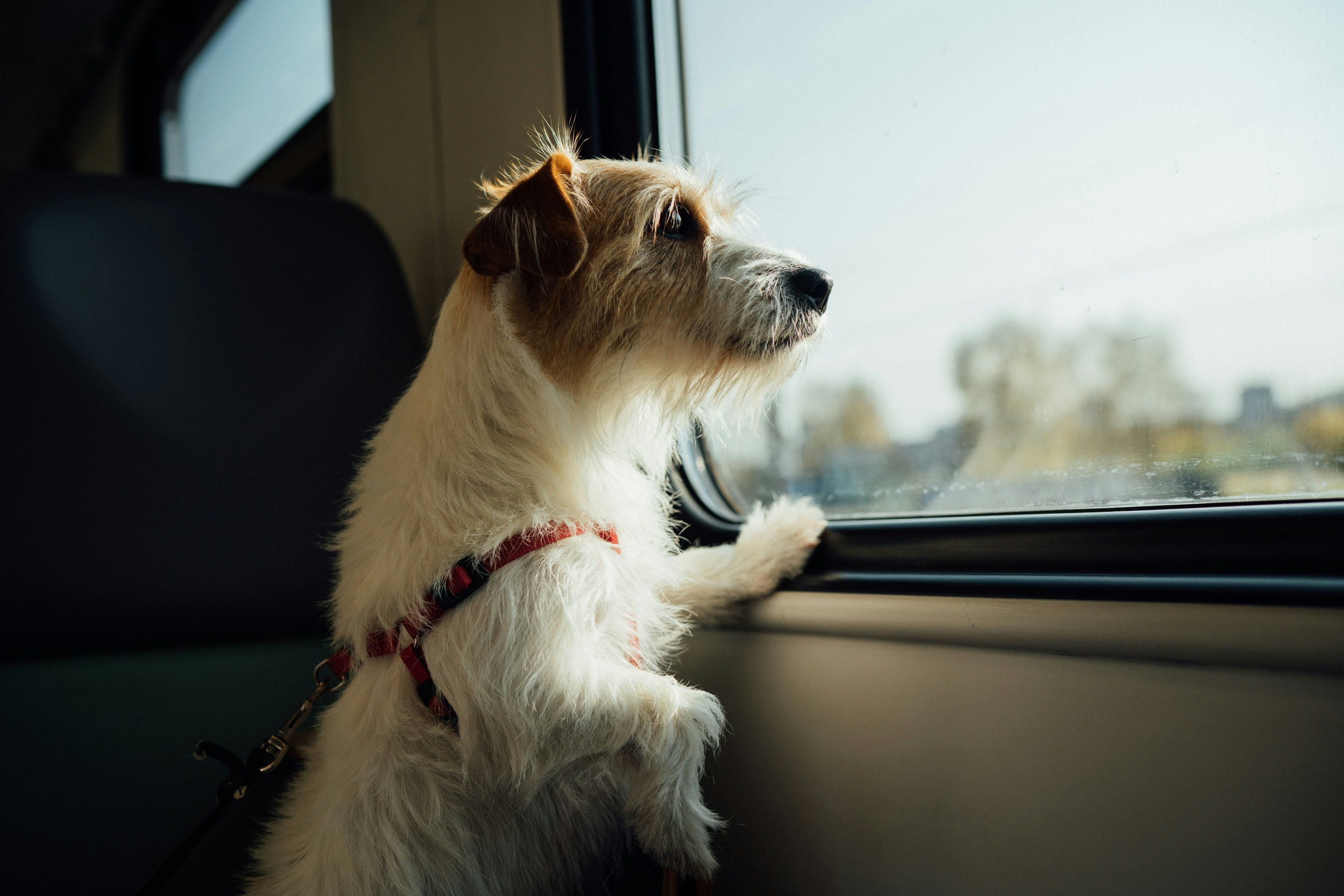
Although most of the general advice in this guide is relevant for all pet owners heading off on their travels, our guide focuses primarily on travelling with dogs and cats. Some transport providers also accept smaller pets, such as rabbits and birds, although the rules and requirements can vary. We'd always recommend checking the provider's pet policy before you book to check your pet is permitted to travel.
When you've got your furry friend in tow, there are a few extra things to consider when planning your journey, whether you're travelling for a day out or heading off on holiday. Not every destination, mode of transport or accommodation option will be suitable for pets, so doing your research before setting off is important.
Whether you're planning a day out somewhere new, a holiday in the English countryside or a sunny beach break in Spain, there are so many destinations across the world that are great for pets. However, not every destination is suitable for pets, so it's worth doing a bit of research before making plans. Here are some things to consider when choosing where to go:
When you choose to travel can make a big difference to your experience. It's worth thinking about the weather conditions in your chosen destination and how busy your journey will be.
Weather: Check the typical weather conditions at your destination for the time of year you plan to travel. Extreme hot or cold temperatures can be uncomfortable or even unsafe for pets.
Peak periods: Think about how busy your journey might be and whether your pet copes well with lots of people. Summer is generally the busiest period for holidays, whilst morning and evening commutes can make everyday journeys busier. If your pet gets anxious, consider travelling during quieter periods.
Travelling in warmer weather? For more advice, check out our guide to travelling with pets in summer.
Whether you're planning a short domestic trip or travelling internationally, preparing your pet in advance can help make the journey more comfortable and less stressful.
Whether your pet is a seasoned traveller or it's their first time travelling, there are a few things you can do to help them feel more prepared.
Make sure your pet is comfortable with how they will be travelling: Depending on how you are travelling, your pet may need to travel in a carrier, crate or harness. If your pet isn't used to this, we’d recommend introducing them well in advance of your journey. Use treats and their favourite toys to help them associate the crate or carrier with a positive experience.
Practise shorter journeys: If you’re travelling long distance, then it might be worth making a few shorter journeys with your pet to help them get used to travelling. It’s also a good way to get them used to new environments and unfamiliar noises. Always keep an eye on them during the journey to check for any signs of stress or anxiety.
Book a check-up: Before setting off, arrange a check-up at the vets to make sure your pet is fit to travel and that all their microchip details, vaccinations and any other treatments are up to date. If you’re concerned about anxiety or motion sickness, you can also discuss this with the vets and get any additional medication whilst you are there.
The documents and requirements for travelling with your pet will depend on your destination, where you're travelling from and how you are travelling. It's important to research these well in advance of your journey to make sure you have everything you need.
Below is a general guide to some of the documentation and requirements you may need.
Domestic travel:
If you're travelling within your own country, the requirements are usually simpler. However, you should still make sure you have the following:
Identification: Make sure your pet is microchipped and that your contact details are up to date. It’s also a good idea for your pet to wear a collar with an identification tag and your contact information.
Vaccination and health records: Although you may not be asked to show these when travelling domestically, it’s important to have copies in case of any vet visits.
International travel:
International travel often requires more preparation and extra documentation. Requirements vary depending on the country you're visiting so it's always best to check the country's entry requirements before you travel.
Some destinations may require your pet to undergo certain health checks, vaccinations or treatments before arrival, whilst quarantine may also apply in certain circumstances. Remember to also check the requirements for returning home too.
It's also worth bearing in mind that some countries restrict or prohibit certain animal species and dog breeds. Breeds considered dangerous or potentially aggressive may be subject to specific restrictions. If you're travelling with a dog, make sure you check whether its breed is permitted in your destination country before booking.
Depending on your destination, you may need the following documents when travelling with your pet:
Bear in mind that some documents and treatments must be arranged within specific timeframes before travelling so make sure you get everything organised in advance. If you fail to provide the correct documentation, your pet could be refused travel or entry. For more information, take a look at the government website for the country you are travelling to.
There are a range of ways you can travel with your pet - it's all about finding a method that best suits both you and them. Here are some popular pet-friendly ways to travel:
Whether you're travelling long or short distances, travelling by car is a popular option for pet owners. It's also easy to combine car travel with other modes of transport, such as ferries, where you'll need to drive to and from the port.
When travelling by car, it's important to make sure your pet is properly secured to keep them safe and prevent them from distracting the driver. For example, dogs can travel using a suitable harness or secured crate, whilst cats should generally travel in a secure carrier.
It's also important to keep the car at a comfortable temperature, using air conditioning when necessary to prevent your pet from overheating. And remember to never leave your pet unattended in a hot car, even for a short period.
Depending on the length of your journey, you may also want to plan regular stops to give your pet the chance to exercise and go to the toilet.
Travelling by caravan can be a great way to enjoy a holiday with your pet. Just like when travelling by car, you'll need to make sure your pet is safely secured while the caravan is moving. It's also important to ensure they have adequate ventilation, maintain a comfortable temperature and plan regular stops throughout the journey.
You'll also need to think about where you're staying, as not all caravan parks and campsites accept pets. Check the site's pet policy before booking and see whether there are suitable facilities and outdoor spaces for your pet to enjoy.
Many travellers also combine caravan holidays with ferry journeys, as many ferry operators allow cars and caravans on board.
Travelling by train with your pet is also a convenient way to cover short and long-distance routes. However, unlike travelling by car, there are a few extra things to consider before setting off.
You'll need to check your chosen train operator's pet policy as rules can differ between operators. For example, on the Eurostar, pets are not allowed on trains to and from London, but they are allowed on other routes between Belgium, France, Germany, and the Netherlands.
Check whether your particular type of pet is permitted onboard and whether there are any specific requirements, such as using a carrier, keeping your pet on a lead or wearing a muzzle.
It's also important to keep your pet comfortable around other passengers. If they're not used to being around lots of people or get anxious in crowded environments, travelling during quieter periods and outside of peak commuting hours is often best.
If you're travelling long distances with your pet, flying may be your only option. Rules and restrictions vary depending on your airline and destination.
Some airlines allow smaller pets to travel in the cabin, whilst others require pets to travel in a designated area in the aircraft hold. There may also be strict requirements around carrier dimensions, weight limits and the types of pets allowed on board, so always make sure you check your airline's individual policy before you book.
It's also worth checking to see whether your departure airport has designated pet relief or exercise areas. If so, make sure you use these facilities before boarding to give your pet the chance to exercise and go to the toilet before travelling.
Ferries are one of the most popular ways to travel with your pets, especially if you're heading abroad or between coastal destinations. Depending on the route and operator, you may be able to stay with your pet throughout the journey, and some operators even offer pet-friendly facilities to make the crossing more comfortable.
However, not all ferry operators have the same pet policies. Some may have restrictions on the type or number of pets you can bring onboard, whilst others may charge an additional fee. It's always best to check your chosen operator's policy before booking so you know what to expect.
Where your pet stays during the crossing depends on the ferry operator and route. In general, your pet will usually not be allowed in public areas such as shops, restaurants or passenger lounges, and will instead need to stay in a designated pet area on board. Options may include:
In your vehicle: This is common on shorter crossings, where your pet can remain in your vehicle for the duration of the journey. You will need to make sure your pet has adequate ventilation, water and anything else they might need for a comfortable journey. Bear in mind that you may not be allowed to return to your vehicle during the crossing.
Onboard kennels: Some ferry operators offer kennels on board where your pet will stay during the crossing. Certain operators may allow you to visit them at scheduled times.
Pet lounges: Some routes offer designated pet-friendly lounges where you can stay with your pet throughout the journey. These lounges may have specific rules about keeping your pet in a carrier or on a lead.
Pet-friendly cabins: Popular on overnight or longer crossings, pet-friendly cabins allow you to stay with your pet for the duration of the journey. They may also include pet-friendly facilities.
Top tip: If you're planning to use a pet-friendly cabin, onboard kennel or pet lounge, it's worth booking as early as possible. Availability can be limited, and these facilities can fill up quickly, particularly during busy travel periods.
On many pet-friendly routes, there are a selection of facilities to help make the crossing as comfortable as possible for you and your pet. These will vary depending on the ferry operator and route, but may include:
On some routes, pets are allowed in designated outdoor deck areas, giving them the opportunity to enjoy some fresh air. Depending on the operator's policy, they may need to remain on a lead or wear a muzzle.
Looking for a ferry route that welcomes pets? There are plenty of ferry operators around the world that allow you to travel with your furry friend. However, the exact facilities and requirements can vary between routes.
Below we've highlighted some popular pet-friendly routes, including the operators that serve them, the type of pets allowed onboard and the accommodation available*.
| Pet-friendly ferry route | Pet-friendly operators | Type of pet | Pet accommodation |
|---|---|---|---|
| Dover - Calais | P&O | Dogs, cats, ferrets and pet birds (Pet Lounge: dogs only) | Vehicle, pet lounge (dogs only) |
| Irish Ferries | Dogs, cats and ferrets | Vehicle, pet den | |
| DFDS | Dogs, cats, ferrets and other pets | Vehicle | |
| Hirtshals - Kristiansand | Fjord Line | Dogs, cats, rabbits and other small pets | Vehicle, designated dog area (Aft deck) |
| Color Line | Dogs, cats and other pets including rabbits | Vehicle, kennels | |
| Barcelona - Palma | Trasmed GLE | Any pets | Pet-friendly cabins, kennels, pet lounge/area |
| Hook of Holland - Harwich | Stena Line | Dog, cat, rabbit, guinea pig, hamster, ferret, mouse, chinchilla, gerbil (at least 15 weeks old) | Vehicle, pet-friendly cabins, kennels |
| Wellington - Picton | Interislander | Dogs, cats and small caged animals | Vehicle, kennel |
| Bluebridge | Dogs, cats and other small animals | Vehicle, kennel, dog-friendly cabins | |
| Oarai – Tomakomai | MOL Sunflower | Dogs, cats and other small pets | Pet cabins, dedicated pet rooms |
| Buenos Aires–Colonia del Sacramento | Colonia Express | Dogs and cats | Vehicle, kennels, designated pet areas |
| Buquebus | Dogs and cats | Cabins, dedicated pet areas |
*The above information is given as a guide only. We'd always recommend checking with the individual operator to find out the exact rules and requirements before you travel.
Planning a ferry journey with your pet? To help you out, we've put together a step-by-step guide using the Dover to Calais ferry route, so you know exactly what to expect. From adding your pet to your booking to choosing onboard accommodation and disembarking at your destination, we'll walk you through each stage of the journey.
Please note that arrangements and pet travel requirements can vary depending on your chosen route, sailing and ferry operator, so always check the specific pet travel policies before booking.
Step 1: Booking your pet onto the ferry
Pets must be booked in advance, so make sure you include your pet when making your ferry reservation.
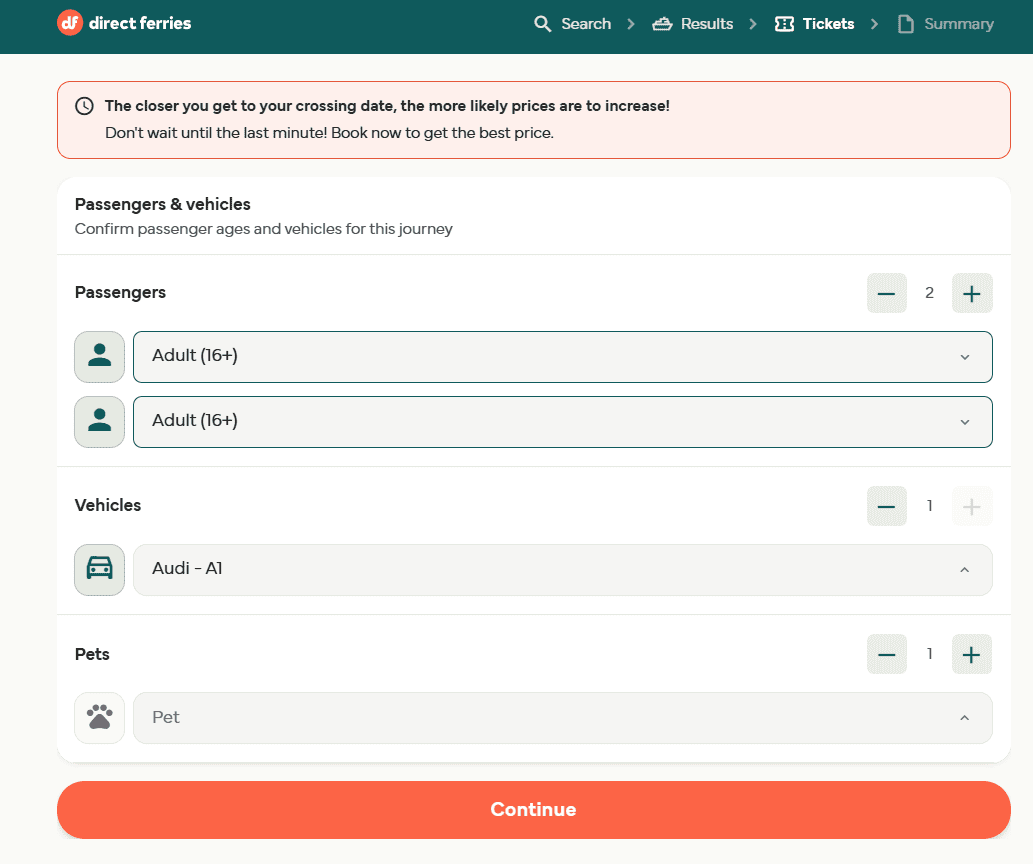
Choose your route and travel dates, then specify your vehicle, the number of passengers and the number of pets travelling with you:

You will then be able to select which sailing you would like and compare departure and arrival times. Once you have selected your sailing, it will then ask about your pet:
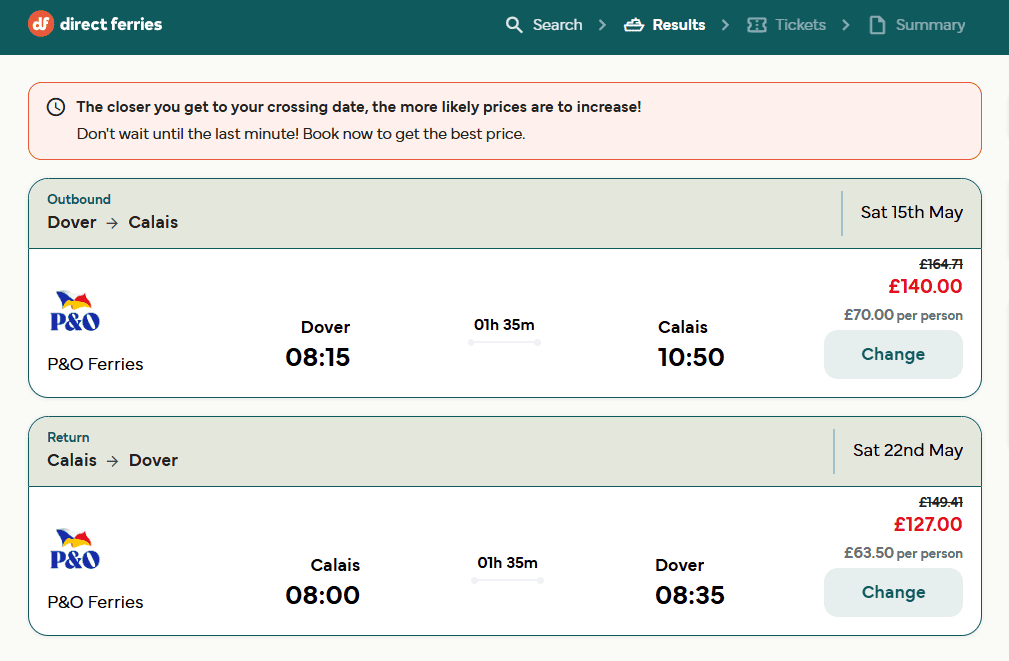
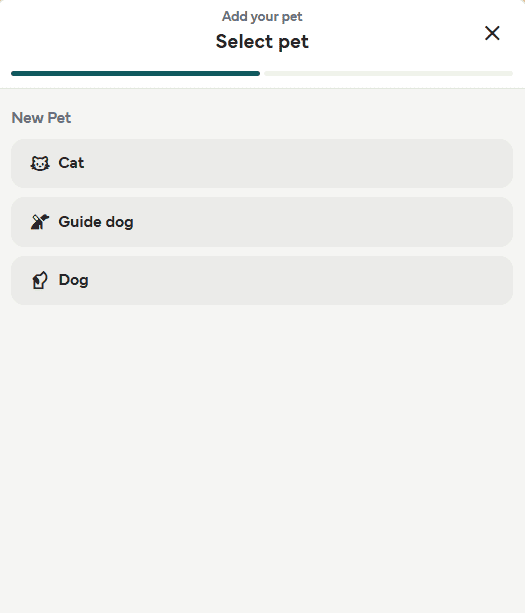
Depending on the operator, sailing and availability, you can select the appropriate pet travel arrangement. If pet lounges or pet cabins are available, you will be able to select them during the booking process:
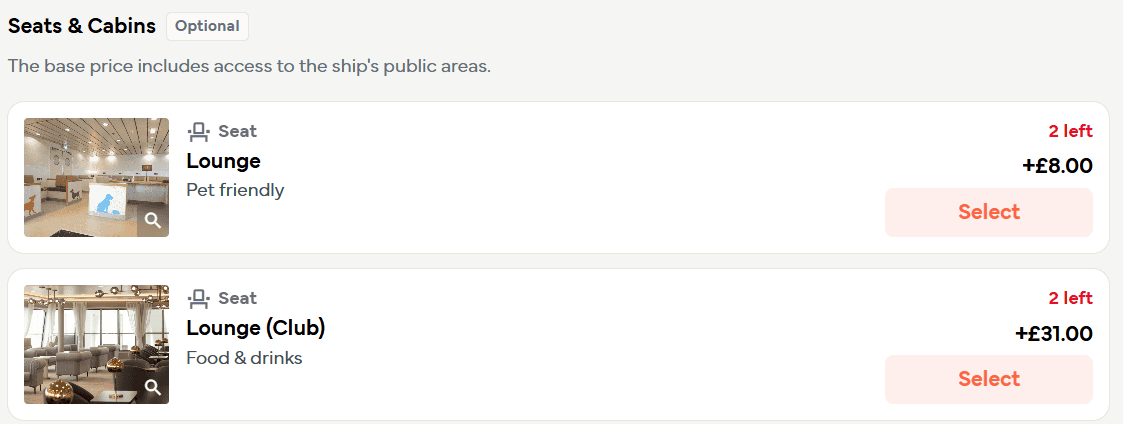
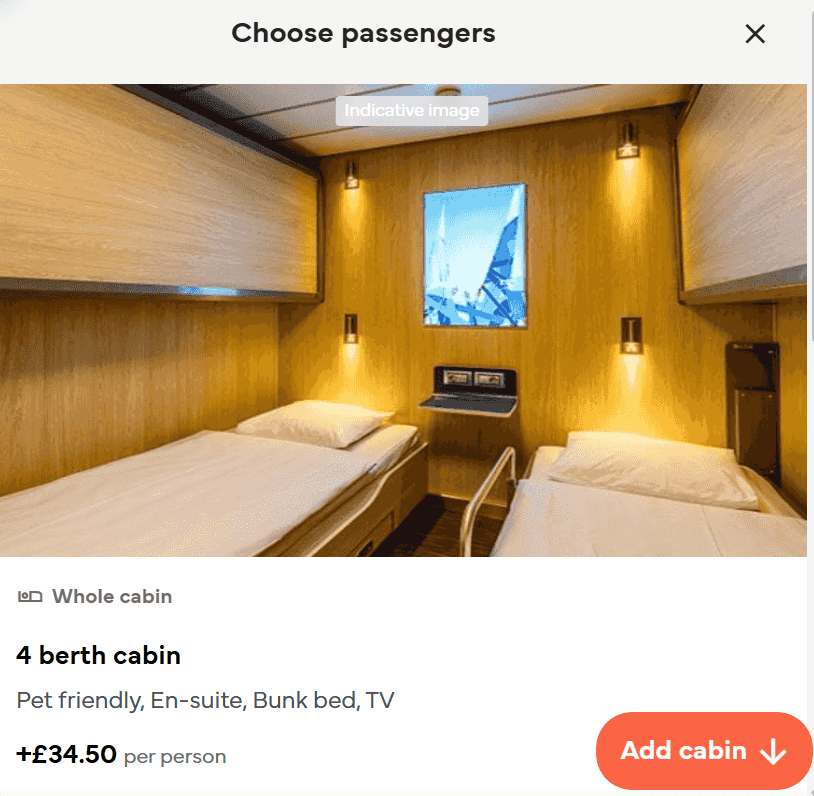
Continue through the booking process, entering your passenger and payment details before confirming your reservation. For more information about making a ferry reservation, visit our Booking FAQs.
Step 2: Arriving at the port
Once you've arrived at Dover Port, you will need to follow the signs for your ferry operator's check-in. Make sure you confirm check-in times before you travel as each operator's policy varies. Allow plenty of time for pre-departure checks.
You will need to tell staff you are travelling with a pet so they can check the relevant documents and scan your pet's microchip.
Once you've checked in, follow the staff's instructions and wait for boarding to begin.
Step 3: Boarding the ferry with your pet
When boarding is announced, drive onto the ferry once directed and follow the crew's instructions about where to park. Your pet will either remain in your vehicle for the crossing, or if you're travelling with P&O or Irish Ferries, you can take your pet to the dedicated pet lounge or pet den onboard.
Step 4: During the crossing
Once you've boarded, your pet will need to remain in its designated travel accommodation for the duration of the crossing. This will either be:
On this route, pets are not allowed in public areas such as restaurants and shops. Dogs must be kept on a lead and wear a muzzle when outside of pet-friendly areas, and cats must be contained in a suitable carrier. There's also a pet relief/exercise area on board for dogs.
Step 5: Disembarking at Calais
When the ferry arrives, listen to announcements and follow the crew's instructions for disembarkation.
Depending on where your pet is, you will need to collect them or return to your vehicle when permitted to do so.
Keep your pet's travel documents accessible in case they are requested on arrival.
When travelling with your pet, you may need to combine different modes of transport to reach your destination. For example, you might have to drive or catch a train to a port before catching a ferry. Each mode of transport may have different rules and requirements so it's always best to research your journey in advance to see what preparation is needed to make the journey as comfortable and stress-free as possible for both you and your pet.
It's important to bear in mind that if you're travelling with assistance animals, the rules may be different. Assistance animals will often need to meet the same requirements as other pets, such as having valid travel documents, being microchipped and vaccinated. However, they are often allowed on routes where other pets may not be allowed. Depending on the operator, they can usually stay with their owner in all passenger areas too.
If you are travelling with an assistance animal, then we'd recommend contacting our customer service team in case any special arrangements need to be made or you need to provide any specific documents. For more information, visit our Special Assistance Help page and our dedicated Accessible Ferry Travel guide.
One of the most important things to consider when travelling with your pet is their comfort and safety. No matter how long you are travelling for, there are a few things you can do to keep your pet happy for the duration of the journey.
Take your pet for a walk before the journey so they can stretch their legs and get some exercise. This also gives them the opportunity to go to the toilet before travelling.
Make sure your pet has access to fresh water throughout the whole journey. This is especially important if you're travelling during hot weather.
Make sure the temperatures are suitable for your pet. Be extra careful during hot weather and never leave your pet alone in a hot car.
Avoid feeding your pet a large meal before they travel as they may be more likely to be sick during the journey.
Make sure your pet has somewhere comfortable to sleep during the journey. Bringing a familiar blanket or a favourite toy can help them to feel more relaxed.
Always keep an eye on your pet throughout the journey and look out for signs of discomfort. Signs may include excessive panting, lip-licking, crying or shaking.
If you're worried about your pet or you know they don't enjoy travelling, make sure you speak to your vet before your trip. They can offer advice and may be able to prescribe additional medication that could help keep your pet calm.
When travelling with your pet, it's important to make sure you pack everything your pet will need for a safe and comfortable journey. To help you out, we've put together a pet packing checklist so you don't forget anything:
If you're travelling a longer distance or heading abroad, it's always best to pack more than you need. Make sure you bring enough food and medication in case of unexpected delays too.
Once you've arrived in your destination, it may take a bit of time for your pet to get used to their surroundings. Here are some things to think about to help your pet settle in:
Locate the nearest vet: Find out where your nearest vet is in case of an emergency and keep their contact details handy.
Give your pet time to settle in: Let your pet explore their new surroundings at their own pace. Try not to leave them on their own until they've had time to settle in.
Find suitable outdoor spaces: Look for parks, gardens or walking routes nearby where pets can exercise and explore safely. Check local rules too in case there’s anywhere that should be avoided.
Stick to a similar routine: Keeping to familiar routines such as the same feeding and walking times as at home, can help your pet to feel more settled.
Look out for any safety hazards: Check your accommodation for any hazards such as poisonous plants or wires they could chew.
Create a comfortable sleeping space: Use their favourite toys and blankets to create a home away from home, to help them feel safe and relaxed.
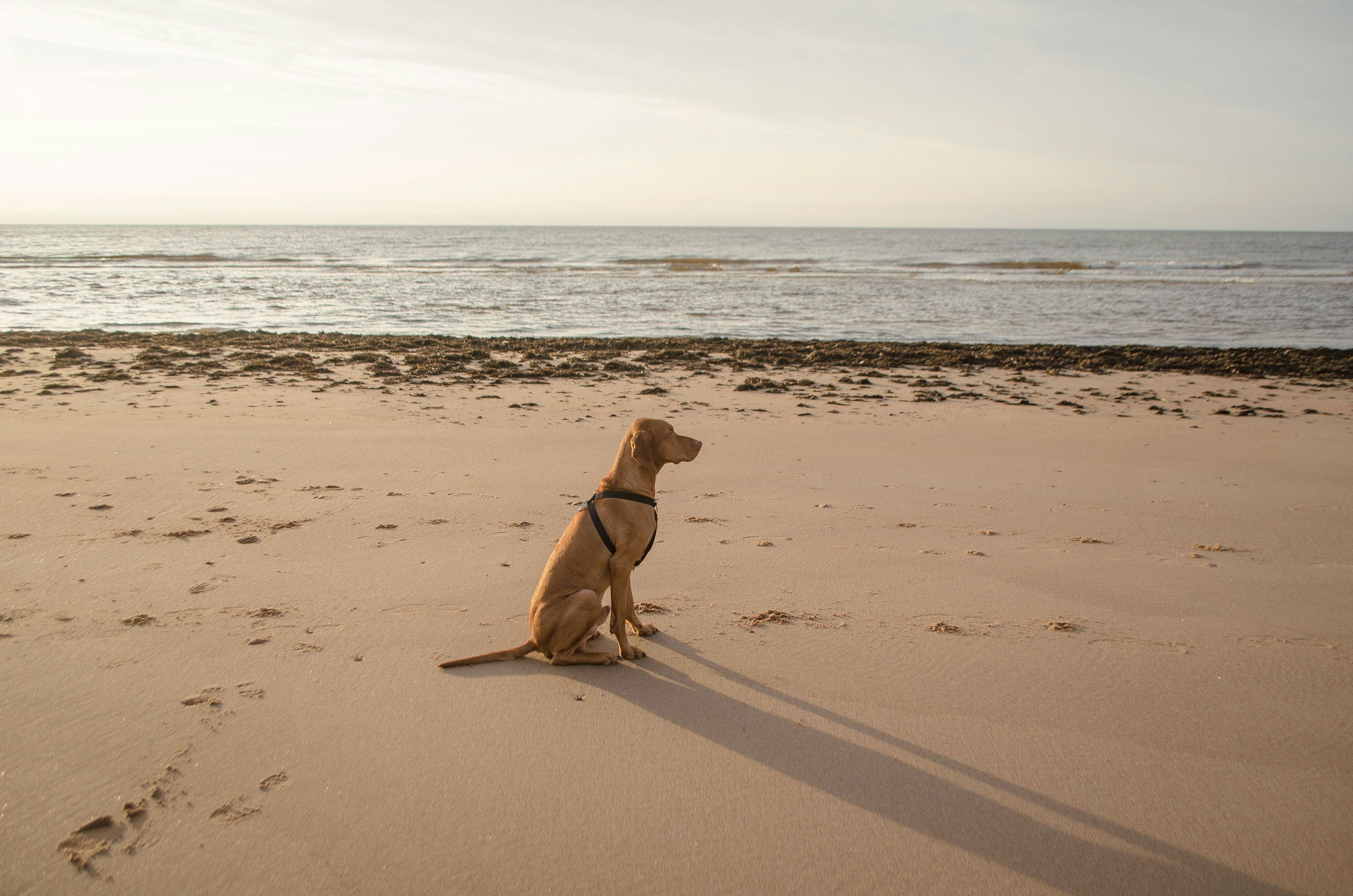
Depending on where you've been and how long you've been away for, returning home may require some extra preparation too. Here are our top tips for a smooth journey home:
Check return travel requirements: Make sure you check the entry requirements for bringing your pet back into your home country. Some destinations require pets to have specific checks, vaccinations or treatments before returning, such as tapeworm treatment for dogs. Make sure you have all the necessary documentation and allow enough time to arrange any required treatments.
Keep an eye on your pet's health: After returning home, monitor your pet for any unusual behaviour or signs of illness. If you notice anything unusual, always contact your vets.
Return to familiar routines: Getting back into your usual feeding, walking and exercise routines can help your pet readjust to life at home and settle back in comfortably.
Give your pet time to readjust: If you've been away for a while, your pet may need a little time to get used to being back home. Give them plenty of time to rest and get used to their usual environment.
Travelling with your pet can be an exciting experience, but the right preparation can make all the difference. Wherever you're travelling, it's important to take the time to research your destination, understand the relevant rules and requirements, and make sure your pet feels safe and comfortable throughout the journey. With the right preparation, you can enjoy a fun adventure together!
Ready to plan your next adventure? At Direct Ferries, we've made it easy to book your trip with your pet. Explore our pet-friendly ferry routes today and book your next journey together!
More routes than anyone else.

Compare fares, times & routes in one place.
Change plans easily with flexi tickets.

Book e-tickets & manage trips in-app.
Live ship tracking & real-time updates.

Top-rated customer support when you need it.