Things to do Dublin
Things to do Dublin
Dublin is the capital of Ireland and one of Europe's most characterful cities, where Viking foundations, Georgian architecture, revolutionary history, and a pub culture of global reputation coexist in a compact urban centre. It sits at the mouth of the River Liffey on the east coast of Ireland, located roughly 100km south of Belfast and 480km from London by the shortest sea crossing.
Dublin is a city that rewards walking at a slower pace and sitting in pubs for longer than planned. For UK visitors, it is among the most directly accessible capitals in Europe, especially via the Holyhead to Dublin ferry, which crosses the Irish Sea in as little as 2 hours and 15 minutes on the fast service, making Dublin comfortably reachable for a long weekend from anywhere in England or Wales.
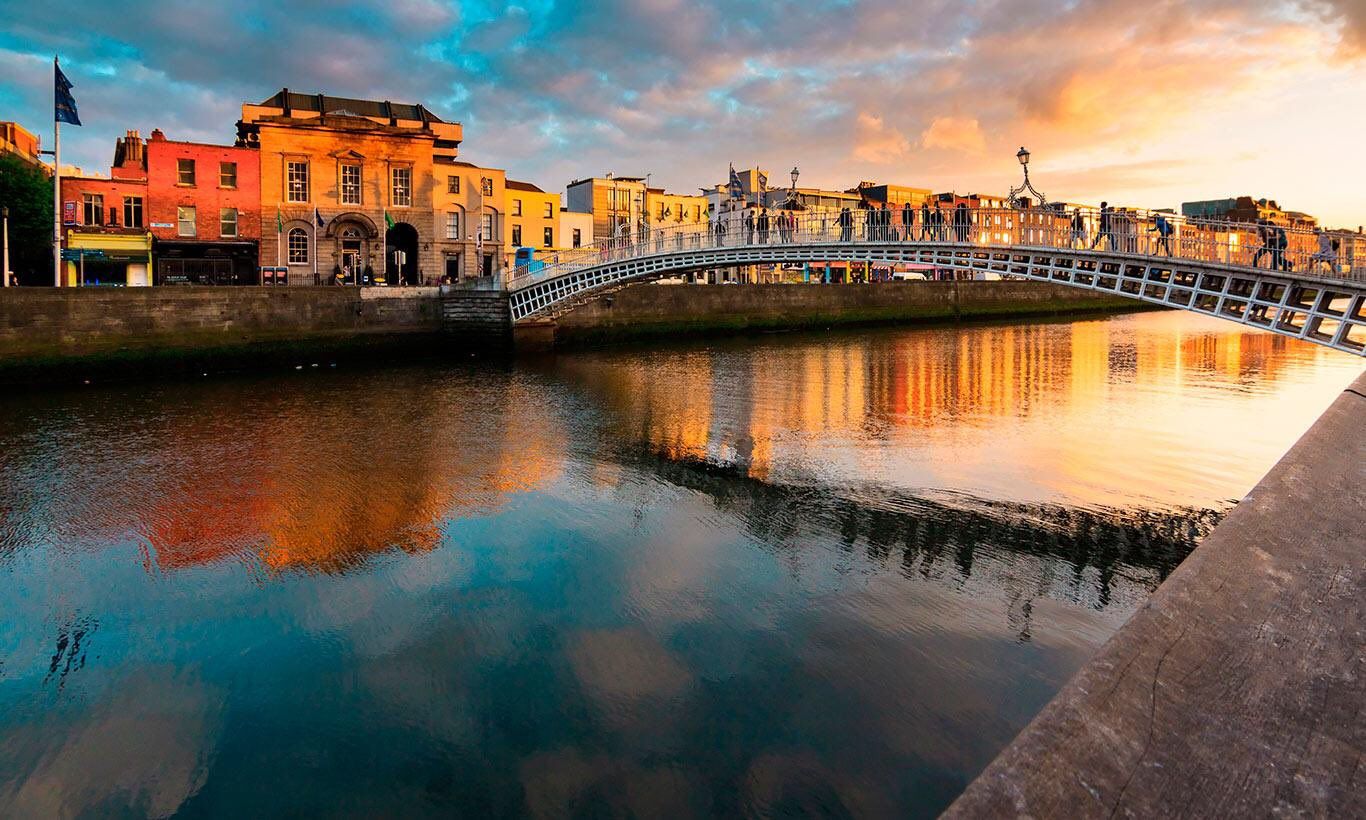
For visitors from the UK, Dublin is most directly reached by ferry from Holyhead in north Wales — the fastest and most frequent crossing on the Irish Sea.
The Holyhead to Dublin ferry is operated by both Irish Ferries and Stena Line, with up to ten daily sailings in peak periods, crossing times of approximately 2 hours and 15 minutes on the Irish Ferries Dublin Swift fast catamaran and around 3 hours and 15 minutes to 3 hours and 30 minutes on the larger conventional ferries.
The Dublin ferry port at Alexandra Road is located around 3km from the city centre and is well served by public buses and taxis. For those travelling from northern England, the Liverpool to Dublin ferry, operated by P&O Ferries, offers an overnight crossing of approximately 8 hours that avoids the drive across Wales entirely.
Bringing your car on the ferry is the most flexible way to reach Dublin from the UK, giving you the freedom to explore the Wicklow Mountains, the Boyne Valley, and the wider Irish countryside in your own time. From Holyhead, the A55 North Wales Expressway connects to Chester in 1 hour and 40 minutes, Liverpool in 2 hours, and Manchester in 2 hours and 20 minutes. Holyhead has direct rail links to London Euston and Manchester via Chester, making it accessible by train before boarding the ferry for those travelling without a car.
Upon arrival at Dublin port, the Dublin Port Tunnel provides quick access to the M50 ring road and the M1 motorway. Driving in Dublin city centre is not recommended for sightseeing as traffic can be slow and parking is expensive, but a car is invaluable for day trips to Wicklow, the Boyne Valley, and the wider countryside. Most visitors find it practical to park at their hotel on arrival and use public transport for the city itself.
Dublin is one of the most foot-passenger-friendly ferry destinations in the British Isles. From Holyhead, regular Avanti West Coast trains connect London Euston and the main northern cities to the port, with direct rail connections to the ferry terminal. On arrival in Dublin, the city centre is reachable by public bus (routes 53 and 53A run directly from the ferry terminal into the city) or by taxi for around €10 to €15. From the city centre, the DART coastal railway, Luas tram, and the Dublin Bus network cover all the major attractions and day trip destinations. The entire visitor experience in Dublin is highly manageable without a car, making it a particularly good destination for those travelling on foot.
Numerous UK airports serve Dublin with short-haul flights of around 1 hour and 20 minutes. Dublin Airport is located approximately 12km north of the city centre. The Airlink Express bus (route 747) operates every 10 to 15 minutes to the city centre and costs around €8 one way. For those without a car, flying is the fastest option. However, for those travelling with pets or wanting to explore rural Ireland beyond Dublin, the ferry gives considerably more flexibility and is often better value for families or groups with a vehicle.
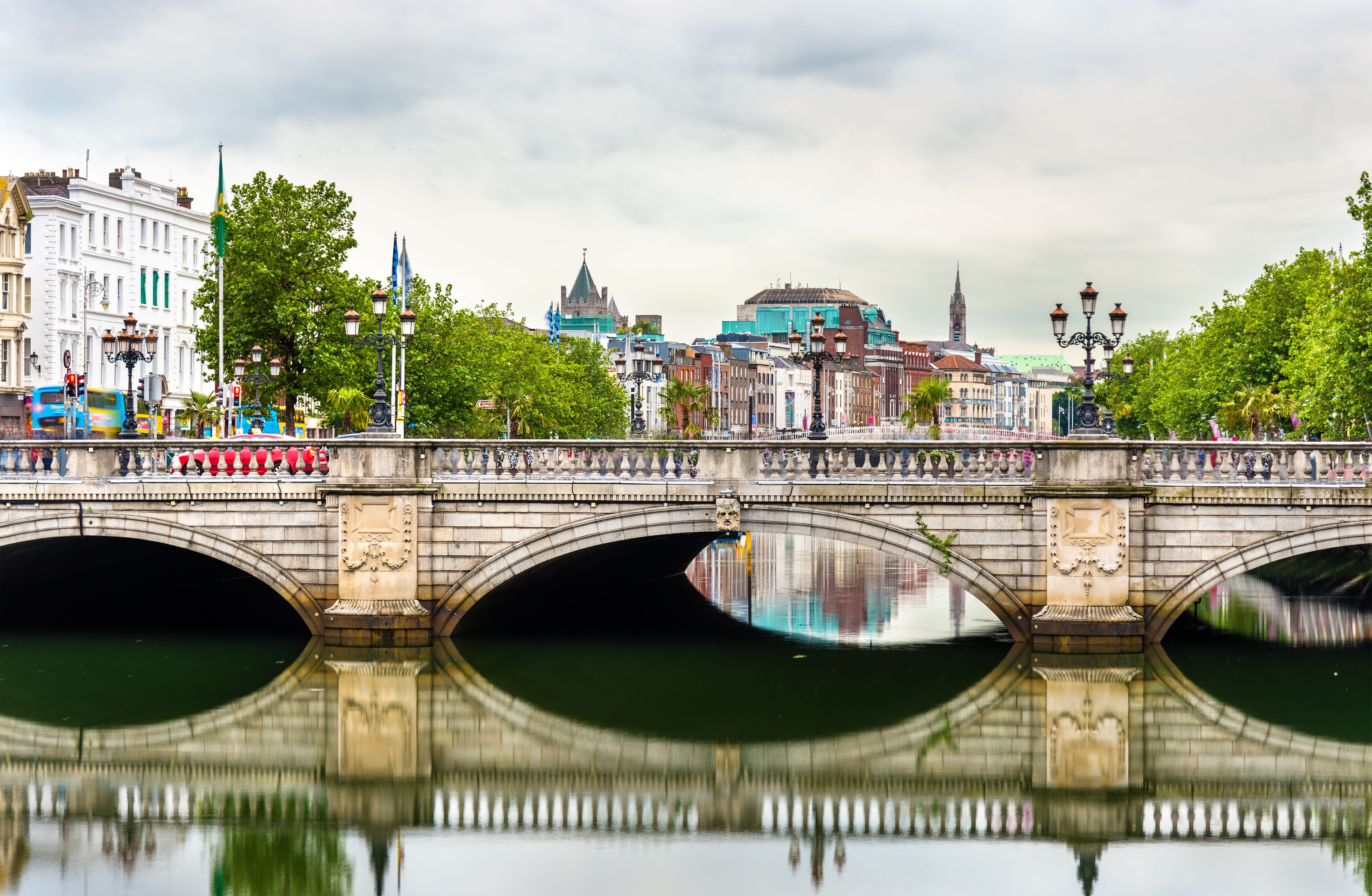
Dublin is a compact and highly walkable city. The historic centre, stretching from O'Connell Street in the north to St Stephen's Green in the south, and from the Guinness Storehouse in the west to Trinity College in the east, can be crossed on foot in around 25 minutes.
The majority of the main landmarks are clustered within this central area and are best explored on foot, with the river acting as the natural north-south dividing line. The Georgian southside and the more bohemian Liberties and Smithfield on the northside are both easily walkable from the river.
The walk from the O'Connell Street Bridge south to Trinity College takes around 5 minutes; from Trinity to St Stephen's Green, 10 minutes; from St Stephen's Green west to Kilmainham Gaol, around 35 minutes along the south quays. The north quays, linking the Custom House with the Four Courts and the Smithfield district, are also a great place to walk.
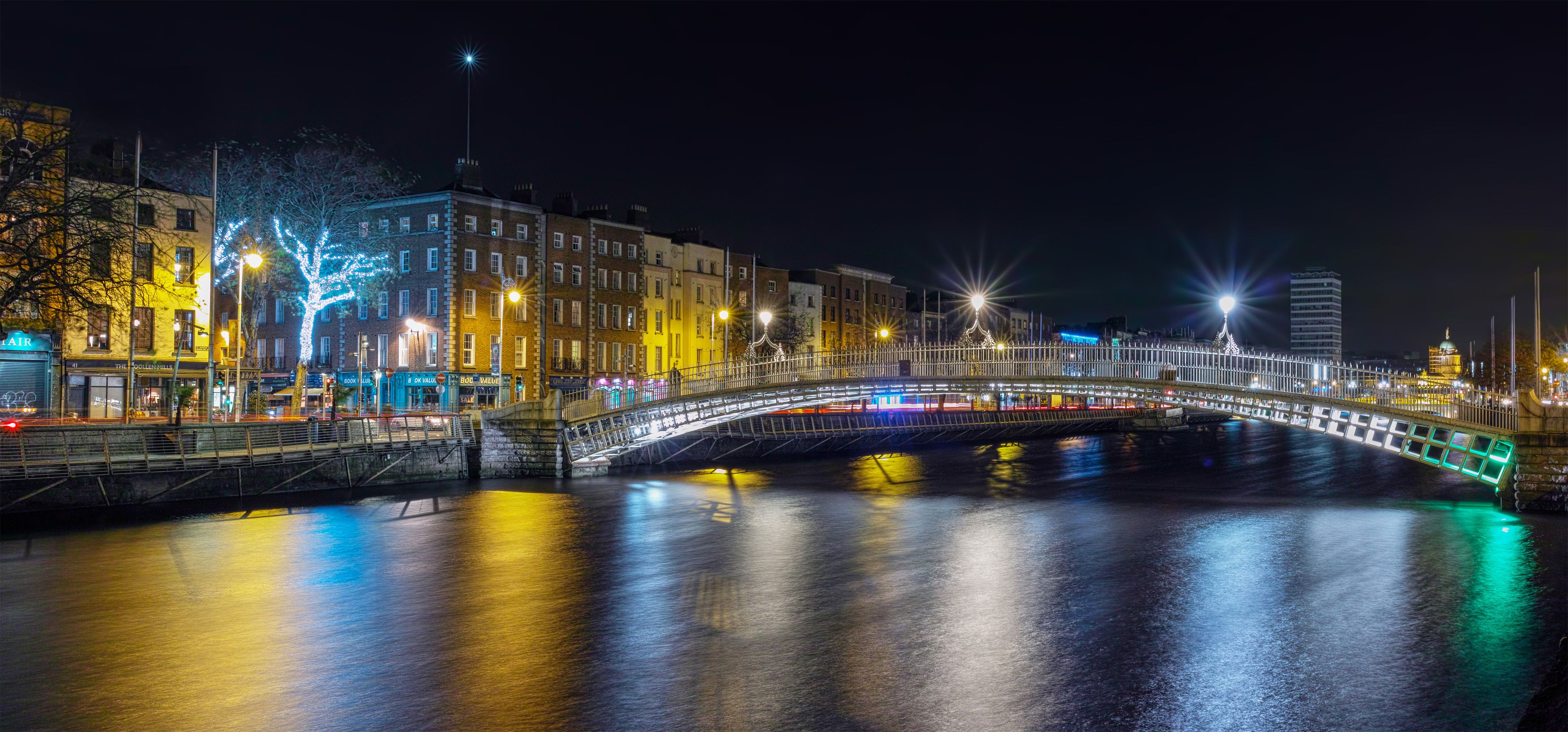
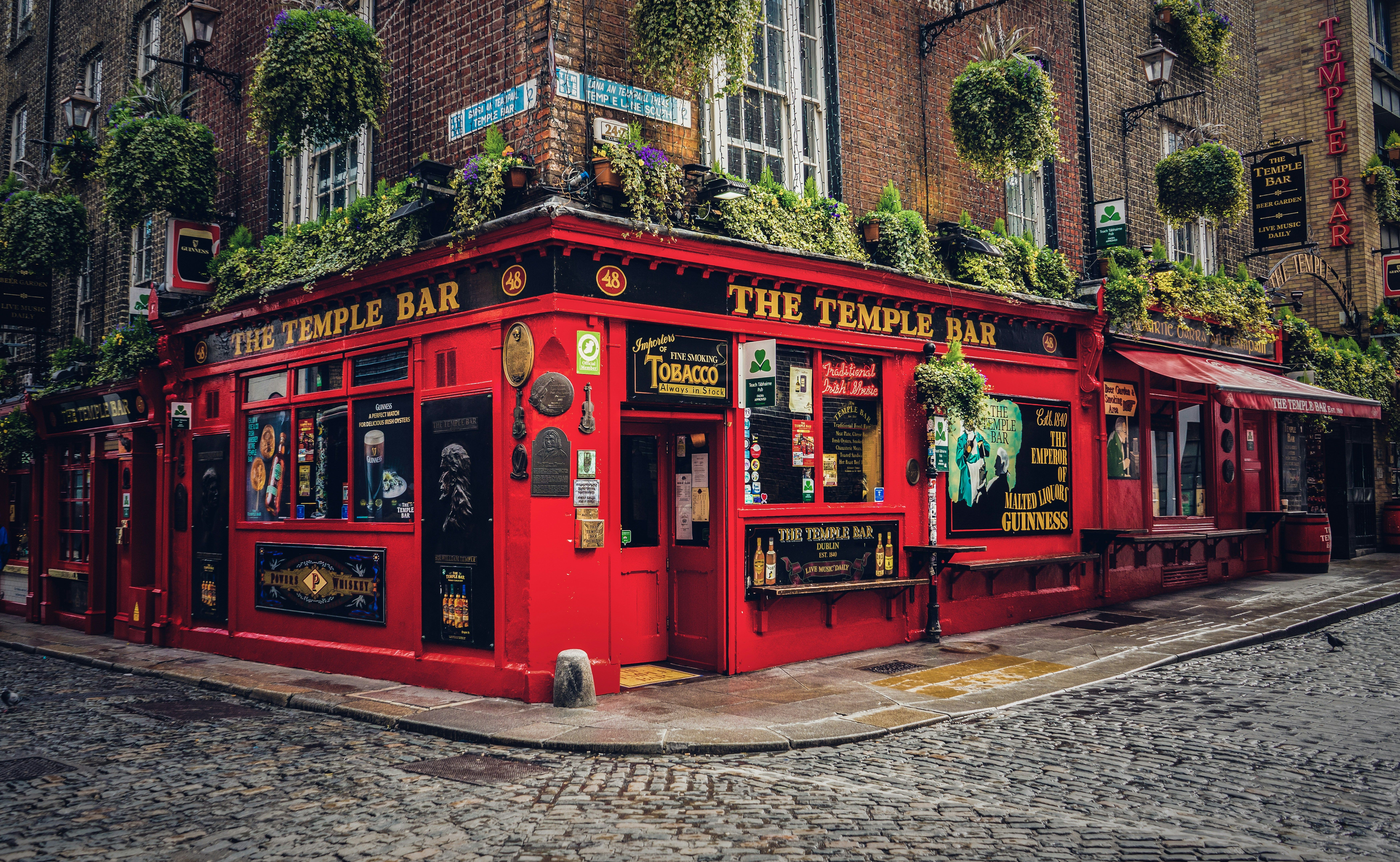
The most atmospheric streets for wandering are Grafton Street, the cobbled alleys of Temple Bar immediately south of the Ha'penny Bridge, the Georgian terraces of Merrion Square and Fitzwilliam Square, and the lanes of the Liberties around St Patrick's Cathedral. A Leap Card, a rechargeable contactless public transport card available from convenience stores for €5, is the most economical way to use Dublin's buses, DART, and Luas tram when you need a rest. Single fares within the central zone cost €2.
The Luas tram network operates two lines: the Red Line running east-west from the Point (near the 3Arena) through the city centre to Tallaght, and the Green Line running north-south from Broombridge through St Stephen's Green and south to Sandyford. The DART coastal railway runs north-south along the Dublin Bay coast, connecting Malahide and Howth in the north through the city centre stations to Greystones in the south.
The Dublin Bus network is extensive and covers the city and suburbs. The most useful routes for visitors are those connecting the ferry port with the city centre and those serving Phoenix Park and Kilmainham. All public transport in Dublin is covered by a Leap Card, which automatically applies the cheapest daily and weekly fares.
The Dublin Bikes public cycle hire scheme operates from 116 stations throughout the city centre, with the first 30 minutes of each hire free on a day pass costing €3.50. The flat terrain of central Dublin and the dedicated cycling lanes on the quays and main arteries make it a practical option for getting between sites quickly. The Grand Canal towpath, running west from the city centre through the Liberties and out to the suburbs, is a traffic-free cycling and walking route that takes you through some of Dublin's most historic residential neighbourhoods.
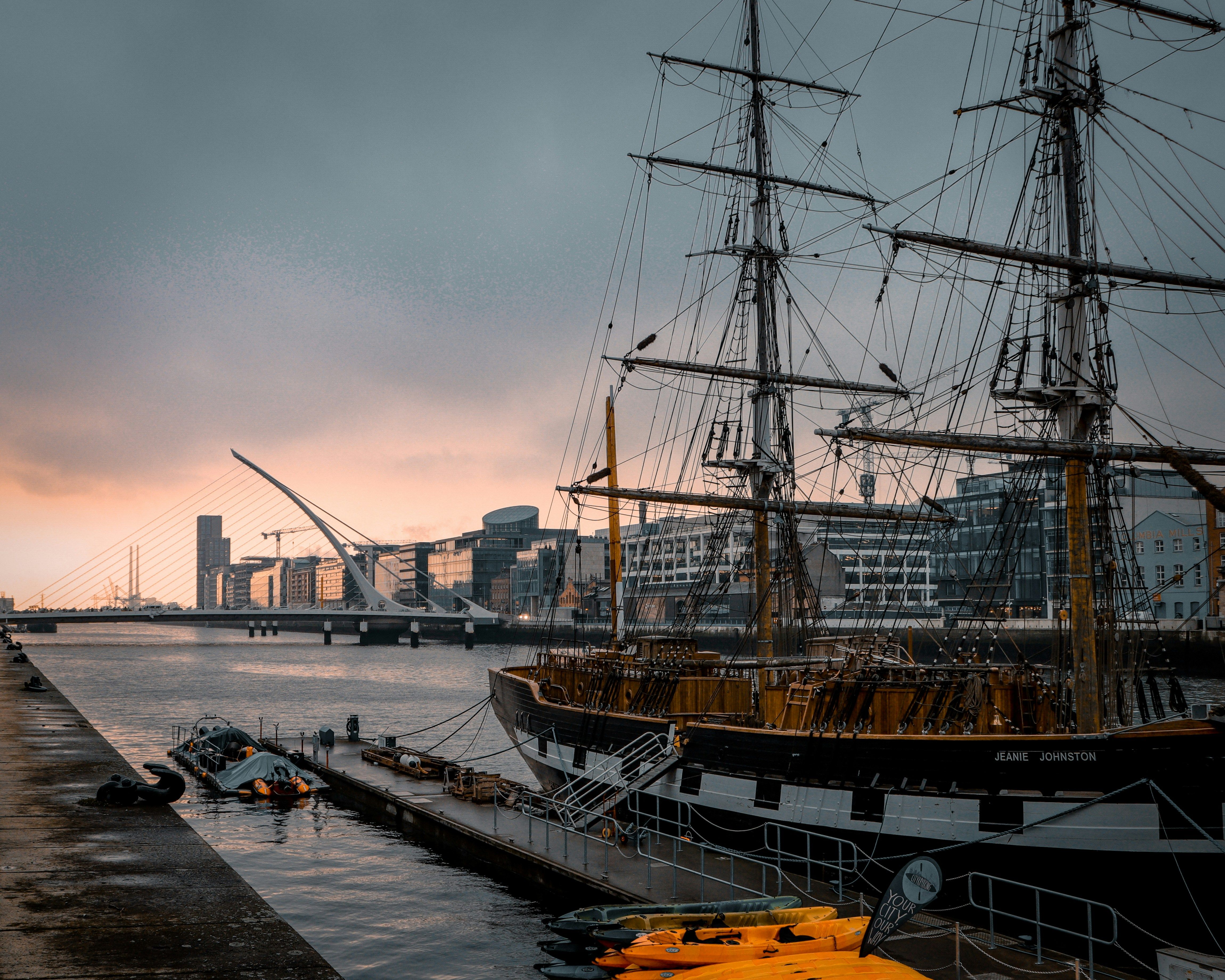
Dublin is a year-round city with a mild climate, but it is prone to heavy rainfall in any month of the year. The best times to visit are late spring from May to June, and early autumn from September to October, when the weather is most settled, the days are long, and the city is operating at full pace without the peak-summer tourist saturation.
Although it’s cold, St Patrick's Day on 17th March draws visitors from around the world and is a worthy spectacle to experience in its home city.
Daytime temperatures in March range from 8–12°C, rising to 13–17°C by May. St Patrick's Day on 17th March is the city's defining annual event, a week-long festival with parades, street performances, concerts, and an atmosphere that is genuinely celebratory rather than the commercial approximation seen elsewhere. The city fills with Irish diaspora and international visitors for the festival.
By May, the days are light until after 9 pm, the parks are in full bloom, and the south-facing pub terraces on Grafton Street and along the Grand Canal are busy from midday. The puffins return to the Howth and Bray Head cliffs in spring.
Perfect for: St Patrick's Day and the spring festival, the Howth cliff walk in spring light, Trinity College and the city's museums without summer crowds, and the best hotel rates before the peak season.
Temperatures reach 18–22°C on the warmest summer days, and the city is at its most animated: outdoor music at Merrion Square, evening crowds on the south quays, festivals at the RDS and Phoenix Park, and the full summer programme of events at Kilmainham and the national museums.
Bloom, the annual garden festival at Phoenix Park held in early June, is the largest horticultural event in Ireland. The Dublin Horse Show at the RDS in August draws visitors from across Ireland and beyond. Accommodation and attraction ticket prices peak in July and August, so you must book well in advance for any summer visit.
Perfect for: outdoor festivals and events, the Phoenix Park in full summer life, evenings on the pub terraces of the south city, and day trips to the Wicklow Mountains.
September and October are fantastic months to visit Dublin as the summer tourists have thinned, the city returns to its everyday pace, and the Dublin Theatre Festival in October gets underway. The Bram Stoker Festival in late October transforms the city for a long Halloween weekend, with outdoor events, horror screenings, and immersive performances throughout the city. The All-Ireland football and hurling finals at Croke Park bring huge energy to the city in August and September. However, temperatures drop to 10–14°C in October, so we recommend bringing a waterproof layer and a midweight jumper.
Perfect for: the Dublin Theatre Festival, the Bram Stoker Halloween Festival, the city's museums at their quietest, and the best accommodation value of the year outside winter.
Winter temperatures range from 4–9°C. December in Dublin has a warm, festive character: the Christmas markets on Grafton Street and in the Iveagh Gardens are among the most atmospheric in Ireland, the pubs are full of good cheer, and the cultural programme continues unabated.
January and February are the quietest and most affordable months as hotel prices drop significantly, and the National Museum and gallery collection can be explored at a genuinely leisurely pace without the crowds. The Winter Solstice illumination of the Newgrange passage tomb, 50km north of the city, is one of the most remarkable prehistoric events in Europe and draws lottery-entry visitors every December.
Perfect for: the Christmas markets and December atmosphere, museum visits without queues, the lowest hotel rates of the year, and the most authentic encounter with everyday Dublin life.
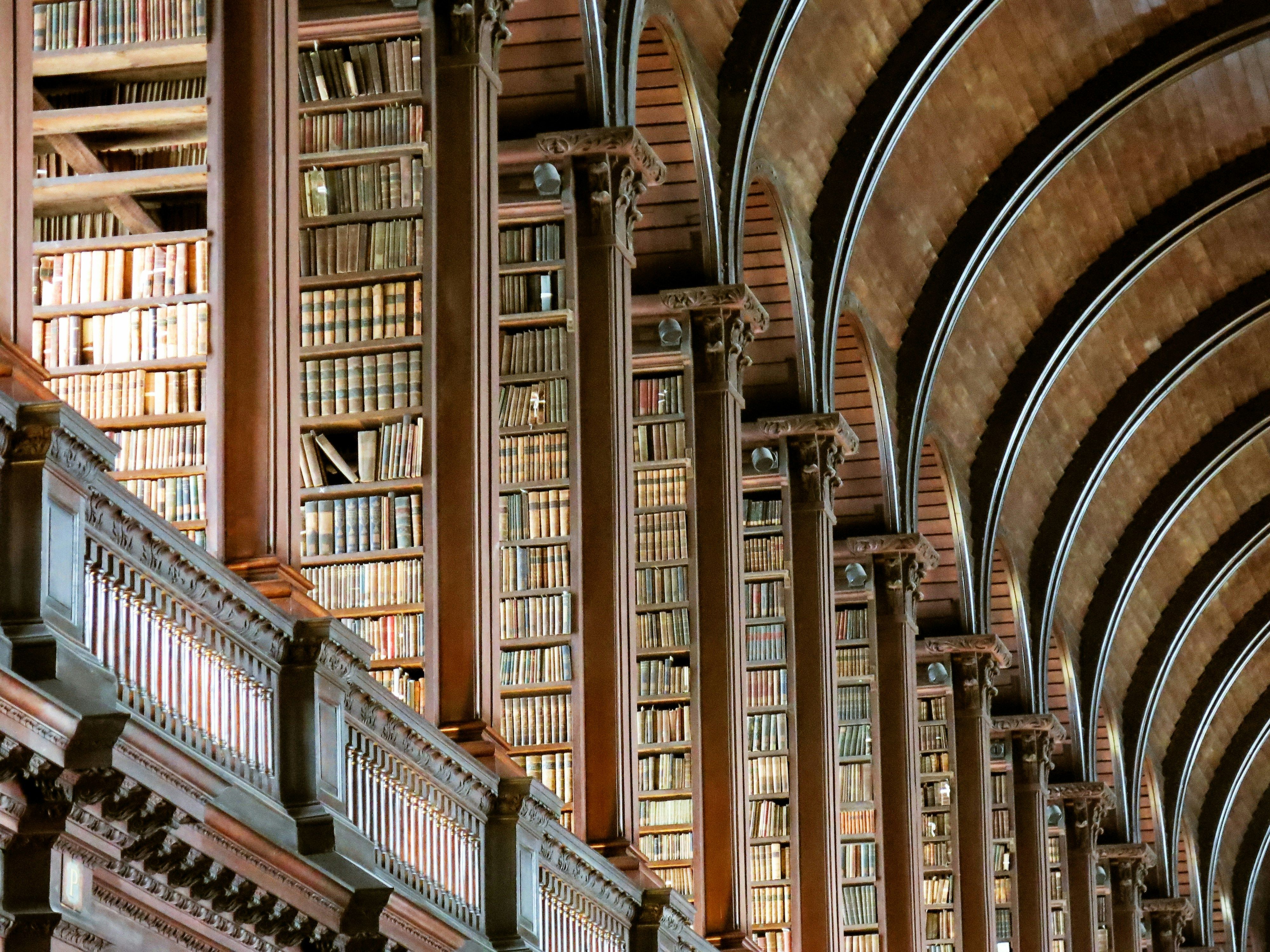
Dublin is compact enough that a first-time visitor can cover the essential attractions within two days, while the neighbourhoods, day trips, pub culture, and literary heritage are worthy of a longer stay. A weekend is the practical minimum, though three to four days allow enough time to explore at a more relaxed pace.
Trinity College Dublin, founded by Queen Elizabeth I in 1592 on the site of a dissolved Augustinian priory, is Ireland's oldest and most distinguished university and one of the finest Georgian and Victorian university campuses in Europe. It's Front Square, with the Campanile at its centre, and the surrounding quadrangles of 18th and 19th-century buildings are free to walk through and among the most beautiful academic spaces in these islands.
The Old Library holds the Book of Kells, a Gospel manuscript produced by Celtic monks around 800 AD, considered the greatest surviving example of Insular art and one of the most remarkable objects of the early medieval world. Please keep in mind that the Old Library is currently undergoing a major conservation project from 2025. The Book of Kells remains on display, but check the Trinity website for current access arrangements before visiting. Timed-entry tickets should be booked online in advance, particularly in summer.
Kilmainham Gaol, built in 1796 and in use as a prison until 1924, is the place where the leaders of the 1798 Rebellion, the 1803 Rising, the Fenian movement, and the 1916 Easter Rising were imprisoned and, in many cases, executed. The leaders of the Easter Rising were shot in the stonebreakers' yard between 3rd and 12th May 1916 in executions that galvanised Irish nationalist opinion and set in motion the events that led to independence.
The guided tour of the gaol lasts around 1 hour and is one of the best in Ireland. We suggest that you book entry tickets well in advance, as Kilmainham regularly sells out weeks ahead, particularly in the summer. Entry costs around €9 for adults.
Arthur Guinness signed his famous 9,000-year lease on the St James's Gate brewery in 1759 for an annual rent of £45, and the brewery he established grew over the following two centuries into the largest stout brewery in the world. The Guinness Storehouse, housed in a fermentation building constructed in 1904, is Ireland's most visited tourist attraction, with seven storeys of immersive exhibition covering the history of the stout, the science of brewing, and the extraordinary Guinness advertising archive.
The visit culminates in the Gravity Bar on the top floor, a 360-degree glass-enclosed bar with panoramic views across Dublin and the Wicklow Mountains, where admission includes a pint of Guinness. Please allow at least 2 hours to explore the storehouse. Book entry tickets online in advance.
The National Museum of Ireland's Archaeology branch on Kildare Street holds one of the most significant collections of prehistoric and early medieval gold artefacts in Europe. The Irish Gold gallery, displaying lunulae, torcs, gorgets, and dress fasteners from the Bronze Age, is one of the most breathtaking single rooms in any museum in these islands. The Treasury holds the Ardagh Chalice and the Tara Brooch, two of the finest surviving examples of early medieval metalwork in the world. The museum is free to enter, and is open on Tuesday to Saturday 10am–5pm, Sunday 2–5pm, but closed on Mondays.
Built beside the well where Ireland's patron saint is said to have baptised converts to Christianity, St Patrick's Cathedral was founded in 1191 and is the largest cathedral in Ireland, at 91 metres, the longest medieval nave in the country. The interior is filled with the monuments and battle flags of the Anglo-Irish tradition, including the memorial to Jonathan Swift, who is buried beneath the nave beside his companion Esther Johnson. Swift's death mask and his writing desk are on display. Entry to the cathedral costs around €9 and is free for children under 16.
Phoenix Park is one of the largest enclosed parks in Europe, even larger than Central Park in New York. It’s a remarkable piece of wild countryside within 3km of the city centre. A herd of around 600 fallow deer introduced by the Duke of Ormond in the 17th century roams freely through the grassland of the northern section. Most people usually see them in the early morning and in the late afternoon near the Fifteen Acres. The park contains the Áras an Uachtaráin (open for free guided tours on Saturdays), Dublin Zoo, and a network of cycling and walking paths. Bike hire is available from Phoenix Park Bikes at the Parkgate Street entrance.
The Howth Cliff Walk, accessible by DART train from the city centre in 25 minutes, is the finest accessible coastal walk in the Dublin area. The headland of Howth sits at the northern end of Dublin Bay and offers five waymarked trails of various lengths, all beginning from the DART station in Howth village.
The most dramatic route follows the full circuit of the headland's sea cliffs, with views south across Dublin Bay to the Wicklow Mountains. The village of Howth itself has excellent fish and chip shops and seafood restaurants beside the working fishing harbour.
The National Gallery of Ireland on Merrion Square holds a distinguished collection of Irish and European painting, including a Vermeer, a Rembrandt, and the largest collection of works by Jack B. Yeats outside private hands. The gallery is entirely free to visit, and remains open six days a week. Alternatively, the Irish Museum of Modern Art at the Royal Hospital Kilmainham holds a permanent collection running from Francis Bacon to Louise Bourgeois, with free entry and 17-acre walled gardens.
The Chester Beatty Library in Dublin Castle gardens, housing the extraordinary collection of Oriental and Western manuscripts assembled by the American mining magnate Sir Alfred Chester Beatty, is one of the finest small museums in Europe. The EPIC Irish Emigration Museum in the CHQ building at the docklands is one of the most technically innovative museums in Ireland, covering Ireland's extraordinary global diaspora through 20 interactive rooms.
Dublin is very well equipped for wet weather. The National Museum collections, the National Gallery, and the Chester Beatty Library are all free and can take up a full day between them. The Guinness Storehouse is entirely indoors and one of the best rainy-day options in the city. The Little Museum of Dublin on St Stephen's Green, a community museum of 20th-century Dublin life housed in a Georgian townhouse, runs guided tours every 30 minutes and is one of the most engaging small museum experiences in the city.
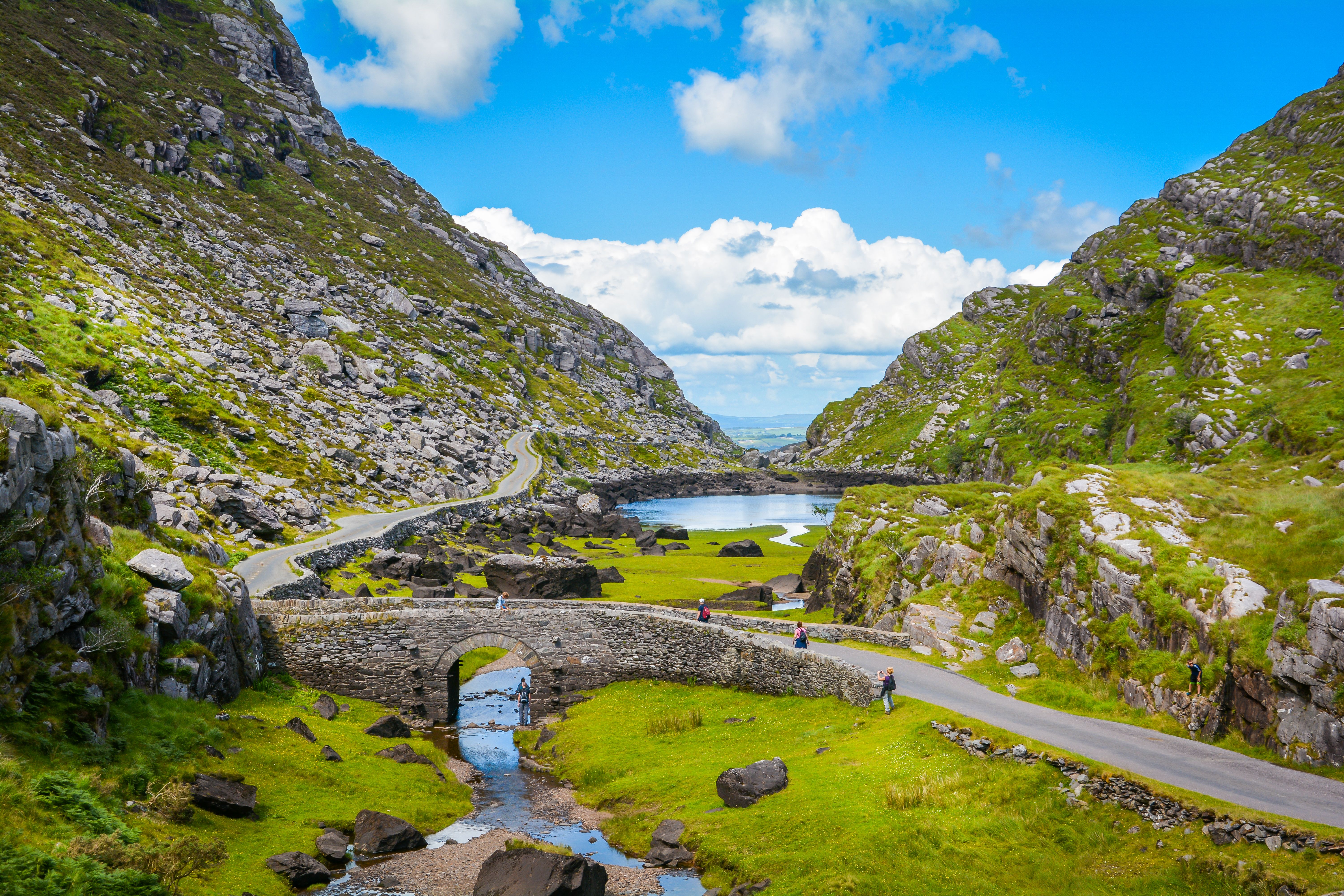
Wicklow Mountains National Park (30km south): The granite uplands of County Wicklow begin almost immediately south of the city, and the national park encompasses 20,000 hectares of blanket bog, heathland, and river valley, including the glacially carved valley of Glendalough with its 6th-century monastic settlement founded by St Kevin.
The round tower, ruined cathedral, and two lakes of Glendalough are among the most atmospheric early Christian sites in Ireland. The walk around the Upper Lake takes around 2 hours. Powerscourt Estate, located 25km south of the city, has the most spectacular gardens and the highest waterfall in Ireland. You can get there by car in around 35 minutes or by bus from Bray DART station.
The Boyne Valley (50km north): The Boyne Valley contains the most concentrated area of prehistoric monuments in Ireland, including Newgrange, which is a passage tomb built around 3200 BCE, older than Stonehenge and the Giza pyramids, whose inner chamber is precisely aligned with the winter solstice sunrise. The site is accessible only on guided tours from the Brú na Bóinne visitor centre and must be booked in advance throughout the year.
Kilkenny (90km south-west): The best-preserved medieval city in Ireland, with a 12th-century Norman castle and a walled city centre. Kilkenny can be easily reached in 2 hours by taking the Expressway bus or by train from Heuston station in 1 hour and 40 minutes.
Dublin's pub culture is a functioning social institution that predates any version of the hospitality industry as it exists elsewhere. The traditional music session, locally known as seisiún, is an informal gathering of musicians playing jigs, reels, hornpipes, and slow airs together, that takes place in most pubs throughout Ireland. The Cobblestone in Smithfield, O'Donoghue's on Merrion Row, and Mulligan's on Poolbeg Street are the three essential pub experiences. Temple Bar contains many bars marketed primarily to tourists, though the sessions there are less authentic and the prices are considerably higher. The rule for finding a good session is simple: follow the music, not the sign.
Dublin is an excellent destination for families. Dublin Zoo in Phoenix Park, one of Europe's oldest zoos, with African Savanna, Gorilla Rainforest, and Kaziranga Forest Trail habitats, can take up a full day. The DART train to Howth for the cliff walk, and a fish and chips lunch on the harbour, is a perfect half-day family outing, accessible without a car from any city centre hotel.
Dublinia on Christchurch Place, the interactive Viking and medieval history museum, is specifically designed for children and includes a reconstructed Viking longship and a medieval street. The Bram Stoker Halloween Festival in late October is one of the best family festival events in Europe, with free outdoor events and ghost walks available throughout the city.
Dublin has an exceptional choice of free cultural experiences. The National Museum of Ireland, the National Gallery of Ireland, the National Botanic Gardens in Glasnevin, the Irish Museum of Modern Art, and the Chester Beatty Library are all entirely free to visit. Phoenix Park is free, along with the Ha'penny Bridge walk and the Georgian streetscapes of the southside.
The Howth cliff walk costs only the DART fare, which comes to around 4 € for a return ticket from the city centre. Please note that a Leap Card reduces public transport fares by approximately 31% compared to cash. For food, the Moore Street market on the northside and the weekend farmers' markets at Dun Laoghaire and Marlay Park offer excellent local food at non-tourist prices. A pint of Guinness in any pub away from Temple Bar costs around €6 to €7.
The Casino at Marino, located 4km north of the city centre, is a neoclassical 18th-century pleasure house designed by the Scottish architect William Chambers and considered the finest example of neoclassical architecture in Ireland. Another hidden gem is Marsh's Library. First founded in 1701 and situated adjacent to St Patrick's Cathedral, Marsh’s Library is the oldest public library in Ireland, and it often doesn’t get the credit it deserves.
Dublin's food scene has transformed significantly over the past two decades, from a city with a reliable pub food tradition and little else to one of the most interesting eating cities in the British Isles. Irish stew still remains one of the most satisfying meals available in any Dublin pub, and the full Irish breakfast, with back bacon, pork sausages, black and white pudding, eggs, grilled tomato, and soda bread, is a non-negotiable morning meal served at almost every café in the city.
Beyond the pub kitchen, Dublin has excellent fish and seafood. The crab claws from Howth harbour, the Dublin Bay prawns, and the oysters from Galway Bay served at every oyster bar in the city are all certainly worth trying. There are several Michelin-starred restaurants in the south of Dublin, but the most characteristic dining experience is considerably less formal: a bowl of chowder and a crab sandwich at a seafood bar in Howth, or a plate of Dublin Bay prawns with soda bread at a quayside pub.
As the capital of Ireland, Dublin has accommodation suitable for every budget, from luxury five-star hotels to sociable hostels, with most found in the south city centre and along the north quays. Staying within the canal ring puts you within walking distance of all major attractions.
The south city centre typically charges the highest prices and is most convenient for the National Museum, National Gallery, and the Georgian streetscapes, whereas the Smithfield and Liberties area is increasingly well-served with hotels at more competitive prices and within walking distance of Kilmainham and the Guinness Storehouse. You can book accommodation via our accommodation page or directly with properties for the best rates.
Dublin is one of the best short-break destinations in the British Isles, and the speed and frequency of the Holyhead to Dublin ferry make it genuinely viable as a weekend trip from anywhere in England or Wales. A car is not necessary for exploring the inner city, but it does give you the freedom to explore the Wicklow Mountains, the Boyne Valley, and rural Ireland for those with more time.
Duration: 2–3 days
Arrive in Dublin and check in. Walk south from the city centre to Trinity College for the Book of Kells and the Long Room. Enjoy lunch on Grafton Street. Spend the afternoon at the National Museum of Archaeology on Kildare Street, followed by an evening in the Liberties, with dinner in a neighbourhood restaurant. Finish the evening at a session at O'Donoghue's on Merrion Row.
Take the DART north to Howth and arrive in 25 minutes. Walk the full cliff circuit in 3 hours with views across Dublin Bay to the Wicklow Mountains. Have lunch at the harbour before returning to Dublin via the DART in the afternoon. Visit the Guinness Storehouse and enjoy a pint in the Gravity Bar as the sun sets over the city. Evening at the Cobblestone in Smithfield for the session.
Spend the morning at Kilmainham Gaol, then walk west along the south quays to the Irish Museum of Modern Art. Spend the afternoon at the Chester Beatty Library before heading back to the ferry port for the Dublin to Holyhead ferry.
Why we love it: The ferry from Holyhead to Dublin is one of the most convenient crossings in the British Isles, with multiple daily sailings and drops arriving passengers close to the city centre.
Duration: 5 days
Arrive by ferry from Holyhead or the overnight ferry from Liverpool to Dublin. Check in and explore O'Connell Street, the Ha'penny Bridge, Temple Bar, and the south quays. Evening at the Cobblestone for a session.
Visit Trinity College and the Book of Kells in the morning. National Museum of Archaeology after lunch. In the evening, go to the National Gallery of Ireland and then have dinner in a Merrion Square restaurant.
Visit Kilmainham Gaol in the morning. Spend the afternoon at the Guinness Storehouse. Finish the evening with a traditional music pub crawl through Smithfield and the Liberties.
Take a day trip to Glendalough and Wicklow Mountains National Park (either 35 minutes by car or 1 hour and 30 minutes by bus from the city centre). Return to Dublin for dinner and the theatre or a concert.
In the morning, visit the Chester Beatty Library and Dublin Castle. Spend the afternoon in the Irish Museum of Modern Art at the Royal Hospital Kilmainham. Return to the ferry port for the evening, Dublin to Holyhead ferry.
Why we love it: Five days is the ideal length for a first holiday to Dublin, enough time to cover the essential museums, the pub culture, and a day in the Wicklow countryside without feeling rushed. The combination of the Holyhead to Dublin ferry for the outward leg and the return sailing gives maximum flexibility, and travelling with a car gives you the opportunity for day trips.
Yes, Dublin is one of the most ferry-connected capitals in Europe. The Holyhead to Dublin ferry is the most frequent and popular route, operated by both Irish Ferries and Stena Line with up to ten daily sailings and crossing times from 2 hours and 15 minutes on the Irish Ferries Dublin Swift fast catamaran to around 3 hours and 30 minutes on the larger conventional vessels.
The Liverpool to Dublin ferry, operated by P&O Ferries, offers an overnight crossing of approximately 8 hours from Liverpool, which is the most convenient travel option for visitors from northern England. The Dublin ferry port is well connected to the city centre by public bus and taxi.
You don’t need a car to explore Dublin city itself as the centre is compact and walkable, and the bus and Luas networks cover everything else within the canal ring. However, a car is essential for day trips to Glendalough and the Wicklow Mountains, the Boyne Valley, and Kilkenny. If you plan to explore rural Ireland beyond the Dublin region, bringing your car on the Holyhead to Dublin ferry is the most practical arrangement.
Driving in Dublin city centre is actively discouraged due to congestion and limited parking. Walking and public transport, therefore, are a far better choice for all city-centre sightseeing.
Here are some of our best tips for travelling to Dublin:
More routes than anyone else.

Compare fares, times & routes in one place.
Change plans easily with flexi tickets.

Book e-tickets & manage trips in-app.
Live ship tracking & real-time updates.

Top-rated customer support when you need it.