Things to do Cork
Things to do Cork
Cork is Ireland's second city and a place of enormous cultural confidence, outstanding food, one of the most celebrated markets in the world, a pub and live music scene that rivals Dublin's, and a county of such remarkable coastal and landscape variety.
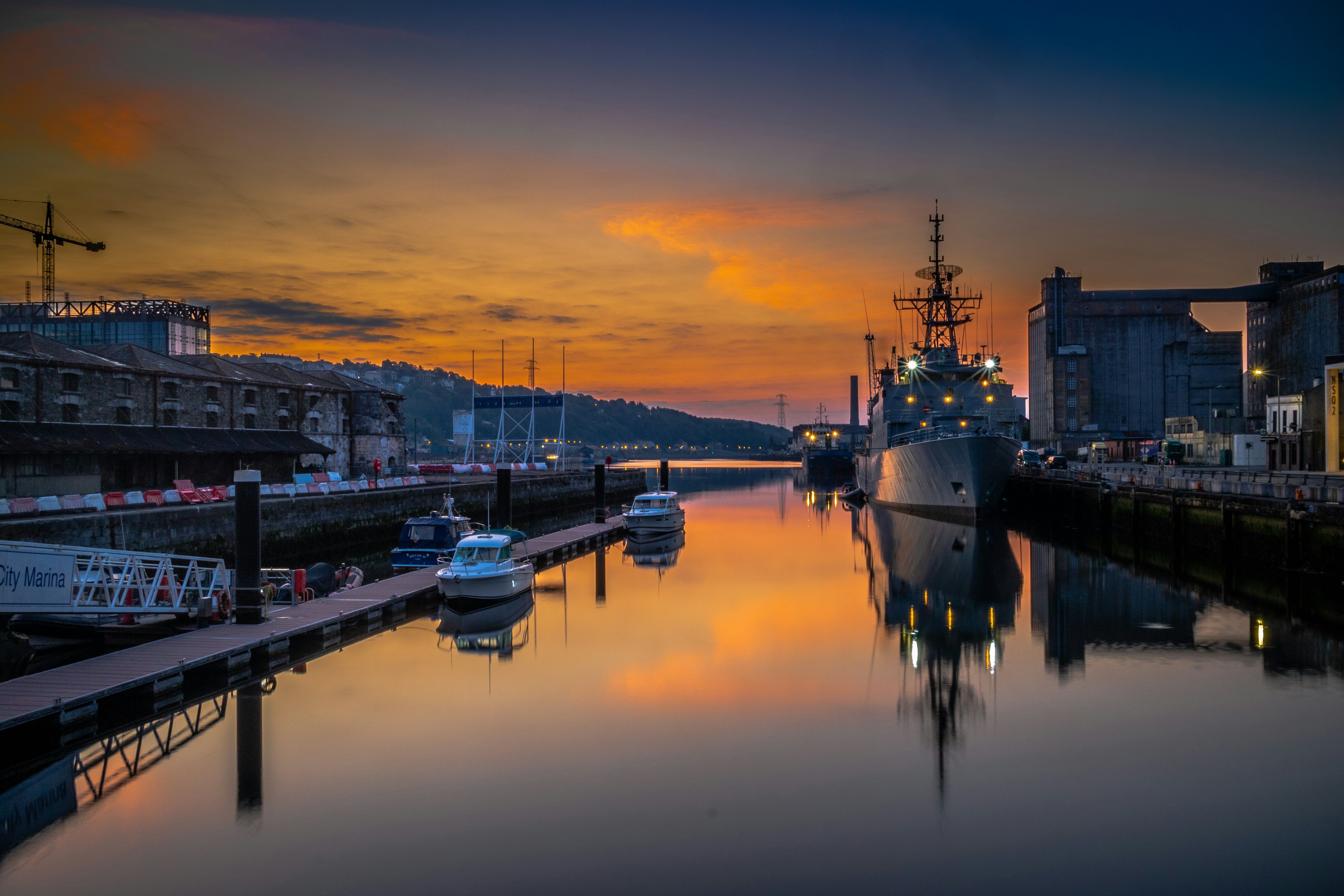
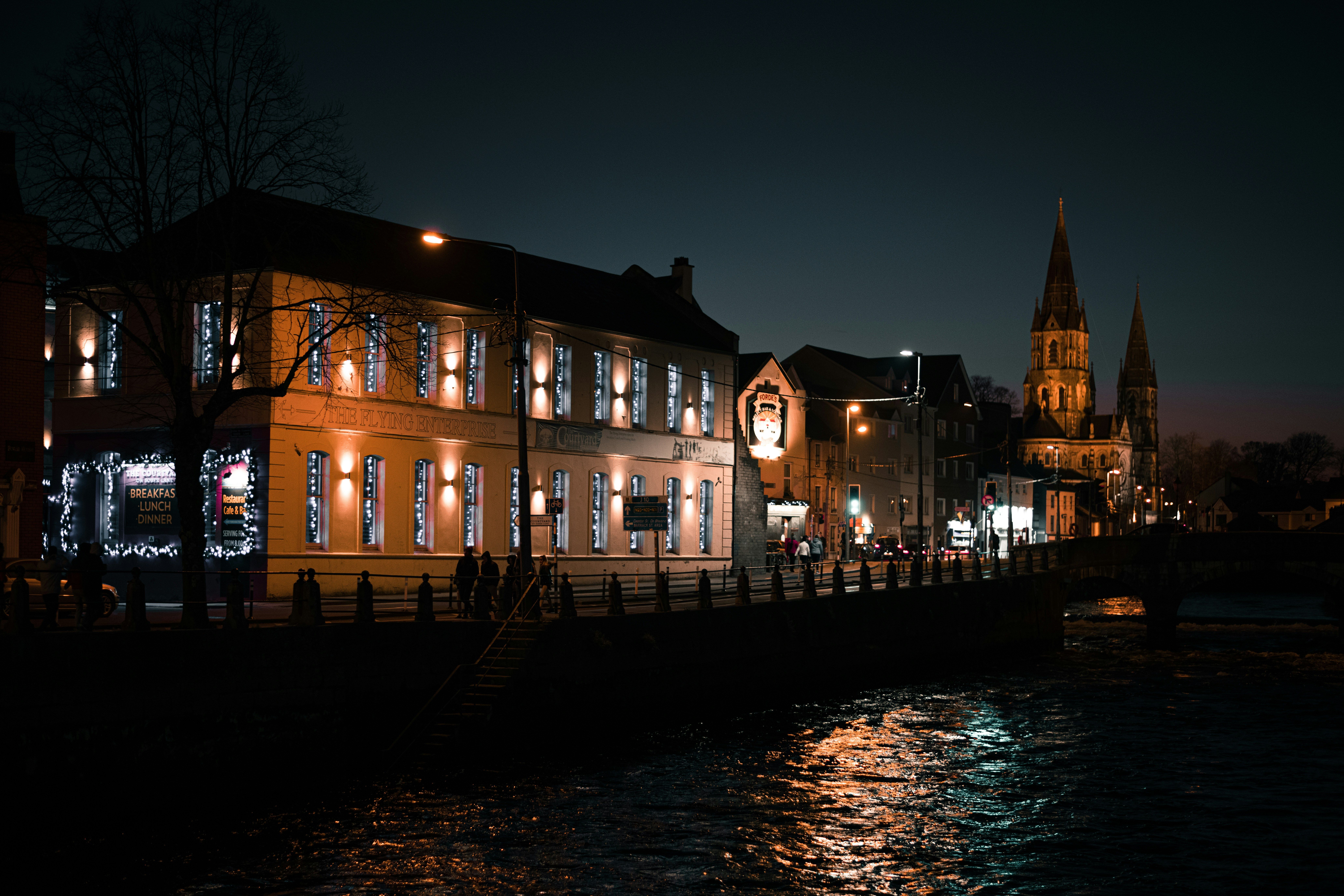
It is located at the head of the Lee Valley on the south coast of Ireland, built on an island between two channels of the River Lee, and it spills uphill in every direction through a city of Georgian terraces, Victorian churches, independent coffee shops, and the kind of hilly streets and harbour views that give Cork a distinctly Mediterranean quality on a sunny day.
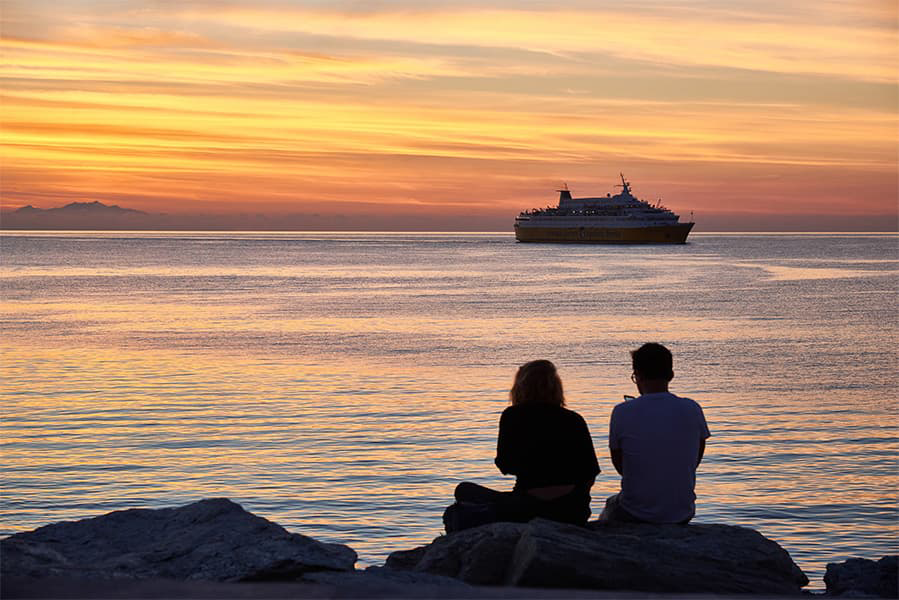
For visitors arriving from the UK, Cork is most easily reached by taking the Fishguard to Rosslare ferry or the Pembroke to Rosslare ferry and driving approximately 2 hours and 30 minutes south-west, or by taking the Holyhead to Dublin ferry and driving approximately 2 hours and 30 minutes south. Those travelling from France can arrive directly at Cork's Ringaskiddy port on Brittany Ferries' Roscoff to Cork ferry.
Cork is most conveniently reached from the UK by combining a ferry to Ireland with a car journey to the south-west. The closest ferry port to Cork is Rosslare Europort in County Wexford, located approximately 2 hours and 30 minutes' drive east of Cork city via the N25.
The ferry from Fishguard to Rosslare, operated by Stena Line, crosses in approximately 3 hours and 30 minutes, whereas the ferry from Pembroke to Rosslare, operated by Irish Ferries, takes approximately 4 hours.
Alternatively, the ferry from Holyhead to Dublin, operated by both Irish Ferries and Stena Line, arrives in Dublin, which is approximately 2 hours and 30 minutes south on the M8 motorway. Anyone travelling from France, Brittany Ferries operates a direct ferry from Roscoff to Cork (Ringaskiddy), with an overnight crossing of approximately 14 to 15 hours running twice a week.
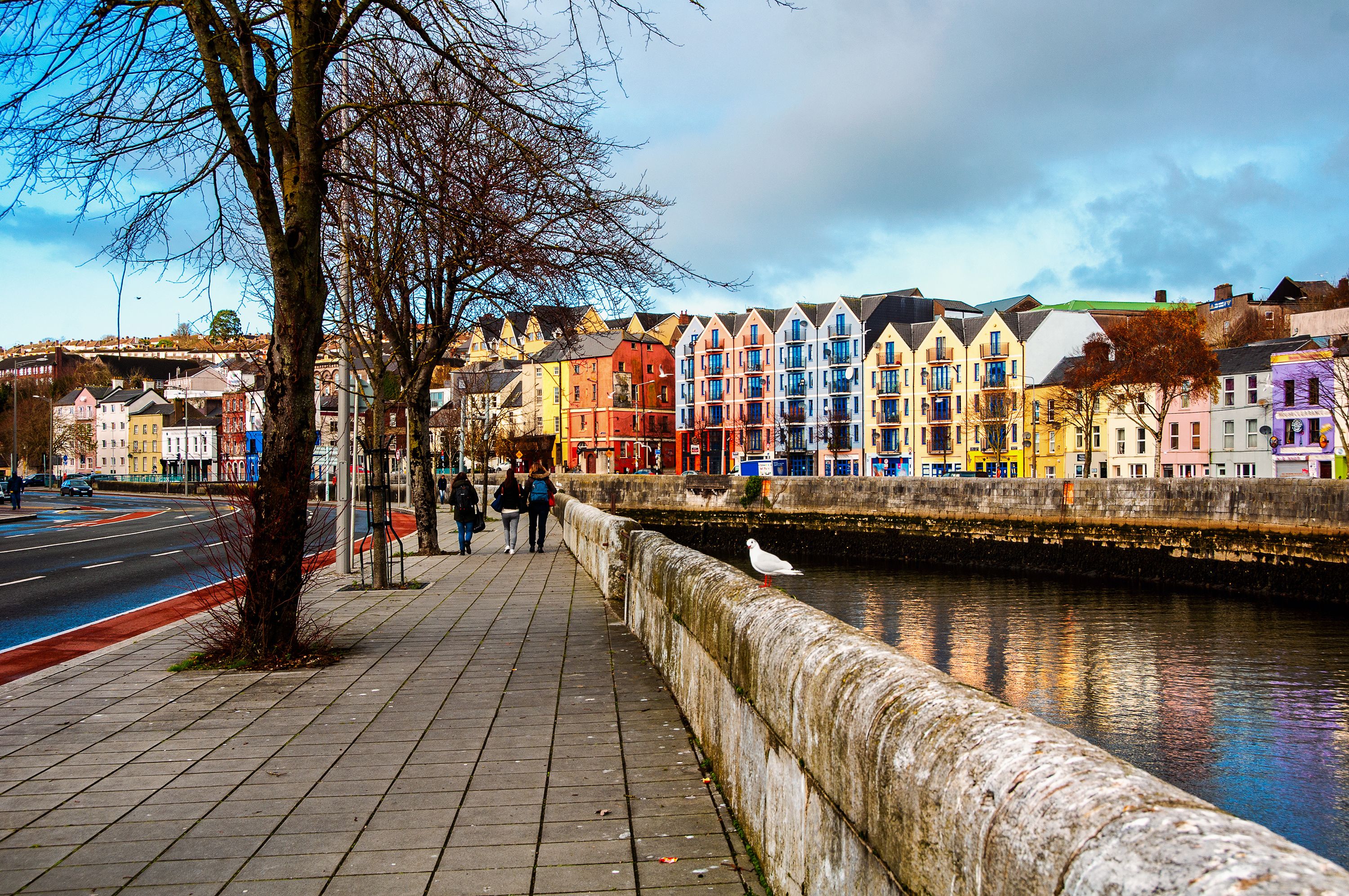
The Rosslare approach is the most direct way to reach Cork from Wales and suits those who wish to begin their Cork and south-west Ireland itinerary immediately upon arrival, with the scenic N25 coastal road taking them through Waterford City, Youghal, and Midleton before arriving in Cork.
Taking a car on the Fishguard to Rosslare ferry or the Pembroke to Rosslare ferry is the most flexible choice, as Cork and the west Cork peninsulas are poorly served by public transport, and a car is essential for exploring the county beyond the city.
The Holyhead to Dublin ferry is the most frequent and fastest crossing across the Irish Sea, with up to ten sailings per day during peak travel periods and crossing times of 2 hours and 15 minutes on the Irish Ferries fast catamaran or 3 hours and 30 minutes on the conventional ferry.
From Dublin port, Cork can be reached in approximately 2 hours and 30 minutes via the M7 and M8 motorways. The Liverpool to Dublin ferry, operated by P&O Ferries with an overnight crossing of approximately 8 hours, suits visitors arriving from northern England who want to avoid the drive across Wales.
Brittany Ferries operates a direct service twice a week from Roscoff in Brittany to Cork (Ringaskiddy), with crossings taking approximately 14 to 15 hours. This is the only direct ferry connection between Cork and mainland Europe and drops passengers at the Ringaskiddy terminal, situated approximately 30 minutes south of Cork city centre, making it a great option for visitors combining a south of Ireland tour with a holiday in Brittany or Normandy.
The crossing is an overnight sailing with cabins, restaurants, and bar facilities on board. For those combining Cork with a visit to France, the return Cork to Roscoff ferry departs from Ringaskiddy on the same twice-weekly schedule.
Cork is well-connected to Dublin by Irish Rail's intercity service from Cork Kent Station to Dublin Heuston, with up to ten trains departing per day in each direction and a travel time of approximately 2 hours and 20 minutes. Bus Éireann operates express services from Rosslare Europort to Cork city in approximately 3 hours and 30 minutes.
The Cork city bus network and the suburban rail network (the Mallow–Cork–Cobh and the Mallow–Cork–Midleton commuter lines) give excellent access to Cobh, Midleton, and the inner suburbs, though Kinsale, Blarney, and the west Cork peninsulas require either a car or a tour operator.
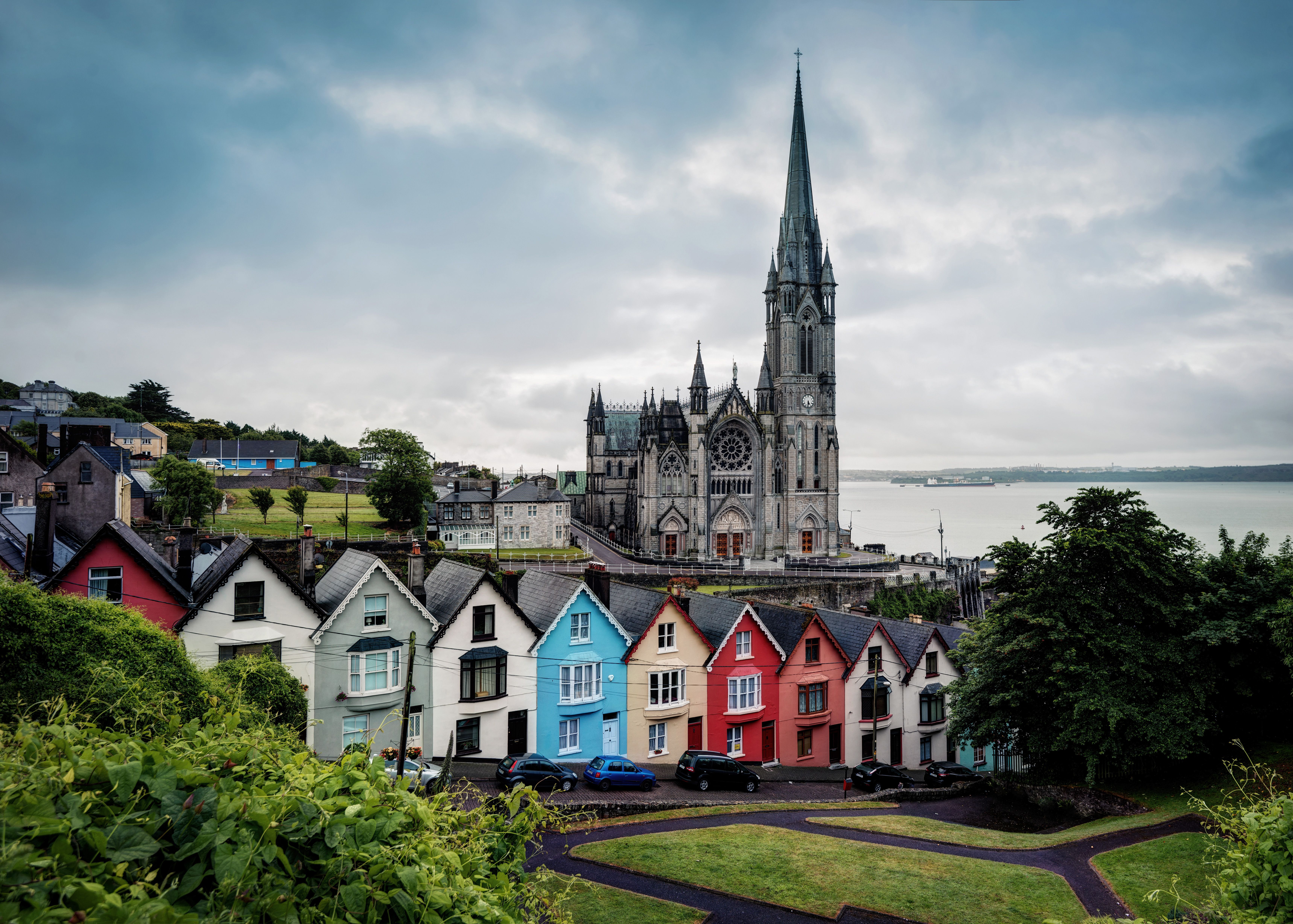
Cork city centre is very walkable. The island between the two channels of the Lee, which forms the historic core, can be crossed in around 20 minutes on foot. Most of the main city attractions, like the English Market, Cork City Gaol or St Fin Barre's Cathedral, are within comfortable walking distance of one another.
However, you will require a car if you want to explore the county, as Kinsale, Blarney, Cobh, Fota, the Beara Peninsula, Mizen Head, and the Ring of Kerry all lie beyond the city's public transport network.
The city splits naturally into three areas, all walkable from a central hotel. The island centre contains the English Market, the Crawford Art Gallery, the Opera House, Grand Parade, and the main shopping streets. The northside rises steeply through the Shandon area to St Anne's Church and Cork City Gaol in the Western Road area.
The southside climbs through the Barrack Street and Bishop Street neighbourhood to St Fin Barre's Cathedral and Elizabeth Fort. The lanes and alleys between The Grand Parade and St Patrick's Street, particularly those in the French Quarter around Carey's Lane, are also worth exploring. Alternatively, you can buy a Leap Card from any convenience store, which provides discounted fares on the Bus Éireann city services when walking isn't practical.
Bringing a car completely transforms the possibilities of a trip to Cork, giving full access to a range of West Cork's extraordinary coastal and mountain scenery. Blarney Castle is 8km north-west of the city and can be reached in 15 minutes.
Kinsale is 25km south-west (30 minutes). Cobh and Fota Island are 23km east (25 minutes via the N25 and R624). Midleton is 25km east (25 minutes). Mizen Head is 130km south-west (approximately 2 hours). The Beara Peninsula circuit from Cork is a full day's drive of around 300km.
For those looking to park in Cork city centre, there are several multistorey car parks on Lavitt's Quay, Kyrl's Quay, and the Merchants Quay Shopping Centre.
The Cork suburban rail network operates two routes for visitors: the Mallow–Cork–Cobh line serves Cobh for anyone heading to the Titanic Experience and Spike Island ferry, and the Mallow–Cork–Midleton line serves Midleton for anyone heading to the Jameson Distillery Experience. Both of these trains from Cork Kent Station take approximately 25 minutes.
The Spike Island ferry departs from Kennedy Pier in Cobh, a short walk from Cobh station. Bus Éireann route 226 connects Cork city centre with Cork Airport in just 30 minutes, while route 215 connects with Blarney Castle in 30 minutes from the city. For Kinsale and the west Cork towns, a car is the practical choice for any itinerary that extends beyond a single day in the city.
Cork has a moist Atlantic climate, with warmer and somewhat drier weather than the rest of Ireland, benefiting from the Gulf Stream's tempering influence. Summer is by far the most popular season for exploring west Cork's coastline and the Ring of Kerry, while spring and autumn are perfect for exploring the city itself, with the October Jazz Festival and the November Film Festival making autumn particularly appealing.
The city is lively throughout the entire year, with a large student population at University College Cork that keeps the cultural and social life active even in the quieter winter months.
Daytime temperatures range from 9–16°C through spring, and the county's coastal landscape is at its most vivid in May and June, when the hedgerows and clifftop vegetation are in full bloom. Attractions like the English Market, the Crawford Gallery, and the city's independent restaurants and coffee shops are all operating without the influx of summer visitors.
The Wild Atlantic Way coastal walks, especially along the Mizen Head and Beara peninsulas, are at their best in April and May, with the gorse and fuchsia in bloom across the cliff slopes. Gougane Barra, the mountain lake sanctuary west of Macroom, is spectacularly atmospheric in spring before the summer walking season begins.
Perfect for: the English Market and Cork city without crowds, the west Cork peninsulas in spring light, Blarney Castle and gardens at their most colourful, and the best hotel rates of the year.
Temperatures can reach 18–22°C on the warmest summer days, and the west Cork coast teems with visitors, sailing boats, and outdoor eating venues. Whale watching season runs between April and November, with peak sightings of humpback, fin, and minke whales off the south-west coast in July and August. The West Cork Literary Festival at Bantry and the Kinsale Arts Festival get underway in July and August, marking the most notable cultural events of the summer season.
Perfect for: whale watching off the west Cork coast, the Kinsale harbour and restaurants, the Beara Peninsula circuit, Fota Wildlife Park and Cobh, and the full summer programme of sailing and outdoor events.
Autumn is arguably the finest season for visiting Cork. The Cork Jazz Festival in late October is one of the most celebrated music events in Ireland, a long weekend of international jazz, blues, and soul that takes over almost every pub, hotel, and concert venue in the city and has been running since 1978. In addition, the Cork Film Festival gets underway in November and is among the most prestigious in Ireland.
September and October are excellent months for west Cork road trips as the summer crowds have departed, whale watching season is at its peak, and the light over the Atlantic headlands in autumn is extraordinary. October temperatures typically drop to 11–15°C.
Perfect for: the Cork Jazz Festival (October), the Cork Film Festival (November), west Cork in autumn light with minimal crowds, and the best value accommodation in the city.
Winter in Cork is mild but wet, with temperatures rarely dropping below 4°C. The city has a festive Christmas atmosphere, with the Coal Quay Christmas Market and the Christmas lights along St Patrick's Street among the best in Ireland. The English Market is at its most atmospheric in December, fully stocked with Cork spiced beef as well as smoked fish, artisan cheeses, and seasonal produce. January and February are the quietest and most affordable months, though the city's restaurants and pubs are still in full swing.
Perfect for: the Christmas markets and Cork spiced beef season, the English Market at its most festive, the lowest hotel rates of the year, and the most authentic encounter with Cork's food and pub culture.
Three days is often enough for a trip to Cork, with two days dedicated to the city and its immediate surroundings, and at least one for the county beyond, whether that means Kinsale and the coast, the west Cork peninsulas, Blarney, or Cobh and Fota.
A week gives you sufficient time to explore the Ring of Kerry, the Dingle Peninsula, and Killarney from the Cork base, completing a full circuit of Ireland's most celebrated south-western scenery.
The English Market on Grand Parade is the most celebrated institution in Cork and one of the finest covered food markets in the world, an enclosed Victorian market hall that has been feeding the people of Cork since 1788. The market’s name derives from the English Corporation that administered Cork under British rule, built to distinguish it from the separately managed Irish Market that operated on nearby Peter Street.
Nowadays, there are around 50 stalls that occupy the market's main hall and upper gallery, selling everything from beef and free-range pork to artisan cheeses, smoked salmon, Gubbeen farmhouse products, Cork butter, tripe, and fresh fruit and vegetables. Chef Rick Stein even described it as the best covered market in Ireland. The Farmgate Café on the gallery level makes dishes from the market produce below every day and is one of the best lunches available in the city. The market is open from 8am to 6pm on Monday to Saturday, and is entirely free to enter.
Blarney Castle, located 8km north-west of Cork city, is Ireland's most visited tourist attraction. The castle itself is one of the finest examples of a medieval Irish tower house and gives panoramic views from its battlements across the Lee valley. The Blarney Stone, set into the battlements below the parapet, is kissed by leaning backwards over a 25-metre drop and is said to confer the gift of eloquence on anyone who does so; a legend that dates all the way back to the 16th century.
The 60 acres of gardens surrounding the castle are just as impressive as the castle itself. There, you will find a Victorian rock garden, a Druid Glen with ancient yew trees, a Fairy Glade, and a winding path along the Blarney Stream that provides some of the most atmospheric woodland walking in County Cork. The castle is open all year round. Admission costs approximately €18 for adults and €10 for children.
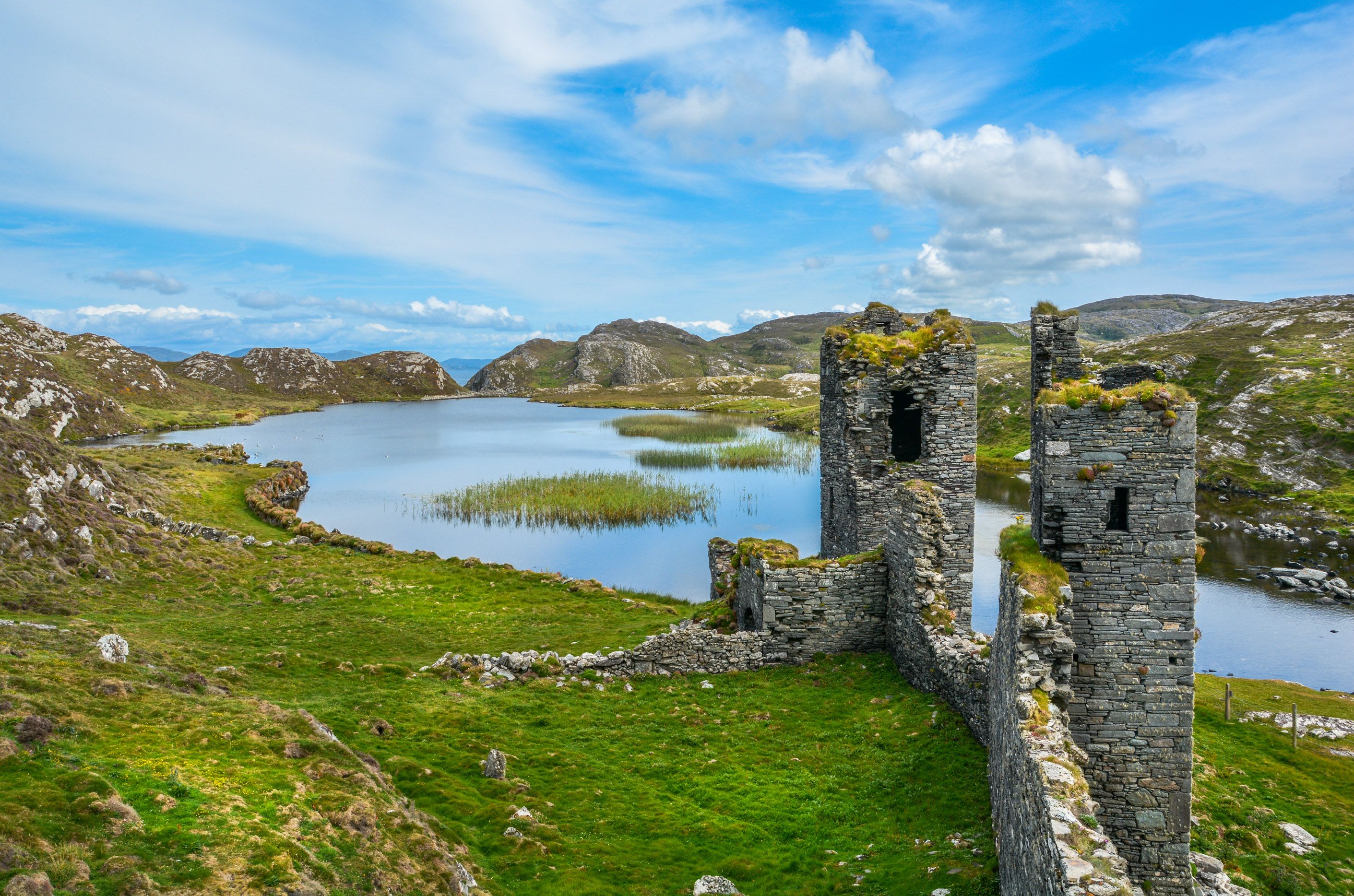
Cobh, located 23km east of Cork, is one of the most striking towns in Ireland. When you arrive, you will be greeted by a steep hillside of brightly painted Victorian terraces, known as the Deck of Cards, rising above the harbour below the spire of St Colman's Cathedral. Cobh was the last port of call for the RMS Titanic on 11th April 1912, when 123 passengers boarded the ship by tender. The Titanic Experience Cobh, in the restored White Star Line ticket office on Cobh's waterfront, is one of the most popular experiences in the area. Visitors are assigned the identity of a real Titanic passenger from Cobh and follow their story throughout the exhibition.
From Kennedy Pier, the 15-minute ferry to Spike Island drops visitors on a 103-acre island dominated by the massive 18th-century fort of Fort Mitchel, formerly a military garrison, prison, and convict depot, named Europe's top tourist attraction at the 2017 World Travel Awards. Please allow a full day to explore both Cobh and Spike Island.
Fota Wildlife Park on Fota Island, located 15km east of Cork, is one of the finest wildlife parks in Ireland. It has a 100-acre open habitat reserve where animals roam freely through natural enclosures. The park accommodates more than 90 species, including cheetahs, giraffes, ostriches, ring-tailed lemurs, kangaroos, and Barbary macaques.
The cheetah run, where the animals stretch to full speed across the open savanna habitat, is the most spectacular experience available in the park. Fota is an independently funded, non-profit charity with internationally significant conservation breeding programmes. Entry into the park costs approximately €22 for adults and €15 for children. It can be reached by car in 25 minutes from Cork city centre or via the suburban rail from Cork Kent Station to Fota Station in 25 minutes.
Kinsale, located 25km south-west of Cork, is a medieval fishing port with an historic centre of narrow streets and brightly painted shopfronts. The small town has two 17th-century forts that guard the harbour entrance on opposite banks, along with a wide array of seafood restaurants that have made it the unofficial gourmet capital of southern Ireland. Charles Fort, constructed in 1682, is the most complete bastioned fortification in Ireland and is open for guided tours throughout the whole year, providing extraordinary views across the harbour to the town. Entry costs approximately €5.
West Cork is predominantly comprised of peninsulas, offshore islands, fishing harbours, and Atlantic headlands stretching from Kinsale in the east to Mizen Head and the Beara Peninsula in the far south-west. The Mizen Head Signal Station, on a dramatic promontory at the southernmost tip of the Irish mainland and accessible by a suspension bridge over an Atlantic channel, gives some of the most dramatic coastal views in the country.
The Beara Peninsula circuit, approximately 160km of coastal road starting and ending in Kenmare or Glengarriff, is one of the best driving routes in Ireland, with the option to ride the only cable car in Ireland to the car-free Dursey Island at the peninsula's western tip. Another great outdoor activity is whale and dolphin watching on the south-west coast of Ireland. The offshore waters host humpback, fin, and minke whales from April to November, with Courtmacsherry, Baltimore, and Union Hall the main departure points for wildlife watching cruises.
Cork City Gaol is a Gothic Revival prison building that operated as a county gaol until 1923 and is now one of the most atmospheric heritage museums in Ireland. The guided tour takes visitors through restored cells with costumed wax figures, with particular focus on infamous inmates and political prisoners. Entry to the gaol costs approximately €12 for adults.
The Cork Butter Museum on Shandon Street follows the story of Cork's dominance of the global butter trade. Cork was once the leading exporter of butter in the world during the 1890s, exporting to every continent. Alternatively, the Jameson Distillery Experience in Midleton, traces the history of Irish whiskey distilling through the original 18th-century distillery buildings, including the world's largest surviving pot still at 31,618 gallons capacity. Entry tickets cost approximately €28.
Gougane Barra (60km west): The valley and lake of Gougane Barra, situated in the Sheehy Mountains west of Macroom, is the most beautiful inland landscape in County Cork. It is a glacial valley with a mountain lake surrounded on three sides by peaks rising to over 500 metres, at the head of which stands a small island with a 19th-century chapel on the site of the oratory built by Cork's patron saint St Finbarr in the 6th century.
Killarney and the Ring of Kerry (90km west): The Ring of Kerry, a 179km circular driving route around the Iveragh Peninsula, is Ireland's most popular scenic drive, passing through coastal villages and lake landscapes unlike any other. Killarney National Park contains Muckross House, the three Lakes of Killarney, Torc Waterfall, and the Gap of Dunloe mountain pass. Killarney is 90km and 1 hour 20 minutes west of Cork on the N22, while the full Ring of Kerry circuit is a full day's drive from Cork.
The Dingle Peninsula (150km north-west): At 456 metres, the Conor Pass is the highest mountain road in Ireland, crossing the spine of the Dingle Peninsula above a landscape of almost theatrical drama. Dingle town, on the south shore of the peninsula, is an Irish-speaking fishing port with an abundance of pubs and restaurants despite its small size. The Slea Head Drive around the western tip of the peninsula passes prehistoric beehive huts, the Blasket Islands visitor centre, and the Gallarus Oratory.
Cork is an excellent family destination. Fota Wildlife Park, accessible by car and suburban rail, is the best family attraction in the county by far, with a full day of open-habitat wildlife encounters. The grounds of Blarney Castle include a Fairy Glade, a Witch's Kitchen, and woodland trails that are well-suited for children alongside the castle tour.
The Spike Island ferry and fort provide a vivid introduction to Irish prison and military history for older children. Cobh's Titanic Experience is designed for mixed-age groups, and the harbourfront playground and ice cream parlours make Cobh an excellent half-day family destination.
The English Market is entirely free to browse, with a lunch plate at the Farmgate Café costing between €12 and €15, making it one of the most affordable places to eat. There are several venues that are free to visit in Cork, including the Crawford Art Gallery, Elizabeth Fort, the walk up to St Anne's Church in Shandon, the University College Cork campus. If you are visiting pubs, a pint of Murphy's or Beamish — Cork's own stout, preferred locally over Guinness — in any neighbourhood pub costs around €5.50 to €6.50.
Lough Hyne, located 5km south of Skibbereen in west Cork, is a tidal saltwater lake linked to the Atlantic by a narrow channel through which the sea races at up to 8 knots at the turn of the tide, creating one of the most beautiful small lakes in Ireland. The Nano Nagle Place on Douglas Street in Cork city is also worth visiting. It’s a restored walled convent dedicated to the life of Nano Nagle (1718–84), with a serene and beautifully designed heritage garden and museum in the heart of the city, almost entirely overlooked by tourists.
There is also the island of Sherkin, accessible by a 10-minute ferry crossing from Baltimore in west Cork. This is a car-free island of approximately 100 residents, three sandy beaches, the ruins of a 15th-century Franciscan friary, and extraordinary views of the Fastnet Rock lighthouse on the horizon.
Cork calls itself the food capital of Ireland, and the claim is difficult to argue with. The city's food culture is built on a foundation of remarkable local produce, provided by the dairy farms of the Lee Valley and Munster hinterland, the fishing harbours of Kinsale and Baltimore, and the artisan producers who sell at the English Market.
Murphy's and Beamish stouts, both brewed in Cork, are the preferred draught pours of the city's pubs as they are slightly sweeter and creamier in character than Guinness and the most popular choice in any Cork pub.
Beyond the traditional, Cork's restaurant scene offers some of the finest cooking in Ireland. Kinsale has long been celebrated as a gourmet town, with seafood restaurants of national reputation. The west Cork cheese tradition is the most diverse farmhouse cheese culture in Ireland. The cluster of independent restaurants in the city centre around Pembroke Street, Princes Street, and the Mardyke area includes venues with Michelin recognition and makes Cork one of the best cities in Ireland for fine dining.
Cork city has a wide range of accommodation from five-star hotels to independent guesthouses, most of which are located around the South Mall, MacCurtain Street, and North Main Street. Staying in the city centre keeps you within walking distance of the English Market, the Crawford Gallery, and the best restaurants and pubs. The MacCurtain Street area on the northside is slightly more affordable and has a good selection of independent guesthouses within 15 minutes' walk of the centre.
For those who want a west Cork base, Kinsale, Bantry, and Clonakilty all have excellent hotels and B&Bs with direct access to the coast. You can book accommodation via our accommodation page or directly with properties for the best rates.
Cork is best approached as a two-part destination: the city itself warrants at least two full days of exploring, and the county beyond warrants as many more as you can give it. A car is essential for anything beyond the city. The Fishguard to Rosslare ferry or Pembroke to Rosslare ferry, combined with the drive along Ireland's south coast, is the best approach for UK visitors travelling with a car.
Duration: 2–3 days
Day 1: Arrive in Cork by ferry to Rosslare and drive south. Check in and walk around the English Market and have lunch at the Farmgate Café, before exploring Grand Parade and St Patrick's Street. In the afternoon, check out St Fin Barre's Cathedral and Elizabeth Fort. In the evening, enjoy a pint of Murphy's in a Shandon pub and dinner in one of the Pembroke Street or French Quarter restaurants.
Day 2: Take a morning drive to Blarney Castle to explore the castle and kiss the stone. Return to the city for lunch. In the afternoon, go on the Cork City Gaol tour or walk around the Crawford Art Gallery. In the evening, drive 25 minutes to Cobh for the Spike Island late afternoon ferry and fort tour. Have dinner in Cobh.
Day 3 (optional): Drive 25 minutes south-west to Kinsale. Spend the morning exploring the old town, the harbourfront, and Charles Fort. Have lunch at a Kinsale seafood restaurant before returning to Cork for the evening, or continue to Rosslare Europort for the Rosslare to Fishguard ferry or Rosslare to Pembroke ferry.
Why we love it: Cork repays visitors who treat it as the equal of Dublin as opposed to a secondary stop. The English Market, Blarney, Cobh, and Kinsale each merit a full half-day, and the city's restaurant and pub culture is outstanding on its own terms. Taking the ferry to Rosslare and driving south puts you in Cork in time for an evening arrival, making the most of a long weekend from anywhere in the UK.
Duration: ~7 days
Day 1: Arrive via the Fishguard to Rosslare ferry or Pembroke to Rosslare ferry. Drive along the southern coast via Waterford and Youghal to Cork. Check in and evening in the English Market area. Stay overnight in Cork city.
Day 2: Spend the day exploring Cork city’s best attractions, including English Market, Crawford Art Gallery, St Fin Barre's Cathedral, Elizabeth Fort, and St Anne's Church. In the evening, have dinner and listen to some live music in a Cork city pub. Stay overnight in Cork.
Day 3: Head to Cobh and Fota for the Titanic Experience in the morning, lunch in Cobh, afternoon Spike Island ferry and fort tour. Return to Cork. Overnight in Cork.
Day 4: Walk around Blarney Castle in the morning. Drive south-west via Kinsale, have lunch, then continue onwards to Clonakilty. Stay overnight in Clonakilty or west Cork.
Day 5: Spend the day in West Cork, exploring Drombeg Stone Circle, Glandore harbour, Baltimore, and Lough Hyne. Stay overnight in Skibbereen or Bantry.
Day 6: Visit Mizen Head in the morning, then drive north along the Sheep's Head Peninsula back to Bantry. In the afternoon, the Beara Peninsula entry through Glengarriff and Healy Pass. Stay overnight near Kenmare.
Day 7: The Ring of Kerry circuit from Kenmare, or drive directly to Killarney for the National Park. Return east to Cork or drive to Rosslare Europort for the evening Rosslare to Fishguard ferry or Rosslare to Pembroke ferry.
Why we love it: This weeklong route uses the Fishguard to Rosslare ferry or Pembroke to Rosslare ferry as both arrival and departure point, with the entire south-west of Ireland unfolding in a logical west-pointing arc from Rosslare through Cork, the west Cork coast, and the Ring of Kerry before the return east.
There is one direct ferry to Cork itself. Brittany Ferries provides a biweekly service from Roscoff in Brittany to Cork (Ringaskiddy), with a sailing time of approximately 14 to 15 hours, a great option for those travelling from France, with the return Cork to Roscoff ferry on the same schedule.
For visitors from the UK, the most practical routes are the Fishguard to Rosslare ferry in 3 hours and 30 minutes or the Pembroke to Rosslare ferry in 4 hours, followed by a 2 hours and 30 minutes' drive south-west to Cork on the N25. The Holyhead to Dublin ferry, followed by a drive south on the M8 motorway, is an equally convenient alternative.
A car is strongly recommended for getting the most out of Cork and County Cork. Cork city itself is walkable and has good suburban rail connections to Cobh, Fota, and Midleton. However, Kinsale, Blarney, west Cork, Mizen Head, the Beara Peninsula, and the Ring of Kerry are all best reached by car. Bringing your vehicle on the ferry is the best arrangement for a holiday to Cork and is strongly recommended for any itinerary that extends beyond the city itself.
More routes than anyone else.

Compare fares, times & routes in one place.
Change plans easily with flexi tickets.

Book e-tickets & manage trips in-app.
Live ship tracking & real-time updates.

Top-rated customer support when you need it.