Greece Island Hopping: 5-7 Day Trip Itinerary
Greece Island Hopping: 5-7 Day Trip Itinerary
A trip to Greece doesn't require weeks off work to feel like a proper adventure. With more than 6,000 islands connected by one of Europe's most extensive ferry networks, a 5–7-day itinerary is long enough to visit two or three destinations, soak up some real-life island culture, and still have an enjoyable time, all without the trip feeling rushed.
This guide takes you through building a complete Greece island hopping itinerary in just 5–7 days – from picking the right island groups and booking ferry tickets, to practical tips on car rental, travel insurance, and the best time of year to visit.

Greece has one of the most extensive ferry networks in all of Europe, and for a 5–7 day itinerary, that's exactly what makes island hopping feasible. Between conventional ferries, high speed ferries and the odd water taxi, you can comfortably island hop around the Aegean Sea or the Ionian Sea without ever needing to take a flight. Unlike cruise ships, which follow a fixed schedule, ferries enable you to set your own pace and explore the islands exactly when you want to.
Ferry schedules run far more frequently during the high season between June and September, when demand for ferry services is at its peak. If you're travelling in the shoulder season, either side of the busy summer months, services are usually reduced, so it's worth double-checking ferry schedules before you commit to a tight 5–7 day plan.
Broadly speaking, there are two main types of ferry:
Most 5–7 day itineraries begin in Athens, which has excellent connections to the Greek islands. Athens is served by one of Greece's busiest international airports, with regular international flights arriving from across Europe and beyond, making it an easy jumping-off point whether you're taking a flight from Athens onward or heading straight to the port.
Athens has three ports of its own: Piraeus, Rafina and Lavrio. Other useful mainland ports include Thessaloniki, Igoumenitsa and Patras.
If you would prefer to explore an island at your own pace once you arrive, it's worth deciding whether to rent a car. Car hire is widely available on the larger islands, or you can rely on public transport and local buses to get between beaches, villages and archaeological sites. Both options are realistic for a 5–7 day trip, depending on how many stops you wish to make.
Greece's islands are grouped into several island groups, and picking just one or two for your 5–7 day itinerary is the easiest way to keep things manageable. Options include the Cyclades in the Aegean Sea, with destinations like Mykonos, Santorini, Paros and Naxos, the Dodecanese, the Ionian Islands in the Ionian Sea, with destinations like Corfu, Kefalonia and Zakynthos, and the Saronic Islands, just a short boat trip from Athens. There's also Crete, the largest Greek island, which doesn't belong to a specific group but is well connected by ferry.
A week-long trip doesn't leave much room for error, so a little planning goes a long way. Here's how to put together a 5–7 day travel itinerary that actually works:
During the high season, ferry tickets for popular routes can sell out, so it's worth booking ahead if your dates are fixed, especially for busier crossings like the ferry from Athens to Mykonos and the ferry from Athens to Santorini. Travelling in the shoulder season means fewer crowds and more flexibility, but ferry schedules aren’t usually as frequent, so check timings before you decide on your itinerary.
With only 5–7 days to play with, it’s best to visit only two islands or three if you keep travel time short. As a rough guide, we recommend spending one to two nights on each island, allowing yourself extra time around each crossing for check-in and security, as well as any unforeseen delays.
Our price finder and app lets you compare ferry options, ferry schedules and prices across operators in one place, so you can assemble your whole 5–7 day itinerary without jumping between multiple websites.
Begin your journey by flying into Athens, one of the country’s main international airports. From here, transfer directly to the port of Piraeus to board the Athens to Mykonos ferry with SeaJets and arrive in Mykonos in under 3 hours.
Start in Mykonos, known for its lively atmosphere, whitewashed architecture, and maze of narrow streets. From Mykonos, you can take a short boat trip to the nearby island of Delos, one of Greece’s most significant ancient Greek sites and a UNESCO-listed archaeological site, best known as the legendary birthplace of Apollo and Artemis.
Continue to Paros and Naxos, where the pace softens, and the landscape opens up to long stretches of sandy beaches, traditional villages, and authentic Greek cuisine. These islands offer a more relaxed contrast to Mykonos, with opportunities to explore inland and experience everyday Greek island life.
Conclude your journey in Santorini, where dramatic cliffs and the island’s famous caldera create one of the most iconic views in the Aegean Sea. With its striking scenery, crystal clear water, and unforgettable sunsets, Santorini provides a fitting finale to a carefully curated island-hopping experience.
If Sarakiniko Beach's otherworldly white rock formations are on your list, it's an easy detour to Milos, one of the Cyclades' smaller islands and well worth the extra day if you can stretch your itinerary closer to 7 days.
The Ionian Islands, located in the turquoise water of the Ionian Sea along Greece’s west coast, offer a greener and more tranquil alternative to the Cyclades islands. This region is ideal for travellers seeking a relaxed trip to Greece with lush landscapes, crystal clear water and charming coastal towns.
Begin your itinerary in Corfu, known for its UNESCO-listed Venetian Old Town and excellent transport connections. From here, you can even take a short 30 minute boat trip across the sea for an international day trip to Albania.
Continue on to Kefalonia, widely regarded as one of the most stunning Ionian Islands with the most beautiful beaches, featuring dramatic cliffs, turquoise water, and untouched natural scenery.
Conclude your journey in Zakynthos, home to the iconic Navagio (Shipwreck) Beach and a coastline filled with hidden coves best explored by boat.
If your trip to Greece is limited to around five days, the Saronic Islands offer one of the most practical itineraries. Located just off the mainland near Athens, these islands are easily reached from Piraeus via Greek ferries or even a private water taxi, with some crossings taking as little as 45 minutes. Their proximity makes them ideal for maximizing time on the ground rather than in transit.
Begin with a ferry from Athens to Aegina, home to the remarkably preserved ancient Greek Temple of Aphaia, an important archaeological site set among pine-covered hills with sweeping views across the Aegean Sea. From there, continue to Poros, where tranquil waterfront cafés and inviting swimming spots create an easy transition into island life.
End your journey in Hydra, a truly distinctive and tiny island where cars are strictly forbidden. Instead, transport comes in the form of donkeys, water taxis, or on foot through narrow, stone-paved streets. The island’s elegant harbor, lined with traditional tavernas serving fresh, local Greek cuisine, provides a memorable setting to enjoy a final glass of wine as the sun sets over the sea.
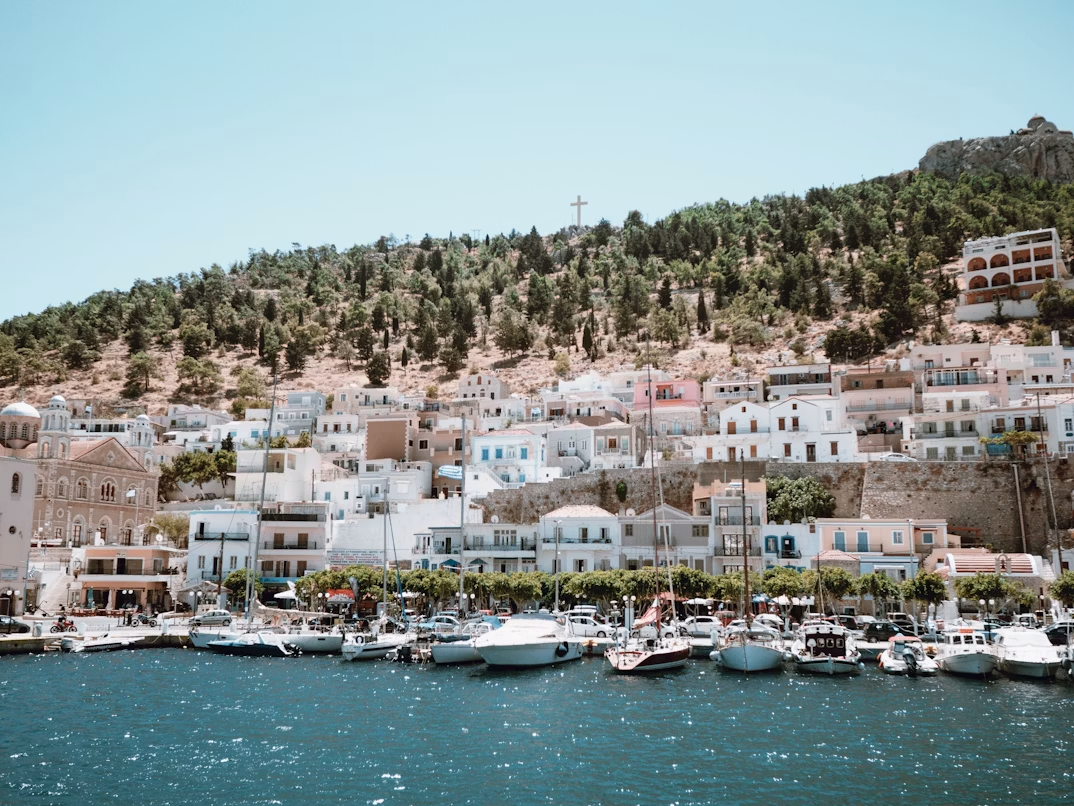
Limited time doesn’t have to limit your travel options. Greece’s ferry network offers frequent connections to nearby islands—and even neighboring countries—with many journeys taking under an hour. This makes it easy to incorporate an additional island day trip into a 5–7 day itinerary.
From Corfu, it's just a 30-minute crossing over to Saranda in Albania – an easy addition if you want to say you've visited two countries on the same trip.
The Dodecanese are located very close to the Turkish coast, and routes like Kos to Bodrum make for a popular half-day trip, while Rhodes connects to Fethiye and Marmaris in Turkey.
For those extending their trip to Greece beyond a week, ferries from Italy to Greece typically take between 6 and 30 hours, arriving in ports like Igoumenitsa or Patras – a good option if you're bringing your own car over from mainland Europe.
For a well-paced Greece itinerary, most travellers find that visiting two islands within 5–7 days offers the best balance between exploration and relaxation. It is possible to visit three islands if travel time is minimal—typically involving short ferry routes of around 30 minutes to 45 minutes between destinations in the Aegean Sea or Ionian Sea. Attempting more than this often results in spending too much time navigating ferry schedules and travelling as opposed to enjoying beautiful beaches, ancient ruins, or local culture.
Travel insurance is strongly recommended for any trip to Greece. It provides essential coverage for disruptions such as delayed or cancelled ferry services, which can occur during the high season when winds affect crossings in the Cyclades islands. It also protects against lost luggage, medical emergencies, and unexpected changes to plans involving international flights or cruise ships. Having comprehensive cover always ensures peace of mind while travelling between popular Greek islands.
When planning an island-hopping itinerary in Greece, booking with Direct Ferries can add valuable flexibility to your travel plans. We allow travellers to compare routes and schedules across multiple operators, making it easier to plan connections between islands and adjust itineraries if weather or schedule changes affect a crossing.
Certain ticket types come with flexible or amendable options, giving travellers the ability to rebook or shift departure times without excessive hassle. This flexibility is particularly useful in the Cyclades islands and other popular routes, where ferry schedules can shift at short notice during the high season. Combining flexible ferry bookings with travel insurance gives island hoppers an extra layer of confidence, ensuring that unexpected changes don't derail an otherwise carefully planned trip.
Whether to rent a car or rely on public transport all depends on the island you visit. On larger destinations such as Crete—the largest Greek island—or Corfu in the Ionian Islands, renting a car allows access to remote sandy beaches, hidden fishing villages, and lesser-known archaeological sites. On smaller islands, particularly in the Cyclades islands, buses, taxis, and even a water taxi or short boat trip are usually sufficient for getting around comfortably.
The summer months (June to August) are the most popular time to visit Greece, offering reliable ferry schedules, vibrant nightlife, and fantastic weather, with temperatures ranging from 28 degrees to 35 degrees Celsius during July and August.
However, this is also the high season, with larger crowds, higher prices, and busy international airports. The shoulder season between May and September is often considered one of the good times to travel, with fewer crowds, warm weather, and a more relaxed pace, making it perfect for a first-time trip to Greece.
Yes, combining well-known destinations with a tiny island is one of the most effective ways to structure a short Greece itinerary. Pairing popular Greek islands such as Mykonos or Santorini with a quieter nearby escape lets you experience both lively harbors and peaceful retreats. You can spend one day exploring ancient Greek heritage or visiting an archaeological site. Another enjoying a relaxing day trip to a secluded bay with turquoise water, fresh fish, and traditional Greek cuisine—perhaps ending the evening with a glass of wine overlooking the sea.
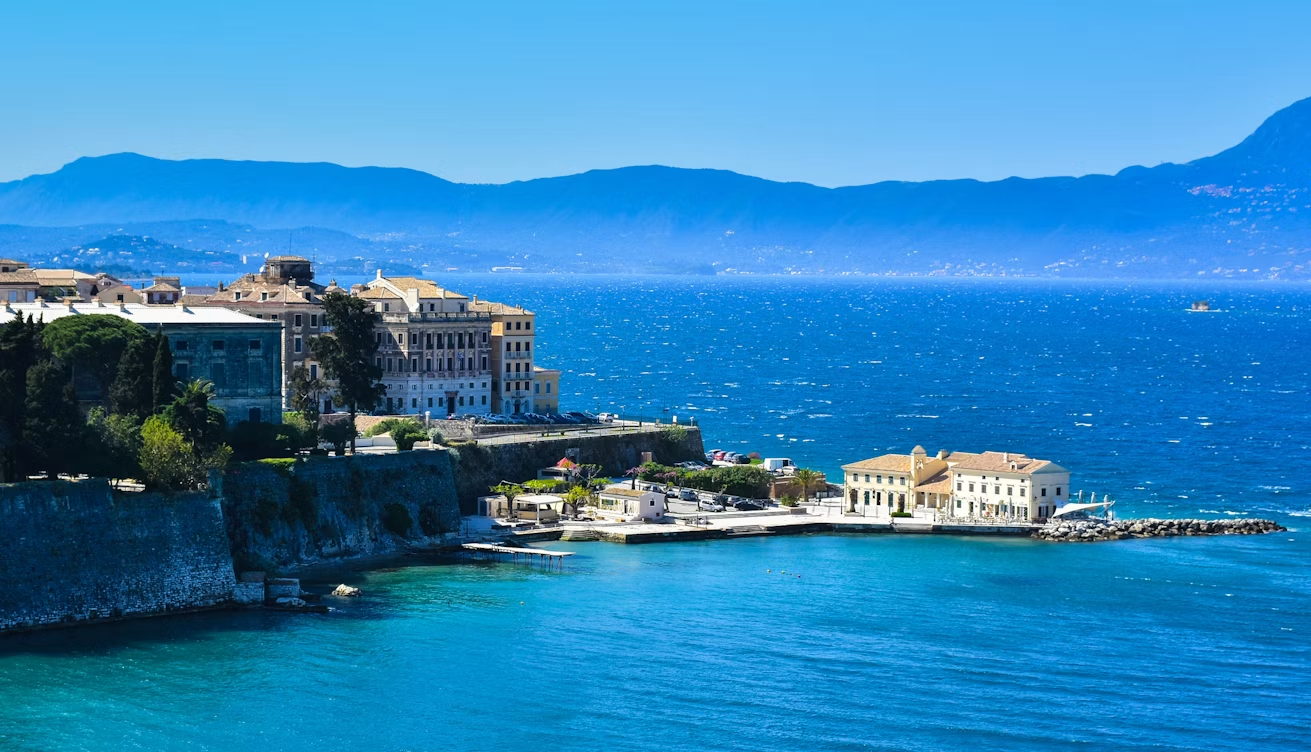
A week is all it takes to fall in love with Greece. Use our price finder to compare ferry routes and ferry tickets, then get ready to explore the islands your own way.
More routes than anyone else.

Compare fares, times & routes in one place.
Change plans easily with flexi tickets.

Book e-tickets & manage trips in-app.
Live ship tracking & real-time updates.

Top-rated customer support when you need it.