Travelling with car Isle of Wight
Travelling with car Isle of Wight
The Isle of Wight is one of the most popular destinations for driving in the UK. Taking your vehicle to the Isle of Wight by ferry is the only way to bring it across the Solent, with three ferry routes available that accommodate cars, motorcycles, motorhomes, and caravans.
Whether you are departing from Southampton, Portsmouth or Lymington, the ferry journey is short enough that passengers arrive at their destination before they know it.
For more information, also read our page on travelling with a car on the ferry and our guide to ferry travel with a motorhome or caravan. Continue reading to find out everything you need to know to get your vehicle from the mainland to the Isle of Wight by ferry.
As the Isle of Wight is part of England, it subsequently uses the same road laws, driving regulations, and speed limits as the rest of the UK. There are no additional documentation requirements, no border checks, and no special stickers or environmental permits needed for your vehicle. Insurance that covers the UK mainland automatically covers the Isle of Wight.
There are three ferries to the Isle of Wight that allow vehicles onboard, and are all available throughout the year. Wightlink is the largest Isle of Wight ferry operator and runs the Portsmouth to Fishbourne ferry and the Lymington to Yarmouth ferry.
Red Funnel operates the Southampton to East Cowes ferry, which takes approximately 1 hour. All three of these routes accommodate cars, motorbikes, motorhomes, campervans, and vehicles towing caravans and trailers.
Please be aware that the ferry from Southsea to Ryde with Hovertravel is a foot passenger and bicycle-only service.
The main vehicle routes and operators are:
Portsmouth Gunwharf is the departure terminal for the ferry from Portsmouth to Fishbourne, with up to 25 sailings per day in summer and a crossing time of approximately 45 minutes. Wightlink has four car ferries that are operational on this route: the Victoria of Wight, Harry Ayres, St Clare, and Wight Sky, with each vessel capable of transporting up to 178 cars.
At Portsmouth Gunwharf, vehicles enter the terminal from the M275 motorway and are directed into numbered holding lanes on the quayside by Wightlink staff. Check-in is done by booking confirmation. Simply scan your booking at the barrier or present your confirmation to the staff, and you will be allocated a lane.
We recommend that passengers aim to arrive at the port at least 30 minutes before their sailing time, as the car decks are loaded approximately 15 to 20 minutes prior to departure.
The ferry from Lymington to Yarmouth connects the market town of Lymington in the New Forest with the harbour town of Yarmouth on the north-west tip of the island. With up to 18 sailings per day and a crossing time of approximately 40 minutes, this route is the most scenic of the three vehicle crossings, passing through the western Solent with views of Hurst Castle and the narrow Hurst Narrows.
This route is particularly popular among visitors heading for the western side of the island — Freshwater Bay, the Needles and Alum Bay, Compton Beach, and the Tennyson Down walk — and for those approaching from the New Forest, Bournemouth, Dorset, and the south-west.
Wightlink uses two smaller vessels on this route, the Wight Sun and Wight Light, each with a vehicle capacity of approximately 60 cars. Due to this lower capacity, the Lymington to Yarmouth ferry route books out more quickly at peak times than the Portsmouth route.
At Lymington ferry port, vehicles enter from the B3054 Lymington Road and queue in the holding area of the terminal. The terminal is located approximately 1km from Lymington town centre and is served by a regular bus connection.
Motorhomes and caravans are accommodated on this route, but the smaller vessel size and the layout of the terminal make very large combinations more challenging to manoeuvre.
Red Funnel provide car ferries from Southampton Town Quay to East Cowes on the Isle of Wight, with a crossing time of approximately 1 hour and up to 12 sailings per day. Red Funnel operates four car ferries on this route — the Red Eagle, Red Osprey, Red Kestrel, and Red Falcon — each capable of transporting up to 186 cars.
The Southampton route is the longest of the three vehicle crossings but drops you to the north of the island, with good road access south towards Newport, Cowes town centre, and the eastern beaches. It is also the most convenient route for those travelling from London and the south-east who approach via the M3 and M271 motorways into Southampton, and for those heading for East Cowes and the northern coast.
At Southampton Town Quay terminal, vehicles arrive from the A33 and the Southampton city centre ring road, following signs for the Isle of Wight ferry. Red Funnel operates a seamless check-in where vehicles are directed to lanes depending on departure time. Please ensure that you arrive at least 45 minutes before your booked sailing in summer, as the terminal is in central Southampton and can be slow to access in heavy traffic.
Red Funnel does accept motorhomes, campervans, and vehicles towing caravans and trailers on this route. The vehicle deck has a standard clearance of approximately 4.5 metres.
Please also note that Red Funnel's car ferry heads to East Cowes — their separate Red Jet high-speed catamaran service heads to West Cowes but is foot passenger only and does not accommodate vehicles. Ensure you are booked on the vehicle ferry to East Cowes, not the Red Jet service.
When you are on board a car ferry to the Isle of Wight, your vehicle is parked on the car deck, and you are free to remain in your vehicle or to go up to the passenger lounge, café, and outdoor deck areas for the duration of the crossing.
Unlike the overnight ferry crossings to France and Ireland, the Isle of Wight routes are short enough that many passengers simply remain in their vehicles throughout, especially in poor weather. However, all three operators have comfortable passenger areas above the car deck, and on a fine day, the outdoor decks provide beautiful views across the Solent.
On the Portsmouth to Fishbourne ferry with Wightlink, vehicles are driven onto the car deck and parked by crew marshals in tight parallel lanes. The car deck is open at both ends, so vehicles alight from Portsmouth and disembark directly at Fishbourne without reversing.
Please leave a reasonable gap to the vehicle in front when parking, and do not attempt to get back into your vehicle under any circumstances unless you receive the signal from the crew that the car deck is being readied for disembarkation.
On the 45-minute crossing, the passenger lounge on the upper deck has café seating and a small shopping area, while the outer decks provide good views of the Solent.
Motorbikes are secured in a dedicated bay at the front or side of the car deck. Motorcyclists must return to the bike deck approximately 10 minutes before docking in Fishbourne. However, caravans and motorhomes park in designated oversize bays, which typically are loaded last and disembark first.
On the Southampton to East Cowes ferry with Red Funnel, the 1-hour crossing is long enough to take advantage of the vessel's facilities, including a café bar and lounge area available on the deck above the car deck, with a licensed bar and hot food service.
The vehicle deck is also double-ended, with vehicles alighting at Southampton and disembarking directly at East Cowes. Red Funnel's car ferries have a larger vehicle deck than the Wightlink Portsmouth ferries, with a capacity of up to 186 cars. Motorhome and caravan passengers are directed to designated lanes on the vehicle deck.
On the ferry from Lymington to Yarmouth with Wightlink, the crossing takes approximately 40 minutes on the Wight Sun or Wight Light. These vessels transport approximately 60 cars and 400 passengers, with a café area and outdoor deck giving views over the western Solent.
Most passengers choose to remain in their vehicles for this shorter crossing. Caravans and motorhomes board last and disembark first, as the limited deck space requires these larger vehicles to be positioned for clear unloading. Motorbikes are secured in a bay at the forward end of the car deck.
Upon arrival in the Isle of Wight, the crew will announce over the tannoy, instructing passengers to return to the car deck approximately 5 to 10 minutes before docking. Please follow the crew's instructions carefully and do not attempt to start your engine or move your vehicle until the car deck is signalled as open and the vehicle in front has begun to move.
All three Isle of Wight vehicle ferry terminals are straightforward to exit, with the disembarkation roads leading directly away from the terminal and well-signposted for the main destinations.
The Fishbourne ferry terminal is situated approximately 3km east of Ryde at the head of Wootton Creek on the north coast of the Isle of Wight. The terminal is a dedicated ferry port with no town centre. Arriving vehicles must drive off the vessel and onto the A3054, which heads east towards Ryde and west towards Newport.
The A3054 gives good access to the island's main road network in all directions. There is a small car park adjacent to the terminal and a modest cafe facility. From Fishbourne, the B3330 south links to the Newport road and provides easy access to the island's mainland and southern coast. The first petrol station is approximately 2km along the A3054 towards Ryde.
The East Cowes ferry terminal is located opposite Cowes on the west bank at the mouth of the River Medina. Vehicles disembark onto the East Cowes waterfront and are signposted onto the A3021, which heads south alongside the Medina towards Newport.
East Cowes town centre is situated immediately adjacent to the terminal building. Newport is only a 5-minute drive south via the A3021. From Newport, the island's full road network is accessible in all directions. There are also petrol stations and supermarkets available in Newport town centre and along the main roads.
The Yarmouth ferry terminal is located in the heart of Yarmouth on the north-west coast of the island. Vehicles depart the ferry onto The Square in Yarmouth town centre and are signposted onto the A3054 east towards Newport or the B3401 south towards Freshwater and the western tip of the island.
The town of Yarmouth itself can be easily reached on foot from the ferry terminal. This is the most scenic of the three Isle of Wight ferry ports, and most visitors arrange a short stop in Yarmouth before proceeding with their journey. Petrol stations are available in Freshwater, approximately 5km south.
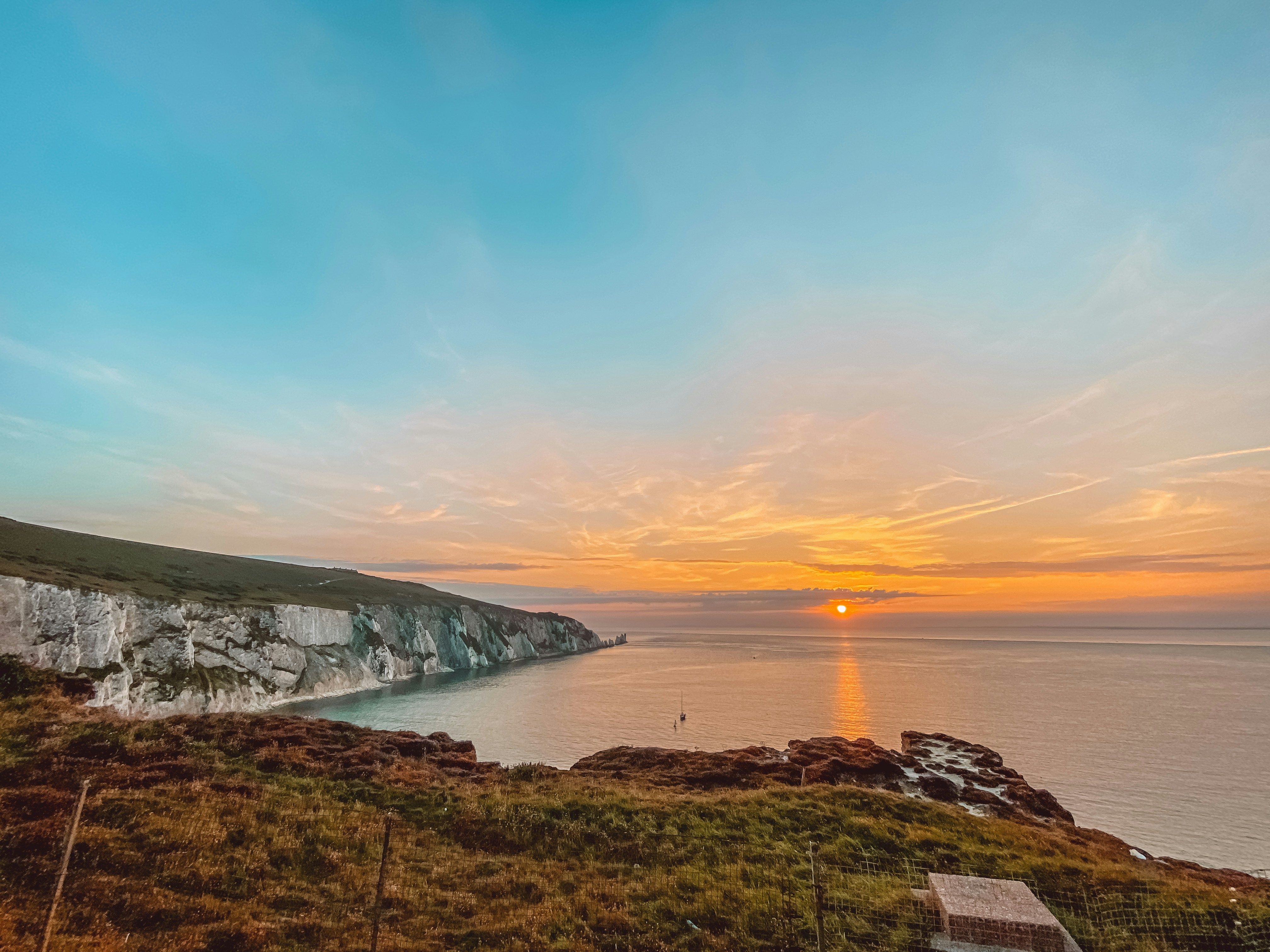
Yes, we highly recommend that you book vehicle ferry spaces to the Isle of Wight in advance, especially in summer, on bank holiday weekends, and during major island events such as Cowes Week in late July, the Isle of Wight Festival in June, and the Round the Island Race in June.
Spaces on the car deck are strictly limited and are likely to reach full capacity during busy travel periods. Arriving at the port on a busy summer day without a booking and waiting for the next available space can mean a delay of several hours. Therefore, it’s best practice to book your outward and return crossings at the same time via the Direct Ferries Isle of Wight page.
The best route all depends on where you are driving from and your destination on the island. The Portsmouth to Fishbourne ferry with Wightlink is the most frequent and highest-capacity vehicle route and the most convenient for anyone approaching from the M27, the south-east, and London via the A3 or A272.
The Lymington to Yarmouth ferry with Wightlink is the best option for those arriving from Dorset, the New Forest, and the west. This is equally convenient for anyone heading to the Needles and Freshwater Bay, as it drops you at the western coast of the island.
Alternatively, the Southampton to East Cowes ferry with Red Funnel is most convenient for those arriving via the M3 from London and the south-west.
Yes, all car ferries to the Isle of Wight allow motorhomes, campervans, and vehicles towing caravans and trailers onboard. Vehicle fares are calculated by the length of the vehicle, and you must declare your dimensions accurately when booking.
Anyone with a motorhome that measures over 7 metres should contact the ferry operator directly before booking to confirm that the vessel can accommodate their vehicle length.
Yes, all ferries that allow vehicles accept motorbikes. Motorbikes are loaded separately from cars onto a dedicated area of the vehicle deck and are secured with straps by the crew. The Isle of Wight is a popular touring destination for motorbikes, especially the Military Road along the south coast, the Tennyson Down ridge road, and the chalk downland lanes of the interior.
Please arrive at the port a little earlier than the standard car check-in deadline to allow enough time for the loading process.
Wightlink and Red Funnel both recommend arriving at the port at least 30 to 45 minutes before your booked sailing time. Vehicle decks begin loading approximately 15 to 20 minutes before departure. If you arrive after loading has begun for your sailing, you may be unable to board even with a valid booking and will have to wait for the next space to become available.
In the peak summer periods, particularly July and August weekends, ferry ports at Portsmouth and Southampton can experience queuing traffic on the approach roads, so allow additional time for this. The Lymington terminal is generally the quietest of the three ports in terms of traffic.
No, the Isle of Wight is part of England and subsequently uses the same road laws and vehicle requirements as the rest of the UK. No special documentation, environmental sticker, vignette, or permit of any kind is required. Your standard UK driving licence and UK motor insurance policy are fully valid on the island.
There are no toll roads and no low-emission zones on the Isle of Wight. The only documentation you will need is the standard UK vehicle documentation you carry every day — driving licence, V5C, and insurance certificate.
There are no motorhome exclusion zones on the Isle of Wight, but a few roads have weight restrictions, width restrictions, or very narrow passages that make them virtually impassable for larger motorhomes. Most notably, the lanes of the Yar valley and the interior downland can be extremely narrow in places.
The best course of action for those driving large motorhomes is to use a GPS or mapping system that has been programmed with your vehicle's dimensions to generate a route that stays clear of any unsuitable roads.
Yes, electric cars can be driven in the Isle of Wight, with plenty of charging infrastructure available across the island. You can find public charging points in Newport, Ryde, Sandown, Shanklin, Cowes, and at some ferry terminal car parks. If your vehicle has limited mileage, plan your charging stops before travelling by using Zap-Map or a similar service.
The ferry crossing itself does not provide any opportunity to charge your vehicle, as access to the car deck is not available during the crossing. Please make sure you begin your Isle of Wight journey with an adequate charge.
More routes than anyone else.

Compare fares, times & routes in one place.
Change plans easily with flexi tickets.

Book e-tickets & manage trips in-app.
Live ship tracking & real-time updates.

Top-rated customer support when you need it.