Things to do St Malo
Things to do St Malo
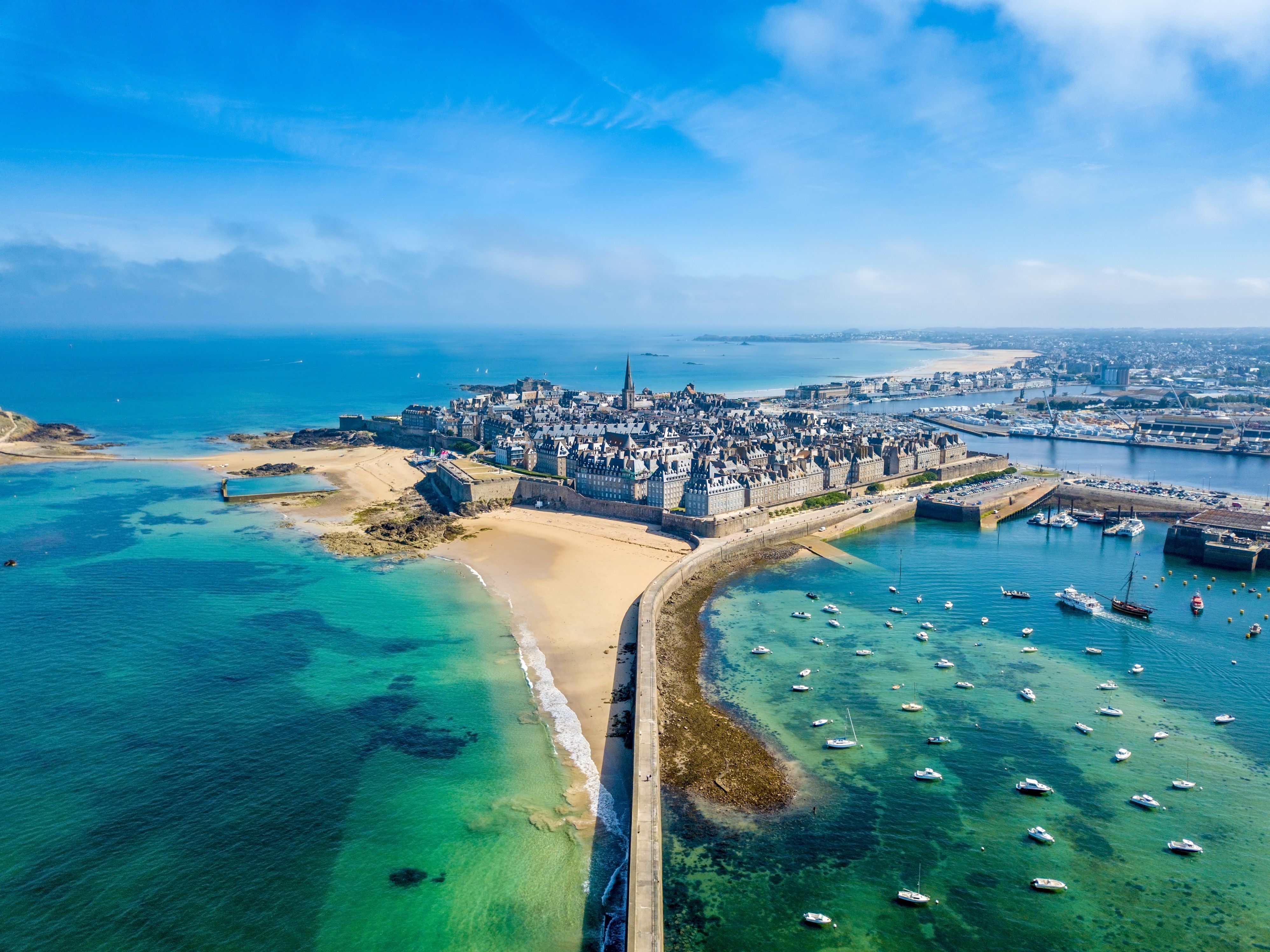
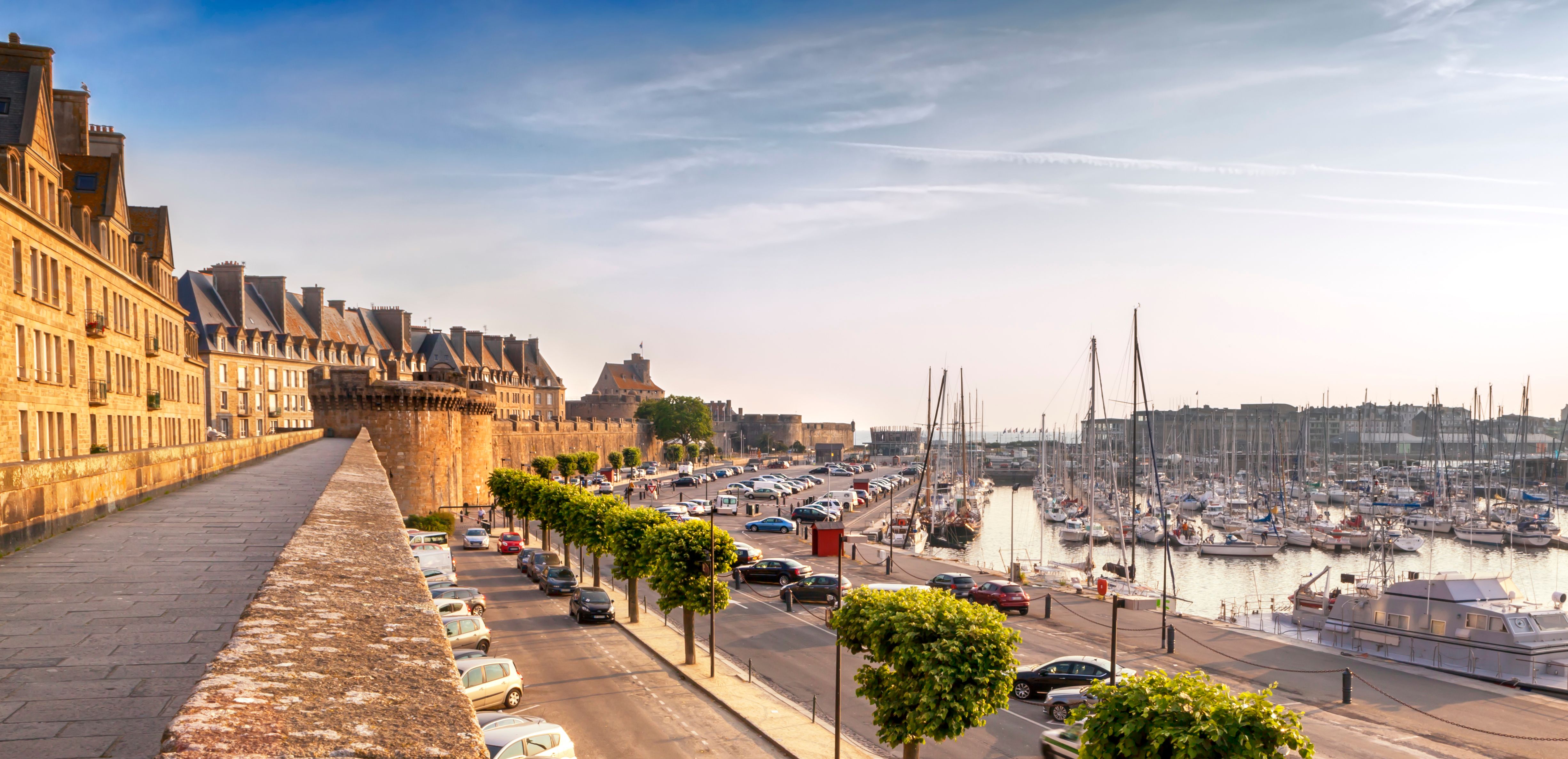
Saint-Malo is a walled port city on the northern coast of France, perched on a granite promontory at the mouth of the River Rance in Brittany, roughly 70km north of Rennes and 420km from Paris. The walled old city, known as Intra-Muros, is a maze of granite streets and 18th-century merchants' houses entirely enclosed by rampart walls, surrounded on three sides by sea.
More than 75% of the city was destroyed in the Allied bombardments of August 1944 and painstakingly rebuilt stone by stone over the following twelve years, making what survives all the more remarkable.
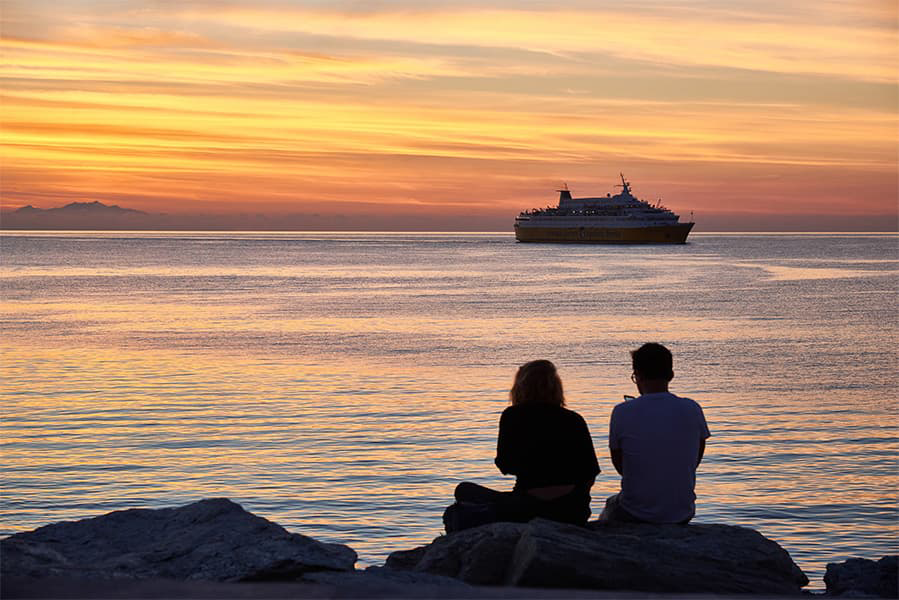
For visitors from the UK, the most direct route is the Portsmouth to Saint-Malo ferry, operated by Brittany Ferries. The crossing takes approximately 8 to 9 hours and runs year-round, typically departing Portsmouth in the evening and arriving in Saint-Malo the following morning, making it one of the most convenient overnight crossings on the Channel.
The Saint-Malo ferry port at the Gare Maritime du Naye is located at the western edge of the walled city, within a 10-minute walk of Intra-Muros.
From Paris, Saint-Malo is approximately 390km via the A11 motorway towards Le Mans, then the A81 to Rennes, and the N137 north to Saint-Malo. Allow around 4 hours to 4 hours 30 minutes in normal traffic. From Rennes, the N137 covers the 70km in around 55 minutes. From Caen, follow the A84 south-west to Rennes and then the N137 north, which takes approximately 1 hour and 50 minutes for the 200km journey. The ferry port is well-signposted on the approach to the city; follow the signs for Terminal Ferry du Naye. Free short-stay parking is available in front of the terminal for the first 20 minutes.
Saint-Malo has its own SNCF station on Square Jean Coquelin, around 2km from the ferry port and 15 minutes' walk from the Porte Saint-Vincent gate into Intra-Muros. Direct TGV services from Paris Montparnasse reach Saint-Malo in around 2 hours 10 minutes on the faster trains, with advance fares from around €20. Services also connect Saint-Malo with Rennes (50 minutes), and from Rennes with Nantes, Brest, Bordeaux, and Lyon. From the SNCF station, the city centre and ferry port are reachable on foot, by taxi, or by the local Kéolis bus network.
FlixBus and BlaBlaBus both operate services from Paris to Rennes, with connections to Saint-Malo. The total journey from Paris takes around 4 hours 30 minutes to 5 hours by coach and is cheaper than the train, with fares from around €12 booked in advance. Keolis Emeraude operates regional buses within Ille-et-Vilaine, connecting Saint-Malo with Dinard, Cancale, and Dinan.
For foot passengers arriving on the Portsmouth to Saint-Malo ferry, the Intra-Muros and the SNCF station are both within comfortable walking distance of the Gare Maritime du Naye, making Saint-Malo one of the most foot-passenger-friendly ferry ports in northern France.
Saint-Malo's Intra-Muros is compact, car-free within the walls, and easily explored on foot. The St Malo ferry port is situated immediately west of the city walls, making it one of the most walkable ferry arrivals in France. Beyond the walls, the wider city of Saint-Malo extends into the districts of Saint-Servan to the south and Paramé to the north-east, both accessible by bus or a short drive.
The Intra-Muros is best explored on foot. Cars are not permitted within the walls except for residents, and the narrow granite lanes are too tight for anything but walking anyway. The rampart walk of 1.75km around the full perimeter of the walls is the essential starting point for any visit, taking around 45 minutes at a leisurely pace with stops.
Enter via the main gate of Porte Saint-Vincent and turn right to begin the circuit. The most dramatic section faces north-west, with views across to Fort National on its tidal island, the Grand Bé island where Chateaubriand is buried, and the Emerald Coast stretching towards Cap Fréhel.
A car is of limited use within Saint-Malo itself but invaluable for day trips to Mont Saint-Michel (60km south), Dinard, Cancale, Dinan, and Cap Fréhel. Paid car parks are available outside the city walls, with the largest adjacent to the Porte Saint-Vincent. Taxis are available at the rank outside the SNCF station and at Esplanade Saint-Vincent near the main gate.
The water taxi, Compagnie Corsaire's shuttle, connects Saint-Malo harbour with Dinard in 10 minutes across the Rance estuary, a quicker alternative to driving around the dam for those wanting to visit the resort town.
The Kéolis bus network covers Saint-Malo and its surrounding region, with the most useful lines for visitors running between the SNCF station, the ferry port, and the beach districts of Paramé and Rochebonne to the north-east. Local buses also connect Saint-Malo with Cancale and Dinard via the Rance dam road.
For those exploring the wider Emerald Coast without a car, please note that the regional bus services are manageable but infrequent on rural routes, so check timetables at the Saint-Malo tourist office on Esplanade Saint-Vincent before travelling.
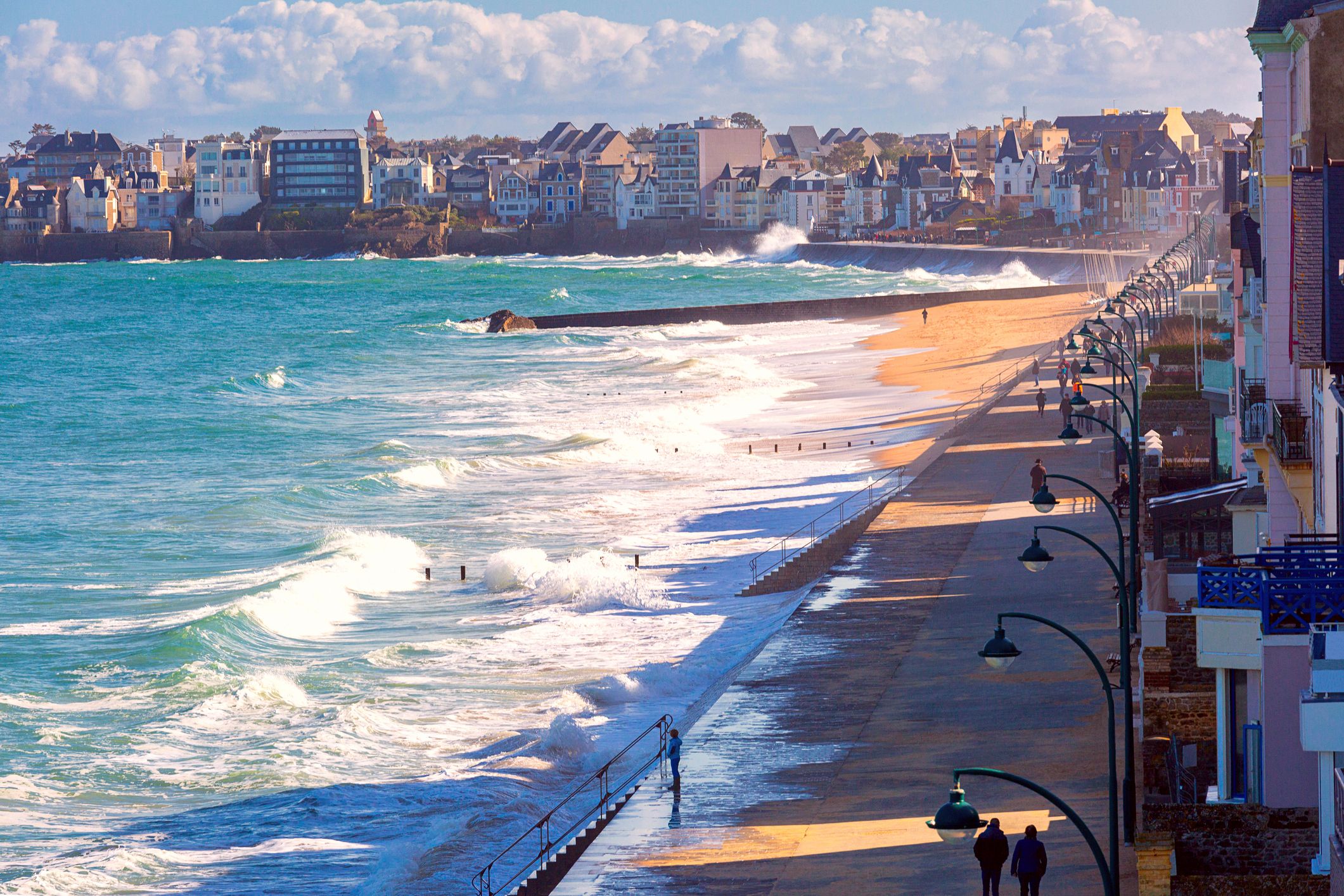
Saint-Malo's location on the Atlantic coast gives it a climate similar to Cornwall, with frequent winds and significant tidal variation throughout the year. The tidal range here is among the highest in Europe, reaching up to 13 metres at spring tides, which transforms the shoreline and determines access to the tidal islands. The city is a year-round destination, though July and August see the highest number of visitors.
Those visiting outside peak season are usually rewarded with shorter queues and lower prices for accommodation and transport.
Daytime temperatures in March typically range from 9–13°C, rising to 14–18°C by May. A waterproof jacket and layers are advisable throughout spring as the sea breeze on the ramparts can be cutting even on bright days. The Étonnants Voyageurs literary festival takes place in late May, drawing writers, readers, and cultural visitors from across France and beyond, transforming the city for a long weekend.
Perfect for: the rampart walk and tidal islands without summer crowds, the Étonnants Voyageurs festival, Cancale oyster season, and the best hotel rates before high season.
Temperatures reach 21–25°C on the warmest days of July and August. The Plage du Sillon and the beaches of Paramé fill with French holidaymakers, and the restaurant terraces of Intra-Muros are busy from midday into the evening. The Route du Rock music festival in August draws around 15,000 visitors to the city for a weekend of British and American rock, held in the fort of Saint-Père just outside the walls. Please book accommodation months in advance for any summer weekend visit, and especially while the Route du Rock is underway.
Perfect for: beach days and water sports, the Route du Rock festival (August), terrace dining in Intra-Muros, and day trips along the Emerald Coast.
September brings temperatures of 15–19°C and a sharp drop in visitor numbers after the French school holidays end. This is prime season for Cancale oysters, the best time to eat them fresh on the harbour wall at the market, and the Vente en Poulpe film and arts festival in September adds a cultural dimension to the quieter shoulder season. October temperatures drop to around 10–15°C, so a warm mid-layer becomes essential for the rampart walk.
Perfect for: fresh oysters at Cancale, the Vente en Poulpe festival, atmospheric walks on the Emerald Coast without crowds, and the best value accommodation of the year.
Winter temperatures typically range from 4–9°C. Saint-Malo in winter is prone to Atlantic storms that drive enormous swells against the outer ramparts, and the spectacle of a high spring tide overtopping the walls is one of the most dramatic free experiences in Brittany. The city is quieter but not deserted. The restaurants of Intra-Muros remain open and welcoming, and hotel prices drop significantly. The Christmas market on Place Chateaubriand in December, with its crêpe stalls and Breton crafts, is a great alternative to its larger Norman counterparts.
Perfect for: storm and high-tide watching from the ramparts, the Christmas market, indoor museum visits without queues, and the lowest accommodation prices of the year.
Saint-Malo's Intra-Muros, its tidal islands, beaches, and the surrounding Emerald Coast can take up to three days with ease. If you factor in Mont Saint-Michel, Cancale, and the medieval town of Dinan to your travel itinerary, then the region justifies staying a full week.
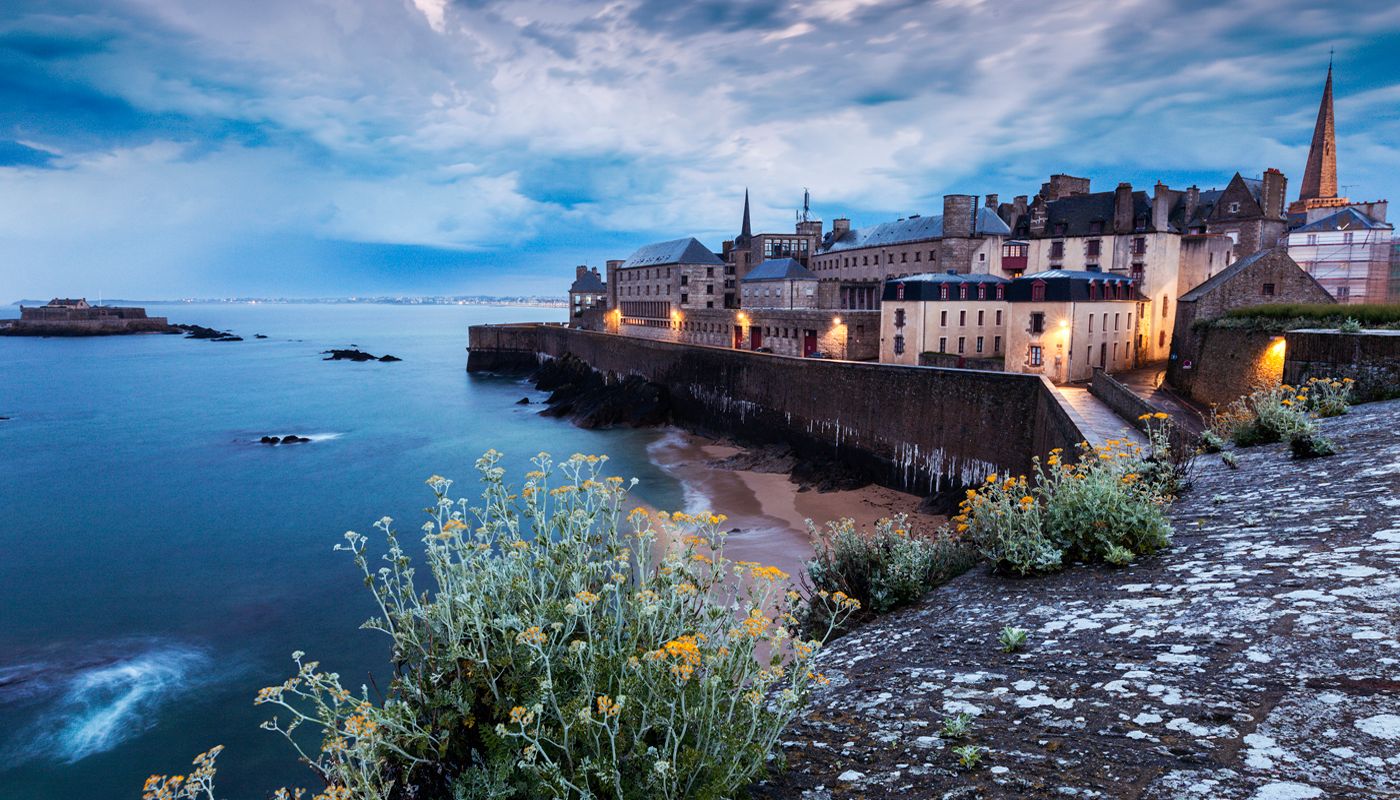
The 1.75km circuit of the city walls is the defining experience of any visit to Saint-Malo and should be the first thing you do on arrival. The ramparts were originally constructed in the 12th century and progressively strengthened and expanded through to the mid-18th century. The walk takes around 45 minutes at a leisurely pace, though most visitors spend considerably longer at the bastions to photograph Fort National, the Grand Bé island, and the Plage du Sillon stretching away to the north-east. The rampart walk is free to enter at all times.
Built in 1689 by Vauban on a tidal island 300 metres off the northern face of the city walls, Fort National is accessible only at low tide across a sand and pebble causeway. Guided tours of the fort take around 35 minutes and cover the fort's role in defending Saint-Malo from the English fleet, its use as a German prison in the Second World War, and the tidal geography of the site. It costs around €5 to enter, and the view back to Intra-Muros from the fort's gun platform is widely considered the best in the area.
A second tidal island, accessible on foot at low tide from the beach below the ramparts, the Grand Bé is where François-René de Chateaubriand chose to be buried. His tomb is a simple unmarked stone slab on the western tip of the island, facing the open Atlantic. The walk to the island takes around 10 minutes, but the view back to the ramparts from the island's height certainly makes it all worthwhile.
Built in the early 18th century, the Demeure du Corsaire is the most complete surviving example of a corsair merchant's mansion in Saint-Malo. Its seven-storey interior is classified as a historic monument in its entirety. Guided tours visit the grand reception rooms, the vast cellar where spices and goods from India and the Americas were stored, and the atmospheric attic storerooms. Tours run at set times; entry costs around €9.
Standing at the heart of Intra-Muros, Saint-Vincent was begun in the 12th century, extended through the Gothic period, and severely damaged in the 1944 bombardments. The reconstruction of the nave and the extraordinary modern stained-glass windows are among the most successful post-war religious interiors in France. The west window, a vast composition in deep blues and greens that floods the nave with Atlantic light, is particularly remarkable.
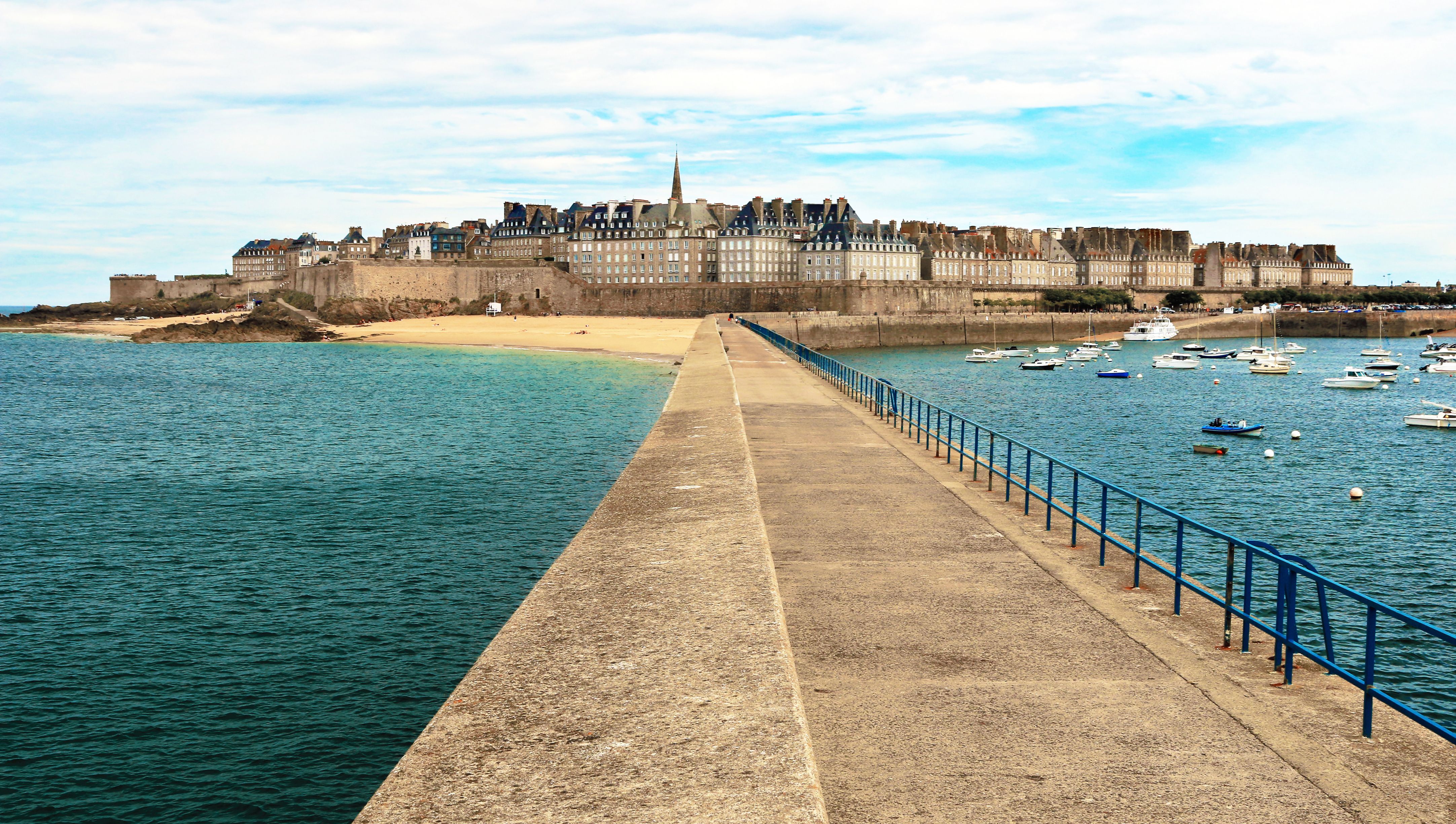
The Plage du Sillon, Saint-Malo's main beach, stretches for over 2km north-east of the city walls and is one of the finest urban beaches in Brittany. At low tide the beach expands dramatically, exposing wide flat sands suitable for sand yachting (char à voile), which can be practised at Paramé beach to the north-east.
The tidal sea pool between Plage du Mole and Plage de Bon-Secours, set into the rocks below the eastern ramparts, is one of the most photographed spots in the city and makes an excellent swim at high tide when the pool fills from the sea.
The GR34 coastal walking path passes through Saint-Malo and runs east along the Emerald Coast. The section from Saint-Malo to Cancale (15km, approximately 4 hours one way) is the most accessible stretch for day walkers from the city, passing through the Saint-Servan district and along the Rance estuary before finishing at Cancale's oyster harbour.
The Musée d'Histoire de Saint-Malo, housed in the Château de la Duchesse Anne, the great castle built in 1424, covers the history of Saint-Malo from the corsair era to the post-war reconstruction, with personal accounts, maritime charts, and artefacts that bring the city's extraordinary biography into focus.
The Solidor Tower in Saint-Servan houses the Musée International du Long Cours Cap-Hornier, dedicated to the sailors who rounded Cape Horn in the great age of sail. The Memorial 39/45, set in a vast German bunker in the Cité d'Alet in Saint-Servan, recreates the German occupation and the August 1944 battle for the city across 500m² of underground rooms, and is widely thought of as the most atmospheric Second World War site in the region.
The Grand Aquarium, located in the south-western suburbs, is one of the largest aquariums in France, with 600 species, a 360° shark aquarium, a Nautibus mini-submarine ride, and a convincing recreation of an Atlantic shipwreck. It comfortably takes up two hours for adults and considerably longer for children.
The Musée d'Histoire in the castle and the Memorial 39/45 bunker are both excellent indoor alternatives. The Micro Zoo, tucked into the ramparts near Plage de l'Éventail, is also a great choice, displaying a small collection of terrariums with snakes, geckos, dwarf crocodiles, and exotic insects.
Mont Saint-Michel (60km south): The tidal abbey rising 80 metres from its bay is one of the great sights of France and the most visited monument outside Paris. Saint-Malo is one of the closest cities to Mont Saint-Michel, and the drive south takes under an hour. Arrive before 9am or after 5pm to experience the island with fewer crowds.
Cancale (15km east): The oyster capital of Brittany, with oyster beds stretching across the bay visible at low tide from the harbour wall. The market on the harbour at La Houle sells freshly opened oysters at €5 to €7 per dozen every morning.
Dinard (across the estuary): The aristocratic Belle Époque resort is located directly across the Rance from Saint-Malo, and can be reached in 10 minutes by water taxi from the harbour or 30 minutes by road via the Rance dam. Victorian and Edwardian villas line the coastal promenade, and the town has a faded glamour that contrasts with Saint-Malo's corsair granite.
Dinan (32km south): One of the best-preserved medieval towns in Brittany, with a 3km circuit of 14th-century ramparts, a castle, half-timbered streets, and a port on the Rance below the cliff that is idyllic in summer. Allow a full half-day. Accessible by bus from Saint-Malo or by boat from Dinard in summer.
Saint-Malo is an outstanding family destination. The tidal islands of Grand Bé and Fort National are natural adventure playgrounds for young children to explore. The Grand Aquarium with its Nautibus submarine ride and shark tank is the most popular paid family attraction in the city.
The tidal sea pool at Bon-Secours provides a safe place to swim for younger children. The Micro Zoo in the ramparts appeals to children fascinated by unusual animals. The rampart walk, with its towers, cannonballs, and sea views, holds the attention of most children old enough to walk the circuit.
The rampart walk is free and is the single best experience Saint-Malo offers. Alternatively, walking to Grand Bé island and Chateaubriand's tomb costs absolutely nothing and is a fun activity for those on a tight budget.
When it comes to food, the oyster market at Cancale is the best value seafood experience in the region, with a dozen opened oysters costing around €6. Within Intra-Muros, the supermarkets on Rue de Dinan and Rue Saint-Vincent sell excellent local Breton produce at non-tourist prices, where you can pick up food for a picnic on the ramparts in good weather.
The Parc de la Briantais in Saint-Servan, a large public park on the banks of the Rance estuary, is almost unknown to visitors who stay within Intra-Muros. The views across the Rance to Dinard from the park's terrace are among the finest in the area, and the park is entirely free. Another great choice is the Bar de l'Univers on Place Chateaubriand, an atmospheric mixed local-and-visitor bar with no tourist pricing and a terrace looking directly at the castle.
Brittany has one of the most distinctive regional food identities in France, and Saint-Malo sits at the heart of it. The essential Breton dishes are the buckwheat galette, a savoury crêpe traditionally filled with ham, egg, and Emmental, served in the numerous crêperies within Intra-Muros.
Cancale oysters, from the beds visible across the bay 15km east, are available in restaurants throughout Saint-Malo from September to April and at their freshest at the Cancale harbour market. Moules marinières cooked in local Muscadet, homard breton (Breton lobster), and coquilles Saint-Jacques (scallops, in season from October) are the other pillars of the seafood tradition.
The best crêperies in Intra-Muros are found around Rue Jacques Cartier and Rue de la Vieille Boucherie. The galette-saucisse, a sausage wrapped in a buckwheat galette, is the definitive Breton street food, available from vendors near Porte Saint-Vincent on weekend mornings. Muscadet and Breton cider are the natural accompaniments to seafood, both of which can be purchased by the glass at most café terraces within the walls.
Staying within Intra-Muros is the most atmospheric option. Hotels within the walls tend to be characterful but small, and prices reflect the premium of the location. We suggest booking at least two months ahead for any summer or festival weekend.
The hotel district outside the walls, around the SNCF station and along the beachfront at Paramé, offers a wider range of three-star options at more competitive prices. Self-catering apartments within Intra-Muros are excellent for stays of three nights or more. Budget travellers are better served in the Saint-Servan district to the south, where smaller hotels and chambres d'hôtes offer genuine value with easy bus access to the walled city. Several well-regarded campsites operate on the outskirts of the city, within cycling distance of the ramparts.
You can book accommodation in Saint Malo via our accommodation page or directly with properties for the best rates.
Saint-Malo is one of the most accessible destinations in France for UK visitors. The overnight Portsmouth to Saint-Malo ferry arrives in the morning, arriving at the city walls with the whole day ahead. A car is not necessary for the city itself but is strongly recommended for visiting Mont Saint-Michel, the Emerald Coast, and the surrounding Breton countryside.
Duration: 2–3 days
Arrive on the overnight ferry from Portsmouth to Saint-Malo and walk directly from the port into Intra-Muros. Begin with the rampart walk, which takes around 45 minutes and orients you perfectly for the rest of the visit. Check tide times and walk out to Fort National if the causeway is open.
Enjoy lunch at a crêperie on Rue Jacques Cartier and try a classic galette complète before finishing with a salted caramel crêpe. Spend the afternoon at the castle museum and then take a walk through the corsair streets to the Cathédrale Saint-Vincent. You could later have an evening dinner at a harbourside restaurant with moules marinières or a plateau de fruits de mer.
Take a morning drive or bus to Cancale (20 minutes east) for freshly opened oysters at the harbour market, and arrive by 10 am for the best selection. Walk or drive to the Pointe du Grouin headland for the view across the bay. Return to Saint-Malo in the afternoon, where you can take the Compagnie Corsaire water taxi across the estuary to Dinard for the Belle Époque promenade, returning to Saint-Malo for a final evening in Intra-Muros.
Drive south for 1 hour to Mont Saint-Michel, arriving early to beat the coach tours, before returning to the ferry port for the evening sailing home via the Saint-Malo to Portsmouth ferry.
Why we love it: The overnight ferry from Portsmouth to Saint-Malo, with onboard cabins, restaurants, and bar facilities, is one of the most comfortable Channel sailings available, and arriving directly at the city walls saves all the transit time of a flight-and-transfer itinerary.
Duration: ~5 days
Arrive on the overnight ferry and settle in. Morning rampart walk and Fort National (tide permitting). Afternoon in the castle museum and Demeure du Corsaire. Evening crêperie dinner within the walls.
Morning at Cancale for oysters and the Pointe du Grouin coastal walk. Afternoon at the Grand Aquarium. Evening water taxi to Dinard for dinner on the Belle Époque promenade.
Spend a full day at Mont Saint-Michel. Make sure you arrive early, walk the tidal flats with a guide if possible, explore the abbey, and return to Saint-Malo via the Rance valley in the late afternoon.
Drive 32km south to Dinan for the medieval ramparts, castle, and port on the Rance. Return later via the Rance estuary road for views of the Barrage de la Rance tidal power station. Spend your evening in the Solidor Tower at sunset and have dinner overlooking the Rance.
Morning walk along the GR34 coastal path towards Cancale. Return to Saint-Malo for a final afternoon in Intra-Muros before the evening sailing home on the Saint-Malo to Portsmouth ferry.
Why we love it: Five days is the ideal amount of time to experience both the depth of Saint-Malo and the remarkable range of the surrounding region, including Mont Saint-Michel, the Emerald Coast and medieval Dinan. The year-round Portsmouth to Saint-Malo ferry means this itinerary works in any season, with winter offering particularly dramatic tides and storm watching from the ramparts.
Yes, the Portsmouth to Saint-Malo ferry runs all year-round, operated by Brittany Ferries, with up to daily sailings and a crossing time of approximately 8 to 9 hours. The ferry typically departs Portsmouth in the evening and arrives in Saint-Malo the following morning.
The Saint-Malo ferry port at the Gare Maritime du Naye is located within a 10-minute walk of Porte Saint-Vincent, the main gate into Intra-Muros.
Ferries also connect Saint-Malo with Jersey, Guernsey, Plymouth, and Poole.
Not for the city itself. Intra-Muros is entirely car-free within the walls, and foot passengers arriving on the ferry can walk directly to the main gate in under 10 minutes. Cancale is accessible by local bus, and the water taxi to Dinard operates from the harbour.
However, a car is strongly recommended for visiting Mont Saint-Michel (60km south), Cap Fréhel (50km west), and the wider Emerald Coast. If you are planning a broader Brittany road trip from Saint-Malo, bringing your car on the Poole to Saint-Malo ferry is the most practical and cost-effective option.
The tides govern several of the best experiences in Saint-Malo. Fort National and Grand Bé island are only accessible on foot at low tide, and the tidal sea pool at Bon-Secours is best at high tide. We suggest that you pick up a tide timetable from the tourist office on Esplanade Saint-Vincent on arrival and plan your itinerary around it.
Intra-Muros is significantly less crowded before 10am and after 6pm; the best light for photography on the ramparts is in the early morning and early evening. If you are travelling to Mont Saint-Michel, arrive before 9am or after 5pm in summer, as midday visits usually involve lengthy queues and considerable crowds.
More routes than anyone else.

Compare fares, times & routes in one place.
Change plans easily with flexi tickets.

Book e-tickets & manage trips in-app.
Live ship tracking & real-time updates.

Top-rated customer support when you need it.