Things to do Mont St Michel
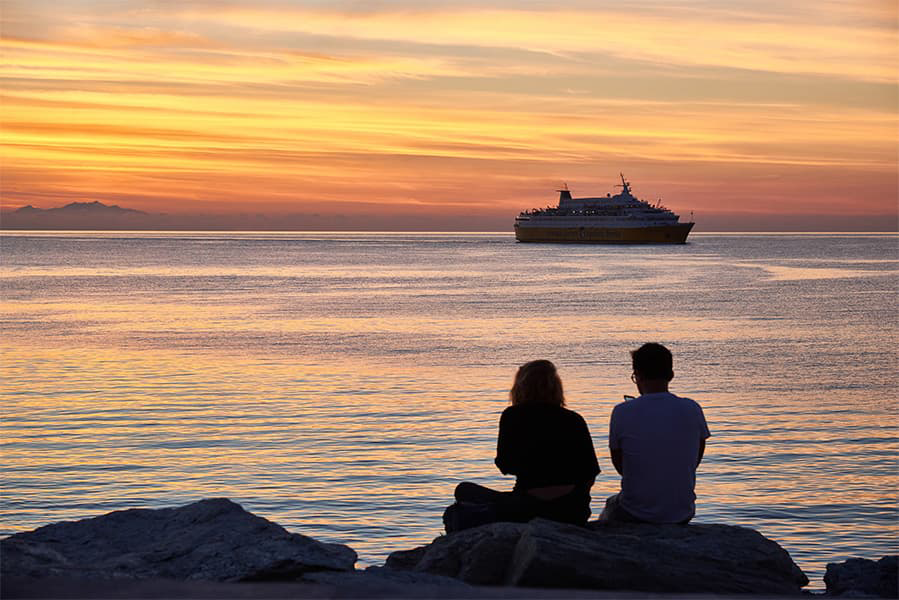
Things to do Mont St Michel
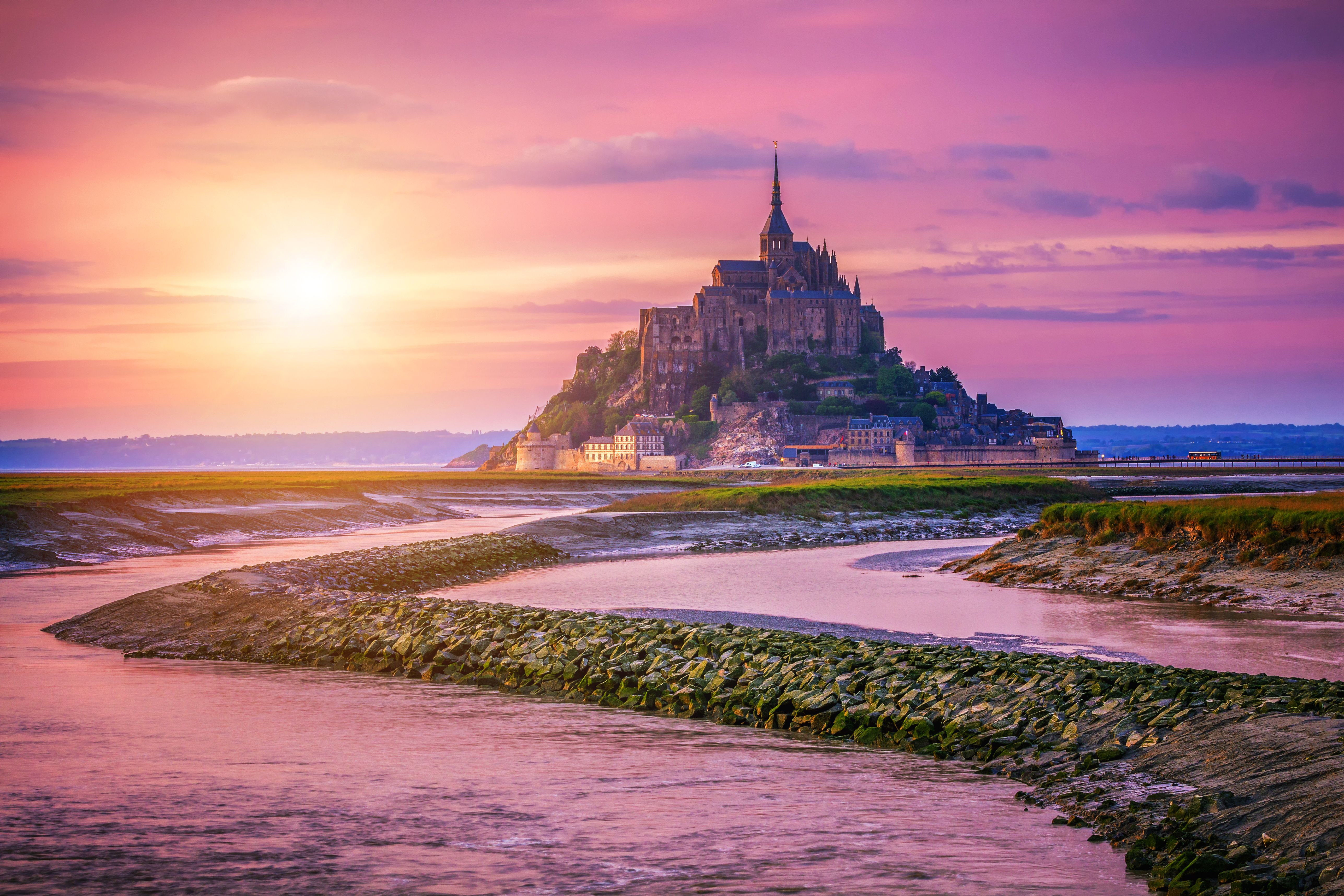
Mont Saint-Michel is one of the most extraordinary places in France, a rocky granite island rising 80 metres from a tidal bay on the border of Normandy and Brittany, topped by a Benedictine abbey that has been a place of Christian pilgrimage since 708 AD. The island receives around three million visitors a year, making it the most visited monument in France outside of Paris.
It was designated a UNESCO World Heritage Site in 1979, and the surrounding bay, with the highest tidal range in continental Europe, reaches up to 13 metres at spring tides. The nearest ferry ports for UK visitors are Saint-Malo (60km south-west) and Cherbourg (150km north). Whether you are visiting for a morning or staying overnight, this guide covers everything you need to make the most of one of France's most unforgettable sites.
For visitors from the UK, the most practical ferry routes are to Saint-Malo or Cherbourg, both of which give good road access to Mont Saint-Michel. The Portsmouth to Saint-Malo ferry, operated by Brittany Ferries, is the most convenient option as Saint-Malo is located just 60km from Mont Saint-Michel, around 1 hour's drive, making it the closest UK ferry port to the island.
The Portsmouth to Cherbourg ferry is a shorter crossing at around 3 hours, but it puts you 150km from the island, approximately 2 hours and 30 minutes by road. We strongly recommend bringing your car to visit Mont Saint-Michel, as public transport connections to the site are limited and a car gives you the flexibility to arrive early and leave late.
From Saint-Malo, follow the D176 east and then the N176 towards Pontorson and Avranches, turning north on the D43 at the junction for Mont Saint-Michel, allowing roughly 1 hour in normal traffic conditions. From Cherbourg, take the A84 south via Avranches, which takes approximately 2 hours and 30 minutes. From Caen, the A84 motorway runs south-west directly to Avranches and then to the Mont Saint-Michel junction, which takes approximately 1 hour and 45 minutes.
For those arriving from Paris, the most direct route is via Le Mans and the A81/A84 to Avranches, which takes around 4 hours. There is no vehicle access to the island itself. All visitors must park on the mainland at the purpose-built car park in La Caserne, approximately 2.5km from the island, and either walk across the causeway or catch the free shuttle bus.
The nearest SNCF station to Mont Saint-Michel is Pontorson–Mont Saint-Michel, located 9km south of the island. A summer shuttle bus (Keolis Emeraude) connects Pontorson with the island. Please check the latest bus timetables carefully as services are seasonal and infrequent.
From Paris Montparnasse, the fastest option is the TGV to Rennes in 2 hours, followed by a Keolis Emeraude bus directly to Mont Saint-Michel, which takes around 1 hour and 10 minutes. A combined train and bus ticket from Paris to Mont Saint-Michel is available from around €27. From Saint-Malo, a Keolis Emeraude bus departs every day at 09:25, with the journey taking approximately 1 hour. This is particularly useful for passengers arriving on the Portsmouth to Saint-Malo ferry who do not have a car.
Guided day tours from Paris to Mont Saint-Michel are widely available and take the logistical pressure off entirely. Most coaches depart from central Paris in the early morning, arrive at the island mid-morning, and return to Paris by late evening. The travel time each way is around 4 hours, depending on traffic. These tours are a reasonable option for those who want to see the island as a one-off experience without driving, though an overnight stay gives a significantly richer visit.
Once you arrive at the island, there are no vehicles. Mont Saint-Michel is explored entirely on foot. The free shuttle bus from the car park in La Caserne drops passengers at the base of the causeway bridge, from which it is a 10-minute walk across to the island gate.
From the gate, the main street of La Grande Rue leads steeply uphill through the village to the abbey entrance at the summit, a climb of approximately 350 steps in total. The island is small enough to walk its full perimeter in around 30 minutes. The main street, the ramparts, and the upper terraces can all be covered in 2 to 3 hours at a comfortable pace.
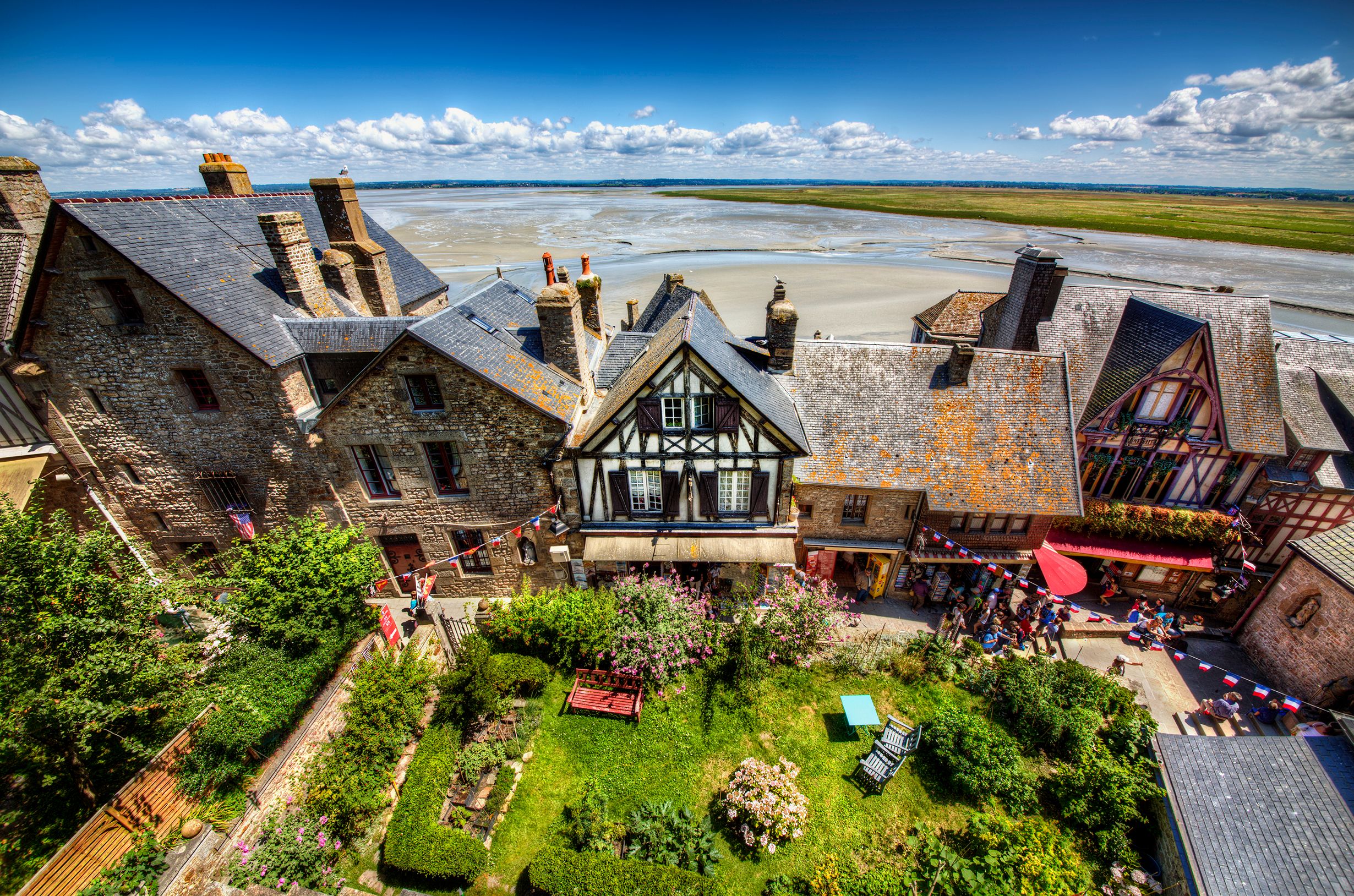
The single most important practical tip for exploring Mont Saint-Michel is to leave La Grande Rue as quickly as possible and find the smaller alleys and stairways that branch off it. The village is more intricate than it first appears: there are winding lanes behind the main street, a lower rampart walk that circles the base of the abbey rock at sea level, and a small church, a cemetery, and hidden gardens that most day visitors entirely miss.
We suggest wearing sturdy shoes with grip as the cobblestones are steep and can be slippery when wet. The climb to the abbey entrance is unavoidable and involves several flights of stone steps. The ascent is manageable for most adults but can be tiring for very young children or those with mobility difficulties.
From the main car park at La Caserne, visitors can reach the island by free shuttle bus (navette), by horse-drawn carriage (a paid option, around €8 per person, taking 25 minutes each way), or on foot along the 2.5km causeway and bridge. The walk across the causeway takes around 35 to 40 minutes at a comfortable pace and is flat; many visitors choose to walk out and take the bus back. The free shuttle operates continuously throughout the day; queues at the bus stop can be long in peak summer — arriving early avoids the worst of them.
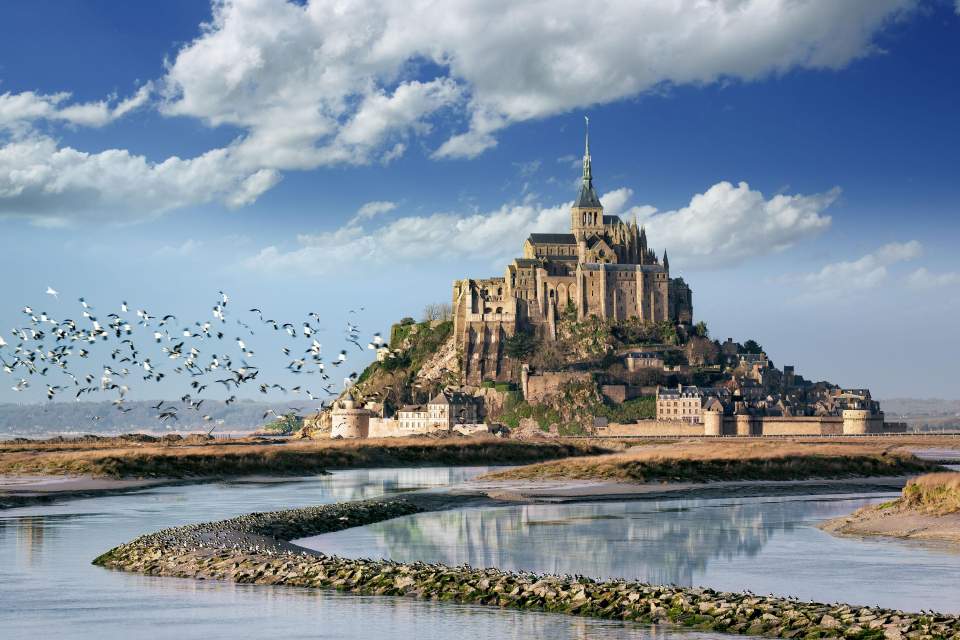
Mont Saint-Michel receives visitors every month of the year, but the timing of your visit makes an enormous difference to the experience. The island's tidal rhythm adds an additional layer of planning that most other tourist sites do not require. At high tide, the island is surrounded by sea and is at its most dramatic. At low tide, the bay is exposed as a vast flat expanse of sand and mud, which enables guided bay walks and changes the character of the site entirely.
Daytime temperatures in March typically range from 8–13°C, rising to 14–18°C by May. Spring is the best season for visiting without the summer crowds as queue times at the abbey are manageable, the shuttle bus wait is short, and the bay walks are operating. The tidal bore is at its most dramatic around the new and full moons, so checking tide tables before booking a spring visit can allow you to time your arrival with a spectacular high tide.
Perfect for: visiting the abbey without summer queues, guided bay crossings, the salt meadow lamb season, and the best hotel rates before high season.
Temperatures reach 21–25°C on the warmest days, and visitor numbers peak between mid-July and late August, with up to 15,000 people visiting on the busiest days. The abbey requires timed-entry booking in advance in July and August. Arriving before 9am or after 5pm avoids the worst of the coach tour crowds, which typically descend on the island between 10am and 4pm. The evening illuminations of the abbey, which run from April through October, are one of the most extraordinary light shows in France and are visible from the mainland or from the causeway after dark.
Perfect for: the evening illuminations, long summer days on the causeway and bay, and combining Mont Saint-Michel with a stay in Saint-Malo or the D-Day beaches.
September and October bring temperatures of 12–19°C and a significant drop in visitor numbers. The autumn equinox tides, which are the highest of the year, draw large crowds specifically to watch the sea rush across the bay. These are spectacular events and worth planning a visit around. The surrounding Norman and Breton countryside is beautiful in autumn colour, and the local restaurants in Pontorson and Avranches offer the salt meadow lamb at its most concentrated flavour.
Perfect for: the autumn equinox tides, bay walking with the best light of the year, and the most atmospheric visit to the abbey without summer crowds.
Winter temperatures typically range from 3–8°C, and visitor numbers are at their lowest. The abbey is open year-round and can be visited with virtually no queuing, while the village has a genuinely lived-in quality without the summer souvenir-shop atmosphere. The island is lit by the illumination system on most evenings. Hotel prices within the walls drop considerably, and the experience of staying overnight on the island in winter is one of the most memorable things you can do in this part of France.
Perfect for: the abbey without queues, overnight stays on the island, winter tides and storm watching, and the lowest accommodation prices of the year.
Mont Saint-Michel is a compact site, but the abbey, the village, the ramparts, the bay, and the surrounding coastline reward time and unhurried attention. A day visit is entirely viable, but an overnight stay transforms the experience: the day-trippers leave by early evening, the abbey is lit up after dark , and you have the island largely to yourself in the early morning.
The abbey is the reason for everything. Construction began in 966 AD, when Benedictine monks established a monastery on the summit of the rock at the invitation of the Duke of Normandy, and continued for over five centuries. The section known as La Merveille (The Marvel) is the architectural highlight: its cloister, with its slender paired columns and herb garden open to the sky, is one of the finest Gothic spaces in France, while the vast Knights' Hall below it served as the monks' scriptorium.
The church at the summit, with its nave dating partly to the 11th century and its choir rebuilt in the Flamboyant Gothic style after 1450, contains the gilded statue of Saint Michael slaying the dragon that crowns the spire — visible from 50km away on clear days. Allow a minimum of 90 minutes for a self-guided visit; 2 to 3 hours is more comfortable.
Timed-entry tickets are essential in July and August and strongly recommended at all other times in high season. A small monastic community of both monks and nuns has been in residence since 2001, and the abbey remains an active place of worship.
The tidal bay of Mont Saint-Michel is one of the most remarkable natural environments in France, and walking across it with a qualified guide is one of the most memorable experiences the region offers. At low tide, the sea retreats up to 20km, exposing a vast landscape of quicksand channels, salt marsh, and tidal pools that is genuinely dangerous to navigate without knowledge of the terrain.
A guided bay crossing, departing from either Genêts on the Normandy side or Le Vivier-sur-Mer on the Breton side, takes around 3 to 4 hours one way, crossing several kilometres of the bay floor with the abbey on the horizon throughout. Guides are knowledgeable about the position of the quicksand channels, which shift with every tide.
Guides can be found via the official tourism office at Genêts or at Destination Mont Saint-Michel. Wear old shoes that you don’t mind getting wet and muddy, as you may have to wade through at least one shallow channel.
The fortifications surrounding the base of the island were built from the 14th century onwards during the Hundred Years' War, when Mont Saint-Michel was the only fortress in Normandy never to fall to the English. The rampart walk follows the outer wall at sea level and takes around 20 to 25 minutes to complete, giving views across the bay in all directions and a sense of the island's extraordinary position.
The village within the walls contains several small museums (a history museum, a maritime museum, and the Archéoscope multimedia presentation), the Église Saint-Pierre halfway up the main street, and the tiny Chapelle Saint-Aubert at the foot of the island outside the main walls. Most visitors pass through the village quickly on their way up to the abbey, but slowing down to explore the side lanes and lower ramparts reveals a more intimate side of the island.
From April to October (and on selected winter dates), Mont Saint-Michel is illuminated after dark by a sophisticated system of lights that transforms the abbey into a golden beacon visible from extraordinary distances across the bay. The illuminations begin at dusk and continue until midnight.
Watching them from the mainland car park or from the causeway bridge as the tide comes in around the island is one of the great free spectacles in Normandy. Visitors who stay overnight on the island or in the immediate area experience the additional benefit of seeing the illuminations from within the walls.
At the highest tides, particularly around the spring and autumn equinoxes, and during the new and full moons, the sea returns to the bay with extraordinary speed, filling the flat expanse of sand at a rapid rate. The tidal bore is a genuine natural event rather than a show, and the combination of the racing water and the gradual isolation of the island makes it one of the most compelling natural spectacles in France.
The best viewing points are from the causeway bridge itself and from the viewing areas on the mainland shore. The tourist office in Pontorson and the official Mont Saint-Michel website both publish the dates and times of the highest tides in advance.
Beyond the guided bay crossings, the immediate surroundings offer several outdoor activities worth trying. The Véloscénie is a 450km cycling route from Paris to Mont Saint-Michel that ends at the island. The final section along the Couesnon river through Pontorson is one of the more accessible stretches for cyclists based locally. Sand yachting, otherwise known as char à voile, is a popular sport practised on the beaches of Cherrueix and Hirel, 12km west of the island along the Breton side of the bay.
The abbey itself is fully sheltered and provides at least 2 to 3 hours of indoor exploration in any weather. The Archéoscope museum at the base of the island offers a 20-minute multimedia presentation on the history and tidal geography of the bay.
The Scriptorial d'Avranches, 23km east, is a world-class museum of medieval manuscripts housing the abbey's own scriptorium collection, with 200 manuscripts produced at Mont Saint-Michel between the 8th and 15th centuries, many of them illustrated. It is one of the finest specialist museums in Normandy and is housed in a strikingly modern building in the centre of Avranches, a town that also has excellent views over the bay from its botanical garden.
Saint-Malo (60km west): The granite-walled city of Saint-Malo is the most popular day trip from Mont Saint-Michel. The two places complement each other perfectly. Take the Portsmouth to St Malo ferry or the Poole to St Malo ferry and use Saint-Malo as your base, with Mont Saint-Michel as a day excursion.
Cancale (45km west): The oyster capital of Brittany, with a harbour market selling freshly opened oysters for around €6 a dozen. The Pointe du Grouin headland 5km north of Cancale provides one of the finest views across the bay to Mont Saint-Michel, with the island visible on the horizon across the water.
Avranches (23km north-east): The historic town on a promontory above the bay contains the Scriptorial manuscript museum, the botanical garden with its panoramic view of the bay, and the Patton Memorial commemorating the American general whose breakout from Normandy in July 1944 liberated the region.
Granville (52km north): A walled port town on a rocky promontory above the bay, with a historic upper town and access to the Chausey Islands, a scattered archipelago of 365 islands at low tide that is one of the most remarkable tidal landscapes in the Channel.
Mont Saint-Michel is a naturally engaging destination for children. The combination of a castle-like island, the drama of the tides, and the physical experience of climbing through a medieval village creates an instinctive sense of adventure. The abbey appeals strongly to children with an interest in knights, monks, and medieval history.
Alligator Bay at Beauvoir, 5km from the island on the mainland road, is home to the largest alligator collection in Europe, with over 700 reptiles, including rare white alligators. The horse-drawn carriage crossing from the car park is an alternative to the shuttle bus that most children find considerably more exciting.
The island of Mont Saint-Michel and the village within the walls are free to enter. There is no charge to walk through the gate, explore the lower streets and ramparts, or visit the Chapelle Saint-Aubert. The abbey charges admission of around €13 for adults, with reduced rates for 18–25s and free for under-18s and EU residents under 26.
The free shuttle bus from the car park is included in the parking charge. The best free experience at the site is timing your visit to coincide with a high tide and watching the sea surround the island from the causeway bridge. When it comes to food, bring a picnic to eat in the mainland viewing areas rather than paying the significantly elevated prices within the island's restaurants. Alternatively, a crêpe and cider from a stall at the base of the island is the best value option if you do eat on site.
The lower village rampart walk, accessible from several points off La Grande Rue, is almost entirely deserted even during the busiest summer days, since most visitors walk straight up to the abbey and back down the same way without discovering the sea-level perimeter path. The Chapelle Saint-Aubert, tucked against the outer wall at the very foot of the rock, is a tiny and quietly beautiful chapel that almost no one visits.
The Fanils, the abbey's former storehouses, contain the original 13th-century treadwheel used by prisoners in the 19th century to winch supplies up the north face of the rock. This is one of the most unusual and under-appreciated artefacts on the island.
The two dishes most closely associated with Mont Saint-Michel are the salt meadow lamb and the Mère Poulard omelette. The lamb grazes on the salt marshes of the bay, the same grasses that give the meat its distinctive mineral sweetness, for at least 70 days before going to market. It has its own protected geographical indication and appears on menus in restaurants on the island and in Pontorson and Avranches from spring to winter.
Within the island, restaurant prices are significantly higher than in the surrounding towns — eating in Pontorson or Avranches and returning to the island for the evening illuminations is a sensible strategy for visitors who are on a tight budget.
Staying on the island itself is one of the most unusual overnight experiences available anywhere in France. There are a small number of hotels directly within the walls, including La Mère Poulard, Auberge Saint-Pierre, and Les Terrasses Poulard, all of which are expensive and book out months in advance during the summer.
For those on a more modest budget, the mainland villages of Beauvoir and Le Mont Saint-Michel commune have a cluster of chain and independent hotels within 2km of the car park. The nearby towns of Pontorson (9km south) and Avranches (23km north-east) provide the widest range of accommodation at the most competitive prices. Saint-Malo (60km west) is the most rewarding overnight base for those combining Mont Saint-Michel with the wider region, offering an excellent range of hotels and restaurants, with the island accessible as a day or half-day trip by car.
You can book your accommodation via our accommodation page or directly with properties for the best rates. Please be aware that summer and equinox tide weekends usually book out well in advance.
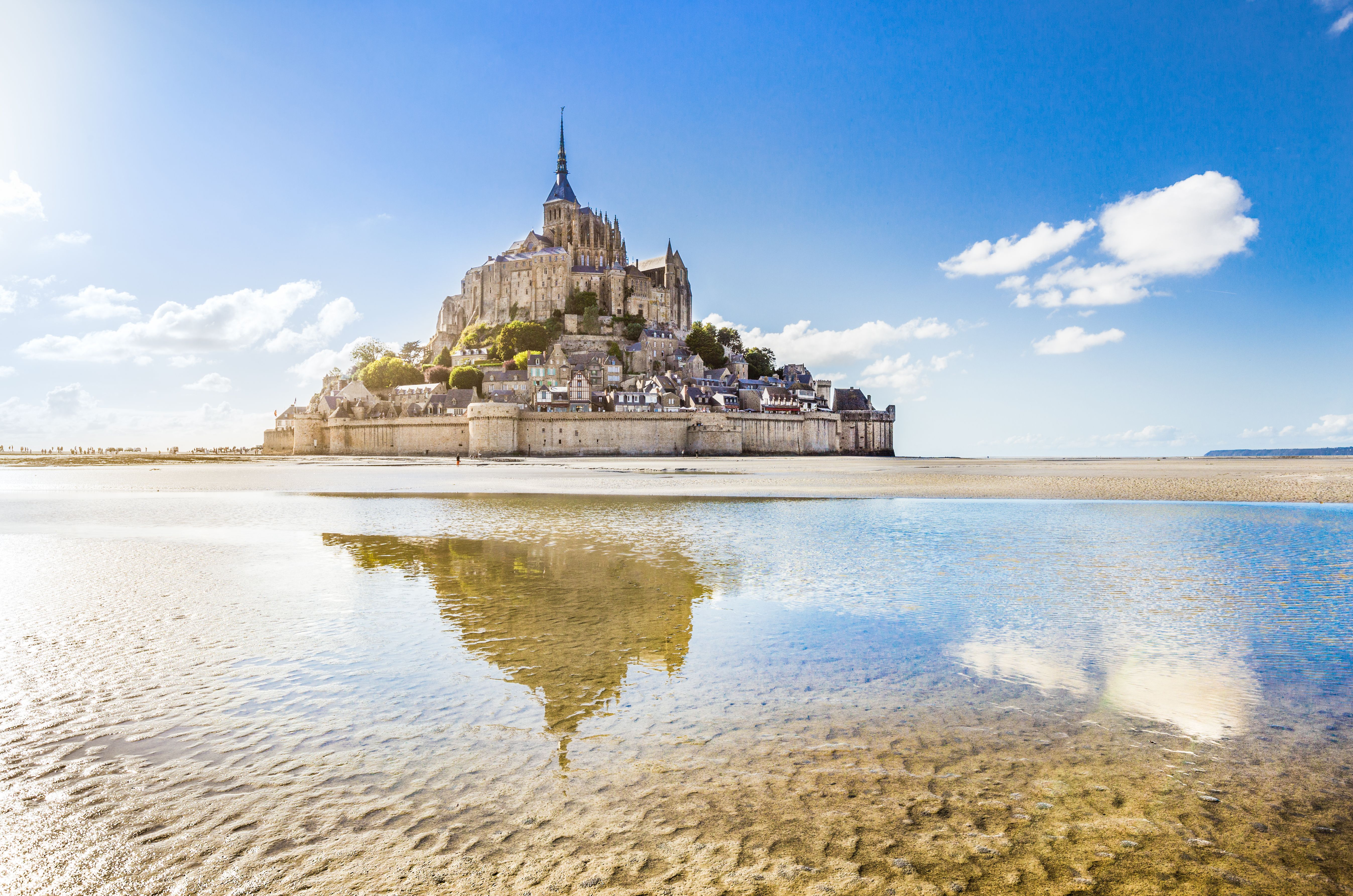
The most practical way to visit Mont Saint-Michel from the UK is to take the Portsmouth to St Malo overnight ferry with your car, drive 1 hour to the island the following morning, and use Saint-Malo as your overnight base. This approach avoids expensive on-island accommodation, gives you the freedom to arrive early and leave late, and combines two of the finest sites in northern France in a single trip.
Duration: 2–3 days
Arrive on the overnight ferry from Portsmouth to Saint-Malo and check into your Saint-Malo hotel. Spend the morning and afternoon in Intra-Muros, visiting the rampart walk, the castle museum, and a crêperie lunch. Drive 1 hour to Mont Saint-Michel in the late afternoon, arriving in time for the early evening when day-visitor numbers drop. Cross to the island by shuttle and walk the ramparts as the light changes over the bay. Return to Saint-Malo for dinner.
Arrive at Mont Saint-Michel before 9am to beat the coach tours. Visit the abbey, allowing 2 to 3 hours for a thorough exploration of La Merveille cloister, the church, and the lower crypts. Walk the lower ramparts and find the Chapelle Saint-Aubert before returning to the causeway. Drive to Cancale (45 minutes west) for freshly opened oysters at the harbour market, then to the Pointe du Grouin for the view back to the abbey across the bay. Return to Saint-Malo for a final evening in Intra-Muros.
Take a morning drive to Avranches for the Scriptorial museum and the botanical garden view of the bay, before returning to Saint-Malo for the evening, Saint-Malo to Portsmouth ferry.
Why we love it: Combining Mont Saint-Michel with Saint-Malo via the overnight ferry from Portsmouth to St Malo ferry is the most efficient and rewarding way to visit both sites from the UK. The ferry's onboard cabins, restaurants, and bar mean you arrive rested and ready to drive directly to the island. Returning to Saint-Malo each evening gives you access to far better food and accommodation than the island itself provides at a fraction of the cost.
Duration: ~5 days
Arrive on the overnight ferry at Saint-Malo and check in. Enjoy a full day in Saint-Malo, exploring the ramparts, Fort National (tide permitting), castle museum, and Demeure du Corsaire. Evening crêperie dinner in Intra-Muros.
Take an early morning drive for 1 hour to Mont Saint-Michel. Preferably, aim to arrive before 9am and visit the abbey before the coach tours. In the afternoon, explore the village ramparts and the Chapelle Saint-Aubert. Stay overnight on the island or at a mainland hotel to experience the evening illuminations at dusk.
Morning: guided bay crossing from Genêts (book in advance) — 3 to 4 hours across the tidal flats with the abbey as your constant landmark. Return to the island by shuttle for a final look from the west terrace. Afternoon: drive to Avranches for the Scriptorial and the bay view from the botanical garden.
Morning: Cancale oyster market and Pointe du Grouin coastal walk. Afternoon: drive north to Granville's walled upper town and harbour. Return to Saint-Malo for dinner.
Final morning on the Saint-Malo ramparts or a day trip to Dinard by water taxi. Return to Saint-Malo for the evening, Saint-Malo to Portsmouth ferry.
Why we love it: Five days allow you enough time to experience Mont Saint-Michel at its very best, while covering the wider riches of the bay region. The year-round Portsmouth to Saint-Malo ferry makes this itinerary possible in any season, though winter and spring visitors will find the abbey at its most atmospheric and the tides at their most dramatic.
There is no ferry directly to Mont Saint-Michel, but the nearest ferry port is Saint-Malo, which is located 60km to the west. The Portsmouth to Saint-Malo ferry, operated by Brittany Ferries, runs year-round and takes approximately 8 to 9 hours overnight.
Alternatively, the Portsmouth to Cherbourg ferry is a shorter crossing in around 3 hours, but places you 150km north of the island, approximately 2 hours and 30-minute drive away. Both routes require a car for the onward journey to Mont Saint-Michel.
A car is strongly recommended. Public transport to the island is possible but very complicated. It requires a TGV to Rennes, a bus to Pontorson, and a further shuttle to the island, with limited return services in the evening. With a car, you can arrive before the coaches, travel at your own pace, and visit Cancale, Avranches, and Saint-Malo on the same trip. Bringing your car on the ferry is the single most practical arrangement for a UK visitor.
Ready to explore France? Compare ferries to France and find the crossing that suits you best.
More routes than anyone else.

Compare fares, times & routes in one place.
Change plans easily with flexi tickets.

Book e-tickets & manage trips in-app.
Live ship tracking & real-time updates.

Top-rated customer support when you need it.