Things to do Caen
Things to do Caen
Caen is the capital of the Calvados department in France and the largest city in Lower Normandy, located roughly 15km inland from the Channel coast on the banks of the River Orne. Built by William the Conqueror, the city has two of the finest Romanesque abbeys in northern France, a vast ducal castle on a hill at its centre, and a neighbourhood of cobbled streets that survived the bombardments of 1944.
Whether you arrive on the overnight ferry from Portsmouth or drive in from Paris, here is everything you need to make the most of one of Normandy's most underrated cities.
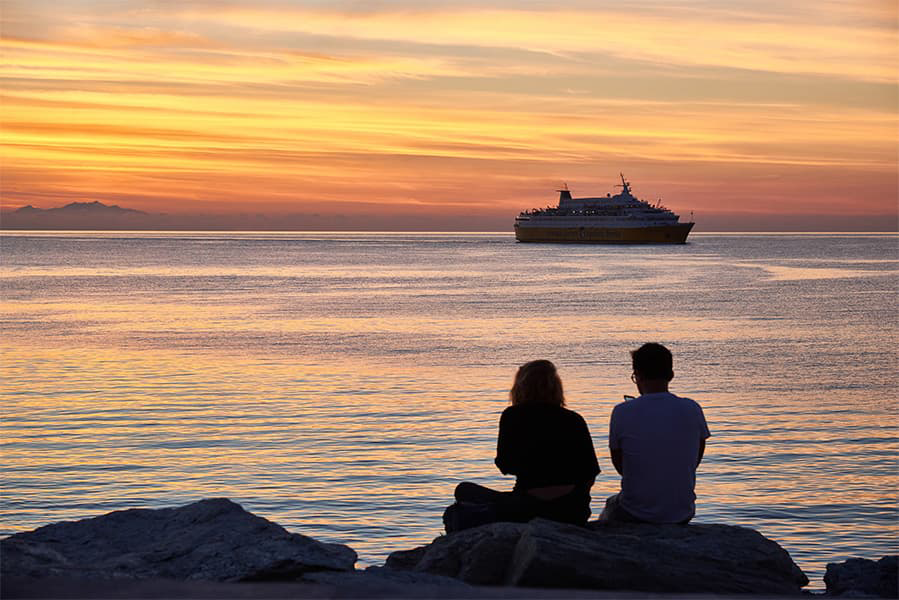
For visitors arriving from the UK, Caen is one of the best-connected ports in Normandy. The Portsmouth to Caen ferry, operated by Brittany Ferries, runs year-round with up to three daily sailings and a crossing time of approximately 6 hours.
The ferry arrives not at Caen itself but at the port of Ouistreham, located 15km north of the city at the point where the Canal de Caen à la Mer meets the sea. From Ouistreham, the city centre is easily reached by bus, taxi, or car. For travellers arriving from within France, Caen sits at the junction of several major road and rail axes, making it straightforward to reach from Paris, Cherbourg, Rennes, and Rouen.
From Paris, Caen is approximately 230km via the A13 autoroute towards Rouen and then south-west on the A13 continuation towards Caen. Give yourself around 2 hours and 30 minutes to account for possible traffic. From Cherbourg, follow the N13 south-east for 120km, which should take around 1 hour and 30 minutes. From Rennes, the A84 runs north-east for 170km, taking approximately 1 hour and 45 minutes.
If you are arriving by ferry at Ouistreham, the port has direct access onto the D515 road, which becomes the dual-carriageway N814 into the heart of Caen. The drive from the terminal to the city centre takes approximately 20 minutes. Follow signs for Caen Centre or for the A13 if travelling onwards. The Caen ferry port at Ouistreham has free parking for the first 2 hours, with the vehicle check-in lanes available for overnight parking if you are catching an early morning ferry.
Caen's SNCF station on Place de la Gare is well-served and centrally located, around 800m south of the ducal castle. Direct services to Paris Saint-Lazare take approximately 2 hours on the faster Intercités trains, with fares starting from around €15 when booked in advance. Services also connect Caen to Cherbourg in 1 hour, Rennes in 2 hours and 30 minutes, and Rouen in 1 hour 45 minutes with a change at Lisieux.
There is no TGV service to Caen, though the journey times from Paris are still manageable. Please be aware that the SNCF station is in central Caen and not at the ferry port in Ouistreham.
FlixBus operates services from Paris to Caen, with journey times of approximately 3 hours to 3 hours 30 minutes and fares from around €10 when booked in advance, making it the cheapest option from the capital. Regional bus services connect Caen with Bayeux, Falaise, and other towns within Calvados, though journey times and frequencies may vary.
For foot passengers arriving on the Portsmouth to Caen ferry, Twisto operates a bus service, line 1B, between Ouistreham ferry port and Caen city centre. The journey takes around 30 to 40 minutes and costs a few euros. Please keep in mind that this service does not run for all ferry arrivals, particularly evening sailings, so check the timetable in advance. Alternatively, a taxi from Ouistreham to Caen centre takes around 20 minutes and costs approximately €25 to €30.
Caen is a medium-sized city that is best explored by a combination of walking in the historic centre and the tram for longer journeys across the wider urban area. The ferry port at Ouistreham lies 15km to the north of the city, connected by bus and road, but the main attractions, like the castle, the two abbeys, the Mémorial, the Vaugueux quarter, and the Jardin des Plantes, are all within a walkable area of the city centre.
The historic centre of Caen is compact and largely pedestrianised, making it rewarding on foot. A natural walking circuit begins at the castle ramparts on the hill above Rue Saint-Pierre, descends through the cobbled lanes of the Vaugueux quarter and continues west along Rue Saint-Pierre to the Abbaye aux Hommes. From there, a 20-minute walk east brings you to the Abbaye aux Dames near the pleasure port.
Flat, comfortable shoes are adequate for the centre, though the climb to the castle ramparts involves a short, steep incline that can be tricky when it’s wet.
A car is not necessary for the city centre, but is strongly recommended if you wish to visit the D-Day Landing Beaches, Bayeux, and the surrounding Calvados countryside. Paid car parks are available throughout the centre, with the most convenient being those adjacent to the castle and near the SNCF station.
Taxis in Caen are metered and available at the main ranks at the SNCF station, Place du Maréchal Foch, and near the castle. For journeys to the ferry port at Ouistreham, a taxi is often the most practical option for evening sailings when the Twisto bus is not available. The standard ride-hailing services are available in Caen, unlike in smaller Normandy towns.
Caen's Twisto network operates two tram lines (A and B) and a comprehensive bus network covering the city and its suburbs. Tram line A runs east to west through the city centre and is the most useful line for visitors, connecting the university district in the west with the pleasure port in the east via the SNCF station and the city centre stops near the castle.
A single Twisto ticket covers both tram and bus travel and can be purchased from machines at tram stops. The tourist office on Rue Saint-Pierre can provide route maps and timetable information. For the Mémorial de Caen, tram line A stops at a dedicated station called Mémorial, which is approximately 800m from the museum entrance.
Caen's inland location gives it a slightly more continental climate than the coastal towns of Normandy, making it marginally warmer in summer and cooler in winter than Dieppe or Cherbourg, though rain is a possibility in any season.
The city is a year-round destination with attractions that stay open in any weather, though the D-Day beaches and surrounding countryside are at their most pleasant between April and October. The major D-Day anniversary commemorations on 6th June draw significant visitor numbers to the region and should be planned for in advance.
Daytime temperatures in March typically range from 8–13°C, rising to 14–19°C by May. Light layers and a waterproof jacket are advisable throughout spring, since the Norman countryside can be breezy and cool even on bright days.
Perfect for: visiting the D-Day Landing Beaches and the Mémorial without peak summer crowds, bocage countryside, and finding good value accommodation before the high season begins.
Temperatures reach 22–26°C on warm July and August days, though Atlantic cloud often keeps conditions comfortable for sightseeing. The D-Day anniversary on 6th June brings major commemorations to the region, with ceremonies at the beaches, cemeteries, and the Mémorial that are open to the public and deeply moving to attend. Hotel prices throughout June and July reflect the high demand, and the Mémorial and Bayeux Tapestry both require timed-entry bookings in peak season.
Perfect for: the D-Day anniversary commemorations, outdoor dining in the Vaugueux quarter, beach days at Cabourg and Courseulles-sur-Mer, and exploring the surrounding countryside in long evening light.
September brings temperatures of 15–20°C and a noticeable drop in visitor numbers after the French school holidays end. This is the start of Normandy's cider and calvados season and the local producers' markets in and around Caen are at their most atmospheric. October temperatures drop to around 10–15°C, so a mid-weight jacket becomes necessary attire by the end of the month.
Perfect for: the cider and calvados season, the Mémorial and the castle museums without summer crowds, day trips to the Bayeux Tapestry and the Pays d'Auge in autumn colour, and the best value for money of the travelling year.
Winter temperatures in Caen typically range from 3–8°C. The city is quiet compared to the high season, but the Mémorial de Caen, the Musée des Beaux-Arts, and the two abbeys all remain open and can be visited without any of the summer pressures. The Christmas market on Place Saint-Sauveur, held from late November into December, transforms the old town centre with stalls selling calvados, Norman cheeses, and seasonal crafts.
Hotel prices drop considerably in January and February, making it the most affordable time to visit. The Norman countryside is stark and dramatic in winter, and the D-Day cemeteries in particular take on a particularly affecting quality on grey days.
Perfect for: the Christmas market, indoor museum visits without queues, the lowest accommodation prices of the year, and a more intimate encounter with everyday Norman city life.
Caen has enough to fill three to four days comfortably without leaving the city. The Mémorial alone warrants a full afternoon, and the castle, the two abbeys, the Vaugueux quarter, and the city's excellent markets can each take an hour or two. If you also factor in the D-Day beaches, Bayeux, and the Pays d'Auge countryside into the mix, the region easily justifies a week-long stay.
The Mémorial de Caen opened on 6th June 1988, and it remains the most comprehensive museum of the Second World War in France, and one of the most thoughtfully designed anywhere in Europe. The building stands on the northern edge of the city on the very ground where some of the fiercest fighting in the Battle of Caen took place in the summer of 1944.
We recommend that you allow at least 3 hours to fully explore the museum. Timed-entry booking is strongly recommended in July and August as demand is much higher. There’s also an international peace garden surrounding the building, with memorial gardens dedicated to the nations that participated in the liberation.
William the Conqueror began building his ducal castle on the hill above the River Orne around 1060, and it grew into one of the largest medieval fortified enclosures in Europe. The castle was used as a prison, a barracks, and a Gestapo headquarters before the bombardments of 1944 largely destroyed what was inside the walls, but the massive perimeter ramparts, two gatehouses, and the foundations of William's own residence all remain.
Walking the full circuit of the walls takes around 30 minutes and provides excellent views over the city. Within the ramparts are the Musée des Beaux-Arts, housing works by Monet, Pissarro, Boudin, and Delacroix. While the ramparts are free to walk, the museums do charge a small admission fee, but offer combined ticketing.
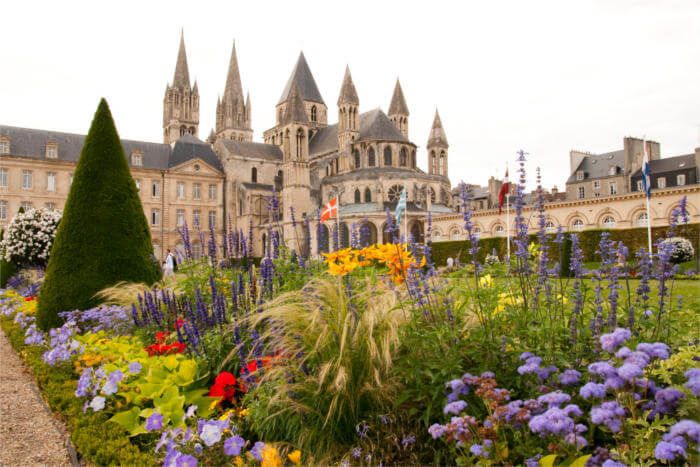
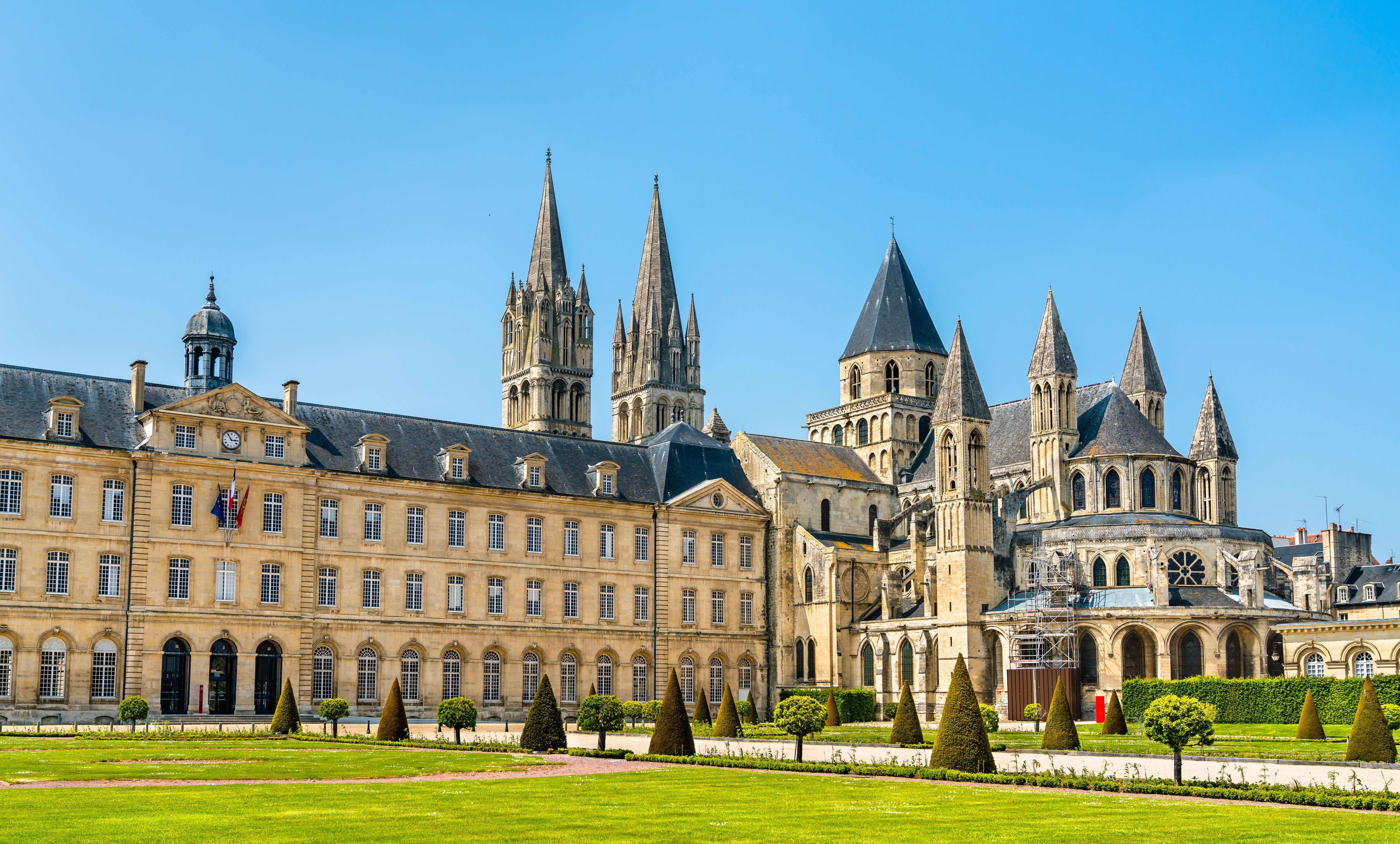
William the Conqueror built the Men's Abbey in 1066, partly to regain papal favour after his marriage to a distant cousin. The Church of Saint-Étienne that forms its centrepiece is one of the great buildings of the Romanesque world: its twin towers, begun in the 11th century and completed in the 13th, are the defining feature of Caen's skyline.
The conventional buildings attached to the abbey, now housing the Caen town hall, can be visited on free guided tours, which take visitors through the chapter house (where civic wedding ceremonies now take place). Allow 1 hour to 1 hour 30 minutes for the guided tour. Tours run several times each day, so please check exact timings with the tourist office.
Built between 1060 and 1080 as a counterpart to the Men's Abbey, the Abbaye aux Dames stands on the eastern side of the city near the pleasure port. Its Church of the Holy Trinity contains Matilda's tomb, marked by an original black stone with a Latin inscription laid at her death in 1083. The superb crypt, with barrel vaults supported by 16 closely-ranked columns, dates to the founding of the church and is one of the finest Norman Romanesque spaces in France. Free guided tours of the conventional buildings are available on weekend afternoons.
Sandwiched between the castle ramparts and the Church of Saint-Pierre, Le Vaugueux is the best-preserved neighbourhood of medieval Caen, with cobbled lanes, half-timbered buildings, and a selection of restaurants and bars that come to life between Thursday evening and Sunday. The quarter's main street, Rue du Vaugueux, was known historically as a place where the poor gathered to celebrate after paying their feudal tithes, an irony that has not been lost on the restaurants that now occupy its ground floors.
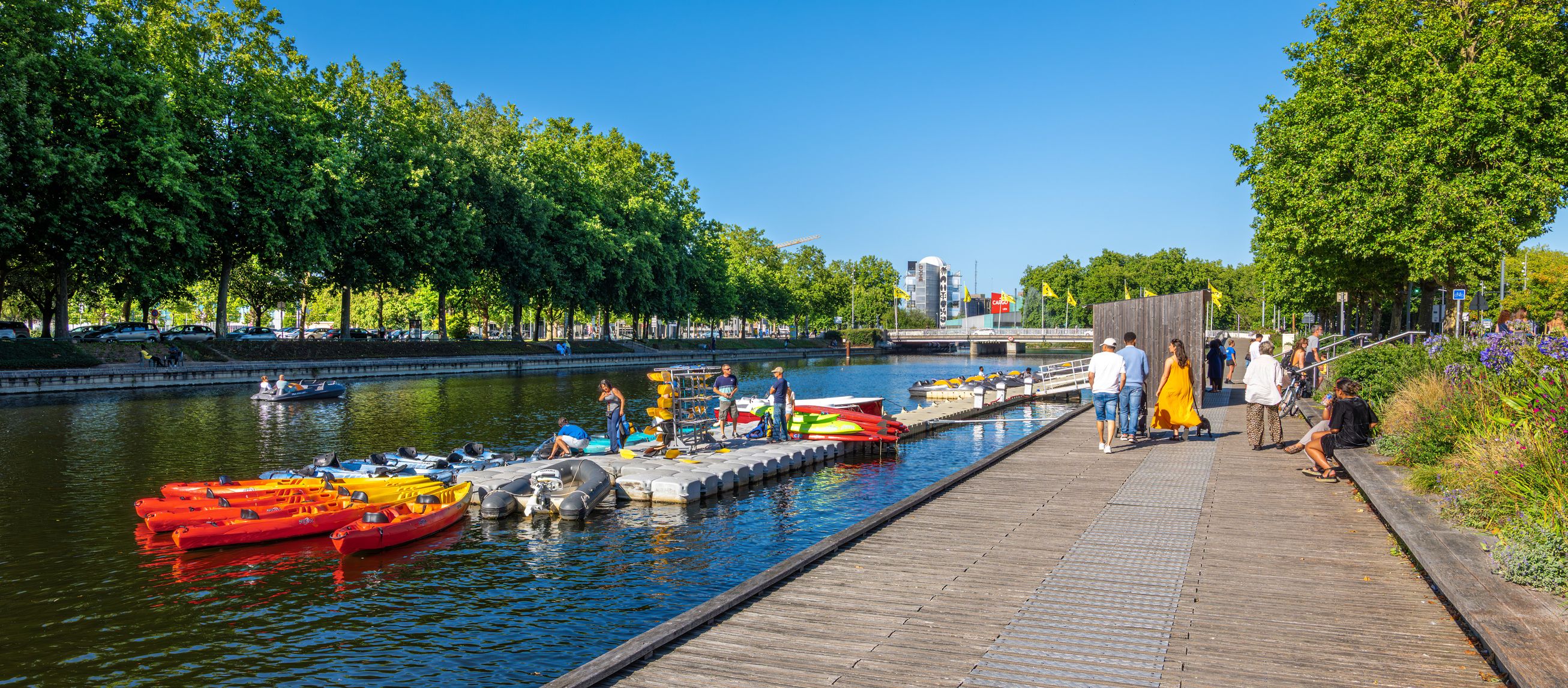
The most popular outdoor excursion from Caen is the cycling route along the Canal de Caen à la Mer, a 14km waterway that connects the city to the sea at Ouistreham. A flat path follows the canal towpath for its full length, passing through the Pegasus Bridge memorial at Ranville and arriving at the beach and ferry port at Ouistreham. The full route takes around 1 hour 30 minutes one way at a leisurely pace. Bikes can also be rented from several points in central Caen, and the route is entirely accessible to cyclists of all abilities.
The beaches of the Calvados coast are within a 20 to 30-minute drive of Caen. The vast sandy beach at Cabourg, which is over 3km long at low tide, was beloved by Marcel Proust and appears fictionalised in À la Recherche du Temps Perdu. Courseulles-sur-Mer, 20km north, was Juno Beach on D-Day and now combines a working harbour with good swimming. Both beaches are accessible by car or by seasonal bus services from Caen.
Beyond the Mémorial and the castle museums, Caen has several excellent historic sites that are worth visiting. The Church of Saint-Pierre, standing immediately below the castle ramparts on Rue Saint-Pierre, was begun in the 12th century and completed in a florid Renaissance style in the 16th, giving it one of the most exuberantly decorated interiors of any Norman church. Entry to the church is free.
The Pegasus Bridge Memorial at Ranville, 8km north-east of Caen via the canal path, commemorates the British 6th Airborne Division's capture of the Caen Canal bridge in 1944. The original bridge has been preserved and moved to the memorial grounds. Café Gondrée, located beside the bridge, is widely described as the first house liberated in France on D-Day and is still run by the Gondrée family.
Caen is exceptionally well-equipped for poor weather. The Mémorial de Caen provides at least a half-day of absorbing indoor experience regardless of weather conditions. The Musée des Beaux-Arts within the castle ramparts is one of the finest regional art museums in northern France, with a collection that repays several hours of exploration.
The covered market hall on Place Saint-Sauveur is an excellent rainy morning option, particularly on Fridays and Sundays. The Abbaye aux Hommes guided tour is a consistently worthwhile indoor experience available in any weather. For families, the escape game complex Atom Game in Caen is consistently well-reviewed and appeals to teenagers and adults alike.
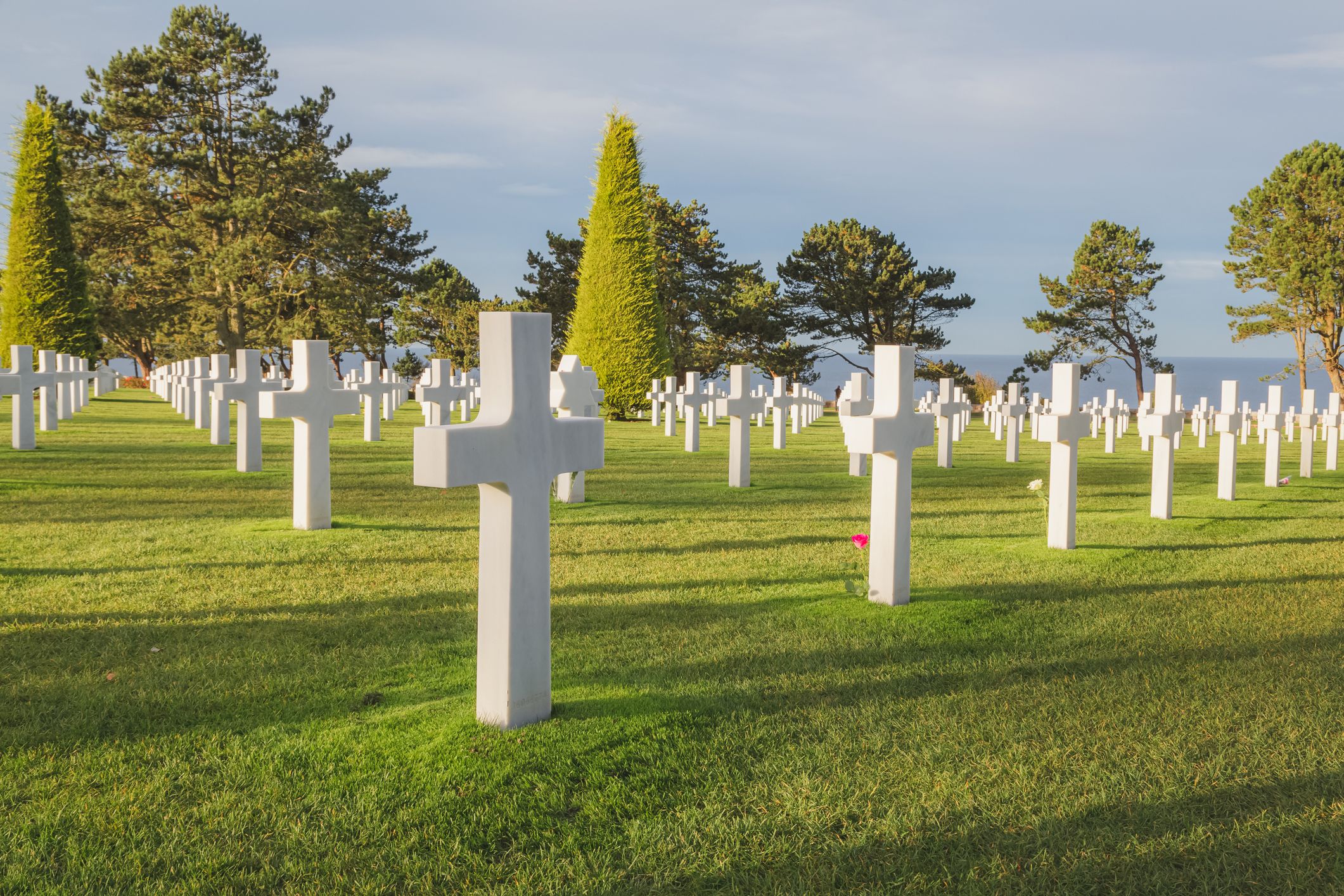
The D-Day Landing Beaches (20–50km west and north): Gold, Juno, and Sword beaches are all within 30km of Caen. The American beaches of Omaha and Utah lie slightly further west, beyond Bayeux. A full day's circuit visiting the American Cemetery at Colleville-sur-Mer (the largest American military cemetery in Europe, with 9,387 white marble crosses above Omaha Beach), the Pointe du Hoc (where the cliff-top craters from naval bombardment remain exactly as they were in June 1944), Arromanches (site of the Mulberry Harbour, whose concrete caissons still lie offshore), and Juno Beach Centre at Courseulles-sur-Mer is one of the most significant historical experiences available in France. A car is by far the most practical way to cover multiple sites in a day.
Bayeux (30km west): The most complete medieval town in Normandy, Bayeux was the first French town liberated after D-Day. Its cathedral is one of the finest Gothic buildings in northern France. But the main reason to visit is the Bayeux Tapestry, a 70-metre embroidered linen narrative of the Norman Conquest of England produced around 1077, displayed in its own purpose-built museum. It is one of the most remarkable objects of the medieval world and seeing it in person is a genuinely different experience from any reproduction.
Pays d'Auge (30–60km south-east): The picturesque rural hinterland of half-timbered farmhouses, apple orchards, and dairy farms that produces Normandy's most celebrated cheeses as well as the cider and calvados for which the region is internationally known. The village of Beuvron-en-Auge, 30km east of Caen, is one of the most beautiful in France. The Cider Route (Route du Cidre) links the main producing villages and their farm shops in a 40km driving circuit.
Caen is an excellent family destination, with attractions catering for a wide age range. The Mémorial de Caen is suited to older children and teenagers who have some context for the Second World War. The museum handles difficult history with intelligence and care, and the combination of artefacts, film, and personal testimony makes it engaging rather than simply overwhelming.
For younger children, the Colline aux Oiseaux park offers free, open-air space with a small animal farm, a labyrinth, and a crêperie within the park. Festyland, Normandy's largest amusement park, is located 10 minutes from Caen by car, with rollercoasters, splash rides, and a petting zoo. The Château de Caen's ramparts, with their towers, viewpoints, and open grassy interior, appeal to children of most ages and are free to walk.
Several of Caen's best experiences are free or very low-cost. The castle ramparts are free to walk and offer the best view of the city. The Friday and Sunday markets on Place Saint-Sauveur are the most authentic food-shopping experiences in the city. If you go before 11 AM, you can pick up a local cheese, a bottle of farm cider, and a ficelle (thin baguette) for well under €10.
The Musée des Beaux-Arts and Musée de Normandie within the castle charge entry but offer combined ticketing at a reduced rate, and both offer free entry for EU residents under the age of 26. The Mémorial de Caen is the one significant admission charge in the city but represents genuine value for a half-day visit, though students with a valid ID receive a discount.
The Château de Bénouville, 8km north of Caen near Pegasus Bridge, is a late 18th-century neoclassical château and is considered one of the finest surviving examples of such work. It now houses the European Institute of Gardens and Landscapes and is open to visitors during the summer months. The pleasure port on the Orne basin near the Abbaye aux Dames is lively in summer with café terraces and moored boats, and is almost entirely unknown to visitors who confine themselves to the historic centre.
Alternatively, Rue Écuyère and Rue Saint-Sauveur, running parallel to the more-visited Rue Saint-Pierre, contain some of the finest surviving pre-war domestic architecture in the city. Aux Fromages de France on Rue Saint-Jean is the most concentrated source of Norman farmhouse cheeses in the city.
Caen lends its name to one of the great dishes of Norman cuisine: tripes à la mode de Caen, a slow-cooked stew of beef tripe, vegetables, cider, and calvados that has been prepared in the city since at least the 14th century and is said to have been a favourite of William the Conqueror. It is a dish that divides opinion, and it is available in many of the traditional brasseries around the Vaugueux quarter.
The Confrérie de la Tripière d'Or, a gastronomic brotherhood founded to preserve the recipe, awards an annual prize for the best tripes à la mode de Caen in the city.
More broadly, Caen sits at the heart of Normandy's dairy country, and the region's most celebrated cheeses are all produced nearby. Normandy cream and butter appear in almost every local sauce; the sole à la normande (sole with cream, mussels, and shrimp) and the poulet vallée d'Auge (chicken cooked with cider, calvados, and cream) are the canonical expressions of Norman cuisine and appear on menus throughout the city.
The Friday and Sunday markets on Place Saint-Sauveur are the best places in Caen to buy regional produce directly from producers.
Caen offers accommodation for every type of traveller. The highest concentration of hotels is in the city centre, within walking distance of the castle and the two abbeys, with a range of three and four-star options on and around Place Courtonne and near the SNCF station. The Hôtel Ivan Vautier, named after and associated with one of the city's most celebrated chefs, represents the most distinctive upmarket option in the city centre.
For those primarily visiting the D-Day beaches and the Mémorial, hotels in the northern suburbs closer to the Mémorial offer quick access without the need to drive through the centre. Budget travellers are well served by an array of two-star hotels around the SNCF station and by the university area further west, where lower prices reflect the local student economy.
You can book accommodation via our accommodation page or directly with properties for the best rates. In June, around the D-Day anniversary and throughout July and August, accommodation across the Caen region books out well in advance, so reservations should be made at least two to three months ahead.
Caen works equally well as a standalone city destination, a base for exploring Normandy's Second World War sites, and a great starting point for a wider French road trip.
The Portsmouth to Caen ferry arrives at Ouistreham after approximately 6 hours, making an overnight sailing the most practical option for travellers from the UK. A car is not strictly necessary for the city itself, but certainly increases what you can see in the surrounding region.
Duration: 2–3 days
Day 1: Arrive via the overnight Portsmouth to Caen ferry, disembarking at Ouistreham. Drive or take the Twisto bus into the city centre, check in, and spend the morning walking the castle ramparts and visiting the Musée des Beaux-Arts. After lunch in the Vaugueux quarter, spend the afternoon at the Abbaye aux Hommes guided tour and explore Rue Saint-Pierre and the colombage houses. Then crown the day with an evening dinner in the Vaugueux.
Day 2: Dedicate the full morning and early afternoon to the Mémorial de Caen, arriving at opening time to get the most from the experience. Take the tram or walk to the Colline aux Oiseaux park afterwards to unwind. In the late afternoon, drive or cycle the canal path towards Ouistreham, stopping at the Pegasus Bridge Memorial at Ranville. Then finish by returning to Caen for a final evening in the Vaugueux.
Day 3 (optional): Drive 30 minutes west to Bayeux for the Tapestry and the cathedral, then continue north to Arromanches to see the remains of the Mulberry Harbour before the return sailing from Ouistreham via the Caen to Portsmouth ferry.
Why we love it: This itinerary works perfectly for history-focused travellers or anyone who wants to encounter Norman culture in depth rather than superficially. The overnight ferry from Portsmouth to Caen is one of the most comfortable Channel crossings available, with onboard cabins, restaurants, and bar facilities, and saves a night's hotel cost while maximising time in Normandy.
Duration: ~5 days
Day 1: Arrive on the overnight ferry and check in. Morning at the castle — ramparts, Musée des Beaux-Arts, and Musée de Normandie. Afternoon guided tour of the Abbaye aux Hommes. Evening in the Vaugueux quarter.
Day 2: Full morning and afternoon at the Mémorial de Caen. Late afternoon at the Abbaye aux Dames and the pleasure port. Evening at the harbour-side restaurants.
Day 3: Full day on the D-Day Landing Beaches. Drive west to the American Cemetery at Colleville-sur-Mer and Omaha Beach, continue to Pointe du Hoc, then east along the coast to Arromanches (Mulberry Harbour) and Gold Beach. Return via Bayeux for a brief look at the town. Back to Caen for dinner.
Day 4: Morning in Bayeux for the Tapestry and cathedral (timed-entry booking essential in summer). Afternoon drive east through the Pays d'Auge — Beuvron-en-Auge village, a working cider farm on the Route du Cidre, and a stop for cheese at a farm shop. Return to Caen via the N13.
Day 5: Morning at the Juno Beach Centre at Courseulles-sur-Mer (25 minutes north), then a final beach walk at Cabourg (30 minutes east) before returning to Caen. Cycle the canal path to Pegasus Bridge and Ouistreham for the return sailing to Portsmouth on the Caen to Portsmouth ferry.
Why we love it: Five days is the ideal length of time to experience both the depth of Caen itself and the extraordinary range of what lies within an hour's drive. The ferry from Portsmouth to Caen is the most direct ferry crossing for travellers from southern England, the Midlands, and beyond, and the year-round schedule means this itinerary works in any season.
Yes, the Portsmouth to Caen ferry runs year-round, operated by Brittany Ferries, with up to three sailings per day and a crossing time of approximately 6 hours. The ferry arrives at the port of Ouistreham, 15km north of Caen city centre, which is connected to the city by the Twisto bus service (line 1B) and by taxi. The Caen ferry port at Ouistreham has free parking for the first 2 hours, with overnight parking available in the check-in lanes for early morning sailings.
Not for the city itself, as the historic centre is compact and walkable, while the tram network covers the wider city, and the Mémorial de Caen is accessible via tram from the centre. However, a car is strongly recommended if you intend to visit the D-Day Landing Beaches, Bayeux, the Pays d'Auge, or any of the surrounding Calvados countryside.
Public transport connections to the beaches and rural areas are limited, and the freedom to stop at multiple beach and memorial sites in a single day requires your own transport. If you are travelling by ferry, bringing your car on the Portsmouth to Caen crossing is by far the most practical option for getting the most out of the region.
Book the Mémorial de Caen and the Bayeux Tapestry museum online in advance if visiting in July or August, since both operate timed-entry and sell out during peak periods. The Abbaye aux Hommes guided tour is free but only runs at set times, so please check current schedules at the Caen tourist office on Rue Saint-Pierre before arriving.
If you are driving to or from the ferry port at Ouistreham in the evening, be aware that the Twisto bus service does not run for all ferry departures. Therefore, a pre-booked taxi is the more reliable option. Cards are widely accepted in Caen, but smaller farm shops and market stalls on the Cider Route in the Pays d'Auge may be cash-only.
More routes than anyone else.

Compare fares, times & routes in one place.
Change plans easily with flexi tickets.

Book e-tickets & manage trips in-app.
Live ship tracking & real-time updates.

Top-rated customer support when you need it.