Things to do Dieppe
Things to do Dieppe
Dieppe is a working port city on the Normandy coast of northern France, nestled between two chalk cliffs at the mouth of the River Arques, roughly 58km north-west of Rouen and 200km from Paris. It holds the distinction of being France's first seaside resort, and today it remains one of the most authentic and underrated destinations on the English Channel coast.
This is not a destination that demands your attention. It earns its reputation quietly, with good food, real history, and a seafront that rewards an unhurried afternoon. Whether you're stepping off the ferry for the first time or returning for your fifth visit, here's everything you need to make the most of Dieppe.
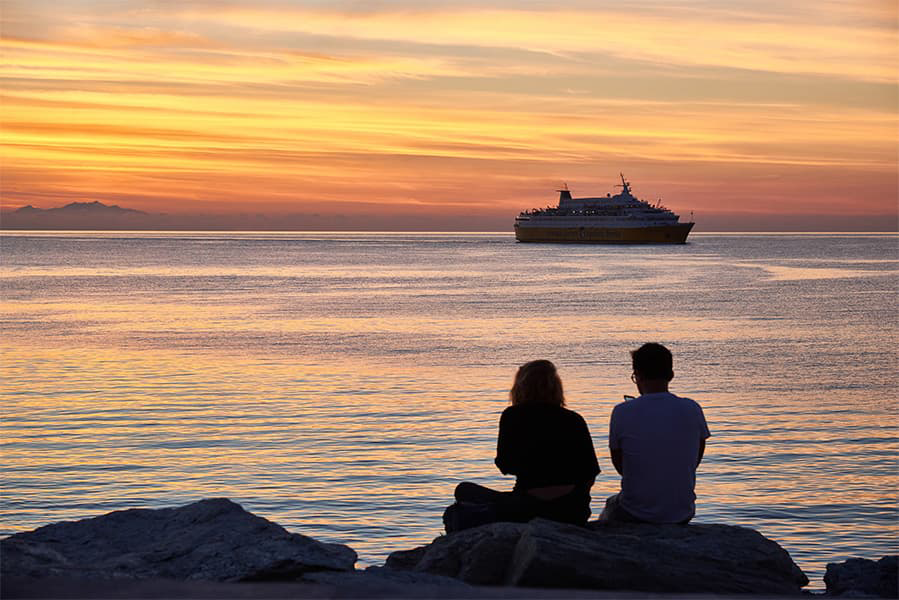
For visitors from the UK, Dieppe is one of the most directly accessible ports in Normandy thanks to the Newhaven to Dieppe ferry, operated by DFDS Seaways. The crossing takes around 4 hours and runs up to twice daily throughout the year, making it one of the most convenient gateways into northern France.
For travellers arriving from within France, the city sits at the northern end of the A28/N27 axis, with Rouen 53km to the south providing the main rail and road connection to Paris and beyond.
From Paris, Dieppe is approximately 170km via the A13 motorway towards Rouen and then the N27 north through the Seine valley. We suggest allowing yourself around 2 hours and 30 minutes in normal traffic. From Rouen, the N27 is a dual carriageway for most of its 53km length and takes under 45 minutes. From Calais, follow the A16 south-west towards Abbeville and then the D925/A28 south-west to Dieppe. The drive is approximately 130km and takes around 1 hour 30 minutes.
The ferry port at Dieppe is clearly signposted on approach to the town from all directions and has free short-stay parking directly in front of the terminal. If you're arriving by ferry from Newhaven, you'll be deposited on Quai Gaston Lalitte, a 10-minute drive or 25-minute walk from the centre of town.
Dieppe has its own SNCF station on Boulevard Clemenceau, located around 500m from the ferry port. Trains connect to Rouen in approximately 45 minutes and from there to Paris Saint-Lazare, with the total journey taking around 2 hours and 15 minutes on the faster services.
There is no direct high-speed TGV service to Dieppe. All journeys to and from Paris require a change at Rouen. Tickets can be booked online, and advance fares from Paris start from around €13. Between May and September, a shuttle bus operates from Dieppe's SNCF station to the ferry terminal, whereas outside this period, local bus line 1 covers the route to the port area.
FlixBus operates direct services from Paris Bercy to Dieppe several times a week, with the journey taking around 3 hours and 30 minutes to 3 hours and 45 minutes. This is a cheaper but slower alternative to the train, with tickets costing around €11 when booked in advance.
Within Normandy, regional bus services operated by Lignes de Normandie connect Dieppe with Rouen, Fécamp, and other coastal towns, though timetables can be infrequent on rural routes. If you're travelling as a foot passenger on the Newhaven to Dieppe ferry, the centre of Dieppe is compact enough to explore entirely on foot once you arrive, as the beach, castle, market quarter, and harbour are all within 15 minutes' walk of the port.
Dieppe is a compact city that rewards walking above all other modes of transport. The main landmarks of the town can be covered on foot in a single afternoon without difficulty. The Dieppe ferry port at Quai Gaston Lalitte sits at the eastern edge of the town centre, roughly 25 minutes' walk from the castle on the western cliff.
The most rewarding way to discover Dieppe is on foot. This is because distances between attractions are short, the seafront promenade is traffic-free, and the old streets of the centre are best explored at a pace slow enough to notice the carved doorways, flint-and-stone facades, and hidden courtyards tucked behind the main shopping streets.
A natural walking circuit begins at the seafront promenade, heads west to the base of the cliff below the castle, climbs to the castle esplanade for views across the bay, and then descends back into the centre via the Rue de la Barre and Place du Puits Salé. From there, cross the inner harbour via Pont Colbert to reach the Le Pollet quarter, the old fishermen's district, with its cobbled lanes and flint cottages climbing the eastern cliff. Allow around 3 hours for this full circuit, including time at the castle museum.
A car is not necessary for exploring the town centre itself, but it is the best way to access the surrounding Alabaster Coast, the Château d'Arques-la-Bataille (8km south-east), and the village of Varengeville-sur-Mer (6km west). Town centre parking is available at several pay car parks, with the most convenient being the one adjacent to the covered market.
Taxis are available at the rank outside the SNCF station and can be hailed from the seafront. Ride-hailing apps are not widely used in Dieppe, and a call to a local taxi company is the more reliable option for pre-booked journeys.
Dieppe's urban bus network, Stradibus, operates several routes covering the town and its immediate suburbs. For most visitors, however, the network is of limited use as the key attractions are all walkable from the centre. The most useful service for visitors arriving by ferry without a car is bus line 1, which runs between the SNCF station and the port area when the DFDS ferry shuttle is not operating.
Local buses to nearby coastal villages such as Puys and Pourville-sur-Mer run from the central bus terminus, making short day trips possible without a car if timetables are checked in advance.
Dieppe's location on the English Channel means it shares broadly the same maritime climate as southern England. Rain is possible in any month, and strong winds are common in winter, but the town has enough indoor attractions, covered markets, and harbour-side cafes to make it worth visiting all year-round. Peak visitor numbers arrive in July and August, whereas the cheapest months for hotel prices are November through March.
Daytime temperatures in March typically range from 8–13°C, rising to 13–18°C by May. A light waterproof jacket is essential throughout spring, and layers are advisable for cliff walks where the sea breeze can be cutting even in sunshine. Spring is one of the best times to visit the Alabaster Coast by car, when the clifftop paths above Étretat and Fécamp are uncrowded, and the light on the chalk is at its most dramatic.
Perfect for: exploring the Alabaster Coast clifftops without summer crowds, the Saturday market at its freshest, and getting the best hotel rates before high season begins.
Temperatures reach 20–25°C on the warmest days of July and August, though Atlantic cloud often keeps the temperature closer to 18–22°C. The beaches fill with French families, and the café terraces along the harbour are busy from midday into the evening. Hotel prices are at their peak in August, so we advise you to book well in advance for weekend stays. The International Kite Festival, held in even-numbered years in September, transforms the seafront into one of Europe's most spectacular free events, with kites from over 30 countries flying simultaneously above the promenade.
Perfect for: beach days and seafront walking, the harbour terrace atmosphere, the Kite Festival (even years, early September), and day trips to nearby coastal villages by car.
September brings temperatures of 16–20°C and a significant reduction in visitor numbers after the French school holidays end. This is the start of herring and scallop season, and the annual herring and scallop fair in November draws over 100,000 visitors to the harbour for two days of cooking demonstrations, live music, and exceptional fresh seafood at very reasonable prices. October temperatures drop to around 10–15°C, when a mid-weight jacket and scarf become necessary for everyday activities.
Perfect for: the herring and scallop fair, seafood restaurants at their best, the Varengeville gardens in autumn colour, and the most atmospheric walking conditions on the cliff paths.
Winter temperatures in Dieppe typically range from 4–9°C. The town is quiet but by no means closed. The covered market hall and the harbour-side restaurants still welcome visitors, and the castle museum can be visited without any of the summer queues. Christmas market stalls appear in the town centre in December. Hotel rates drop substantially, and the town takes on a calm, everyday character that offers a more genuine encounter with Norman life than the summer season provides.
Perfect for: the castle museum and indoor attractions without crowds, Christmas market visits, storm-watching from the promenade, and the best value accommodation of the year.
Dieppe rewards visitors who take their time. The castle and its remarkable museum, the Saturday market, the fishermen's quarter of Le Pollet, the seafront promenade, and the working harbour can easily fill a full two-day itinerary. Add the surrounding Alabaster Coast, the villages of Varengeville-sur-Mer and Arques-la-Bataille, and the beaches east and west of town, and the region easily justifies three to five days.
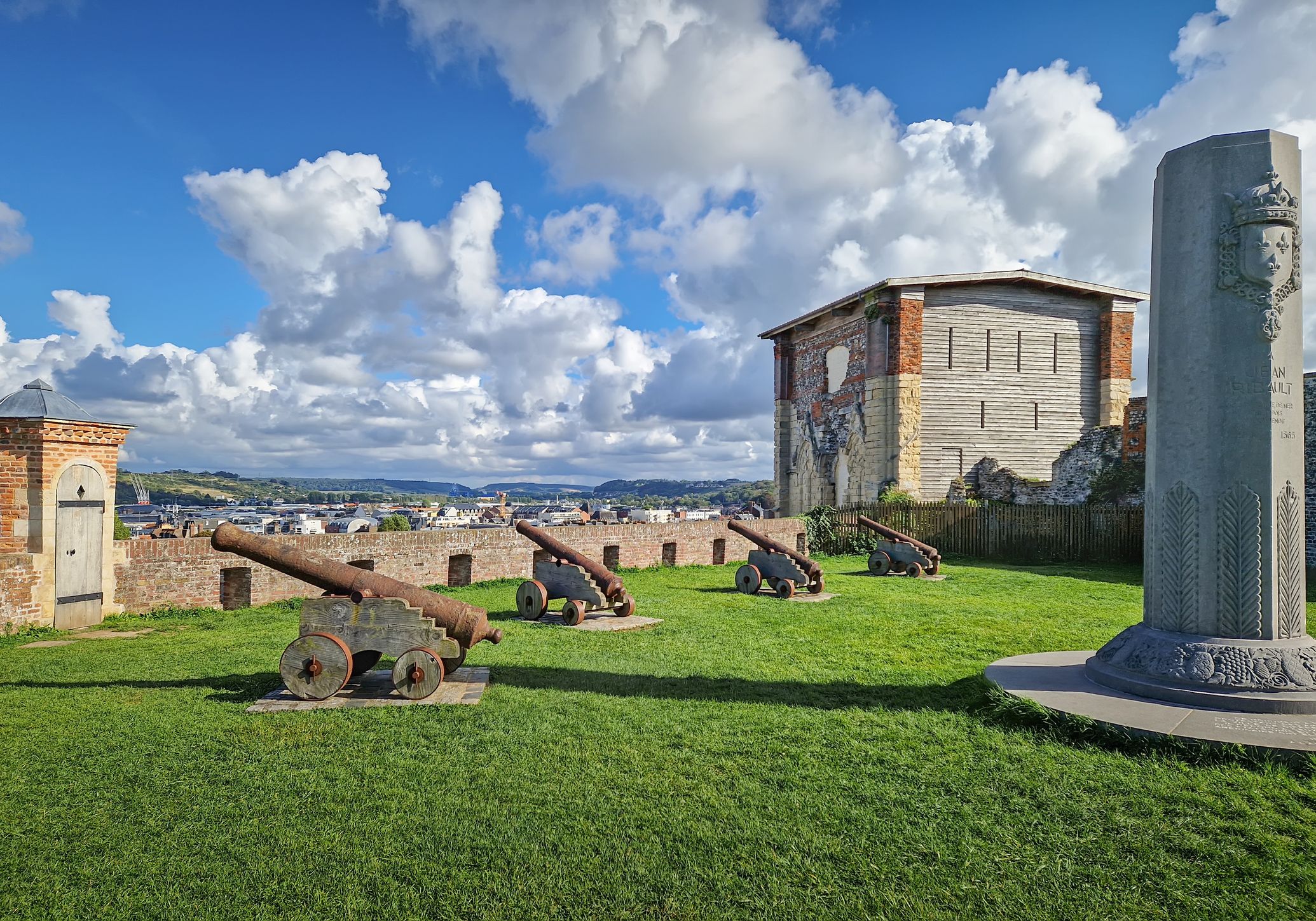
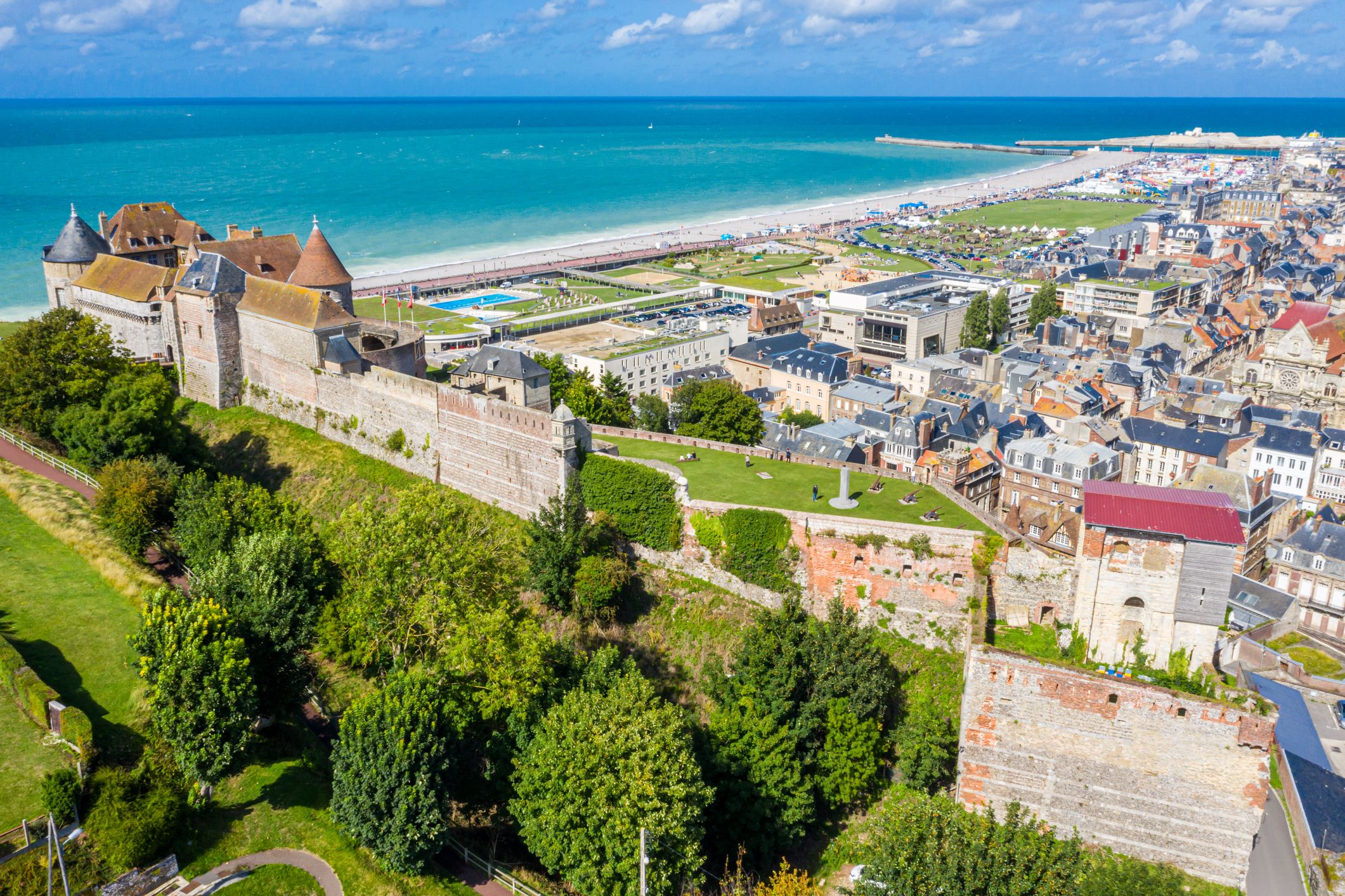
The castle sits on the western cliff above the beach, and the view from its esplanade alone, which looks out over the harbour and the white chalk headlands, is worth the climb. Built in sandstone and flint between the 14th and 15th centuries, the castle houses the city museum, which contains one of the finest collections of carved ivory in Europe: more than 1,000 pieces created in Dieppe between the 16th and 20th centuries, when the city was the world centre of ivory craftsmanship.
The museum also holds over 100 original prints by Georges Braque, 19th and 20th-century French paintings, Dutch masters, archaeological finds from the region, and a collection of detailed model ships. We suggest allowing at least 90 minutes. There is an admission fee upon entry, though reduced rates are available for students and children under 12 are free.
Dieppe's Saturday morning market runs along the Grande Rue and surrounding streets from around 8am to 1pm and was voted the best market in France in 2020. It is one of the longest continuous street markets in Normandy, with over a mile of stalls selling fresh fish landed that morning from the fishing port, Norman cheeses, cider, calvados, charcuterie, seasonal vegetables, clothing, crafts, and cut flowers.
The area around the covered market hall is the most concentrated for food, while the clothing and household stalls extend east towards the station. We suggest getting there for 9am as that’s when the cheese stalls are at their best, and the crowd is manageable. By 11am, the most popular stalls are often running low.
Cross Pont Colbert, the 19th-century swing bridge that spans the inner harbour, and you enter a part of Dieppe that most visitors miss entirely. Le Pollet is the original fishermen's quarter, built at the foot of the eastern chalk cliff, and its winding cobbled streets are lined with narrow houses faced in the local flint-and-brick banding that is characteristic of Normandy's maritime architecture.
At the top of the quarter, the Chapel of Notre-Dame-de-Bon-Secours was built in the 1870s as a pilgrims' chapel and is now a memorial to sailors lost at sea, with stained glass and a terrace that looks directly across the harbour mouth to the beach. The climb is steep, but the view is the finest in Dieppe.
This memorial museum, housed in a former Italian-style theatre on Boulevard du Maréchal Foch, tells the story of Operation Jubilee, where more than 4,000 troops were killed, with maps, photographs, personal accounts, and military equipment. The Canadian War Cemetery, 200m away at Hautot-sur-Mer, contains 707 graves, an affecting and beautifully maintained site that is open every day and is free to enter.
Standing at the heart of the old town with its 42-metre belfry tower visible from across the harbour, Saint-Jacques is a 12th to 16th-century church whose interior documents Dieppe's remarkable global history with unusual specificity. A carved stone frieze depicts indigenous peoples encountered by Dieppe's 16th-century explorers — funded by the wealthy ship-owner Jehan Ango, whose tomb is in the south transept.
One side chapel contains a beautifully detailed piece of carved graffiti: an early modern sailing ship etched into the stone by a sailor's hand, centuries ago.
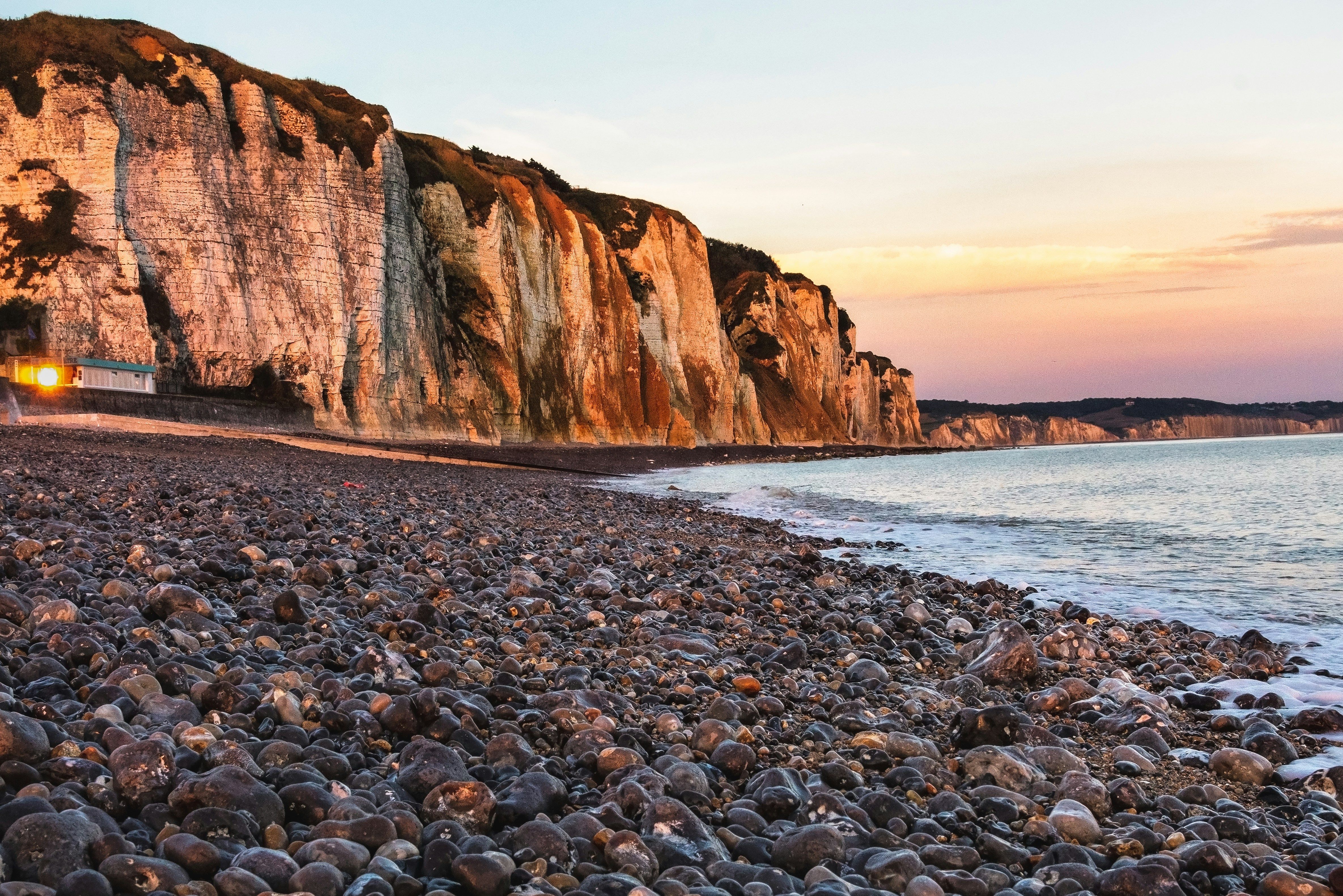
The Alabaster Coast, the 120km stretch of chalk cliff coastline running from Dieppe south-west to Étretat, is the dominant outdoor attraction of the region. The GR21 long-distance walking route traces the clifftops for its entire length, passing through the beach villages of Pourville-sur-Mer (3km west of Dieppe), Quiberville (12km), and Veules-les-Roses (20km).
The section immediately west of Dieppe, between Pourville and Quiberville is accessible without a car and offers views of the famous chalk arches and needle formations. The critical rule for any cliff walk is to check the tide: the beach-level sections are only passable at low tide, and the tidal range here is significant.
The beach at Dieppe itself stretches for 1.8km between the two chalk headlands and is backed by Europe's longest seafront lawn and promenade. At low tide, the sandstone shelf below the pebbles is exposed, creating natural rock pools. Behind the promenade is an outdoor swimming pool and lido complex (L'O 2 Mer) for days when the Channel is not appealing for open-water swimming.
Cyclists are well served by the Véloroute du Lin, a traffic-free converted railway track that runs south-east from Dieppe towards Arques-la-Bataille through entirely peaceful countryside.
Day sailing and sea fishing: Dieppe is France's premier scallop port, and local operators offer sea fishing trips from the working harbour. Check with the tourist office in Pont Ango for current operators and booking.
The castle museum is the essential starting point for any visit. The Estran – Cité de la Mer on Rue de l'Asile Thomas is Dieppe's maritime heritage centre, with 1,600m² of permanent exhibition covering the history of fishing, navigation, and life on the Norman coast, including a small live aquarium with Channel fish species. It is less architecturally dramatic than the castle, but deeply informative on the fishing heritage that still defines the city's economy and identity.
The Église Saint-Rémi, in the southern part of the old town, is often overlooked in favour of Saint-Jacques but contains some of Dieppe's finest Renaissance stonework and a series of 16th-century sculpted choir stalls of remarkable quality. Entry is free. The Les Tourelles gateway, the only surviving gate from the medieval town walls, stands near the seafront at the foot of the western headland. It is a private residence and cannot be entered, but its facade is one of the most photographed medieval structures in Dieppe.
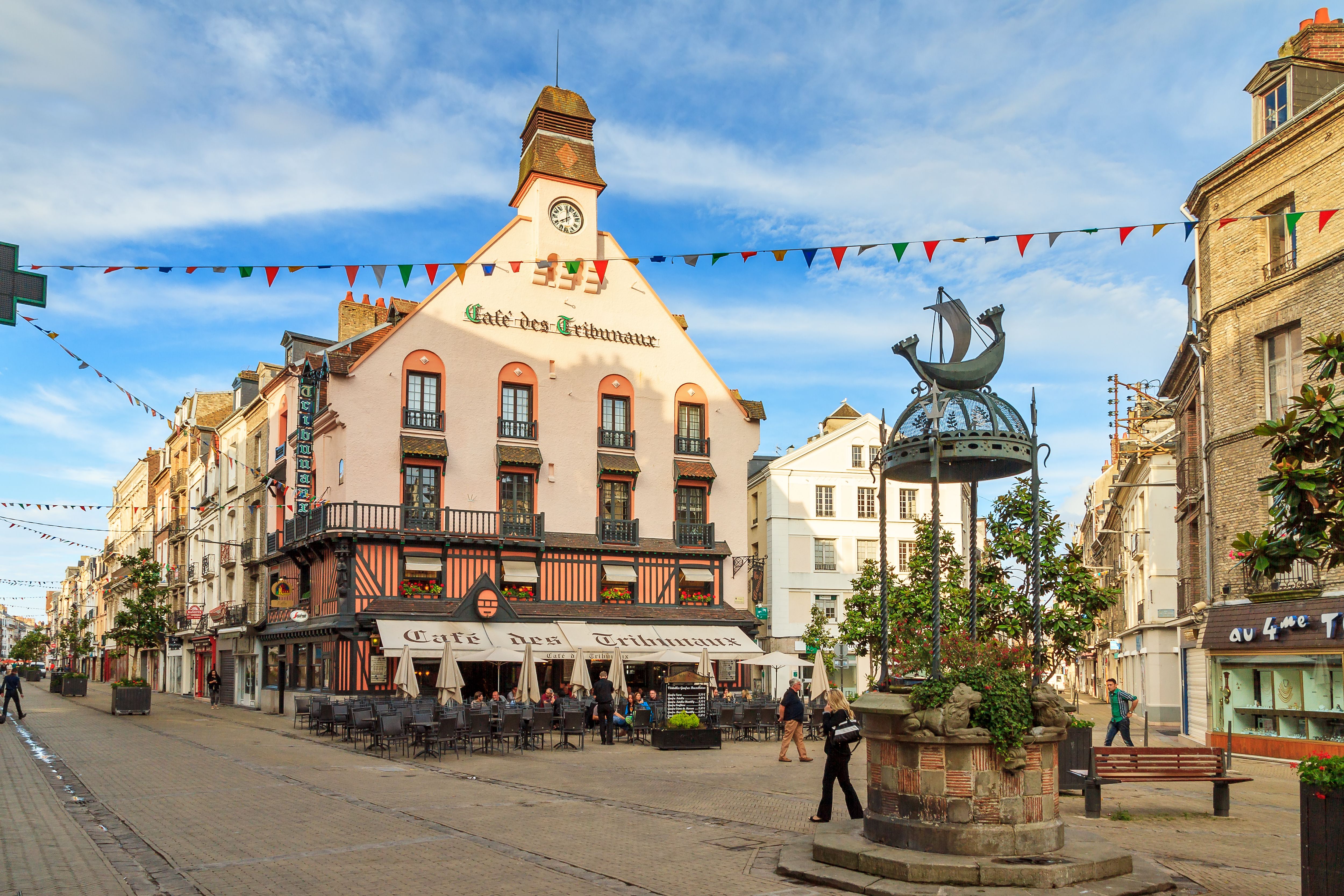
Dieppe is unusually well-equipped for a wet afternoon. The Café des Tribunaux on Place du Puits Salé, a decorated late 19th-century brasserie, was a regular haunt of Impressionist painters and the exiled Oscar Wilde, and it remains the finest café interior in the city. Order a coffee and sit at one of the window tables overlooking the square.
The covered market hall on Place Nationale provides a dry circuit of local produce and regional food stalls. The castle museum provides at least two hours of shelter with genuine interest, and the Estran – Cité de la Mer is an excellent option for families with children who are fascinated by boats and fish.
Varengeville-sur-Mer (6km west): A village of extraordinary quality for its size. The clifftop church of Saint-Valéry and its maritime cemetery, where Georges Braque is buried, with a mosaic he designed himself marking his grave, look directly over the Alabaster Coast. The Parc du Bois des Moutiers is one of the most visited gardens in France, designed by Edwin Lutyens with planting by Gertrude Jekyll, with a mass of rhododendrons, azaleas, and rare woodland plants leading down to the sea.
The Shamrock Garden nearby holds the world's largest collection of hydrangeas, with over 1,400 varieties, and is open from mid-June to September. The Manoir d'Ango, just outside the village, is a 16th-century Renaissance manor house built for the privateer Jehan Ango, with an extraordinary dovecote in Italian-Moorish style visible from the road.
Arques-la-Bataille (8km south-east): The ruined 12th-century fortress above the village was the site of Henry IV's decisive victory against the Catholic League in 1589. The castle keep and curtain walls are partly intact and freely accessible; the view over the Arques valley from the ramparts is excellent.
Étretat (70km south-west): The most incredible chalk arch and needle formations on the entire Alabaster Coast. The cliffs at Étretat are the classic Normandy coastal image, and the walk from the village up to the Falaise d'Aval and down to the Falaise d'Amont on the opposite side of the bay is one of the finest half-day walks in northern France.
Rouen (53km south): Capital of Normandy, with a largely intact medieval centre, one of France's finest Gothic cathedrals, and the site where Joan of Arc was burned at the stake in 1431. Accessible by train from Dieppe in around 45 minutes.
Dieppe works well for families, particularly if children are at an age to engage with history and the outdoors. The castle museum appeals to older children (roughly 8 and up) who have an interest in ships, exploration, or art, whereas the Estran – Cité de la Mer's aquarium and fishing exhibits are more suited to younger visitors.
The seafront's broad promenade, coupled with the outdoor swimming pool at L'O 2 Mer, gives younger children space to have fun. The Arques-la-Bataille castle ruin, which is free to enter, is an excellent half-day trip for children of all ages and requires nothing more than a sense of adventure and decent footwear. During the International Kite Festival, the spectacle on the seafront is one of the most visually exciting free events in northern France and holds the attention of children and adults equally.
Most of Dieppe's best experiences are free or low-cost. The Saturday market is free to browse and the best value place to eat in the city, where you can pick up Norman cheeses, a fresh baguette, and a bottle of local cider for under €10.
The castle museum charges entry but is good value for the quality of the collection, while children under 12 enter free and EU citizens under 26 receive discounts. The Canadian War Cemetery at Hautot-sur-Mer and the Les Tourelles gate are free. All of Dieppe's churches, including Saint-Jacques and Saint-Rémi, are free to enter.
Place du Puits Salé, at the centre of the old town, is the social heart of Dieppe that most tourists walk through without stopping. The Café des Tribunaux here has been a writers' and painters' café since the 1880s, and its interior is extraordinary.
The beach at Puys, 3km east of town and accessible by local bus or a 45-minute cliff walk, is a narrow strip of pebbles between chalk cliffs that is quieter than the main Dieppe beach and gives a better sense of the raw coastal character of the Alabaster Coast.
Dieppe's most distinctive dish is marmite dieppoise, a rich, cream-based stew of mixed fish, scallops, mussels, and shrimp cooked with cider and Norman cream in a closed pot. It appears on the menus of most of the harbourside restaurants and is the definitive expression of the city's maritime identity.
Dieppe is France's leading scallop port, and from October through March, they are available everywhere: grilled in their shells with butter and garlic, seared with lardons, or served raw in a fine dining preparation. The herring, smoked or fresh, is the fish that built the city's early economy and appears in various guises at the November fair and in local restaurants throughout autumn and winter.
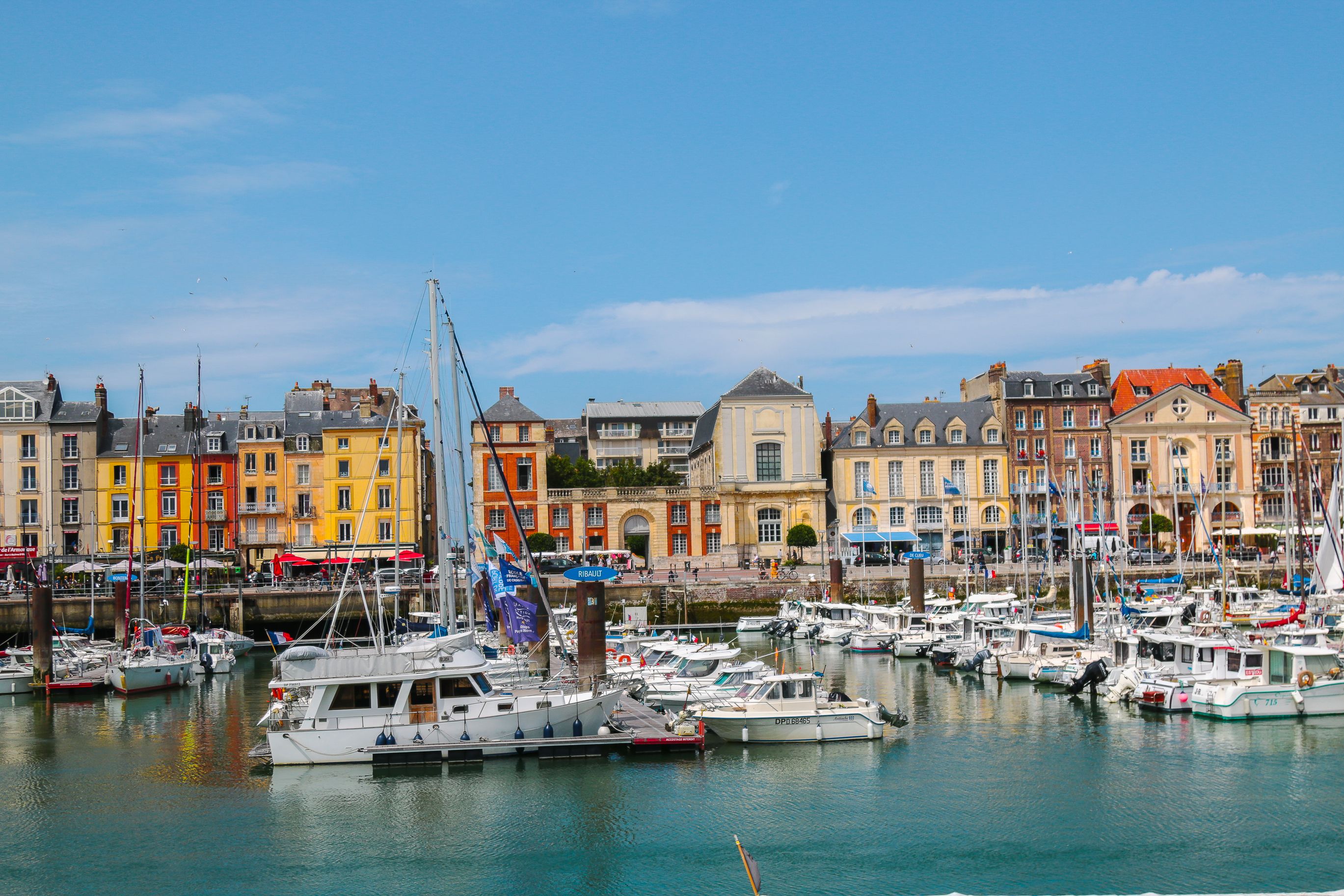
The seafront and quayside around Quai Henri IV concentrate most of the better restaurants. The Michelin-starred Les Voiles d'Or is the most celebrated restaurant in town, but the harbourside brasseries serving moules marinières and plateaux de fruits de mer offer excellent quality at more approachable prices. The Café des Tribunaux on Place du Puits Salé is also another classic place for a crêpe or an early evening drink.
Dieppe has accommodation to suit most budgets. The highest concentration of hotels is along the seafront and around the harbour on Quai Henri IV, where mid-range three-star properties offer the most convenient base, since you're within walking distance of everything and can hear the harbour from your window.
The Hôtel de la Plage and similar seafront options suit couples and solo travellers wanting a classic Norman seaside hotel experience. For families or those wanting more space, self-catering apartments in the old quarter offer flexibility, particularly for stays of three nights or more. Budget travellers will find better value in smaller hotels away from the seafront, particularly on the streets between the station and the covered market.
There are also several campsites in the surrounding area, including at Pourville-sur-Mer (3km west), which offers direct clifftop access. Book accommodation via our accommodation page or directly with properties for the best rates. In summer and for the Kite Festival weekend, we suggest booking at least two months in advance.
Dieppe works well as both a standalone destination and as a launching point for a longer Normandy road trip. The ferry crossing from Newhaven to Dieppe takes around 4 hours, with up to two daily sailings year-round, making it possible to arrive in Dieppe by mid-morning and be exploring the castle by lunchtime. A car is not necessary for the town itself, but is strongly recommended if you want to explore the Alabaster Coast, Étretat, or the inland villages.
Duration: 2–3 days
Day 1: Arrive via the morning Newhaven to Dieppe ferry. Check in and walk the seafront promenade from the western cliff to the Pollet headland, getting your bearings and a sense of the town's geography. Climb to the Château de Dieppe for the view and spend 90 minutes in the museum. Descend into the old town via Rue de la Barre and have lunch or an early dinner at one of the harbour brasseries on Quai Henri IV, where you can try marmite dieppoise if it's on the menu. Cross Pont Colbert into Le Pollet in the late afternoon and climb to Notre-Dame-de-Bon-Secours for the harbour view at dusk.
Day 2: The Saturday market on Grande Rue, if you've timed your visit for the weekend. Arrive there by 9am, buy cheese, cider, and something for a picnic. Spend the morning at the Estran – Cité de la Mer and the Église Saint-Jacques. In the afternoon, drive or take a taxi to Varengeville-sur-Mer (15 minutes) to visit the Parc du Bois des Moutiers and the clifftop church and cemetery. Return via the clifftop road for views of the Alabaster Coast at the best light of the day.
Day 3 (optional): Drive 20 minutes south-east to Arques-la-Bataille castle, then south to Rouen for half a day in the cathedral city before taking an evening ferry home.
Why we love it: This is a perfect itinerary for history-focused travellers, foodies, or those who want a genuine French port town experience without the crowds or cost of more famous Normandy destinations. The Newhaven to Dieppe ferry makes it accessible from London and the south-east of England in half a day, including the crossing.
Duration: ~5 days
Day 1: Arrive on the morning ferry and settle in. Afternoon at the castle museum and a walk through Le Pollet. Dinner at a harbour-side restaurant.
Day 2: Spend the morning at the Saturday market (if visiting on a weekend) or explore Saint-Jacques, Saint-Rémi, and the Café des Tribunaux. Afternoon drive to Varengeville-sur-Mer: Manoir d'Ango, Jardin Shamrock (June–September), and the clifftop church.
Day 3: Full day on the Alabaster Coast. Drive west along the D75 to Pourville, Quiberville, and Veules-les-Roses, walking sections of the GR21 cliff path between villages. Enjoy a picnic lunch at a clifftop viewpoint, then return via Saint-Valery-en-Caux for a harbour dinner.
Day 4: Drive south to Rouen for a full day: Gothic cathedral, the Vieux-Marché (site of Joan of Arc's execution), Musée des Beaux-Arts, and Rouen's excellent restaurant quarter around Rue Eau-de-Robec. Stay overnight in Rouen or return to Dieppe.
Day 5: Morning drive south-west for 70km to Étretat for the cliff walk and the arches. Return to Dieppe in the afternoon for a final seafront walk and evening ferry home via Dieppe to Newhaven.
Why we love it: This itinerary works perfectly for travellers arriving by ferry with a car, covering the best of Upper Normandy's coast and inland cities without backtracking. Five days is enough to reach Étretat and Rouen while still giving Dieppe itself the attention it deserves. The year-round availability of the Newhaven–Dieppe ferry means this trip can be done in any season.
Yes, ferries from Newhaven to Dieppe run year-round, operated by DFDS Seaways. There are up to two daily sailings, and the crossing takes approximately 4 hours. The route is available for both foot passengers and vehicles, and pet-friendly travel and onboard cabins are offered.
The Dieppe ferry port is located on Quai Gaston Lalitte, around 25 minutes' walk from the town centre, with free short-stay parking in front of the terminal. From May to September, a shuttle bus connects the ferry terminal with the SNCF train station.
Not for Dieppe itself. The town centre is compact and entirely walkable, and foot passengers arriving on the ferry can reach all of the key attractions on foot within 25 minutes of disembarking. However, a car significantly increases what you can see in the surrounding area. The Alabaster Coast villages, Varengeville-sur-Mer, Arques-la-Bataille castle, Étretat, and Rouen are all most efficiently reached by car. If you're planning a longer France road trip starting from Dieppe, bringing your vehicle on the ferry is well worth the cost.
The Saturday market is one of Dieppe's defining experiences. If your visit includes a Saturday, organise your schedule to be there between 8:30am and 12:30pm. Cash is useful at market stalls and at the Jardin Shamrock garden near Varengeville, which is cash-only.
If you plan to walk the beach-level sections of the Alabaster Coast cliff paths, check the tide times before setting out, as many sections can be impassable at high tide. Finally, euros are required throughout France, so please make sure to exchange your money ideally before you travel.
Ready to sail? Book your ferry to Dieppe in minutes with Direct Ferries. With flexible tickets and exclusive deals, finding the perfect crossing has never been easier.
More routes than anyone else.

Compare fares, times & routes in one place.
Change plans easily with flexi tickets.

Book e-tickets & manage trips in-app.
Live ship tracking & real-time updates.

Top-rated customer support when you need it.