European Road Trip: Packing List and Inspiration
Car & Road Trips
Car & Road Trips


Road trips are all about freedom, adventure and exploring the world at your own pace. For many people, the idea of getting in the car, setting off and seeing where the journey takes you is a dream come true. But without any preparation, road trips can be stressful!
To make sure your trip turns out exactly like you imagine, it’s worth keeping a few important things in mind. In this article, you’ll find out how to plan the perfect road trip, including packing must-haves and how to stay relaxed whilst on the road.
Planning
What do I need for the car?
What equipment should I take with me?
What clothes should I pack?
Driving in Europe: What you need to know
Sample routes
Travelling sustainably
Key terms for your road trip
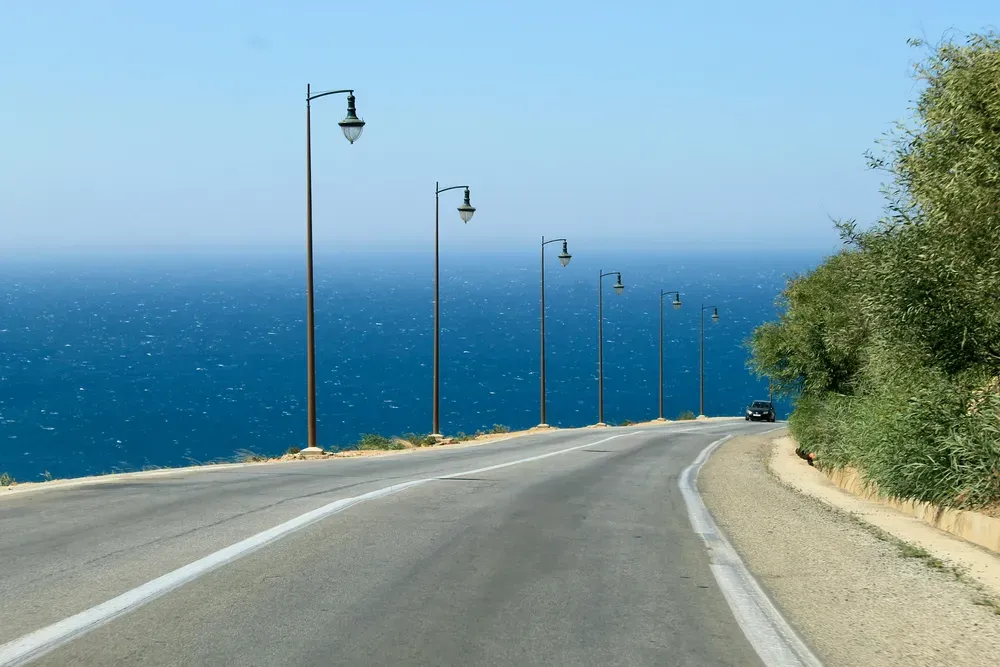
Even though a road trip is all about spontaneity, a certain amount of planning is essential. You don’t need to schedule every minute of the journey, but having a rough outline can give you both direction and peace of mind.
Think about which destinations you absolutely want to see in advance. Be realistic though - journeys that are too long can quickly become tiring and take the joy out of travelling. It’s better to plan shorter stretches and have more time for spontaneous stops instead.
If you’re travelling in a motorhome or campervan, your accommodation comes with you wherever you go. But if you’re taking a road trip by car, you’ll need to decide whether to book your accommodation in advance or keep your plans flexible. Both options have their benefits. Booking ahead gives you peace of mind and guarantees a place to stay, whilst leaving things open allows for more spontaneity and freedom along the way.
Don’t forget to check your important documents. These include your driving licence, vehicle registration certificate, insurance documents and ID. Make sure you find out about country-specific regulations in advance to save you stress during your holiday.
To be on the safe side, it’s also worth printing out some documents that you might otherwise have saved digitally. These include booking confirmations, accommodation addresses, ferry connections and timetables. A notebook can also be useful for jotting down important information or making spontaneous changes to your route.
Hopefully nothing will go wrong on your road trip but unfortunately, unexpected situations can occur so it's important to be prepared.
Your vehicle is at the heart of your road trip, so making sure it’s in good condition before you leave is essential. Give it a thorough check by looking at the oil level, tyre pressure, brakes, and coolant. If you’re unsure about anything, it’s a good idea to have it checked by a professional garage before setting off.
You must have the following with you:
To make the journey more comfortable, consider bringing a neck pillow, a cosy blanket, and a few snacks for the road. It’s also worth organising your car carefully, so that anything you’ll need quickly or frequently is in easy reach.
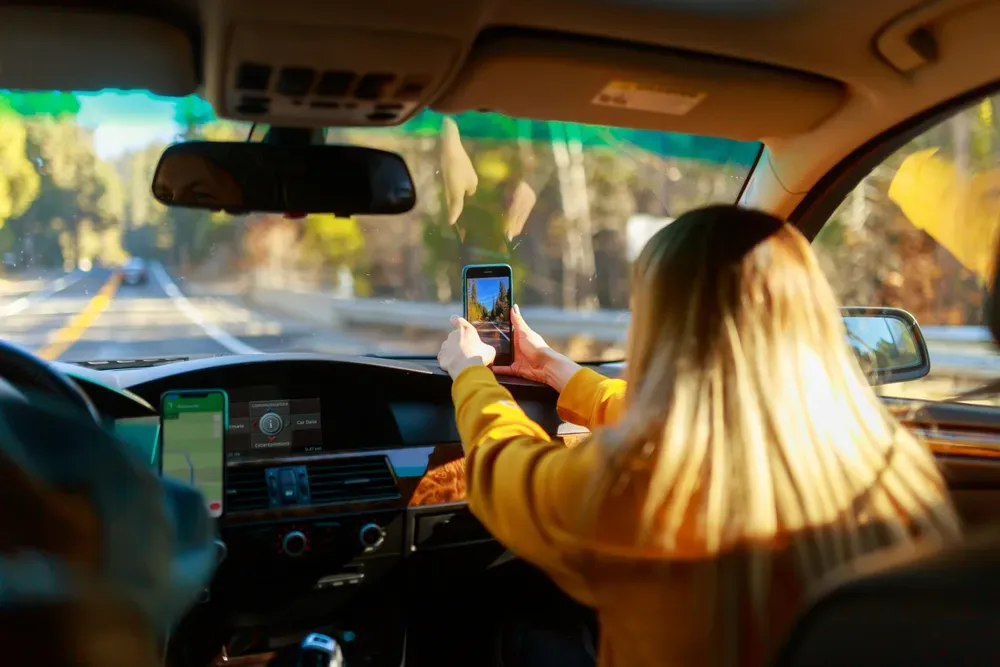
Modern technology can make your road trip much easier, and your smartphone will probably be one of your most useful travel companions. Whether it’s for navigation, music or communication, smartphones are true all-rounders these days.
Before you set off, download any essential apps and save important routes offline, especially if you’ll be travelling through remote areas with limited signal.
Charging cables, a power bank and a USB car adapter are also essential – and ideally, you should have several of each. This is especially important for longer journeys or for rural areas so that your devices are ready for use at all times.
A camera is optional but it's definitely worth having to capture special moments – or you can just use your smartphone for that too.
Top tip: Charge your devices regularly and don’t rely on just one power source.
Although smartphones have become essential for many travellers, it’s still entirely possible to enjoy a road trip without digital devices - and for some people, that can make the experience even more relaxing.
For navigation, for example, you can use traditional road maps. As they work independently of battery power or mobile reception, they can be a good Plan B even for tech enthusiasts. Alternatively, a separate, external sat-nav designed specifically for car journeys is an option. Many regional maps are often already pre-loaded or available to download.
Instead of digital streaming services, you can use CDs or USB sticks with music saved in advance. Audiobooks on CD are also a tried-and-tested alternative.
Whatever the weather, the ‘layering’ approach always works well. Combine several layers that you can put on or take off depending on the temperature.
These include:
Top tip: Roll your clothes in your suitcase instead of folding them. This saves space and makes it easier to see what’s in your luggage!
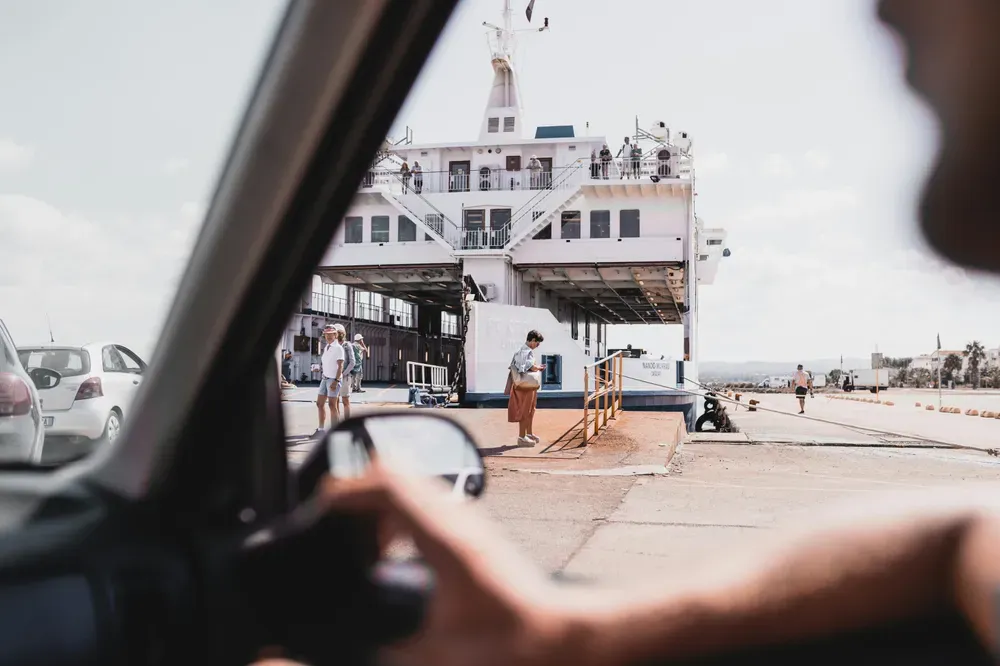
If your vehicle is registered in the UK, make sure you find out about country-specific regulations in advance. Although many rules are standardised within the EU, there are still some specific requirements:
Important to know:
Depending on where you are travelling to, other rules may apply. For example, in some countries, there are specific low-emission zones (e.g. in France or Italy) where you may need an emissions sticker. In France, it's compulsory to carry a high-visibility vest in the vehicle (ideally for all passengers). In some countries, there are also additional regulations, such as spare bulbs or breathalysers so make sure you check in advance.
Toll systems in Europe can vary considerably depending on the country and region. Being well prepared will help you avoid unexpected costs.
| France, Italy and Spain: |
|
| Sardinia and Sicily: |
|
| Northern Europe (e.g. Sweden, Norway, Denmark): |
|
Speed limits vary from country to country and must be strictly observed, as failure to do so can result in heavy fines. Here is an overview of the main regulations (these are general guidelines; please always pay attention to local road signs, as these take precedence).
| Sweden: |
|
| Germany: |
|
| France: |
|
| Spain: |
|
| Italy: |
|
Did you know that you can take your car on many ferries across Europe? Some of Europe's most scenic road trip routes combine driving with relaxing journeys by ferry. Ferries not only allow you to avoid long detours, but they also conveniently link several countries, take a welcome break from driving and enjoy plenty of amenities.
For example, you could explore Southern Europe by starting in the south of France, driving along the stunning Italian Riviera to Tuscany, and then taking a ferry to Sardinia or Sicily. It’s the perfect way to combine diverse landscapes and Mediterranean charm in just one trip.
Top tip: From Naples, you can easily take a day trip to Ischia or Capri, whether you’re travelling by car or not.
Northern Europe also offers plenty of impressive road trip opportunities. A journey through Denmark and Sweden, for example, can easily be combined with scenic ferry crossings, whether that's between the Danish islands or onwards to Norway. Once you're there, you’ll discover dramatic fjords, vast open landscapes, and excellent roads for road trips.
Being able to take your car on ferries gives you maximum flexibility without having to compromise on comfort. At the same time, it opens up entirely new routes that wouldn't be possible via the mainland alone.
| Route | Duration | Daily sailings |
|---|---|---|
| Naples to Palermo | 11 Hours | Up to 2 sailings per day |
| Civitavecchia to Olbia | 8 Hours 0 Minutes | Up to 1 sailings per day |
| Hirtshals to Kristiansand | 3 Hours 19 Minutes | Up to 4 sailings per day |
| Rostock to Trelleborg | 6 Hours | Up to 5 sailings per day |
| Newcastle to Amsterdam | 15 Hours 45 Minutes | Up to 2 sailings per day |
| Dover to Calais | 1 Hours 40 Minutes | Up to 25 sailings per day |
Europe: Holidays with a motorhome
European Road Trip
Driving to France from the UK
New rules to travelling to Europe from the UK
Travelling the Amalfi Coast
Italy all year round: a guide to every season
You can even make your road trip more eco-friendly with just a few small changes that can make a big difference. Make sure you respect the natural environment by avoiding unnecessary waste and choosing reusable products wherever possible.
It also helps to drive as fuel-efficiently as you can - not only is this better for the planet, but it can also save you money too.
Related article: Sustainable Ferry Travel
It might be helpful to know a few basic terms before you embark on your international road trip:
| English | German | French | Spanish | Italian | Sweden |
|---|---|---|---|---|---|
| hotel | Hotel | hôtel | hotel | hotel | hotell |
| port | Hafen | port | puerto | porto | hamn |
| ferry | Fähre | ferry/bac | ferry | traghetto | färja |
| motorway | Autobahn | autoroute | autopista | autostrada | motorväg |
| toll | Maut | péage | peaje | pedaggio | vägtull |
| petrol station | Tankstelle | station-service | gasolinera | stazione di servizio | bensinstation |
Top tip: A little cheat sheet in the car can be very helpful.
A road trip is flexible, personal, and full of possibilities. With the right preparation, you can enjoy a relaxed and unforgettable experience. Make sure you plan sensibly, check your vehicle thoroughly, and pack only what you really need. With the right equipment, suitable clothing, and enough food, you’ll be well prepared for the journey ahead.
And with our price finder, you can compare available ferries along your road trip route and find the best prices and availability for your road trip.