British Horse Racing 2026: The Biggest Events Still to Come
Events & Festivals
Events & Festivals

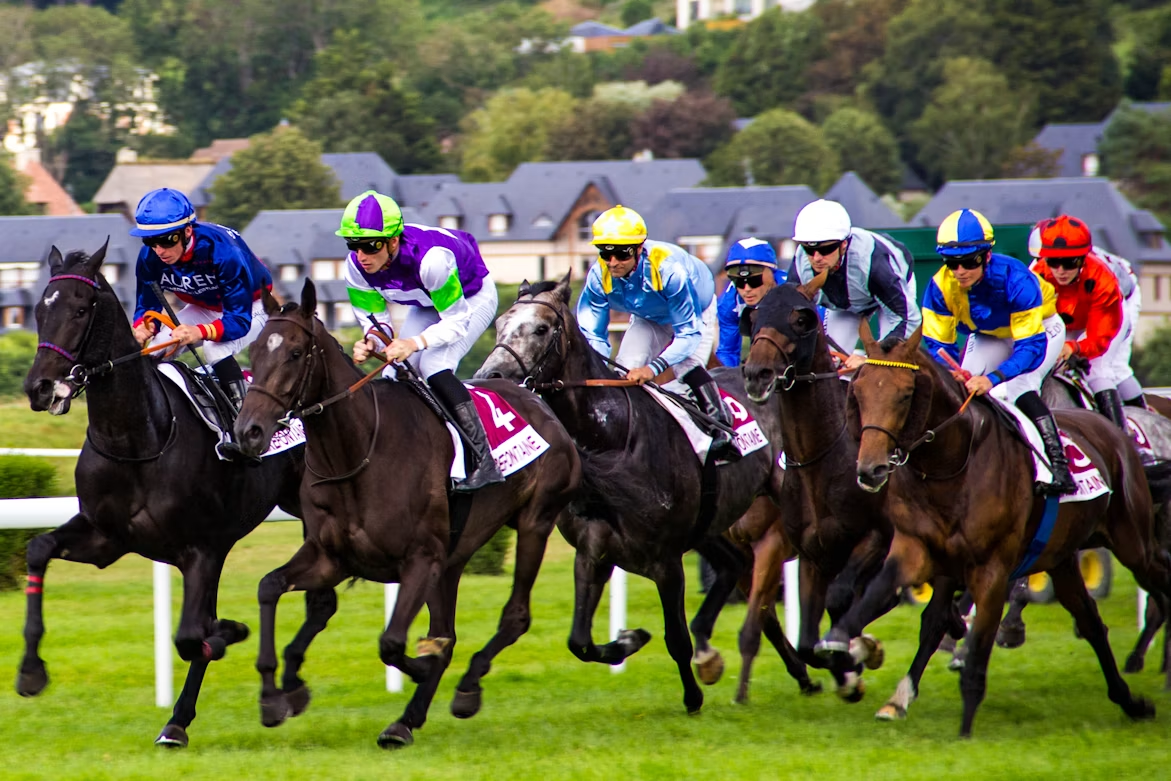
The summer is still in full swing, and the British racing calendar is already building towards its most dramatic stretch of the year. Between now and the turn of winter, the sport moves through Sussex garden parties, Yorkshire's roaring Knavesmire crowds, the world's oldest Classic on Town Moor, and the richest afternoon in the Flat calendar at Ascot, before it all changes as the jumps season gets underway at Cheltenham.
Whether you're planning a day at the track or just want to know what's worth watching, here's a look at the fixtures that matter most in the upcoming months.
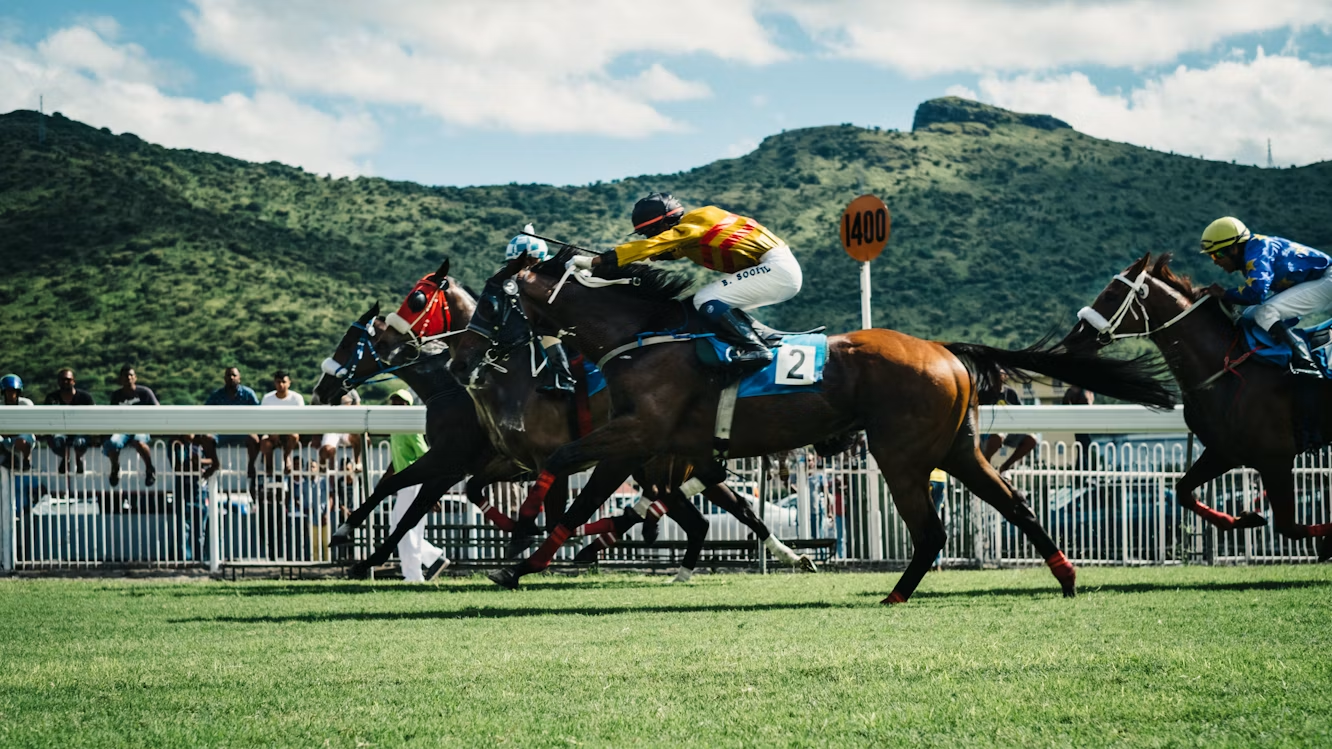
First up is the meeting that racegoers call "Glorious Goodwood." Officially the Qatar Goodwood Festival, it runs across five days from Tuesday 28 July to Saturday 1 August 2026 on the West Sussex Downs, and it's as much a social occasion as a sporting one. King Edward VII reputedly described it as "a garden party with racing tacked on," and that spirit of relaxed, sunlit glamour has never really changed.
On the track, the week is built around a run of Group 1 contests: the two-mile Goodwood Cup, the mile-long Sussex Stakes, and the Nassau Stakes for fillies and mares. Add in the frantic sprint handicap known as the Stewards' Cup, and you have a week that showcases the highest class of Flat racing with some of the most competitive betting heats of the summer.
Three weeks later, the action heads north to York's Knavesmire for a meeting many regard as the best of the summer. The Sky Bet Ebor Festival takes place from Wednesday 19th to Saturday 22nd August 2026, and each of its four days carries at least one Group 1 or Group 2 race, giving it a strong claim to being one of the strongest all-round cards anywhere in world racing.
The week commences with the Juddmonte International, a race that has been won by some of the greatest horses in history, including Frankel in 2012. Thursday brings the Darley Yorkshire Oaks alongside Ladies Day, while Friday belongs to the electric sprinters of the Nunthorpe Stakes. This is all an exciting prelude to the main event on Saturday known as the Ebor Handicap — Europe's richest handicap on the Flat.
| Meeting | Dates (2026) | Location | Race Type |
|---|---|---|---|
| July Festival | 9–11 July | Newmarket, England | Flat |
| King George Weekend | 24–25 July | Ascot, England | Flat |
| Glorious Goodwood Festival | 28 July – 1 August | Goodwood, England | Flat |
| York Ebor Festival | 19–22 August | York, England | Flat |
| St Leger Festival | 14–17 September | Doncaster, England | Flat |
| Irish Champions Festival | 12–13 September | Leopardstown & Curragh, Ireland | Flat |
| Prix de l'Arc de Triomphe Weekend | 3–4 October | ParisLongchamp, France | Flat |
| British Champions Day | 17 October | Ascot, England | Flat |
| QIPCO Future Champions Festival | 9–10 October | Newmarket, England | Flat |
| Breeders’ Cup | 6–7 November | USA (TBC) | Flat |
| Open Meeting | 13–15 November | Cheltenham, England | Jumps |
| Ladbrokes Christmas Festival | 26–29 December | Leopardstown, Ireland | Jumps |
| King George VI Chase Day | 26 December | Kempton Park, England | Jumps |
September belongs to Doncaster, the only northern course to stage one of the five British Classics. The Betfred St Leger Festival takes place across four days from Thursday 10th to Sunday 13th September 2026, and this year carries extra significance: it marks the 250th anniversary of the St Leger Stakes, first hosted all the way back in 1776.
The festival kicks off with Ladies Day and the Group 2 May Hill and Park Hill Stakes, before day two brings the historic Doncaster Cup, which is the oldest race still run under official rules anywhere in the sport. All the excitement builds towards Saturday's St Leger Stakes, the final and longest of the Classics, and the race that completes the season for any horse still chasing the elusive Triple Crown. Finally, the weekend concludes with a family-friendly Sunday of racing and entertainment on Town Moor.
Before the season's big names take their final bow, Newmarket's Rowley Mile hosts the meeting that introduces racing's next generation of superstars to the world. The Dubai Future Champions Festival spans across two days, 9 and 10 October 2026, and is built almost entirely around exceptional two-year-old horses.
Friday's card is headlined by the Group 1 Fillies' Mile, while Saturday brings the meeting's showpiece, the Group 1 Darley Dewhurst Stakes. Raced over seven furlongs, the Dewhurst has an uncanny habit of spotlighting future Classic winners, with Frankel reigning victorious in 2010 before going on to become one of the sport's true legends. Saturday's card also features the marathon Cesarewitch Handicap, one of the most fiercely competitive staying races of the entire year.
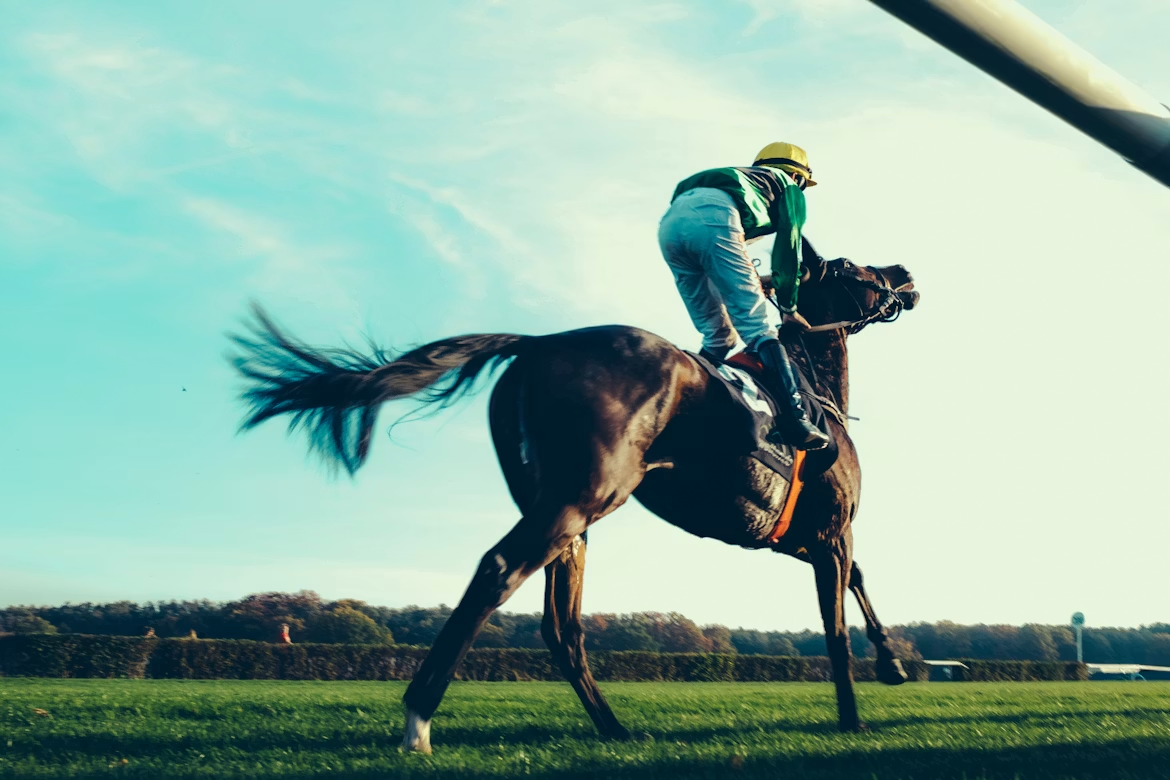
The curtain comes down on the Flat turf season at Ascot on Saturday 17th October 2026, with Qipco British Champions Day. This is best known as Britain's richest raceday, with £4.35 million in total prize money up for grabs. It was created in 2011 to bring the season's championship divisions together into a single, unmissable afternoon, and it has quickly become a fan favorite of the racing calendar.
At the heart of the meeting are four prestigious Group 1 contests that ultimately determine the season’s champion. These headline races include the ten-furlong Champion Stakes, a defining test for middle-distance horses; the Queen Elizabeth II Stakes over a mile, showcasing the very best milers in training; the British Champions Sprint, which brings together the fastest sprinters for a thrilling display of speed; and the Fillies & Mares Stakes, highlighting the finest female middle-distance runners.
Complementing these championship events are two highly competitive supporting races that add further depth and variety to the program. The Long Distance Cup provides a stern examination of stamina for staying horses, while the Balmoral Handicap, one of the most valuable handicaps of the season, never fails to provide a fiercely contested finale.
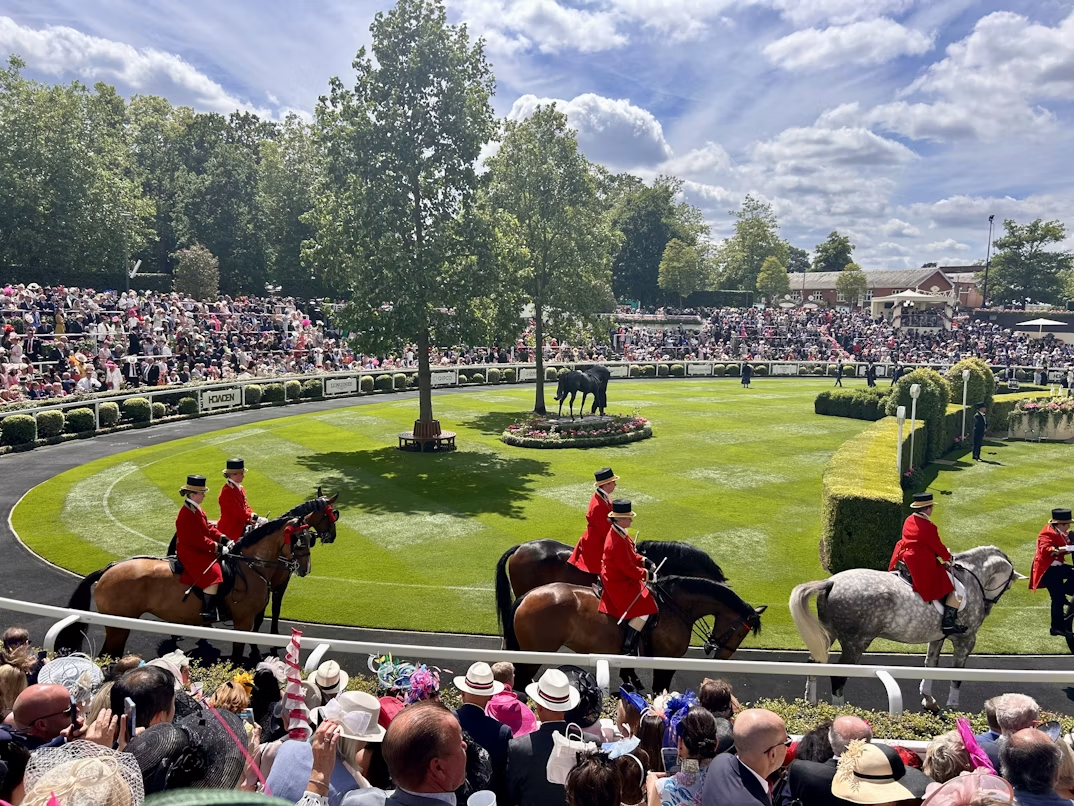
As the Flat season draws to a close in October, attention naturally turns to the sport’s other code. The transition begins quietly, with Goodwood’s Season Finale on 11th October traditionally featuring the first jump races of the autumn on the South Downs. However, it is Cheltenham, the undisputed home of National Hunt racing, that truly signals the start of the jump season with its highly anticipated November Meeting, running from Friday 13th to Sunday 15th November 2026.
Often referred to as “racing’s ultimate weekender,” this meeting has evolved from a relatively low-key fixture into a major early-season highlight. It now serves as a proving ground for horses with ambitions for the Cheltenham Festival, offering their first meaningful test of the winter campaign.
The action starts on Friday with the Shloer Chase and the demanding Cross Country Handicap Chase, setting a strong tone for the weekend ahead. Saturday delivers the standout card, headlined by the prestigious and fiercely competitive Paddy Power Gold Cup, alongside the ever-popular Greatwood Hurdle. The meeting concludes on Sunday with a more relaxed, family-friendly atmosphere, often referred to as Carnival Sunday.
For those who have followed the Flat season throughout the summer months, the November Meeting marks a distinct change in tempo. The ground becomes softer, the obstacles more challenging, and the narrative shifts firmly towards the long journey to the Cheltenham Festival in March.
Arrival port: Portsmouth International Port
Distance: 30 miles
Best route: From Portsmouth, drive east via the M27 and A27 towards Chichester (45–60 minutes). Alternatively, take a train from Portsmouth & Southsea to Chichester, followed by a short taxi ride to the racecourse.
Arrival port: Port of Hull
Distance: 40 miles
Best route: From Hull, drive west via the A1079 directly to York (around 1 hour). Public transport is also straightforward, with regular trains from Hull to York followed by a short taxi to the racecourse.
Arrival port: Port of Hull
Distance: 35–40 miles
Best route: From Hull, drive via the M62 and M18 towards Doncaster (around 1 hour). Alternatively, take a train from Hull to Doncaster, then a short taxi to the racecourse.
Arrival port: Harwich International Port
Distance: 70 miles
Best route: From Harwich, drive via the A120, A12 and A14 towards Newmarket (around 1.5 hours). By rail, travel from Harwich via Cambridge and continue onward to Newmarket, followed by a taxi.
Arrival port: Port of Dover
Distance: 95 miles
Best route: From Dover, drive via the M20 and M25 towards Ascot (around 2 hours). Alternatively, take a train from Dover Priory into London, then connect to Ascot by rail.
Alternative: Arriving via Portsmouth (75 miles) offers a shorter onward drive via the A3/M3. You can also travel from France via the Eurotunnel from Calais to Folkestone. If you can't decide which method to use, please read our Ferry vs Eurotunnel Guide.
Arrival port: Portsmouth Port
Distance: 120 miles
Best route: From Portsmouth, drive north via the M27, A36 and M5 towards Cheltenham (around 2.5 hours). By rail, travel from Portsmouth to Bristol, then continue to Cheltenham Spa with a short taxi transfer to the racecourse.
| Racecourse | Closest Ferry Port | Distance | Easiest Transport |
|---|---|---|---|
| Goodwood | Portsmouth | 30 miles | Drive (M27/A27) |
| York | Hull | 40 miles | Drive (A1079) |
| Doncaster | Hull | 35–40 miles | Drive (M62/M18) |
| Newmarket | Harwich | 70 miles | Drive (A120/A14) |
| Ascot | Dover | 95 miles | Drive (M20/M25) |
| Cheltenham | Portsmouth | 120 miles | Drive (M5 or A36/M27) |
Please be aware that durations are approximate and can vary depending on the traffic conditions on the day of travel.
If you’ve never been to a horse racing event before, a little preparation goes a long way. Dress codes vary by enclosure, but smart attire is generally expected—think summer suits, dresses, and hats, particularly on feature days like Ladies’ Day.
Comfortable footwear is essential, especially at courses like Goodwood where the terrain is uneven. Arrive early to soak up the atmosphere, study the race card, and place bets without rushing. Here are some specific tips to help:
| Racecourse | Dress Code | Etiquette & Rules |
|---|---|---|
| Royal Ascot |
|
|
| Newmarket Racecourses |
|
|
| York Racecourse |
|
|
| Doncaster Racecourse |
|
|
| Goodwood Racecourse |
|
|
| Cheltenham Racecourse |
|
|
Different types of travelers will find their own rhythm during racing season. Couples often enjoy the blend of glamour and leisure—pairing a race day with fine dining, spa stays, or countryside hotels.
Groups of friends may lean into the social atmosphere, treating the races as a stylish day out with drinks and music at the forefront. Families, meanwhile, should look for more relaxed enclosures and quieter race days, where there’s space to move around and a less formal pace.
Whichever your style, the key is to balance the excitement of race day with time to explore the surrounding area, whether that’s coastal walks in Sussex or historic streets in York.
These fixtures map out the full narrative of the British racing autumn. It begins with the late-summer elegance of Goodwood, York, and Doncaster, where the season’s final Classics are decided, before heading to Newmarket and Ascot, where the Flat campaign reaches its dramatic championship conclusion.
From there, the focus shifts once more as Cheltenham ignites the start of a new National Hunt season, marking a clear change in pace and atmosphere.
Wherever you choose to follow the action, the months ahead promise a compelling stretch of racing, with standout moments and top-class competition still to come in 2026.