Things to do Normandy
Things to do Normandy
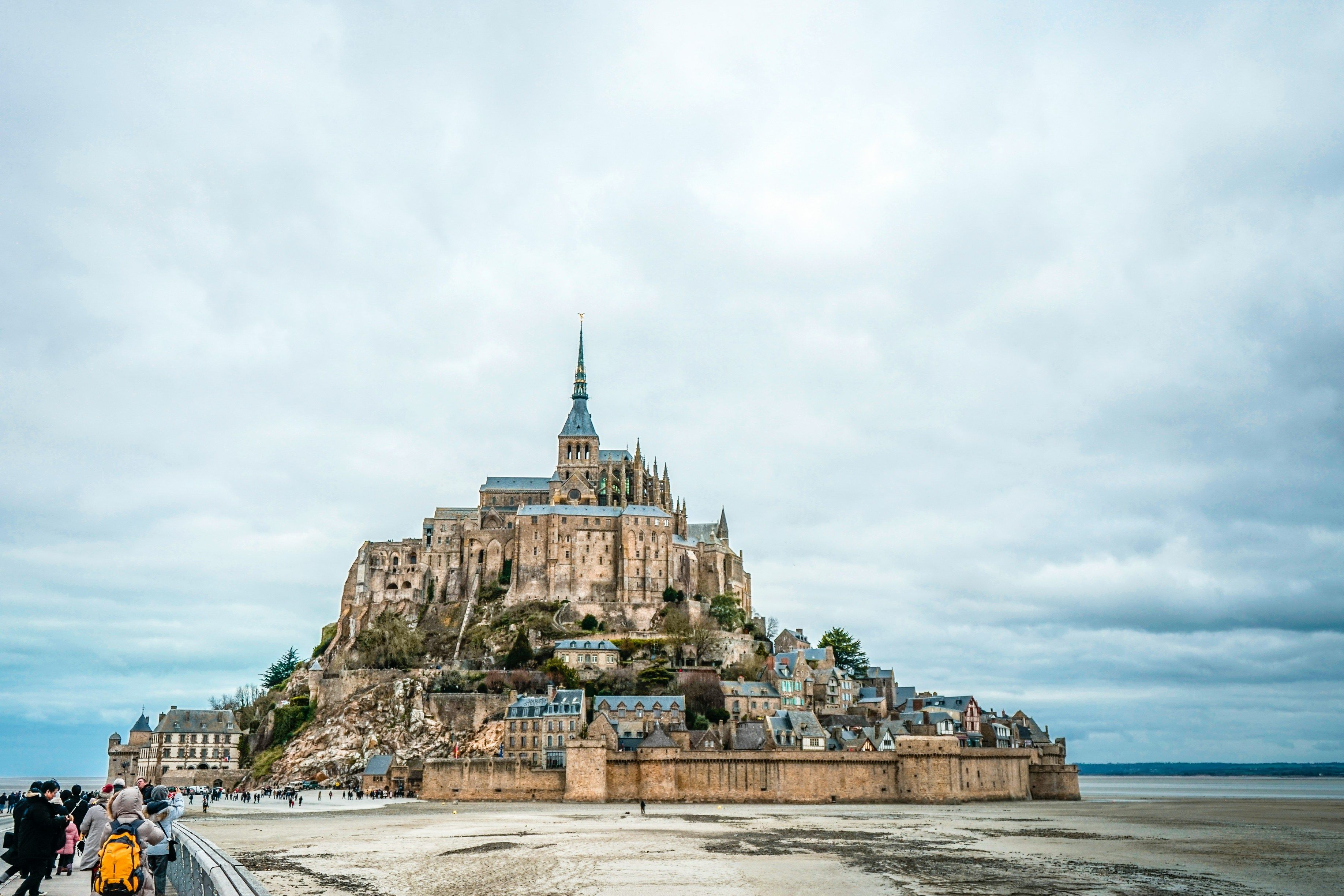
Normandy is the great region of northern France that faces the English Channel along 600km of coastline, stretching from the white chalk cliffs of the Alabaster Coast in the east to the tidal bay of Mont Saint-Michel in the west, and inland through apple orchards, bocage countryside, and the Seine valley to the outskirts of Paris.
It is a region of extraordinary density, with the D-Day Landing Beaches, the Bayeux Tapestry, Mont Saint-Michel, the Impressionist gardens of Giverny, the Gothic cathedral of Rouen, the chalk arches of Étretat, the corsair port of Honfleur, the medieval city of Caen, and the working fishing harbours of Dieppe and Cherbourg are all within its borders.
For UK visitors, Normandy is the most directly accessible part of France, with multiple ferry routes connecting the English south coast to Norman ports, and the distances between the region's major sites are short enough that an entire week can be spent in the region without once covering the same road twice. This guide covers everything you need to plan a visit, whether you are arriving for a weekend or staying for longer.
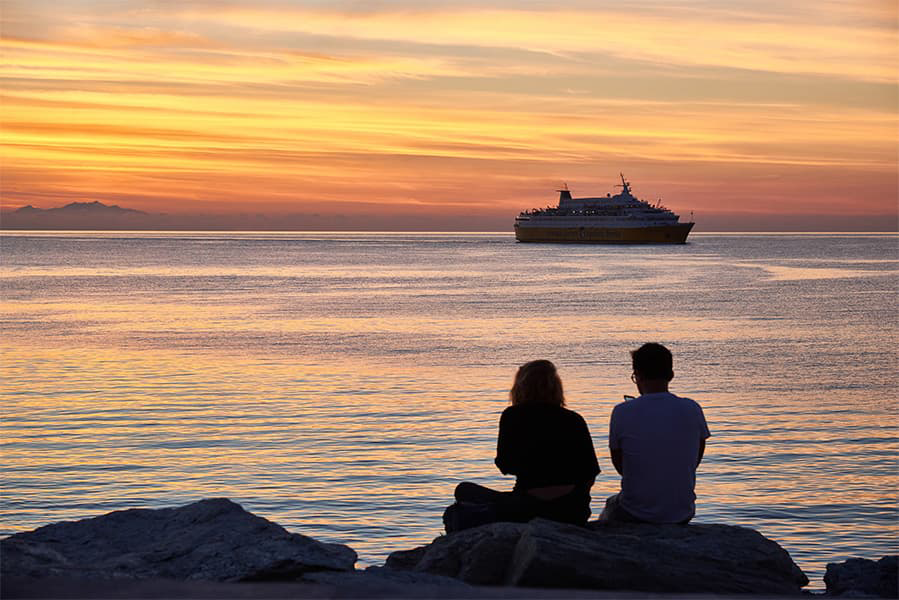
For visitors arriving from the UK, Normandy is the most accessible region of France, with four direct ferry routes connecting the English south coast with Norman ports. The Portsmouth to Caen ferry, operated by Brittany Ferries, is the most central route for exploring the region as Caen is located in the heart of Normandy and within easy reach of the D-Day beaches, Bayeux, and Mont Saint-Michel.
The Newhaven to Dieppe ferry, operated by DFDS Seaways, is the best option for those wanting to explore the Alabaster Coast, Rouen, and Upper Normandy. The Portsmouth to Le Havre ferry, also operated by Brittany Ferries, provides an alternative gateway to the Seine valley and the Impressionist coast.
For those travelling to western Normandy and the Cotentin Peninsula, the Portsmouth to Cherbourg ferry places you directly at the northern tip of the peninsula. A car is strongly recommended for exploring Normandy as the region's most popular sites are spread across a large area and public transport connections between rural sites are limited.
The combination of ferry and car is by far the most practical way to explore Normandy. From Caen, the D-Day beaches are within 30km, Bayeux is 30km west, and Mont Saint-Michel is 90 minutes' drive south. From Dieppe, Étretat is 60km south-west, Rouen is 55km south, and Honfleur is 90km south-west. From Le Havre, Honfleur is just 15km away across the Pont de Normandie bridge, and Rouen is 90km east.
From Cherbourg, the Cotentin Peninsula's wild coastline and the Utah Beach landing site are both within easy reach. For a touring holiday covering the whole region, many visitors find it practical to arrive via one port and depart via another. For example, arriving at Caen and departing from Dieppe after a week-long circuit through the region.
Normandy is well-served by rail from Paris, making it accessible for those travelling without a car. Paris Saint-Lazare connects directly to Rouen in 1 hour and 10 minutes, Caen in 2 hours, Le Havre in 2 hours and 10 minutes, and Cherbourg in 3 hours. Paris Montparnasse serves Bayeux in 2 hours and 30 minutes via Caen, and the station closest to Mont Saint-Michel at Pontorson is in 3 hours with a change at Rennes.
The train is a practical option for visiting the main cities of Rouen, Caen, and Honfleur, but is significantly less flexible for the D-Day beaches, the Alabaster Coast, and the Pays d'Auge countryside, all of which are most efficiently explored by car.
FlixBus and regional coach services connect Paris with Caen, Rouen, and Cherbourg, with travel times of 3 to 4 hours and advance fares ranging from €10 to €15. Within Normandy, the Keolis and Transdev regional bus networks connect the main towns, but services to rural and coastal areas can be infrequent.
For those arriving as foot passengers on the ferry, particularly on the Newhaven to Dieppe ferry or the Portsmouth to Caen ferry, the ferry ports of Dieppe and Caen (Ouistreham) both have local bus connections to town centres, and trains from Caen connect to the wider Norman rail network.
Normandy is a large region, approximately the same size as Wales, and its most rewarding sites are distributed across its full extent. The D-Day beaches, Bayeux, Mont Saint-Michel, Étretat, Honfleur, Rouen, Giverny, Caen, Dieppe, and the Pays d'Auge countryside are all in different corners of the region, and the experience of driving between them through bocage hedgerows, along clifftop coast roads, and through the apple-orchard valleys of the Calvados and Pays d'Auge is itself one of the great pleasures of a Norman road trip.
A car is the only truly practical way to see the best of Normandy. The region's road network is excellent, a combination of autoroutes (toll motorways connecting the main cities), RN dual carriageways, and small departmental roads threading through the countryside. The toll roads are fast and well-maintained. Avoiding them in favour of the D-roads adds time but reveals a Normandy of half-timbered manor houses, farm cider shops, roadside calvados distilleries, and the occasional château half-hidden behind iron gates.
The Pont de Normandie, the spectacular cable-stayed bridge connecting Le Havre with Honfleur across the Seine estuary, is a toll crossing but one of the great pieces of engineering in France and worth experiencing for its own sake. Please remember to drive on the right throughout France, and that speed limits are 130km/h on motorways, 80km/h on main roads, and 50km/h in towns unless signed otherwise.
The rail network covers the region's main cities efficiently. Rouen is the hub for Upper Normandy, with connections to Dieppe, Le Havre, and Paris. Caen is the hub for Lower Normandy, with connections to Bayeux, Cherbourg, and Paris. The rail network is useful for city-to-city travel but does not serve the D-Day beach sites, the Pays d'Auge, the Alabaster Coast clifftops, or most of the rural interior. For those without a car, a combination of train to a hub city and local bus or taxi for onward travel is the most practical arrangement.
Normandy has invested heavily in cycling infrastructure and is one of the best regions in France for cycle touring. The Véloscénie route runs 450km from Paris to Mont Saint-Michel through the heart of the region. The Voie Verte de la Vallée de l'Orne follows the river south from Caen to Thury-Harcourt through the Norman Switzerland (Suisse Normande) on a traffic-free path.
The Véloroute du Littoral traces sections of the Channel coast between the main ferry ports. Electric bike rental is available in Caen, Rouen, Dieppe, and Bayeux, making longer circuits accessible to cyclists of all fitness levels. Cycling between the D-Day beach sites of Gold, Juno, and Sword is a particularly great way to visit the memorials, as they are only 15km apart.
Normandy's Channel coast climate is very similar to southern England, with Atlantic weather systems that can deliver rain in any month. The region is a year-round destination, though the D-Day beach sites, the Alabaster Coast walks, and the gardens of Giverny are at their best between April and October.
The 6th June D-Day anniversary commemorations draw significant visitor numbers and are deeply affecting to attend. Summer is the busiest and most expensive period, while spring and autumn offer shorter queues, lower prices, and often the most atmospheric conditions for both coastal walking and inland driving.
Daytime temperatures in March typically range from 8–13°C, rising to 14–19°C by May. The apple orchards of the Calvados and Pays d'Auge are in blossom throughout April, producing some of the most beautiful countryside in northern France. Giverny's gardens open in late March and reach peak spectacle in May with the irises and wisteria in flower around the famous Japanese bridge.
The D-Day beach sites are accessible without the coach tours of summer, and the Mémorial de Caen can be visited at a relaxed pace. The Étretat clifftop paths are uncrowded, and the light on the chalk is at its most dramatic in the clear air of spring.
Perfect for: Giverny's gardens in blossom, the D-Day beaches without peak season crowds, the Alabaster Coast in spring light, and the best accommodation rates before the summer peak.
Temperatures reach 21–26°C on the warmest days, and the Norman coast fills with French holiday-makers from mid-July to August. The 6th June D-Day anniversary ceremonies take place in the summer and are free to attend. The Étretat cliffs, the Deauville and Trouville beaches, and the harbour terraces of Honfleur are all at their most animated. Please book accommodation well in advance for any summer visit, and especially for D-Day anniversary dates.
Perfect for: the D-Day anniversary commemorations (6 June), Honfleur harbour in full summer life, the beaches of Deauville and the Côte Fleurie, and long evenings in the Norman countryside.
September and October are consistently the best months for a Norman road trip, as the summer visitors have gone, the cider and calvados producers open their farm gates to visitors, and the Pays d'Auge countryside is at its most golden and beautiful. The herring and scallop season begins in November, and is celebrated with annual fairs at Dieppe and other coastal towns. October temperatures drop to around 10–15°C, so a warm layer is essential by mid-month for any cliff walking.
Perfect for: the cider and calvados harvest season, the Pays d'Auge in autumn colour, the herring and scallop fair at Dieppe, and the best value for accommodation across the region.
Winter temperatures range from 3–8°C across the region. The major indoor attractions, like the Mémorial de Caen, the Bayeux Tapestry, the Rouen cathedral and museums, are all open and largely crowd-free. The D-Day cemeteries take on a particularly affecting quality in winter silence. Some smaller coastal restaurants and chambres d'hôtes close from November to March, so it is worth checking opening dates before planning a winter itinerary around rural sites. The Christmas markets in Rouen and in Caen are open throughout December and are certainly worth planning a winter visit around.
Perfect for: the Mémorial de Caen and the Bayeux Tapestry without queues, the Rouen Christmas market, the lowest accommodation prices of the year, and the most intimate encounter with everyday Norman life.
Normandy is one of the richest regions in France for things to see and do. A week is not too long for a first visit, and return visitors are always likely to find areas they missed before. The concentration of world-class sites within a relatively compact area means that a well-planned road trip can cover the D-Day beaches, Bayeux, Mont Saint-Michel, Honfleur, Étretat, and Rouen within five to seven days without feeling rushed.
The Allied landings of 6th June 1944, the largest seaborne invasion in history, took place across five beaches stretching 80km along the Calvados coast between the mouth of the Orne at Ouistreham and the base of the Cotentin Peninsula. Sword, Juno, and Gold were the British and Canadian sectors, whereas Omaha and Utah were American.
Today, the beaches are peaceful stretches of sand backed by dunes and small resorts, but the traces of June 1944 are everywhere: the concrete gun emplacements at Longues-sur-Mer still pointing at the sea, the craters at Pointe du Hoc exactly as the Rangers left them, the artificial Mulberry Harbour caissons still lying in the surf at Arromanches 80 years on.
The Mémorial de Caen provides the essential historical context for the whole landscape. A full day driving the beach route from Sword to Omaha, stopping at Arromanches, Pointe du Hoc, and the American Cemetery, is one of the most significant historical experiences available anywhere in Europe.
The Bayeux Tapestry is a 70-metre embroidered linen narrative, created around 1077, depicting the events leading to the Norman Conquest of England in 1066 and the Battle of Hastings itself. It is one of the most remarkable objects of the medieval world: a continuous narrative of Harold and William, told in wool thread on linen with borders of mythological beasts and agricultural scenes, created within a decade of the events it depicts with a vividness and energy that no reproduction quite captures.
Please allow up to 1 hour and 30 minutes to explore the museum. We recommend booking timed-entry tickets online in advance in summer. The Bayeux Cathedral, a 5-minute walk away, is one of the finest Gothic buildings in Normandy and is free to enter.
Honfleur occupies a singular place in the history of art. The old harbour called Vieux Bassin, lined by the tall, slate-roofed merchant houses that were constructed from the 17th century onwards as the town prospered from its transatlantic trade, has been painted by virtually every French artist of the 19th century: Monet, Boudin, Courbet, Corot, Jongkind.
It was here, in the early 1860s, that the first informal gatherings of what would become the Impressionist movement took place, in the farm of Saint-Siméon on the hill above the harbour where Boudin and the young Monet painted together. The Musée Eugène Boudin, a short walk from the harbour, holds a distinguished collection of 19th-century Norman painting.
Honfleur is at its most atmospheric in the early morning before the day visitors arrive from Le Havre and Paris. By staying overnight, you gain access to the harbour in the evening light that attracted the painters in the first place. The town can be easily reached from Le Havre via the Pont de Normandie in 15 minutes, making it a convenient first stop for passengers who have taken the ferry from Portsmouth to Le Havre.
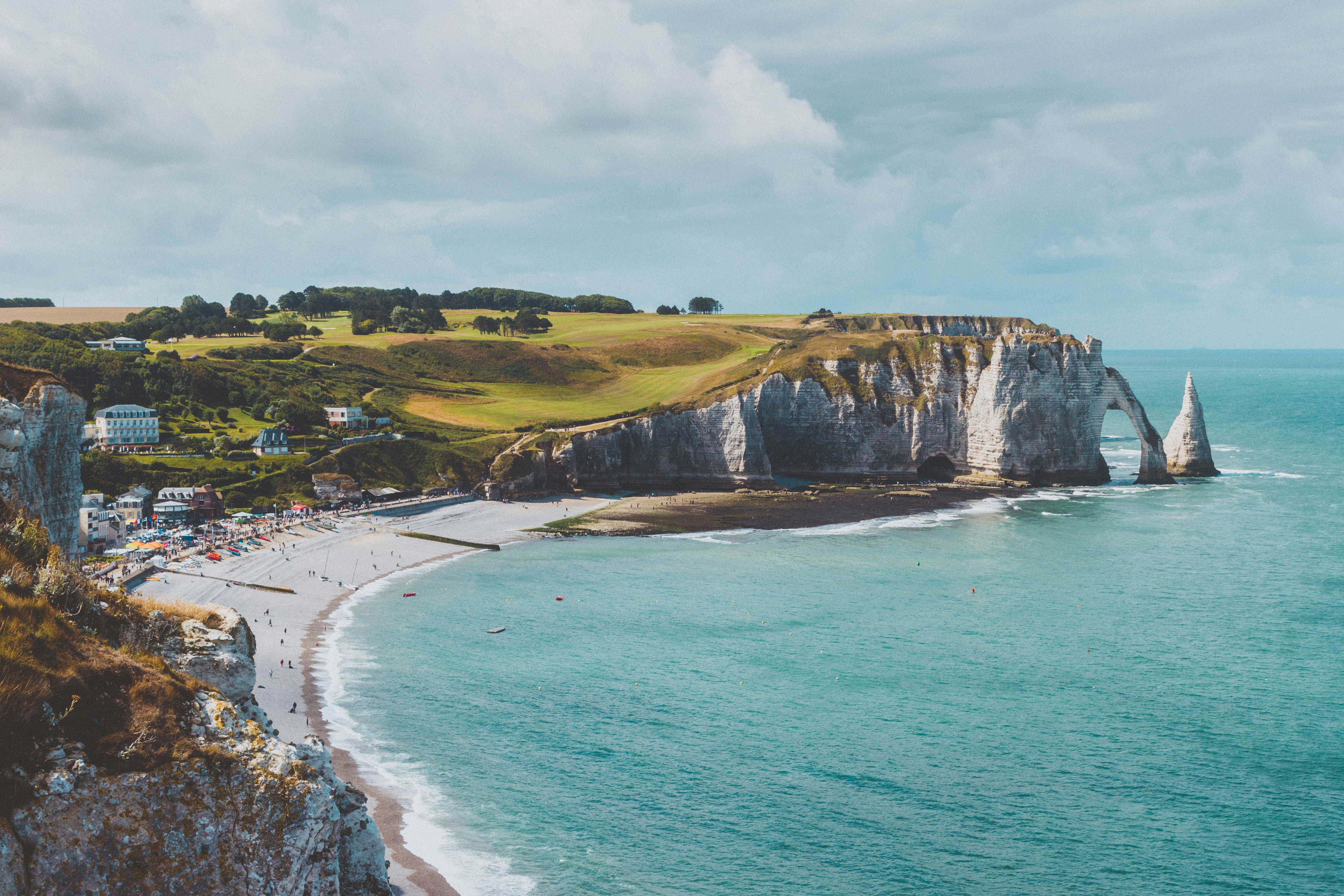
The Côte d'Albâtre, otherwise known as the Alabaster Coast, runs for 120km from Le Havre north-east to Le Tréport, a continuous stretch of white chalk cliffs, flint-and-pebble beaches, and small fishing ports whose names (Fécamp, Saint-Valery-en-Caux, Veules-les-Roses) are largely anonymous outside of France but are among the most beautiful places on the Channel coast.
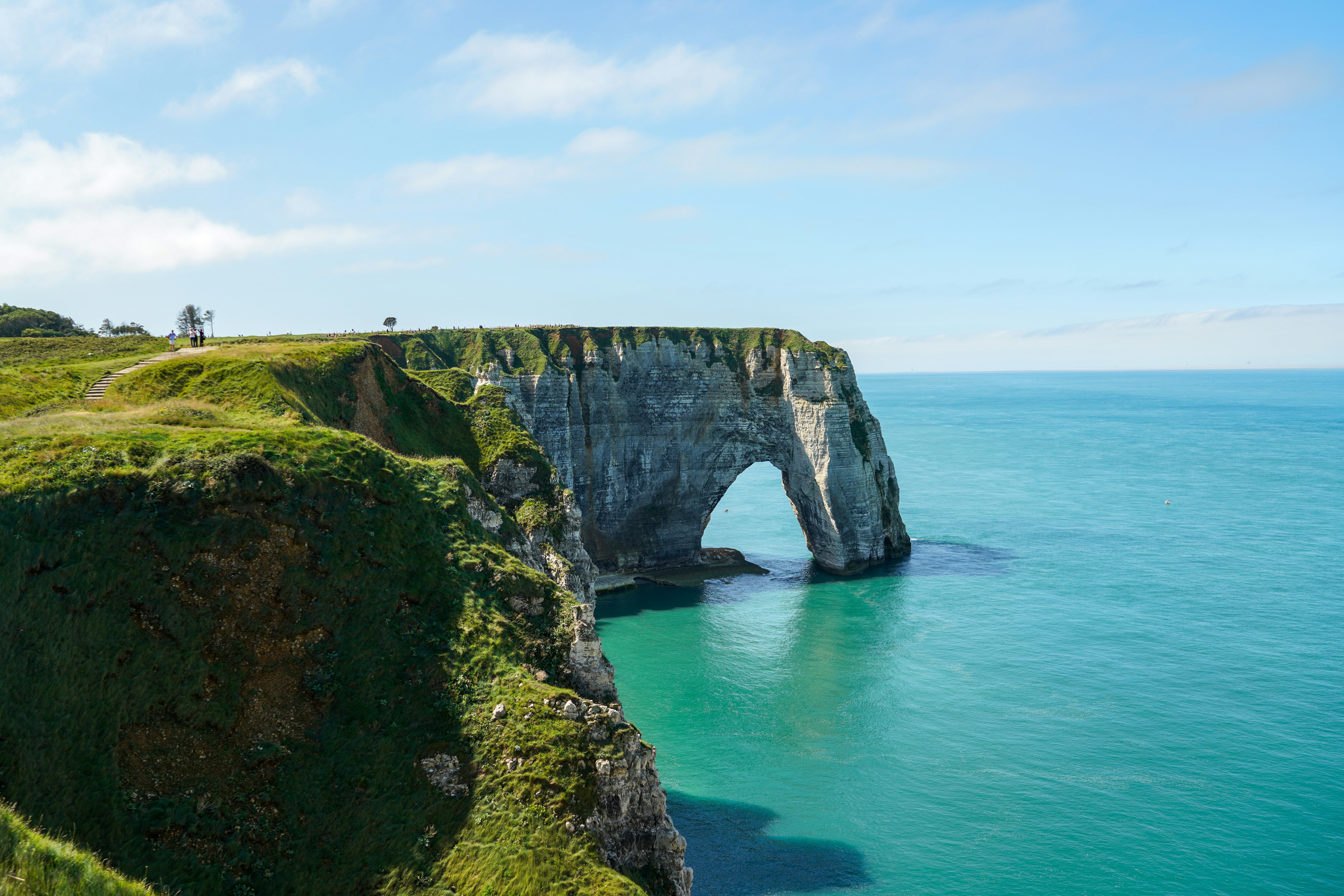
The town of Étretat is the most celebrated point on the coast: its chalk arches were painted by Monet, Courbet, and Delacroix and provided the landscape backdrop for Alexandre Dumas and Guy de Maupassant, who both lived here. The clifftop walk from the beach up to the Falaise d'Aval, through the arch, and back down to the village can be done in just 2 hours and is one of the finest short walks in northern France. The GR21 long-distance footpath follows the clifftops for the entire 120km length of the coast, linking the ports and the villages in a walk of several days accessible in sections from any point along the route.
Claude Monet bought his house and garden in the village of Giverny in 1883 and lived there until his death in 1926, transforming a farmhouse garden into the most celebrated private garden in France and the source of the water lily series. The house and garden are open to visitors between late March and October, while the water lily pond, the Japanese bridge, and the wisteria tunnels are all maintained as they appear in the paintings.
We strongly recommend booking entry tickets online in advance, especially in May and June, when the irises and wisteria are simultaneously in flower around the pond. The surrounding Seine valley, stretching from Rouen west through the great looping bends of the river to Vernon and Giverny, contains one of the most beautiful river landscapes in northern France, with the ruined Château Gaillard of Richard the Lionheart perched on a cliff above Les Andelys halfway along the route.
Normandy's 600km of coastline, four regional nature parks, and extensive cycling and walking infrastructure make it one of the best outdoor regions in northern France. The GR21 long-distance path along the Alabaster Coast clifftops is the most dramatic coastal walk in the region. The Parc Naturel Régional des Boucles de la Seine Normande, north-west of Rouen, follows the great looping bends of the river through forest and flood meadow.
Cycling 80km along the D-Day beach route from Ouistreham to the base of the Cotentin is an increasingly popular and historically rewarding experience. Guided cycling tours are available from operators in Caen and Bayeux. Sand yachting is also another fun outdoor experience, practised on the wide flat beaches of the Côte Fleurie near Cabourg and on the beaches west of Mont Saint-Michel. Alternatively, horse riding is available from numerous farms and stables throughout the region, including the Orne department.
Rouen, the capital of Upper Normandy and the city where Joan of Arc was burned at the stake in 1431, is the most complete historic city in the region. Its largely intact medieval centre, with its Gros-Horloge astronomical clock and its remarkable Gothic cathedral, is one of the finest in France.
Caen, at the heart of Lower Normandy, has the two Romanesque abbeys built by William the Conqueror and Queen Matilda, the vast ducal castle housing two excellent museums, and the essential Mémorial de Caen.
Cherbourg, located at the northern tip of the Cotentin Peninsula, is most familiar to UK visitors as a ferry port but contains the Cité de la Mer, an underwater and maritime museum housed in the former transatlantic passenger terminal, with a decommissioned nuclear submarine open for visitor tours. Bayeux, Dieppe, and Honfleur complete the list of Norman towns that are worthy of a visit in their own right rather than simply as bases for nearby attractions.
Normandy's array of incredible museums ensures that bad weather can’t ruin your trip to the region. The Mémorial de Caen provides a full half-day of exploring, while the Bayeux Tapestry museum is one of the finest single-object museum experiences in France. In Rouen, the Musée des Beaux-Arts and the Musée de la Céramique are both excellent wet-weather options in the city centre. Alternatively, the Pays d'Auge cider farm visits, many of which are covered and include tastings, turn a wet afternoon into one of the most enjoyable experiences in the region.
The Pays d'Auge (around Lisieux and Pont-l'Évêque): The heartland of Norman cheese and cider production, with apple orchards stretching over rolling hills, and the farm shops of the Route du Cidre linking the main producing villages in a 40km circuit. The village of Beuvron-en-Auge, which was officially awarded the title of one of the Most Beautiful Villages in France, is the most photographed in Normandy. Camembert, the village that gave the world's most famous cheese its name, is 60km south of Caen and entirely worth the detour.
The Côte Fleurie (Deauville, Trouville, Cabourg): The glamorous resort coast east of the Orne estuary, with the casino and racecourse of Deauville, the fishing harbour of Trouville directly across the river, and the Belle Époque villas of Cabourg lining the beach boulevard. The American Film Festival at Deauville in September is one of the most prestigious in France and draws thousands of visitors every year.
The Cotentin Peninsula (Cherbourg, Utah Beach, Barfleur): The long peninsula that juts north into the Channel beyond Caen is the most unspoilt and least-visited part of Normandy. Utah Beach, at its south-eastern base, was the westernmost of the D-Day landing sectors and the site where American forces broke through to cut off the peninsula.
The Cap de la Hague at the northern tip of the peninsula is one of the wildest and most dramatic coastlines in northern France, with the Channel Islands visible on clear days. Barfleur, on the eastern coast of the peninsula, is one of the most beautiful small harbours in Normandy and was the main port of embarkation for medieval travellers between Normandy and England.
Normandy works exceptionally well as a family destination across a wide range of ages. The Cité de la Mer at Cherbourg, with its nuclear submarine tour and underwater habitat, is one of the most compelling family museums in France. The tidal bay walk to Mont Saint-Michel, Alligator Bay near the island, and the horse-drawn carriage across the causeway all appeal strongly to children. For cycling families, the flat towpath route along the Caen to Ouistreham canal, ending at the beach, is a manageable and fun family day out.
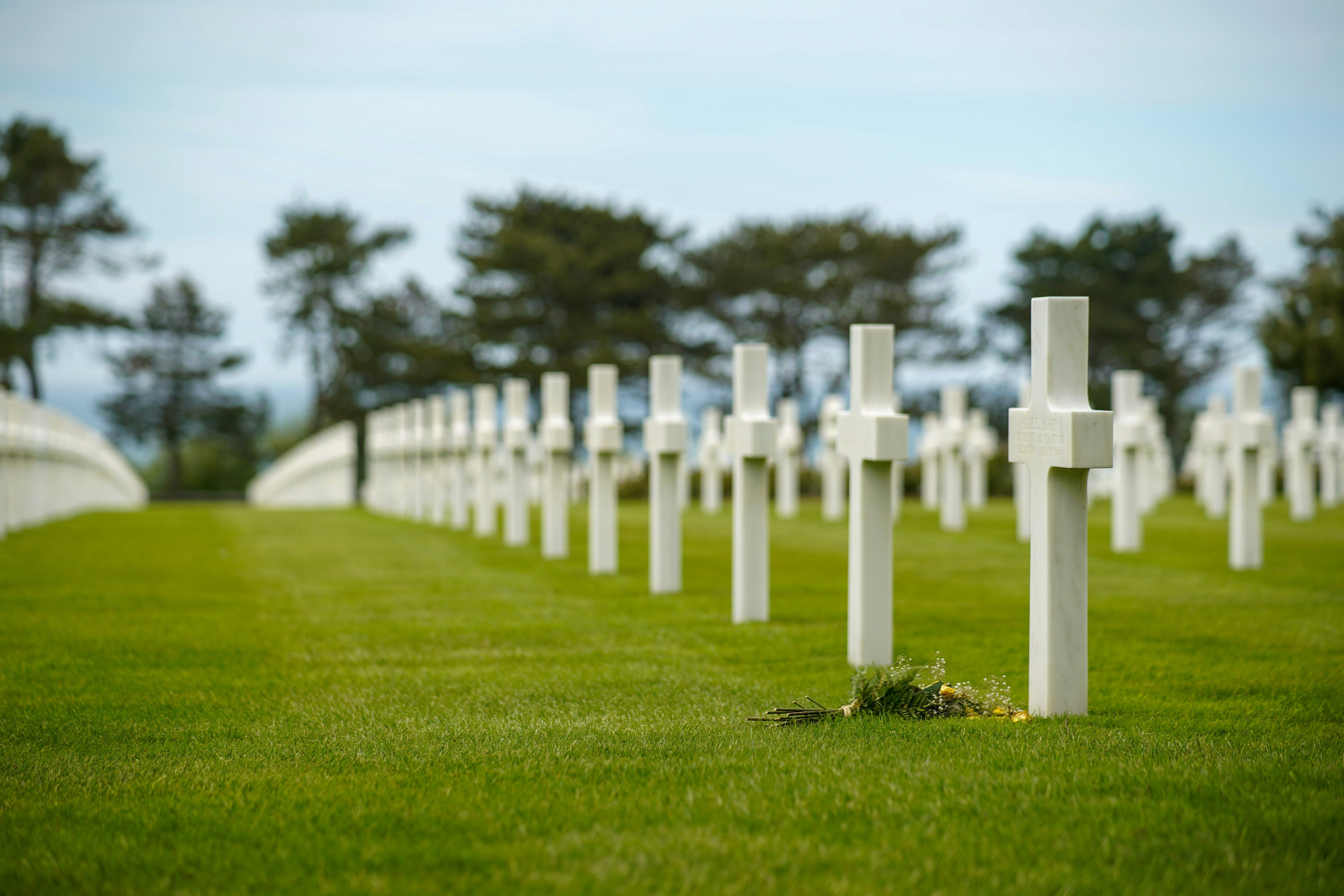
Several of Normandy's greatest experiences are free. The D-Day beaches themselves are free to walk and access. The Normandy American Cemetery at Colleville-sur-Mer and the Commonwealth War Graves Commission cemeteries are also free to visit and are open every day. The ramparts of Bayeux, the exteriors of the two Caen abbeys, and the harbour at Honfleur can all be enjoyed without paying for entry.
The Saturday market at Dieppe is free to browse and among the best food-shopping experiences in the region. For paid attractions, EU residents under 26 enter the Mémorial de Caen at a reduced rate and free on certain days. Please note that visiting in spring or autumn rather than July and August reduces accommodation costs across the region by 20 to 40%.
Veules-les-Roses, 20km west of Dieppe on the Alabaster Coast, is one of the officially designated Most Beautiful Villages in France, a tiny valley village with the shortest river in France (1,149 metres) flowing through watercress beds and water mills to the sea. It is almost entirely unknown to visitors from outside France and is one of the most quietly beautiful places on the Norman coast.
The Abbaye de Jumièges, 25km north-west of Rouen in the Seine valley, is a ruined Benedictine abbey whose roofless nave and twin towers rising against the sky are one of the most romantic and under-visited medieval ruins in France. The Forêt de Lyons, 30km east of Rouen, is one of the finest beech forests in Europe, with an 18th-century château at its centre and a series of waymarked forest walks that are entirely peaceful even in high season.
Normandy has one of the most distinctive and celebrated regional food identities in France. The region produces four AOC-protected cheeses: Camembert de Normandie, Livarot, Pont-l'Évêque, and Neufchâtel. All four should be eaten in Normandy from a farm or market stall at the correct temperature, since the supermarket versions give little idea of what the real thing tastes like.
The apple culture of Normandy is equally deep. Cidre Normand is produced throughout the region and is the natural table drink with galettes, moules, and cheese. Calvados, the oak-aged apple brandy aged for a minimum of two years, is produced only in Normandy and is one of the great spirits of France.
The Norman seafood tradition is anchored by the scallops from Dieppe and the Cotentin (in season from October through April), the mussels of the bay of Mont Saint-Michel, the lobsters and crabs of the Cotentin, and the sole and turbot from the Channel trawlers. Sole à la normande — sole cooked with cream, mussels, and shrimp — is the canonical expression of Norman coastal cooking and appears on menus across the region.
Normandy offers accommodation for every traveller and at every price point, from luxury château hotels to working farm chambres d'hôtes where breakfast arrives with eggs from the garden and the cheese from the farm next door. Caen, Rouen, and Cherbourg have the widest range of hotel options across all price brackets, with good transport connections for those exploring by public transport or using the city as a hub for day trips.
For those exploring the D-Day beaches and the Calvados coast, Bayeux is the most popular base as it’s located within 30 minutes of the main beach sites. Honfleur also has excellent boutique hotel options within the Vieux Bassin area, though prices reflect the premium location.
For the most authentic Norman accommodation experience, the network of chambres d'hôtes and gîtes throughout the Pays d'Auge is unequalled: staying on a working cider farm between Livarot and Pont-l'Évêque, waking to the Norman countryside and a breakfast of local cheese and bread, is a genuinely different encounter with the region than any hotel can provide.
You can book accommodation by visiting our accommodation page or directly with properties for the best rates. Please be aware that D-Day anniversary weekends (around 6th June), July, and August require booking several months in advance across the whole region due to high demand.
Normandy is best explored by car, and the multiple ferry crossings from the UK make it easy to plot a route that arrives via one port and departs via another. The most natural circuits follow the coastline from east to west or vice versa, while dipping inland to Caen, Bayeux, the Pays d'Auge, and Rouen as the itinerary allows.
A car gives total freedom to stop at roadside cider farms, to detour to a ruined abbey on a whim, and to arrive at the major sites before the coach tours.
Duration: 2–3 days
Arrive on the overnight Portsmouth to Caen ferry and drive directly to the D-Day beaches. Begin at the Mémorial de Caen and allow at least 3 hours for the best experience. Then drive north to the Normandy American Cemetery at Colleville-sur-Mer for the view from the clifftop over Omaha Beach. Continue west to Pointe du Hoc for the preserved crater landscape. Return to Bayeux for dinner and try the local cider and a Norman cheese board.
Spend the morning at the Bayeux Tapestry museum and the cathedral. Then drive 30km east to Arromanches to see the Mulberry Harbour remains in the sea, then east along the coast road through Courseulles-sur-Mer (Juno Beach Centre) and Ouistreham (Sword Beach) to Honfleur. Spend the afternoon in Honfleur, where you can visit the Vieux Bassin, the Église Sainte-Catherine, and the Boudin museum, before having an evening dinner on the harbour terrace.
Take a morning drive along the Côte Fleurie through Deauville and Trouville, or south-east through the Pays d'Auge to Beuvron-en-Auge and a visit to a cider farm on the Route du Cidre. Return to Caen for the evening Caen to Portsmouth ferry.
Why we love it: This itinerary covers the essential Lower Normandy in a logical and unhurried circuit, using the overnight ferry from Portsmouth to Caen to arrive rested and ready for a full first day. The return via the same route or via Dieppe on the Dieppe to Newhaven ferry gives flexibility for a longer eastward loop.
Duration: 7 days
Arrive on the overnight Portsmouth to Caen ferry. Spend the morning at the Mémorial de Caen. Afternoon in the city, visiting the castle ramparts and Abbaye aux Hommes. Stay overnight in Caen.
Drive west to Bayeux to see the Tapestry and the cathedral. Spend a full afternoon on the D-Day beaches, visiting the American Cemetery, Pointe du Hoc, and Arromanches. Overnight in Bayeux or at a Pays d'Auge chambre d'hôtes.
Start the morning on the Juno and Sword Beach sites and the Pegasus Bridge Memorial at Ranville. In the afternoon, drive south-east through the Pays d'Auge on the Route du Cidre and experience a cider farm tasting, and check out Camembert village. Stay overnight in Honfleur.
Morning in Honfleur, visiting Vieux Bassin, Sainte-Catherine and the Boudin museum. Cross the Pont de Normandie to Le Havre for lunch (the modernist UNESCO-listed city centre by Auguste Perret is worth an hour). Drive north-east along the Alabaster Coast to Étretat for the clifftop walk and the Jardins d'Étretat. Stay overnight in Étretat or Fécamp.
Drive north-east along the GR21 Alabaster Coast to Dieppe. Morning at the castle museum and the Saturday market (if applicable). Afternoon at leisure in Dieppe. Stay overnight in Dieppe.
Drive south from Dieppe through Rouen — a full afternoon in the city: the cathedral, the Gros-Horloge, the Aître Saint-Maclou, and the Musée des Beaux-Arts. Continue 80km west along the Seine valley to Giverny for a late-afternoon visit to Monet's garden (April–October). Stay overnight near Giverny or in Vernon.
Morning in Giverny, if not visited the previous evening. Drive back north to Dieppe for the Dieppe to Newhaven ferry, or west to Caen for the Caen to Portsmouth ferry.
Why we love it: This week-long circuit covers all of Normandy's defining experiences, including the D-Day history, the Impressionist coast, the Alabaster cliffs, and the great cities of Rouen and Caen, in a logical route that avoids backtracking. Arriving via Caen and departing via Dieppe (or vice versa) gives total flexibility. The year-round availability of multiple ferry routes means this itinerary works in any season.
Yes, Normandy has four direct ferry connections from the UK, making it the most accessible region of France for British visitors. The Portsmouth to Caen ferry, operated by Brittany Ferries, arrives at Ouistreham at the heart of the region and is the most useful route for the D-Day beaches and Lower Normandy. The Newhaven to Dieppe ferry, operated by DFDS Seaways, is the best gateway for Upper Normandy, Étretat, and Rouen.
The Portsmouth to Le Havre ferry is ideal for Honfleur and the Seine valley. The Portsmouth to Cherbourg ferry serves the Cotentin Peninsula and western Normandy.
A car is strongly recommended for getting the most out of Normandy. The main cities of Caen, Rouen, Bayeux, and Dieppe are all accessible by train from Paris and connected by rail, but the D-Day beaches, the Alabaster Coast, the Pays d'Auge cider country, Honfleur, Giverny, and the Cotentin Peninsula are all best reached by car.
The freedom to stop at a roadside farm shop for calvados, to detour to an abbey on a country road, and to arrive at the major sites at your own pace is central to what makes a Norman road trip so enjoyable. All four ferry routes to Normandy accommodate vehicles, so bringing your car on the ferry is the standard arrangement for a UK visitor planning a touring holiday in the region.
Here are some of our favourite tips for travelling in Normandy:
More routes than anyone else.

Compare fares, times & routes in one place.
Change plans easily with flexi tickets.

Book e-tickets & manage trips in-app.
Live ship tracking & real-time updates.

Top-rated customer support when you need it.